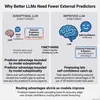
Predictable Performance in Model Routing and Cascades
Recent research explores performance prediction and model routing in large language models by studying when and why an AI's errors are predictable. The authors demonstrate that any performance predictor surpassing a model's self-confidence can directly improve the model's answer loss through recalibration. Furthermore, a predictor's advantage is strictly bounded by the model's suboptimality combined with the additional parameter capacity of the predictor. Empirical experiments across multiple benchmarks reveal that less optimal models yield greater prediction and routing advantages, which naturally diminish after task-specific finetuning. Finally, these theoretical limits extend to two-model cascades, showing that stronger routing advantages emerge in suboptimal models before they absorb the benefits of further training.
Podzilla Summary coming soon
Sign up to get notified when the full AI-powered summary is ready.
Free forever for up to 3 podcasts. No credit card required.
Listen to This Episode
More from Best AI papers explained

Sparks of Weight-Space Programming: LLMs can natively read & write neural network weights
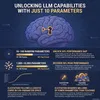
Quantifying Elicitation of Latent Capabilities in Language Models
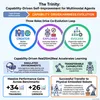
The Trinity: Capability-Driven Recursive Self-Improvement for Multimodal Agents
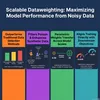
High-Value Training Data from Noisy, Diverse Sources
Get summaries like this every morning.
Free AI-powered recaps of Best AI papers explained and your other favorite podcasts, delivered to your inbox.
Free forever for up to 3 podcasts. No credit card required.