Free Daily Podcast Summary
Astronomy Daily: Latest Space News: Daily Summaries Delivered
by bitesz.com
Join hosts Anna and Avery for daily Space & Astronomy news, insights, and discoveries. Give us 20 minutes and we'll give you the Universe!
Latest Episodes
The most recent episodes — sign up to get AI-powered summaries of each one.
- 1 weeks ago26 min
The Great Water Mystery: Jezero Crater and the Hunt for Mars' Hidden History
Perseverance drove to the edge of an ancient Martian lake expecting a beach and found the inside of a volcano — rock that water has been through at least three separate times. Europe's Jupiter probe comes home on Monday night and crosses Australia in a fully dark sky. Two teams, using two completely different techniques, both find something hiding inside the most famous planetary system we have ever photographed — and an Australian instrument is in the middle of one of them. Plus: heavy water in an interstellar comet, and what it says about the star that made it. In this episode · LEAD — Three floods at the crater's edge. Candice Bedford (Purdue) and colleagues publish in Communications Earth & Environment: the Margin Unit at Jezero is igneous, not sedimentary, and records at least three distinct episodes of water — CO₂-rich groundwater making carbonate ridges, then silica associated with the lake, then a later hot-water event leaving fluorite veins. Habitability context, not a biosignature. · Juice returns. ESA confirms the third Earth gravity assist for 28 September — closest approach 11:45 UTC over the Indian Ocean, bending the trajectory ~20° and adding ~3.5 km/s. The spacecraft crosses Australia north-east to north-west 15–30 minutes earlier, in full darkness. · HR 8799. Two preprints in two weeks point at a fifth, inner planet — one from archival JWST aperture-masking data (~7 au, a few Jupiter masses), one from Gaia astrometry (2–3 au, 10–14 Jupiter masses). They do not obviously describe the same object. Neither is peer-reviewed. · 3I/ATLAS. A modelling paper explains the high deuterium-to-hydrogen ratio measured in March as consistent with formation around a low-metallicity — meaning old — star. · Quick hit: Starship Flight 14 still targeting 28 September; Crew-13 still 'no earlier than early October' on NASA's own page; Albania signs the Artemis Accords as the 73rd country. · Skywatch: the equinox as an instant rather than a date, the Juice pass over Australia, Venus and Mercury for the south, Mars and Jupiter before dawn for the north, and Saturn heading into opposition. Sources and further reading · Bedford, C. C. et al., 'Lake- and groundwater-associated alteration of the olivine-rich Margin unit in Jezero crater, Mars', Communications Earth & Environment (2026). DOI 10.1038/s43247-026-03997-9 · NASA/JPL, 'NASA Discovery Reveals Complex Water Systems on Early Mars', 21 September 2026. · ESA, 'Juice to fly past Earth for third gravity assist', 21 September 2026. · Nguyen, J. S. et al., 'A Candidate Innermost Fifth Planet In the HR 8799 System Revealed By JWST NIRISS Aperture Masking Interferometry', arXiv:2609.10507. · Lagrange, A.-M. et al., 'A fifth companion in the HR 8799 system revealed by Gaia', arXiv:2609.20996 (submitted to Nature Astronomy). · Furuya, K., Cordiner, M., Bockelée-Morvan, D. et al., arXiv:2609.12370. · NASA OIIR, 'NASA Welcomes Albania as Newest Artemis Accords Signatory', 21 September 2026. Skywatch figures computed in-session with PyEphem 4.2.1 for Sydney, Los Angeles, New York and London. Times are local unless marked UTC.Become a supporter of this podcast: https://www.spreaker.com/podcast/astronomy-daily-latest-space-news--5648921/support.Sponsor Details:Ensure your online privacy by using NordVPN. To get our special listener deal and save a lot of money, visit www.astronomydaily.io/nordvpn. You'll be glad you did!Get the best secure and private email on the planet. Stop your Government, google and who knows who else spying on every email you write. Do what we did and use ProtonMail. They beleive in privacy and there are no ads in their business model...yet they still provide a free forever service. Check them out and get out special deal at www.astronomydaily.io/protonmailBecome a supporter of Astronomy Daily by joining our Supporters Club. Commercial free episodes daily are only a click way... Click HereThis episode includes AI-generated content.
- 1 weeks ago28 min
What Keeps a Galaxy Churning: Andromeda's Supernova Secrets Revealed
Supernovae keep galaxies churning A new study led by Fan Yi Meng from Tsinghua University provides the first comprehensive census of superbubbles in the Andromeda Galaxy, revealing that clustered supernova feedback is sufficient to sustain galactic-scale turbulence. This finding helps to explain why galaxies remain active over billions of years, with turbulence playing a crucial role in regulating star formation rates. The research, published in Nature Astronomy, highlights the energy balance between supernovae and the turbulence they create.Neutrinos may dictate stellar explosions A paper from Mariam Gogilashvili and Irene Tambora at the Niels Bohr Institute explores the role of neutrinos in determining which massive stars explode as supernovae. Their findings suggest that neutrino oscillations could lead to a significant number of stars collapsing into black holes, particularly those in the 16 to 30 solar mass range, addressing the long-standing red supergiant problem.TOI 1355b: A planet with an expiry date Researchers from the University of Tokyo have discovered TOI 1355b, a hot Jupiter with a unique eccentric orbit around an A-type star. This planet will stop transiting its host star by 2033 due to nodal precession, providing a rare opportunity to study its characteristics before it disappears from view.SpaceX Crew Missions Update NASA has contracted SpaceX for three additional crew rotation missions to the International Space Station, extending their partnership and ensuring continued access to the station. Crew 13 is currently in quarantine, with a launch targeted for early October.The Sun goes blank For the first time since February, the Sun has gone completely spotless, marking a significant moment in the solar cycle. As solar activity declines, a coronal hole is set to rotate into position, potentially leading to minor geomagnetic storms and auroras.1. Supernovae keep galaxies churning2. Neutrinos may dictate stellar explosions3. TOI 1355b: A planet with an expiry date4. SpaceX Crew Missions Update5. The Sun goes blankBecome a supporter of this podcast: https://www.spreaker.com/podcast/astronomy-daily-latest-space-news--5648921/support.Sponsor Details:Ensure your online privacy by using NordVPN. To get our special listener deal and save a lot of money, visit www.astronomydaily.io/nordvpn. You've been glad you did!Get the best secure and private email on the planet. Stop your Government, Google and who knows who else spying on every email you write. Do what we did and use ProtonMail. They believe in privacy and there are no ads in their business model... yet they still provide a free forever service. Check them out and get our special deal at www.astronomydaily.io/protonmailBecome a supporter of Astronomy AstroDailyPod by joining our Supporters Club. Commercial-free episodes daily are only a click away... Click HereSponsor Details:Ensure your online privacy by using NordVPN. To get our special listener deal and save a lot of money, visit www.astronomydaily.io/nordvpn. You'll be glad you did!Get the best secure and private email on the planet. Stop your Government, google and who knows who else spying on every email you write. Do what we did and use ProtonMail. They beleive in privacy and there are no ads in their business model...yet they still provide a free forever service. Check them out and get out special deal at www.astronomydaily.io/protonmailBecome a supporter of Astronomy Daily by joining our Supporters Club. Commercial free episodes daily are only a click way... Click HereThis episode includes AI-generated content.
- 2 weeks ago33 min
The Unifying Mystery of Black Hole Jets: Stellar and Supermassive Connections
SHOW NOTES Black hole jets follow one universal rule Adelle Goodwin (Curtin University / ICRAR, Forrest Research Foundation Fellow) and Andrew Mummery (Institute for Advanced Study, Princeton) show that supermassive black holes launch their outflows at the same critical accretion rate as stellar-mass black holes — about 2% of the Eddington limit — making accretion-outflow coupling scale-invariant across seven orders of magnitude in mass. Nature Astronomy, 17 September 2026. DOI: 10.1038/s41550-026-02951-1 JWST's Little Red Dots are black hole seeds caught mid-growth Sunmyon Chon, Shingo Hirano, Tomoaki Ishiyama, Seok-Jun Chang and Volker Springel ran fully cosmological radiation-hydrodynamic simulations on Japan's ATERUI III supercomputer and produced heavy black hole seeds of about a million solar masses, whose optically thick discs generate exactly the broad hydrogen emission seen in Little Red Dots. Nature 657, 621-625, 16 September 2026. DOI: 10.1038/s41586-026-10985-8 Earth's centre of mass moves about half as far as we thought Donald Argus, Felix Landerer and colleagues at NASA's Jet Propulsion Laboratory, with the University of Nevada, the University of Montana and the Helmholtz Centre for Geosciences, revise the annual oscillation between Earth's centre of mass and its centre of figure down from roughly 11 millimetres to about 4 to 5.5. Geophysical Journal International, ggag314. DOI: 10.1093/gji/ggag314 Two numbers explain the weather on a world 20 light-years away Merle Schrader and colleagues at Trinity College Dublin applied principal component analysis to one rotation of JWST spectroscopy of the brown dwarf SIMP 0136 and found two components — temperature and vertical cloud structure — account for all the detectable variability. Astronomy & Astrophysics, open access. DOI: 10.1051/0004-6361/202660109 The Sun goes blank With only active region AR4528 left on the Earth-facing disc and rotating out of view, the Sun was on the verge of its first spotless day since 24 February 2026 — which itself ended a 1,335-day run of continuous sunspot activity stretching back to June 2022. Skywatch: Venus at greatest brilliancy, first quarter Moon, Observe the Moon Night Venus reaches greatest brilliancy on 18 September at magnitude -4.8; the Moon reaches exact first quarter at 20:43 UTC the same day, setting up International Observe the Moon Night on Saturday 19 September. All times and altitudes in this segment were computed for Sydney, Los Angeles, New York and London. SKYWATCH — COMPUTED REFERENCE Computed in-session with PyEphem 4.2.1. Local times. Sydney on AEST (UTC+10); Los Angeles PDT; New York EDT; London BST. City Sunset Venus alt Venus sets Mercury Mars pre-dawn Sydney 17:45 39.2 deg 20:58 (3h13m) 16.4 deg (sets 1h20m) 20.4 deg Los Angeles 18:52 14.3 deg 20:10 (1h19m) 8.8 deg (sets 0h43m) 48.4 deg New York 18:56 10.3 deg 19:59 (1h03m) 7.0 deg (sets 0h38m) 46.1 deg London 19:04 3.6 deg 19:32 (0h28m) 3.9 deg (sets 0h26m) 40.6 deg · Venus greatest brilliancy: 18 September 2026, magnitude -4.8. Disc 39.6 arcsec, 26% illuminated. · By 22 September the disc has grown to 42.3 arcsec but the lit fraction has fallen to 22.7% — the two changes nearly cancel, which is why listings disagree on the date. The peak is genuinely flat. · Moon reaches exact first quarter 18 September at 20:43 UTC = 06:43 AEST Sat 19 Sep / 16:43 EDT Fri 18 / 13:43 PDT Fri 18 / 21:43 BST Fri 18. · Moon altitude at sunset: Sydney 81.6 deg (near overhead), Los Angeles 27.1 deg, New York 20.4 deg, London 9.4 deg. · International Observe the Moon Night: Saturday 19 September 2026. NASA event at the U.S. Space & Rocket Center, Huntsville, 5:30-8:00pm CST. · Pre-dawn Sat 19 Sep at nautical dawn — Jupiter: Los Angeles 26.4 deg, New York 25.1 deg, London 21.9 deg, Sydney 8.9 deg. · Mars-Jupiter separation: 22.9 deg on 18 Sep, 12.0 deg mid-October, 1.2 deg mid-November 2026. · Saturn is up essentially all night; sets 06:47 Sydney, 07:55 Los Angeles. Opposition 4 October 2026, disc 19.6 arcsec, rings approx 7 deg open. · September equinox: a single instant, 00:05:09 UTC on 23 September 2026 — evening of the 22nd in the Americas, mid-morning of the 23rd in Australia. · All figures computed in-session with PyEphem 4.2.1 for the four reference cities. Sydney is on AEST (UTC+10); daylight saving begins 4 October. Become a supporter of this podcast: https://www.spreaker.com/podcast/astronomy-daily-latest-space-news--5648921/support.Sponsor Details:Ensure your online privacy by using NordVPN. To get our special listener deal and save a lot of money, visit
- 2 weeks ago33 min
The Youngest Planet Ever Found
Astronomers have confirmed the youngest planet ever found - Elias 2-24 b, less than a million years old, sitting inside a gap it is carving in its own birth disc 450 light-years away. Plus: the Lunar Reconnaissance Orbiter finds a 222-metre crater that was not there in 2024, a 178-year-old space weather record gets corrected by seven years, and Sakurai's Object - a star that came back from the dead - has become six times hotter in thirty years.SOURCES Newfound 'Baby' Planet Smashes Record for Youngest Known World NASA Science, 16 September 2026 - https://science.nasa.gov/universe/newfound-baby-planet-smashes-record-for-youngest-known-world/ Elias 2-24 b discovery paper Bernardi, Cieza et al., The Astrophysical Journal Letters, 16 September 2026, DOI 10.3847/2041-8213/ae9bb6 - https://doi.org/10.3847/2041-8213/ae9bb6 ALMA Observations of Elias 2-24: A Protoplanetary Disk with Multiple Gaps (background) Cieza et al., ApJL 851 L23, 2017, DOI 10.3847/2041-8213/aa9b7b - https://doi.org/10.3847/2041-8213/aa9b7b NASA's Moon Orbiter Spots New, 'Once-in-Century' Moon Crater NASA Science, 16 September 2026 - https://science.nasa.gov/solar-system/moon/nasas-moon-orbiter-spots-new-once-in-century-moon-crater/ New 222-metre lunar crater - mission release W. M. Keck / Intuitive Machines / NASA LROC, 16 September 2026; two papers in Science Advances (Robinson et al., morphology and ejecta; Powell et al., Diviner thermal signature) - https://www.prnewswire.com/news-releases/nasas-lunar-reconnaissance-orbiter-discovers-a-new-222-m-diameter-lunar-crater-302880555.html Mystery of one of the earliest recorded space weather impacts solved Lancaster University / RMIT University, 16 September 2026; Wild, Carter, Hapgood et al., Space Weather (AGU), DOI 10.1029/2026SW005239 - https://doi.org/10.1029/2026SW005239 'Born-again' star offers rare chance to watch stellar evolution in real time The University of Manchester, 16 September 2026; Zijlstra, van Hoof et al., 'The emergence of a [WC] star in Sakurai's object', MNRAS, DOI 10.1093/mnras/stag1533 - https://doi.org/10.1093/mnras/stag1533 Cargo Mission and Crew-13 Updates; Station Research, Maintenance Continue NASA Space Station Blog, 16 September 2026 - https://www.nasa.gov/blogs/spacestation/2026/09/16/cargo-mission-and-crew-13-updates-station-research-maintenance-continue/ International Observe the Moon Night 2026 NASA, Saturday 19 September 2026 - https://science.nasa.gov/moon/observe-the-moon-night/overview Skywatch ephemerides Computed in-session with PyEphem for Sydney, Los Angeles, New York and London, 17-18 September 2026Become a supporter of this podcast: https://www.spreaker.com/podcast/astronomy-daily-latest-space-news--5648921/support.Sponsor Details:Ensure your online privacy by using NordVPN. To get our special listener deal and save a lot of money, visit www.astronomydaily.io/nordvpn. You'll be glad you did!Get the best secure and private email on the planet. Stop your Government, google and who knows who else spying on every email you write. Do what we did and use ProtonMail. They beleive in privacy and there are no ads in their business model...yet they still provide a free forever service. Check them out and get out special deal at www.astronomydaily.io/protonmailBecome a supporter of Astronomy Daily by joining our Supporters Club. Commercial free episodes daily are only a click way... Click HereThis episode includes AI-generated content.
- 2 weeks ago31 min
Roman Opens Its Eye
First starlight from Roman, a shorter fuse on the Solar System, weapons in orbit, and a globular cluster hiding behind the dust Roman opens its eye — and finds it has twice as long to look NASA has activated the Nancy Grace Roman Space Telescope's Wide Field Instrument, a 300-megapixel infrared camera built around eighteen detectors, with a field of view at least a hundred times larger than Hubble's infrared field — a patch of sky bigger than the full Moon in a single exposure, at Hubble-comparable sharpness. The instrument reached its operating temperature of −143 °C on 11 September; detectors and the calibration system came up across the 11th and 12th; the element wheel turned in microgravity for the first time on the 12th; the focus mechanism was verified on the 13th. Roman then took its first starlight image — deliberately out of focus, and exactly as intended: a baseline diagnostic that proves the optical path is clear and every detector is live. Sharp science images are expected by early 2027. The Coronagraph Instrument has completed initial communications checkout from Caltech/IPAC and is running 30-day decontamination cycles at room temperature. Separately, NASA published the numbers from Roman's first mid-course correction: better than 99% accurate, using about 18 kg of a 200 kg propellant budget, on a spacecraft that launched lighter than its allowance. Jamie Dunn (Goddard): Roman has fuel for at least 22 years of potential science operations, against a design life of ten. Caveat kept on air: that is a fuel figure, not a funding or hardware figure. Why it matters: Roman's High-Latitude Time-Domain Survey measures cosmic expansion with Type Ia supernovae, and its High-Latitude Wide-Area Survey probes cosmic acceleration across more than 5,000 square degrees through weak lensing and galaxy clustering — two independent handles on the dark energy question that Monday's Australian-led supernova compilation sharpened but could not settle. A doubled mission means a longer lever arm in time, which in this measurement is everything. Caltech: the Solar System's dynamical fuse is far shorter than we thought Konstantin Batygin, Jim Fuller and Fred Adams (Caltech), 'Terminal instability of the Solar System triggered by stochastic solar mass loss', arXiv:2609.12494, posted 11 September and accepted to the Astrophysical Journal Letters. The standard estimate for how long the giant planets hold their architecture — about 10¹⁸ years — assumes the dying Sun sheds mass smoothly. Observations of white-dwarf recoil indicate mass is instead lost in discrete, independently directed ejections, so planetary orbits take a random walk. In simulations, roughly 40% of systems are disrupted or violently scattered before white dwarf formation and about 90% within ~3 billion years after, cutting the outer Solar System's dynamical lifetime to around a gigayear past white dwarf formation. Framed on air as a prediction to test — planetary systems around old white dwarfs should be rarer and more chaotic — with the granularity of the mass loss named as the number to go and measure. The United States says, for the first time, that it has weapons in orbit Secretary of the Air Force Troy Meink, speaking on the opening day of the Air & Space Forces Association's Air, Space & Cyber Conference at National Harbor, Maryland on Monday 14 September: the United States now has 'on-orbit space control weapons capable of defending the joint force against hostile adversary actions'. It is the first public US acknowledgement of offensive capability in orbit. No systems, numbers, locations or timelines were disclosed. A Space Force spokesperson defined space control as employing 'kinetic and non-kinetic means to affect adversary capabilities through disruption, degradation and even destruction, if necessary'. Gen. Douglas Schiess, Chief of Space Operations, said the following day that 'it was time' to talk about it, citing Chinese and Russian anti-satellite advances. Covered factually, with both the deterrence and the arms-control readings presented, and with orbital debris as the physical consequence that outlasts any dispute. Australian context: Operation Olympic Defender and Defence Space Command. Rubin finds a globular cluster hiding behind the dust Aashay Pai, William Cerny, Andrew Pace, Alex Drlica-Wagner and colleagues, 'Rubin Observatory Reveals a Dust-Shrouded Halo Globular Cluster in Ophiuchus', arXiv:2609.15872, posted 14 September. Rubin-GC1 was found in Rubin's Early Data Preview 2 — not the survey proper — in the direction of the galactic bulge, behind heavy dust and a crowded foreground. It sits about 31 kiloparsecs away, roughly 100,000 light-years, out in the Milky Way's halo. Half-light radius ~5 pc, absolute magnitude ≈ −2.4, placing it in the faint tail of the globular cluster luminosity function; age ≈ 9.2 billion years; moderately metal-poor. Gaia DR3 proper motions and phase-space mode
- 2 weeks ago29 min
The Evolving Enigma of Dark Energy and the Sun's Mysterious Past
An Australian-led team has rebuilt thirty years of supernova observations into one consistent catalogue — and it adds fresh weight to the idea that dark energy is not constant. We also ask whether the young Sun swallowed a super-Earth, find out why a quiet Sun is bad news at thirty-five thousand feet, and watch JWST run the most sensitive exomoon search ever attempted. Plus a Crew-13 update and a skywatch with a live aurora alert for both hemispheres. In this episode · Two thousand, eight hundred and eighty-four Type Ia supernovae, rebuilt from Pantheon+ and the Dark Energy Survey's full five-year sample into a single internally consistent catalogue by Ryan Camilleri and Professor Tamara Davis at the University of Queensland, with ANU, Swinburne and international colleagues. · On their own the supernovae give a matter density of 0.310 for flat ΛCDM. Combined with the CMB and baryon acoustic oscillations, a tension appears under constant dark energy — and eases when dark energy is allowed to evolve. Preference: 2.5–3.1 sigma. · Why that is interesting but not a discovery, and why a second independent line of evidence pointing the same way as DESI changes the shape of the argument. · Professor Mutlu Yildiz (Ege University) on whether the young Sun engulfed a planet of 5–10 Earth masses — and whether that single event explains both the solar sound-speed discrepancy and the Sun's missing lithium. · Yaniv, Yair and Price on six balloon flights to 35 km: cosmic radiation at cruising altitude runs 40–60% higher at solar minimum, with an anticorrelation of r = −0.71 against solar activity. · David Kipping stacks twelve JWST transits of LP 890-9c and excludes moons down to 0.1 Earth radii across the entire Hill region — the most sensitive exomoon search on record. · Crew-13 now targeting no earlier than late September after an oxidiser leak in Dragon's propulsion system. · Skywatch: a coronal-hole stream arriving today with aurora chances at both ends of the planet, Venus at greatest brilliancy on 18 September, Mars past Pollux, Saturn towards opposition, International Observe the Moon Night on the 19th, and the equinox on the 22nd. Sources · University of Queensland — 'Big supernova dataset challenges dark energy theory', 8 September 2026 · Camilleri, Lee, Davis, Rubin, Shah, Scolnic, Lidman et al., 'Supernovae Unite: Combining Pantheon+ and DES-SN5YR', Publications of the Astronomical Society of Australia — arXiv:2609.05053; companion host-mass paper arXiv:2609.05321 · Royal Astronomical Society — ''Fingerprints' inside the Sun could reveal if it once swallowed a planet', 10 September 2026. Yildiz, MNRAS, DOI 10.1093/mnras/stag1527 · Yaniv, Yair & Price, Journal of Geophysical Research: Atmospheres, September 2026 — cosmic radiation at aviation altitudes across the solar cycle · Kipping, 'JWST Excludes Exomoons Down to 0.1 Earth Radii Around a Rocky, Temperate Exoplanet', arXiv:2609.05301, 4 September 2026 · NASA Space Station blog — 'NASA, SpaceX Adjust Crew-13 Launch Date', 29 August 2026; Canadian Space Agency update, September 2026 · EarthSky sun news and NOAA Space Weather Prediction Center outlooks, 12–14 September 2026 · NASA Science — 'What's Up: September 2026 Skywatching Tips'Become a supporter of this podcast: https://www.spreaker.com/podcast/astronomy-daily-latest-space-news--5648921/support.Sponsor Details:Ensure your online privacy by using NordVPN. To get our special listener deal and save a lot of money, visit www.astronomydaily.io/nordvpn. You'll be glad you did!Get the best secure and private email on the planet. Stop your Government, google and who knows who else spying on every email you write. Do what we did and use ProtonMail. They beleive in privacy and there are no ads in their business model...yet they still provide a free forever service. Check them out and get out special deal at www.astronomydaily.io/protonmailBecome a supporter of Astronomy Daily by joining our Supporters Club. Commercial free episodes daily are only a click way... Click HereThis episode includes AI-generated content.
- 3 weeks ago37 min
The Planet That Keeps Shrinking plus the Weekend Wrap
Today's episode — The Weekend Wrap, Saturday 12 September 2026: OUR LEAD: A SMALLER MERCURY Mercury has been contracting for four and a half billion years as its huge iron core cools, and it writes the record on its own surface — in long lobe-fronted cliffs called lobate scarps, where one slab of crust has ridden up over another. Add up all that shortening and you get the total contraction. The trouble was that the surface record always gave a smaller number than thermal models predicted. New work led by Gaku Nishiyama at the German Aerospace Center in Berlin, published in Geophysical Research Letters and released by the American Geophysical Union on 10 September, explains the gap — and the explanation is beautifully simple. Impact debris buries the cliffs. Using MESSENGER imagery reworked with stereophotogrammetry, the team showed that the rougher the terrain, the fewer shortening structures you can find per unit area. Since faults don't know what the surface above them looks like, that correlation isn't geology — it's a detection limit. Correct for it and Mercury's total loss of diameter rises by 10–30%, from a range topping out near 16 km to as much as 23 km. That points to a larger metal core, fewer light elements in it, or a hotter start — and it closes the long-standing mismatch with the physics. BepiColombo is about ten weeks from gravity capture at Mercury, carrying a far better laser altimeter and a much less eccentric orbit. If Nishiyama is right, it should find the missing small scarps in exactly the rough ground where today's maps look suspiciously empty. Some of that data will come home through ESA's New Norcia station in Western Australia, run in partnership with CSIRO. THE WEEK THAT WAS · Monday — Isar Aerospace's Spectrum reached orbit from Andøya Spaceport in Norway on 5 September, the first vehicle ever to do it from Western European soil, carrying five university cubesats. · Tuesday — giant-impact simulations including temperature-dependent rock strength can produce an intact Moon in about five hours rather than a slowly accreting debris disc. A sensitivity result, not a new origin story. · Wednesday — Hubble and Webb together found 27 previously unknown trans-Neptunian objects down to about 5 km, and the small ones keep the colours of their birth population rather than looking like collision fragments. · Thursday — 109 localised fast radio bursts were used to measure how far galactic feedback has smoothed the clumpiness of matter, finding more cool gas in big haloes than X-ray surveys see. · Friday — population synthesis suggests magnetars are roughly half of all neutron stars at birth, not one in a hundred, which doubles the Galactic supernova rate and makes magnetar central engines affordable. ALSO IN THIS EPISODE · The Sun's superflare potential — new work from the Max Planck Institute for Solar System Research with the University of Colorado, released 10 September. Scaling the 300 strongest modern solar flares against the size of their active regions, then applying that relation to the giant sunspot group of 1947 — the largest in four centuries of observation — gives a region with enough stored magnetic energy to power a superflare. Potential, not prediction: the caveats are covered properly on air. · Rocket Lab has filed a protest with the US Government Accountability Office over NASA's ~$700M Mars Telecommunications Network award to Blue Origin, on eligibility and technical-evaluation grounds. A GAO decision is due around mid-December. · Starship Flight 14 has slipped to no earlier than 18 September — and the tower catch of the ship is deferred to a later flight, which corrects how we framed it earlier this month. SKYWATCH — BOTH HEMISPHERES · The Moon and Venus about half a degree apart in front of Spica on the evenings of 13–14 September — Southern Hemisphere observers get the better geometry. · Venus reaches greatest brilliancy on 18 September at magnitude −4.8. · SN 2026aaiv, a Type Ia supernova in NGC 7331 in Pegasus, around magnitude 12 — the week's best observing target, and far easier from North America than from Sydney. · Saturn building towards its 4 October opposition, with Dione and Tethys events in the small hours for northern telescope owners. · Mars passing 6° south of Pollux pre-dawn on 18 September. · The zodiacal light — an evening object in the west from the Southern Hemisphere, a pre-dawn object in the east from the Northern. Best chance until early October. · Eye safety: never point binoculars or a telescope near the Sun when hunting daylight Venus or twilight Mercury. Solar filters must be certified to ISO 12312-2, fitted over the front of the instrument, and inspected every time. Links & sources · Mercury contraction — Geophysical Research Letters: https://agupubs.onlinelibrary.wiley.com/
- 3 weeks ago31 min
Half the Neutron Stars
Today's episode — S05E191, Friday September 11, 2026: Main story: A population-synthesis study published in Nature Astronomy on 10 September argues that magnetars make up roughly half of all neutron stars, not the one-in-a-hundred implied by the catalogues. Celsa Pardo-Araujo and Nanda Rea (Institute of Space Sciences, ICE-CSIC, Barcelona) with Michele Ronchi (ASTRON) and Vanessa Graber (Royal Holloway) modelled the whole isolated-neutron-star population as one family rather than four separate classes, evolving spin-down, magneto-thermal decay and Galactic dynamics together, then filtering the simulated population the way real surveys filter the sky. Of the 24 known neutron stars younger than 2,000 years, magnetars and central compact objects are about 59%; the derived birth fraction averages ~50% (40–70% or 30–50% depending on the assumed birth-field distribution, which peaks at 1–2.5 × 10^14 gauss). Two consequences: the Galactic core-collapse supernova rate has to be higher than assumed, around two per century, and magnetar central-engine models for superluminous supernovae, gamma-ray burst plateaus and fast radio bursts finally have the supply to work. Caveats: it is a model rather than a census, the anchor sample is 24 objects, and 'magnetar' is defined by a field threshold. Southern thread: the field began with SGR 0526−66 in the Large Magellanic Cloud on 5 March 1979, and the same Barcelona group modelled GLEAM-X J162759, found with the Murchison Widefield Array in Western Australia. The rest of the news: · Chariklo's rings: The first stellar occultation ever planned specifically for JWST — 18 October 2022 — has been published in Science Advances, led by Yücel Kılıç, Pablo Santos-Sanz and Celia Navas (IAA-CSIC) with Nicolas Rambaux, Bruno Sicardy and Josselin Desmars (LTE) and Damya Souami (LIRA). Against the 2017 ground-based occultations, the inner ring C1R is about 50% more opaque and the outer ring C2R about 60% less, with the ring positions unchanged. Chariklo is the largest known centaur at ~125 km radius; the rings sit at 390 and 405 km and are a few km wide. Candidate explanations: material loss from C2R, material arriving at or collisions grinding down C1R — or a wavelength effect, since infrared is being compared with visible light. The rings were discovered in 2013 by an occultation campaign across Chile, Brazil, Argentina and Uruguay. · Mercury under bombardment: Kilpua et al. report in Nature Astronomy (8 September) that BepiColombo's fourth Mercury flyby in September 2024 — 165 km above the surface, closer than its eventual science orbit — coincided with a major solar particle eruption. The Finnish-built SIXS instrument watched energetic electrons and protons penetrate Mercury's magnetosphere and precipitate onto the surface over a wide area. That bombardment both sputters atoms off the surface and drives the X-ray fluorescence used to read its composition, and Mercury's small, weak magnetosphere makes it a stand-in for Earth during an extreme solar storm. The spacecraft separated its transfer module on 3 September; gravity capture is 21 November. · Europe buys a way home: ESA has awarded The Exploration Company a contract worth up to €760M under ALADDIN (Autonomous LEO Accelerated Demo Docking to ISS Node) — €310M for the demonstration mission, with ESA funding 60% and the company 40%, plus €450M in options for two further flights. The Nyx capsule flies on Ariane 6 and must dock with the ISS no later than Q2 2029, with up to €50M in additional incentive for using European launch vehicles. Europe has flown cargo up before, with the five ATVs, but has never returned anything from orbit. CEO Hélène Huby: 'It is the first time in Europe that a five-year-old space startup wins a contract worth hundreds of millions of euros.' The company's Mission Possible capsule survived reentry in June 2025 but was lost before splashdown — a partial success in its own words. Thales Alenia Space Italy remains in a parallel tender. · Parker Solar Probe: NASA reports the spacecraft completed its 29th close approach on 4 September, again matching the record set on Christmas Eve 2024 — 430,000 mph and 3.8 million miles from the solar surface, for the eighth time. The encounter ran 30 August to 9 September with nine days of autonomous operation and a beacon tone on the 7th; this pass targeted structures near the Sun's north pole, sampling nearly 40% of the solar circumference in a day. Telemetry began flowing on 11 September, science data 13–27 September. The mission is extended through 2029. · Skywatch: New Moon on 11 September at 14:27 AEST makes tonight and tomorrow the darkest nights of the month. Southern Hemisphere — Venus low in the west after sunset, building to greatest brilliancy on 18 September at magnitude −4.8, with a very thin crescent Moon sweeping past on the 13th and 14th (about half a degree apart on the 14th, near Spica); EarthSky notes the Southern Hem
Get Astronomy Daily: Latest Space News summaries in your inbox
Free AI-powered daily recaps. Key takeaways, quotes, and mentions — in a 5-minute read.
Get Free Summaries →Free forever for up to 3 podcasts. No credit card required.
You Might Also Like
Listeners also like.
The 365 Days of Astronomy
A daily podcast featuring diverse voices exploring astronomy and space science topics.
Bedtime Astronomy
A calming exploration of cosmic wonders, sharing stories about stars, planets, and celestial phenomena to inspire curiosity before sleep.
Astrum Space
Explores the Solar System through detailed planetary series, featuring imagery and discoveries from space missions.

Cosmos in a Pod
Explores space, science, philosophy, and technology to reveal the wonders of the universe and humanity's place within it.
Planetary Radio: Space Exploration, Astronomy and Science
Explores space exploration, astronomy, and science through conversations with experts and advocates shaping humanity's journey beyond Earth.
SpaceTime with Stuart Gary
Weekly explorations of astronomy, space, and science news with insights from a veteran science journalist and industry experts.
Through the Telescope
Two hosts explore key astronomy topics in digestible episodes, making the cosmos accessible and engaging for all knowledge levels.

PBS Space Time
An astrophysicist explains cosmic phenomena like black holes and galaxy evolution through accessible, science-driven discussions.

The World, the Universe and Us
Explores big scientific questions about life, consciousness, climate, and the cosmos with expert scientists and New Scientist journalists.
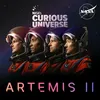
NASA's Curious Universe
Mind-blowing stories from inside NASA’s space exploration, revealing the people and science behind cosmic discoveries.

StarTalk with Neil deGrasse Tyson
Astrophysicist Neil deGrasse Tyson blends science, pop culture, and comedy with guests to explore space, physics, and life in the universe.

Ask a Spaceman!
An astrophysicist answers listener questions about space, time, and the universe.
About Astronomy Daily: Latest Space News
Join hosts Anna and Avery for daily Space & Astronomy news, insights, and discoveries. Give us 20 minutes and we'll give you the Universe!
Customized Recaps
AI-powered recaps with compact key takeaways, quotes, and insights.
Straight to Your Inbox
Get key takeaways from Astronomy Daily: Latest Space News in a 5-minute read.
Save Hours Every Week
Stay current on your favorite podcasts without falling behind.
Frequently Asked Questions
What is Podzilla's Astronomy Daily: Latest Space News daily summary?
It's a free AI-powered email that summarizes new episodes of Astronomy Daily: Latest Space News as soon as they're published. You get the key takeaways, notable quotes, and links & mentions — all in a quick read.
How does the Astronomy Daily: Latest Space News podcast summary work?
When a new episode drops, our AI transcribes and analyzes it, then generates a personalized summary tailored to your interests and profession. It's delivered to your inbox every morning.
Is this an official Astronomy Daily: Latest Space News product?
No. Podzilla is an independent service that summarizes publicly available podcast content. We're not affiliated with or endorsed by bitesz.com.
Can I get summaries of other podcasts too?
Absolutely! The free plan covers up to 3 podcasts. Upgrade to Pro for 15, or Premium for 50. Browse our full catalog at /podcasts.
How often does Astronomy Daily: Latest Space News release new episodes?
Astronomy Daily: Latest Space News publishes daily. Our AI generates a summary within hours of each new episode.
What topics does Astronomy Daily: Latest Space News cover?
Astronomy Daily: Latest Space News covers topics including Science, Astronomy, Natural Sciences. Our AI identifies the specific themes in each episode and highlights what matters most to you.
Start getting Astronomy Daily: Latest Space News summaries tomorrow morning.
Free forever for up to 3 podcasts. No credit card required.
Free forever for up to 3 podcasts. No credit card required.