Free Daily Podcast Summary
Architecture, Design & Photography: Daily Summaries Delivered
by Trent Bell
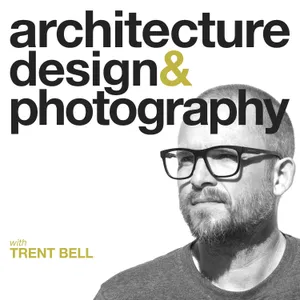
Architectural photographer Trent Bell talks creative process, inspiration and all things design with an assortment of Architects, Designers and Photographers.
Latest Episodes
The most recent episodes — sign up to get AI-powered summaries of each one.
- 2 days ago1h 16m
Ep 133 - The Psychology Behind Creativity, Design, and Storytelling // Lee Schneider
In this episode, Trent Bell sits down with Lee Schneider to explore the role storytelling plays in creativity, architecture, and the way we understand the places around us. They discuss imposter syndrome and creative confidence, why stories help communicate complex ideas, and how architects and designers can use narrative to make their work more meaningful and engaging. The conversation expands into city branding, the identity of place, and even the ways architecture can communicate ideas about culture and gender. At its core, it’s a conversation about how stories shape not only the things we create, but how we experience the world around us.About Lee: Lee Schneider draws on a multi-decade career in media-making, and education to help architects and design professionals use storytelling to transform complex concepts into projects that get funded. For more than 10 years, he has taught a popular graduate-level media-making class at the University of Southern California (USC) School of Architecture. He has taught workshops at the University of Minnesota College of Design and at Public Architecture. As the founder of Red Cup Agency, an award-winning podcast production agency, Lee has developed a storytelling masterclass called the Storyline Sessions. The award-winning author of novels, screenplays, teleplays, stage plays, and audio drama podcasts, Lee has written for Good Morning America and been a producer for Dateline NBC. He has created hit TV shows, and produced, directed, edited, and written documentaries for the History Channel, the Learning Channel, CourtTV, Discovery Health, the Food Network, and ReelzTV. Website: https://www.redcupagency.com/Personal Website: https://leeschneiderbooks.com/LinkedIn: https://www.linkedin.com/in/docuguyInstagram: https://www.instagram.com/leeschneiderbooksYouTube: @leeschneiderpodcasts
- 2 weeks ago1h 46m
Ep 132 - Reimagining Shelter: Systemic Design for Homelessness // Andrew J. Gregor
In this episode, Andrew James Gregor joins Trent Bell for a thoughtful conversation on homelessness, wealth disparity, empathy, art, and the deeper societal structures that shape American life. Together, they explore the complex roots of homelessness, including mental health, economic inequality, cultural values, and the systems that often fail to preserve human dignity. Andrew shares insights into innovative shelter models and systemic design solutions, while Trent reflects on broader questions around American culture, technology, and the growing gaps in human connection. The conversation also touches on the role of art, the importance of empathy, and the potential for AI and emerging technologies to either deepen societal harm or help create more compassionate solutions.About: Andrew James Gregor is an architect and author whose work explores the fragile systems that shape everyday life, from fear and social division to homelessness, dignity, and the meaning of shelter. Raised in Beirut and later based in the United States, Andrew brings a deeply personal and cross-cultural perspective to his writing. His debut novel, Them, examines paranoia, prejudice, and the ways fear can corrode a community, while his latest novel, Roscoe, offers a compassionate look at homelessness and how quickly stability can disappear. Alongside his writing, Andrew has spent years working in architecture and design-build construction, giving him a grounded understanding of shelter not just as a structure, but as a basic human need. More from Andrew: LinkedIn: https://www.linkedin.com/in/andrewgregor Facebook: https://www.facebook.com/bluedogconstruction Latest book - Roscoe: https://www.amazon.com/ROSCOE-Andrew-J-Gregor-ebook/dp/B0GX3771MT?ref_=ast_author_dp&th=1&psc=1 More from us: Website: www.adppodcast.com Instagram: http://instagram.com/adppod_ Apple Podcast: https://podcasts.apple.com/us/podcast/architecture-design-photography/id1447381737 Spotify: https://open.spotify.com/show/5qTtT0lpXkVGyksEkN57VS
- Jul 21, 20261h 46m
Ep 131 - Why Art Is Essential to Being Human // Suzette McAvoy
In this episode of Architecture, Design & Photography, Trent Bell sits down with curator, writer, and arts leader Suzette McAvoy. Suzette reflects on her career at the Farnsworth Art Museum and the Center for Maine Contemporary Art, along with Maine’s long history as a place where artists come to live, work, and find space to think. The conversation explores why art matters beyond beauty or market value, how it can build empathy and connection, and why some work takes time to understand. They also discuss contemporary art, creativity, spirituality, artistic risk, AI, and why artists may become even more important as technology continues to shape how we think and create. It’s a thoughtful conversation about learning to look, staying curious, and the role art plays in helping us better understand ourselves and others. About Suzette: Suzette McAvoy is an independent curator, arts writer, and art advisor with more than thirty-five years experience in the field of fine art and museums. A leading authority on the art and artists of Maine, she has curated more than sixty exhibitions throughout her career, including nationally traveling exhibitions of the work of Louise Nevelson, Kenneth Noland, Lois Dodd, Karl Schrag, Alan Magee, and Alex Katz. Website: https://www.suzettemcavoy.me Instagram: https://www.instagram.com/suzettemcavoy More from us: Website: www.adppodcast.com Instagram: http://instagram.com/adppod_ Apple Podcast: https://podcasts.apple.com/us/podcast/architecture-design-photography/id1447381737 Spotify: https://open.spotify.com/show/5qTtT0lpXkVGyksEkN57VS
- Jun 26, 20261h 13m
Ep 130 - Rick Staub on the Problem with HGTV, Pinterest & DIY Home Design
In this episode of Architecture, Design & Photography, Trent Bell welcomes back architect Rick Staub, co-founder of Your Modern Cottage and partner at Point One Architects, for their first in-studio conversation. Together, Trent and Rick explore how homeowner expectations have shifted in the age of HGTV, Pinterest, Instagram, DIY culture, and AI. They discuss the growing gap between what people think design is — often a collection of images, trends, and wish-list rooms — and what it actually requires: strategy, discipline, budget awareness, trust, and a deep understanding of how people live. Rick shares why good residential design goes far beyond aesthetics. From the emotional impact of a home to the importance of proportion, balance, natural light, privacy, flexibility, and long-term livability, he makes the case that architecture should help people feel grounded, calm, and supported in their daily lives. The conversation also touches on the value of working with architects and builders early in the process, the danger of designing from superficial trends, why budget conversations need to happen sooner, and how homeowners can become better prepared before building, renovating, or buying land. Our previous episode with Rick: https://youtu.be/gvrBtOeAzfU More from Rick Staub: Website: https://www.yourmoderncottage.com/ Instagram: https://www.instagram.com/yourmoderncottage Point One Architects: https://pointonearchitects.com/ Instagram: https://www.instagram.com/pointonearchitects/ LinkedIn: https://www.linkedin.com/in/rick-staub-7751115/ More from us: Website: www.adppodcast.com I nstagram: http://instagram.com/adppod_
- Jun 15, 20261h 41m
Ep 129 - How Spaces Shape Our Lives: Insights from Danish Kurani
In this episode of Architecture, Design & Photography, Trent Bell sits down with architect and author Danish Kurani to discuss his latest book, The Spaces That Make Us: Why Design Is Broken and How We Can Create a Happier, Healthier World. Trent and Danish explore the powerful ways architecture and environmental design shape our psychology, behavior, relationships, and overall well-being. From the spaces we grow up in to the cities we move through every day, the discuss how thoughtful design can influence how we connect, feel, and live. The Spaces That Make Us: Why Design Is Broken and How We Can Create a Happier, Healthier World: https://www.amazon.com/Spaces-That-Make-Us-Healthier/dp/1400249120 About Danish Kurani: Danish Kurani sees how buildings are failing to nourish people. After witnessing how poorly designed environments hold back people across the globe – from the middle of Manhattan to villages in India – he’s made it his mission to remake architecture for human flourishing. His groundbreaking designs for New York City, Google, and communities on four continents prove that thoughtful architecture can unlock human potential. Named one of the World’s Most Innovative Architects by Fast Company, Kurani has pioneered a human-centered approach that’s transforming lives worldwide. His work spans from floating homes in disaster-prone areas to schools in informal settlements, always focusing on one question: how can architecture solve our most pressing social challenges? A Harvard-trained architect and urban designer, Kurani’s architectural ideas have been shared at leading institutions including Stanford, MIT, Harvard, and Columbia, and featured in TIME, World Economic Forum, and the Wall Street Journal. National governments recognize him as a leading voice in social impact architecture – not because he builds beautiful buildings, but because he builds spaces that work for real people. More from Danish Kurani: Website - https://danishkurani.com Architecture Website: https://kurani.us/ LinkedIn - https://linkedin.com/in/danishkurani More from us: Website: www.adppodcast.com Instagram: http://instagram.com/adppod_
- Apr 20, 202654 min
Ep 128 - From One Truck to 25 Years: Mike Corsie on Building Terrapin Landscapes
In this episode of Architecture, Design & Photography, Trent Bell sits down with Mike Corsie of Terrapin Landscapes to talk about building a business from the ground up, evolving from lawn care into high-end design-build work, and creating landscapes that feel deeply rooted in Maine. Mike reflects on 25 years in business, the turning points that helped shape Terrapin’s identity, and the importance of craftsmanship, trust, and doing what you say you’re going to do. The conversation also explores how landscape can tie architecture to place, why native plants and stone matter, and how great outdoor spaces become part of the experience of home. They also get into the bigger picture: the realities of running a seasonal business, the pressures of creative work, the changing character of coastal Maine, and the tension between thoughtful development and preserving what makes a place feel authentic. About Terrapin Landscapes: In 2001, Terrapin consisted of Mike Corsie, a truck, and a mower. He built a network of clients in the community around his home of Kennebunkport and delivered on the promise of deeply personal, quality work. Over the years, he invested what he earned back into the business, adding equipment and building an equally committed team. He connected with clients who wanted much more than a manicured lawn and began flexing the design principles that you recognize in Terrapin today: natural stonework, native plants, careful shoreline stabilization, and an overarching sense of belonging. Today, Terrapin is recognized as one of Southern Maine’s premier landscape companies, with a full-time crew of landscapers, masons, and horticulturists, a fleet of hard earned trucks, and a gorgeous design office in Arundel, ME. More from Terrapin Landscapes: Instagram: https://www.instagram.com/terrapinlandscapes/ Website: https://terrapinlandscapes.com Facebook: https://www.facebook.com/terrapinlandscapes/ More from us: Website: www.adppodcast.com Instagram: http://instagram.com/adppod_
- Apr 3, 20261h 8m
Ep 127 - The Invention of the Future: How Cities Shape Society w/ Bruno Carvalho
In this insightful interview, Bruno Carvalho discusses the invention of the future, urban development, and the impact of technological and societal changes on cities from Lisbon to the US. Trent and Bruno explore how history, religion, law, and innovation shape our cities and societies, with a focus on creating sustainable, inclusive, and adaptable urban environments. More about is new book: THE INVENTION OF THE FUTURE: A History of Cities in the Modern World. The future has always been inextricable from urban planning. As the sea level rises and the effects of climate change become harder to ignore, plans for futuristic urban centers like Saudi Arabia’s mirrored megacity (The Line) and a floating city in the Maldives make for splashy headlines. Our modern cities—sources of greenhouse gas emissions and water pollution, overcrowding and urban sprawl—pale in comparison. Bruno Carvalho argues in THE INVENTION OF THE FUTURE that while modern-day New York City may not be designed for a period of climate emergency, its nineteenth-century architects certainly had the future in mind when laying out the plans. Carvalho details the feats of engineering that restored Lisbon after the 1755 earthquake, transformed Paris from a medieval city into a grand metropolis, and made sprawling cities like Manhattan easier to plan and develop via the implementation of a grid system. He considers how technological innovations (steel, steam-powered engines, automobiles) and social change (the abolition of slavery, the overthrow of colonial rule) led to the rapid growth and expansion of cities in the global South, from Buenos Aires to Brasilia to Lagos. The future may appear bleak from our vantage point, but “there is a lot of space for reinvention,” Carvalho writes, “and if we must reinvent, there might be no better place to look than the history of the future.”Bruno Carvalho is a professor at Harvard University, where he teaches courses on cities. He is the author of Porous City: A Cultural History of Rio de Janeiro. More from us: Website: www.adppodcast.com Instagram: http://instagram.com/adppod_ Apple Podcast: https://podcasts.apple.com/us/podcast/architecture-design-photography/id1447381737 Spotify: https://open.spotify.com/show/5qTtT0lpXkVGyksEkN57VS
- Mar 19, 20261h 46m
Ep 126 - Building an Architectural Photography Career w/ Patrick Rogers
Architectural photographer Patrick Rogers joins Trent and Tim in the studio for a wide-ranging conversation about composition, client relationships, lighting, editing, pricing, publications, and the challenge of building a sustainable creative career. This episode is full of honest insight on the craft and business of architectural photography. About Patrick: Patrick Rogers is a Massachusetts-based architectural and portrait photographer focused on capturing the relationship between people, place, and design. His work highlights not just the finished structure, but the intention, craftsmanship, and human stories behind it—often with an emphasis on sustainable and biophilic architecture. Through ongoing collaborations with architects, builders, and designers, Patrick creates imagery that supports both marketing and storytelling, helping firms consistently share their work and process. He also runs a studio in Maynard, where he photographs headshots and personal projects centered on craft and community. At the heart of his work is a simple idea: that good design—and good photography—can help people feel something lasting. More from Patrick: Website: https://www.patrickrphoto.com Instagram: https://www.instagram.com/patrickrphotos LinkedIn: https://www.linkedin.com/in/patrick-rogers-8378265/ More from us: Website: www.adppodcast.com Instagram: http://instagram.com/adppod_ Apple Podcast: https://podcasts.apple.com/us/podcast/architecture-design-photography/id1447381737 Spotify: https://open.spotify.com/show/5qTtT0lpXkVGyksEkN57VS Thanks for watching!
About Architecture, Design & Photography
Architectural photographer Trent Bell talks creative process, inspiration and all things design with an assortment of Architects, Designers and Photographers.
Customized Recaps
AI-powered recaps with compact key takeaways, quotes, and insights.
Straight to Your Inbox
Get key takeaways from Architecture, Design & Photography in a 5-minute read.
Save Hours Every Week
Stay current on your favorite podcasts without falling behind.
Frequently Asked Questions
What is Podzilla's Architecture, Design & Photography daily summary?
It's a free AI-powered email that summarizes new episodes of Architecture, Design & Photography as soon as they're published. You get the key takeaways, notable quotes, and links & mentions — all in a quick read.
How does the Architecture, Design & Photography podcast summary work?
When a new episode drops, our AI transcribes and analyzes it, then generates a personalized summary tailored to your interests and profession. It's delivered to your inbox every morning.
Is this an official Architecture, Design & Photography product?
No. Podzilla is an independent service that summarizes publicly available podcast content. We're not affiliated with or endorsed by Trent Bell.
Can I get summaries of other podcasts too?
Absolutely! The free plan covers up to 3 podcasts. Upgrade to Pro for 15, or Premium for 50. Browse our full catalog at /podcasts.
How often does Architecture, Design & Photography release new episodes?
Architecture, Design & Photography publishes biweekly. Our AI generates a summary within hours of each new episode.
What topics does Architecture, Design & Photography cover?
Architecture, Design & Photography covers topics including Business, Arts, Design, Entrepreneurship, Visual Arts. Our AI identifies the specific themes in each episode and highlights what matters most to you.
Start getting Architecture, Design & Photography summaries tomorrow morning.
Free forever for up to 3 podcasts. No credit card required.
Free forever for up to 3 podcasts. No credit card required.