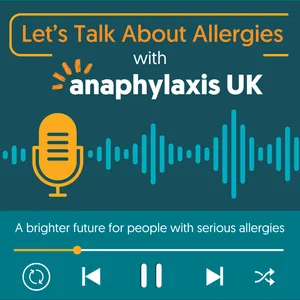
Free Daily Podcast Summary
Anaphylaxis UK: Let's Talk About Allergies: Daily Summaries Delivered
by Anaphylaxis UK
Welcome to the Anaphylaxis UK Podcast ‘Let's Talk About Allergies’, your go-to resource for all things related to serious allergies. Our episodes raise awareness about anaphylaxis, provide expert answers to common questions, and offer insights into daily life with allergies. Our goal is to educate, support and foster a sense of community, helping those with allergies feel informed and less isolated. Tune in to learn about recognising and treating anaphylaxis and living confidently with allergies.Visit our website for more resources: https://www.anaphylaxis.org.uk/
Latest Episodes
The most recent episodes — sign up to get AI-powered summaries of each one.
- 3 days ago49 min
Anxiety and allergies: Practical tools for daily life
Living with allergies goes far beyond the physical symptoms. The unseen burden - constant hyper-vigilance, endless label checks, second-guessing social situations, and the strain placed on families - can feel overwhelming. For Anaphylaxis Awareness Week, we are moving beyond the theory to focus on actionable, evidence-based tools. Clinical Psychologist James Dayer and Health Psychologist Chrissie Jones from the University of Surrey, part of our Knowledge Transfer Partnership project, join us to share practical strategies for calming allergy anxiety and building day-to-day confidence for you and your loved ones. More resources: For our previous episode on allergy anxiety and the research: https://www.youtube.com/watch?v=mwhF-LqpOV4 Our resources for adults and parents of children with allergies: https://anaphylaxis.org.uk/living-with-serious-allergies/anxiety-and-allergies/ Find a support group: https://anaphylaxis.org.uk/living-with-serious-allergies/anaphylaxis-uk-support-groups/
- 1 weeks ago1h 1m
The Invisible Load: Living with Allergies as a Young Adult
From student flat kitchen politics to backpacking in South East Asia - living with serious allergies isn't just about reading food labels, it's about the mental load and preparation that comes with it. For Anaphylaxis Awareness Week 2026, we’re shining a spotlight on what true inclusivity looks like. Living with serious allergies shouldn’t put invisible barriers in the way of university life, travel, dating, or starting a career. In this episode, our Information Officer Emilia speaks with two young guests, Jamie & Alexei, to share their best tips on self-advocacy, handling friendships, and how mates can be top-tier allies. Please note that the guests in this episode mention EpiPen as their brand of adrenaline device. There are two other brands available in the UK. These are Jext and EURneffy.Find more resources and guidance at www.anaphylaxis.org.uk For guidance on managing allergies at university, visit: https://anaphylaxis.org.uk/living-wit... For travel tips, visit: https://anaphylaxis.org.uk/living-wit...
- 1 weeks ago36 min
Beyond nut-free: Creating safer schools for children with allergies
Join Dr Adrian Sie, a leading consultant in paediatrics and allergy specialist, and Tracey Dunn, Education and AllergyWise manager, as they discuss the often misunderstood topic of nut-free schools. They’ll look at the common misconceptions made about nut-free environments and what the evidence tells us when it comes to making children safer in school. Both Adrian and Tracey share their expert perspectives on the pros and cons of nut-free environments. Whether you're a parent, teacher, or simply curious about the topic, this video offers valuable insights and information on one of the hottest debates in the allergy community. For information on allergy training for schools: https://anaphylaxis.org.uk/education/allergywise-for-schools-information/Understand Benedict’s law and prepare for the changes and what to expect: https://anaphylaxis.org.uk/education/benedicts-law/Safer Schools resources from Anaphylaxis UK: https://anaphylaxis.org.uk/education/safer-schools-programme/
- Jun 29, 202629 min
The UK National Allergy Strategy Explained | Professor Adam Fox OBE
On 20 April 2026, the UK’s first-ever National Allergy Strategy was launched — a landmark moment for millions of people living with allergic disease. Developed by the National Allergy Strategy Group, which brings together clinicians, patients, charities including Anaphylaxis UK and advocacy organisations across all four nations, the Strategy sets out a clear plan to improve allergy prevention, diagnosis, treatment and support across the UK. Its ambition is to reduce preventable harm, improve access to specialist care, tackle inequalities, and ensure allergy is recognised as the serious long-term health condition it is. But now the Strategy has been launched, what happens next? What changes could people with allergies actually see in everyday life? And how do we make sure this becomes real action?In this episode of Let’s Talk About Allergies, we’re joined by Professor Adam Fox OBE, a leading Consultant Paediatric Allergist at Evelina London Children’s Hospital, Professor of Paediatric Allergy at King’s College London, and co-founder of London’s first specialist allergy hospital, the Allergy Centre of Excellence. Adam is Chair of the National Allergy Strategy Group and one of the leading voices behind the Strategy. Adam explains what the Strategy proposes, why this moment matters, and answers some of the most common questions we’ve received from the allergy community. You can read the full National Allergy Strategy here: https://www.calameo.com/read/007980318fc08083c061b?authid=cq1m8JD4CeoH Episode highlights: 01:34 - What is the National Allergy Strategy? 04:45 - What are the biggest gaps in allergy care? 08:26 - The strategies 5 goals 10:55 - Postcode lottery 13:22 - What are the recommended changes to specialist allergy care? 14:36 - Support for parents - weaning, transition to adult services 18:10 - Research into new treatments 20:35 - Which allergic conditions are included? 21:53 - Does this affect the food sector? 23:15 - Does this affect cosmetics and medicines? 24:22 - Will this be implemented in all four nations? 26:21 - What happens next? 28:50 - How can I get involved?
- May 13, 202625 min
Weaning and Food Allergies: Common questions answered
With National Weaning Week taking place from 13–17 May, we’re revisiting one of our most popular episodes from last year, packed with practical, evidence-based advice for parents. We’ve also pulled together some of the most common allergy-specific questions into this shorter version, making it even easier for families to find the information they need.We’re joined by paediatric specialist dietitian Karen Wright, Senior Research Fellow at the University of Southampton, whose expertise in allergy spans both NHS practice and international research.Karen explains why early, regular exposure to these foods is important for allergy prevention, how to spot signs of an immediate allergic reaction in infants, and when to seek medical help. She also discusses babies who may be at higher risk of developing allergies and offers practical tips for families already managing allergies at home.For further guidance, visit our website’s Infant Weaning Guide, where you can download a step-by-step resource and access the latest recommendations from the British Society for Allergy & Clinical Immunology: https://www.anaphylaxis.org.uk/living-with-serious-allergies/infant-weaning/Episode highlights:00:56 – What is the likelihood that my child will have an allergic reaction? 01:46 – What are the best foods to introduce first? 04:22 – How often and how much of an allergen should I give my child? 06:46 – What makes a child higher risk for allergies? 08:30 – If my child is at higher risk, when should I start weaning? 10:50 – If a parent has a food allergy, is my child at higher risk? 13:23 – How can we safely wean if there are allergies in the household? 16:32 – What if my child doesn’t like the allergen? 18:45 – What’s the difference between gagging and an allergic reaction, and what should I do if I suspect a reaction? 22:15 – Does redness around the mouth indicate a reaction? 23:20 – Karen’s top tips for parents
- Apr 23, 202640 min
The emotional impact of allergies and new UK support groups
One year after launching our initiative to tackle allergy-related anxiety, funded by Knowledge Transfer Partnership (KTP) with the University of Surrey, we reflect on the progress made and what comes next.Joining us in this Let’s talk about allergies episode are Dr James Dayer Clinical Psychologist and Professor Chrissie Jones of Clinical Health Psychology at University of Surrey, who will help us dive into the research underpinning this work, and share a glimpse on the next phase of the project: the development of accessible, evidence-based resources. Built from a CBT-informed workbook, these tools aim to support people experiencing allergy-related anxiety wherever they are in the UK.We’re also joined by Vanessa Millward Group Support Coordinator and Sam Phillips (East Yorkshire Support Group facilitator), as we explore the introduction of new peer support groups designed to provide safe, understanding spaces for people affected by allergies. We discuss why these groups are needed, how they are being developed, and the steps being taken to ensure group leaders feel confident, supported, and well-equipped.Find out more about Anaphylaxis UK support groups here: https://www.anaphylaxis.org.uk/living-with-serious-allergies/anaphylaxis-uk-support-groups/
- Mar 3, 202621 min
Preparing for Secondary School with Food Allergies
First aired 11 March 2025This week, Year 6 pupils will be hearing the outcome of their chosen secondary school, and taking the next steps. Discover practical advice for managing allergies as your child makes the big move to secondary school in this episode of Let’s Talk About Allergies. Transitioning from primary to secondary education can feel daunting for families living with allergies, but with the right planning and support, your child can stay safe, confident, and fully included.We’re joined once again by Tracey Dunn, Education and AllergyWise® Manager at Anaphylaxis UK. Drawing on her experience as a former headteacher in allergy-aware schools — and as a parent of teenagers with severe allergies — Tracey shares expert insights to help families navigate this important milestone.In this episode, we explore the key differences between primary and secondary school allergy management, what parents should discuss with their child’s new school, and how to gradually encourage young people to take greater responsibility for managing their allergies with confidence.For more guidance, explore the Safer Schools Programme from Anaphylaxis UK. The programme provides schools with practical tools and resources to build best-practice allergy policies and procedures. This includes whole-school allergy awareness guidance, the AllergyWise® for Schools online training course, a model allergy policy, a downloadable allergy awareness assembly presentation, guidance on spare adrenaline pens, advice on roles and responsibilities, tackling allergy bullying, FAQs for schools, and much more.
- Nov 26, 202552 min
Childhood Food Allergy: Outgrowing, Challenging and Long-Term Tolerance
In this episode we’re joined by Professor Adam Fox OBE, and Professor Rosan Meyer. Professor Fox is a leading Consultant Paediatric Allergist at Evelina London Children’s Hospital, Professor of Paediatric Allergy at King’s College London, and co-founder of London’s first specialist allergy hospital, the Allergy Centre of Excellence. Professor Meyer is a leading Specialist Paediatric Dietitian, Senior Lecturer in Paediatrics at Imperial College London, Professor at KU Leuven and Winchester University, and founder of SBS Kidz Nutrition.Together Prof. Fox and Prof. Meyer answer the questions families and clinicians frequently ask about outgrowing food allergies. We explore what “outgrowing” really means, how likely children are to become tolerant to different foods and how age and clinical history affect those odds. We walk through the clinical pathway — referrals, testing, follow-up frequency — and explain the specialist dietitian’s role in assessment and management. We also cover the risk of recurrence and the red flags that should prompt urgent review.Prof. Meyer also offers realistic, low-cost tips for keeping foods in the diet, handling ‘may contain’ labels, managing dislikes and preventing cross-contact at home.Whether you’re a parent, carer or healthcare professional, this episode gives clear, evidence-based guidance and practical steps to help families navigate childhood allergies.
Get Anaphylaxis UK: Let's Talk About Allergies summaries in your inbox
Free AI-powered daily recaps. Key takeaways, quotes, and mentions — in a 5-minute read.
Get Free Summaries →Free forever for up to 3 podcasts. No credit card required.
You Might Also Like
Listeners also like.

Made for Health | Peptides | Lyme | Chronic Infections | Long Covid | Insulin Resistance | Hypermobility
A physician explores science-based approaches to treating chronic conditions and restoring health.
Red Pill Your Healthcast
Two healthcare providers discuss overlooked health issues and empower listeners to make informed decisions for their families.

ADHD Experts Podcast
ADHD specialists answer questions from adults and parents about managing attention deficit in school, work, and family life.
The Autoimmune Wellness Podcast
Explores managing autoimmune diseases through nutrition, lifestyle, and the Autoimmune Protocol.

The Doctor's Kitchen Podcast
A doctor explores how food and lifestyle choices impact health and well-being, with expert guests offering practical advice.

Dysregulated Kids: Science-Backed Parenting Help for Behavior, Anxiety, ADHD and More
A therapist explains the brain science behind children's behavioral and emotional challenges and offers research-based parenting strategies.

ResponseABLE Parenting
A podcast helping parents understand their reactions and develop mindful, effective strategies for raising strong-willed children.

Skincare Podcast
Explores skincare routines, acne solutions, and the emotional and holistic aspects of body care and well-being.

Unbiased Science
Dr. Jess Steier and guests analyze viral health claims using scientific evidence and explain key findings for everyday conversations.

Any Questions? and Any Answers?
Experts answer public questions on current issues, followed by audience responses.

Our Skin: A Personal Discovery Podcast
People share personal experiences with skin conditions like psoriasis and HS, discussing diagnosis, treatment, and living fully despite challenges.

Therapy in a Nutshell
A therapist breaks down research-backed mental health techniques into short, practical lessons for managing anxiety and depression.
About Anaphylaxis UK: Let's Talk About Allergies
Welcome to the Anaphylaxis UK Podcast ‘Let's Talk About Allergies’, your go-to resource for all things related to serious allergies. Our episodes raise awareness about anaphylaxis, provide expert answers to common questions, and offer insights into daily life with allergies. Our goal is to educate, support and foster a sense of community, helping those with allergies feel informed and less isolated. Tune in to learn about recognising and treating anaphylaxis and living confidently with allergies.Visit our website for more resources: https://www.anaphylaxis.org.uk/
Customized Recaps
AI-powered recaps with compact key takeaways, quotes, and insights.
Straight to Your Inbox
Get key takeaways from Anaphylaxis UK: Let's Talk About Allergies in a 5-minute read.
Save Hours Every Week
Stay current on your favorite podcasts without falling behind.
Frequently Asked Questions
What is Podzilla's Anaphylaxis UK: Let's Talk About Allergies daily summary?
It's a free AI-powered email that summarizes new episodes of Anaphylaxis UK: Let's Talk About Allergies as soon as they're published. You get the key takeaways, notable quotes, and links & mentions — all in a quick read.
How does the Anaphylaxis UK: Let's Talk About Allergies podcast summary work?
When a new episode drops, our AI transcribes and analyzes it, then generates a personalized summary tailored to your interests and profession. It's delivered to your inbox every morning.
Is this an official Anaphylaxis UK: Let's Talk About Allergies product?
No. Podzilla is an independent service that summarizes publicly available podcast content. We're not affiliated with or endorsed by Anaphylaxis UK.
Can I get summaries of other podcasts too?
Absolutely! The free plan covers up to 3 podcasts. Upgrade to Pro for 15, or Premium for 50. Browse our full catalog at /podcasts.
How often does Anaphylaxis UK: Let's Talk About Allergies release new episodes?
Anaphylaxis UK: Let's Talk About Allergies publishes monthly. Our AI generates a summary within hours of each new episode.
What topics does Anaphylaxis UK: Let's Talk About Allergies cover?
Anaphylaxis UK: Let's Talk About Allergies covers topics including Science, Medicine, Fitness, Health & Fitness, Life Sciences. Our AI identifies the specific themes in each episode and highlights what matters most to you.
Start getting Anaphylaxis UK: Let's Talk About Allergies summaries tomorrow morning.
Free forever for up to 3 podcasts. No credit card required.
Free forever for up to 3 podcasts. No credit card required.