Free Daily Podcast Summary
AMSEcast: Daily Summaries Delivered
by American Museum of Science and Energy
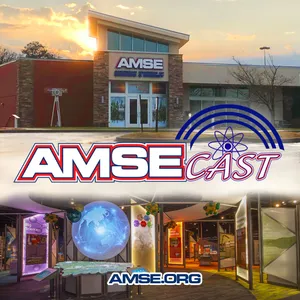
Produced from the American Museum of Science and Energy, AMSEcast invites guests from the world of science, literature, and technology to share unique perspectives from the realm of the highly trained and curiously minded.
Latest Episodes
The most recent episodes — sign up to get AI-powered summaries of each one.
- Aug 12, 202650 min
How Chemistry Shapes Us and Our World: AMSEcast with Dame Ijeoma Uchegbu
On this episode of AMSEcast, host and executive director of the American Museum of Science and Energy Alan Lowe sits with Dame Ijeoma Uchegbu to discuss her new book "Chain Reaction" and how it involves every single one of us, even you! Get a fascinating glimpse at her life leading up to what has become a fruitful career of research, science, and passion on this week's episode of AMSEcast.
- Jul 29, 202646 min
The Story Of Rapa Nui: AMSEcast with Mike Pitts
On this episode of AMSEcast, host and American Museum of Science and Energy executive director Alan Lowe sits down with Mike Pitts to discuss the history of Rapa Nui, commonly referred to as Easter Island. Although not everything can be discerned about the story of this complex and history-rich island, much of the picture can be painted!
- Jul 15, 202649 min
How Life Works: AMSEcast with Philip Ball
On this episode of AMSEcast, host and American Museum of Science and Energy executive director Alan Lowe discusses the science of life with Philip Ball, taking an in-depth dive into Ball's newest book, How Life Works: A User's Guide to the New Biology.
- Jul 2, 202625 min
The History of Trademark: AMSEcast with Jason Clark
On this episode of AMSEcast, host and American Museum of Science and Energy executive director Alan Lowe sits down with Jason Clark of the USPTO to discuss the history and the relevance of trademarks, patents, and copyrights for inventions in America to celebrate America's big 250th birthday!
- Jun 17, 202624 min
Discussing The Warhead: AMSEcast with Jeffrey Stern
On this episode of AMSEcast, host and American Museum of Science and Energy Executive Director Alan Lowe sits down with award-winning journalist Jeffrey Stern to discuss his widely successful book, "The Warhead: The Quest to Build the Perfect Weapon in the Age of Modern Warfare."
- Jun 3, 20261h 3m
Creating The Nuclear Navy: AMSEcast with Paul Cantonwine
On this episode of AMSEcast, host and American Museum of Science and Energy executive director Alan Lowe sits to chat with Paul Cantonwine, author of "The Never-Ending Challenge of Engineering: Admiral H.G. Rickover in His Own Words" to discuss the creation of the nuclear navy through the eyes of H.G. Rickover, and what his mentality might be like in today's ever-changing world.
- May 20, 202654 min
The Science of Presidency: AMSEcast with Andrew Busch
On this episode of AMSEcast, host and AMSE executive director Alan Lowe discusses the science of a presidency with Andrew Busch, the associate director and professor at the Institute of American Civics at the University of Tennessee, Knoxville. The episode goes in depth to analyze the behaviors of not only the American political system, but also its presidents, and how they have operated throughout different political climates and times in history.
- May 6, 202627 min
The Nuclear Navy: AMSEcast with Lawrence Townsend
On this episode of AMSEcast, host Alan Lowe sat down with Lawrence Townsend to discuss the past, present, and future of America's nuclear navy, including what our advancements in technology throughout the country might mean going forward.
Get AMSEcast summaries in your inbox
Free AI-powered daily recaps. Key takeaways, quotes, and mentions — in a 5-minute read.
Get Free Summaries →Free forever for up to 3 podcasts. No credit card required.
You Might Also Like
Listeners also like.
Elementary
A student-run podcast exploring a different chemical element each episode through fun facts, science games, and interviews with researchers.
Science Quickly
A bite-sized science podcast exploring discoveries with journalists and experts.
American Shoreline Podcast Network
Experts discuss coastal business, policy, science, engineering, and advocacy to inform and prepare listeners on American shoreline issues.
Astronomy Cast
Weekly discussions on astronomy topics from planets to cosmology, exploring what’s known and being discovered about the universe.
Cosmos in a Pod
Explores space, science, philosophy, and technology to reveal the wonders of the universe and humanity's place within it.
The World, the Universe and Us
Explores big scientific questions about life, consciousness, climate, and the cosmos with expert scientists and New Scientist journalists.
Modern Chemistry Podcast
Paul Orange Ph.D.
Sean Carroll's Mindscape: Science, Society, Philosophy, Culture, Arts, and Ideas
Conversations with leading thinkers exploring fundamental ideas in science, philosophy, culture, and the arts.

American Alchemy with Jesse Michels
Explores radical and unconventional ideas shaping contemporary thought.
Bringing Chemistry to Life
Talks with leading chemists about their discoveries, careers, and the science shaping our world.
The Naked Scientists Podcast
A weekly science podcast featuring news, expert interviews, experiments, and listener Q&A.
Inquiring Minds
Explores the intersection of science and society through critical thinking and in-depth analysis.
Customized Recaps
AI-powered recaps with compact key takeaways, quotes, and insights.
Straight to Your Inbox
Get key takeaways from AMSEcast in a 5-minute read.
Save Hours Every Week
Stay current on your favorite podcasts without falling behind.
Frequently Asked Questions
What is Podzilla's AMSEcast daily summary?
It's a free AI-powered email that summarizes new episodes of AMSEcast as soon as they're published. You get the key takeaways, notable quotes, and links & mentions — all in a quick read.
How does the AMSEcast podcast summary work?
When a new episode drops, our AI transcribes and analyzes it, then generates a personalized summary tailored to your interests and profession. It's delivered to your inbox every morning.
Is this an official AMSEcast product?
No. Podzilla is an independent service that summarizes publicly available podcast content. We're not affiliated with or endorsed by American Museum of Science and Energy.
Can I get summaries of other podcasts too?
Absolutely! The free plan covers up to 3 podcasts. Upgrade to Pro for 15, or Premium for 50. Browse our full catalog at /podcasts.
How often does AMSEcast release new episodes?
AMSEcast publishes biweekly. Our AI generates a summary within hours of each new episode.
What topics does AMSEcast cover?
AMSEcast covers topics including Science, Education. Our AI identifies the specific themes in each episode and highlights what matters most to you.
Start getting AMSEcast summaries tomorrow morning.
Free forever for up to 3 podcasts. No credit card required.
Free forever for up to 3 podcasts. No credit card required.