Free Daily Podcast Summary
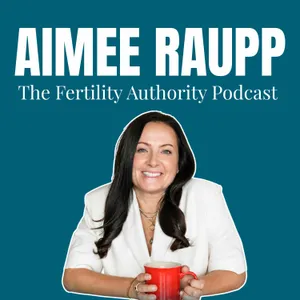
Aimee Raupp | The Fertility Authority Podcast: Daily Summaries Delivered
by Aimee Raupp
For over 21 years Aimee Raupp, MS LAc, has helped women get and stay pregnant against all odds. As a licensed acupuncturist, herbalist, functional medicine clinician, and bestselling author, Aimee brings real science, real clinical experience, and a whole lot of hope to every episode. This is The Fertility Authority. aimeeraupp.substack.com
Latest Episodes
The most recent episodes — sign up to get AI-powered summaries of each one.
- 2 days ago32 min
Fertility Hot Seat with Aimee Raupp
This is a public episode. If you'd like to discuss this with other subscribers or get access to bonus episodes, visit aimeeraupp.substack.com/subscribe
- 1 weeks ago28 min
Live Q&A with Aimee Raupp
This is a public episode. If you'd like to discuss this with other subscribers or get access to bonus episodes, visit aimeeraupp.substack.com/subscribe
- 3 weeks ago1h 0m
Naturally Pregnant at 44 After Five Miscarriages and Secondary Infertility
Beth Gulotta, host of the Quiet the Clock podcast, shares her journey from freezing her eggs at 37 and easily conceiving her first son at 39 to navigating secondary infertility, failed embryo transfers, and five miscarriages while trying for a second child. She ultimately conceived naturally at 44 and welcomed her second son.After giving birth to her first son at 40, Beth expected growing her family to be straightforward. At 42, the pressure she felt around age led her straight to the eggs she had frozen five years earlier. Those eggs produced five euploid embryos, but her first transfer did not implant, and her second ended in miscarriage.Beth began searching for answers beyond being told to keep trying. She learned she had Hashimoto’s, pursued additional uterine and immune testing, and sought out practitioners who would take her concerns seriously. Along the way, she worked with Aimee while continuing medical care, making nutrition and lifestyle changes, and developing an individualized reproductive immunology treatment plan with her doctors.While preparing for another transfer, Beth became pregnant naturally again, despite trying to avoid pregnancy that cycle. With a treatment plan already established, she and her care team moved quickly to arrange her medications and monitoring. She also speaks openly about the anxiety of pregnancy after repeated loss and the months she spent waiting to hold her son.We discuss what secondary infertility felt like after an uncomplicated first pregnancy, the emotional and financial burden of searching for answers, and why Beth began questioning the pressure to rush. She shares what it meant to have another advocate beside her, change clinics when she felt unheard, and use her platform to help other women ask questions. Her story reflects her own experience with treatment and pregnancy, rather than a prediction of anyone else’s outcome.Key Topics* Beth’s Quiet the Clock podcast began as a conversation about societal expectations and timeline anxiety, then expanded as she shared her fertility journey.* At 37, Beth froze 14 eggs while she and her partner were not yet aligned on when to have children. She describes the financial, physical, and emotional weight of that decision.* She conceived her first son quickly at 39 and gave birth at 40, which shaped her expectations about trying for another child.* When she was ready for baby number two at 42, Beth went straight to her frozen eggs because she believed using younger eggs would give her the best chance.* Beth reports that 12 eggs fertilized, eight embryos reached the blastocyst stage, and five were euploid.* Before her first transfer, she learned her TSH was elevated and began thyroid medication. The transfer did not implant, and she later learned she had Hashimoto’s.* After an impersonal experience and unclear communication at her first clinic, she moved her embryos and care to another clinic.* Her second transfer implanted, but the pregnancy ended in miscarriage at about eight weeks. Beth describes both the grief and feeling unprepared for the physical experience of the loss.* When she began asking for further investigation, Beth says she was told she needed to have more miscarriages before some practitioners would evaluate her.* She sought nutrition and functional medicine support and worked on food, supplements, lifestyle, and thyroid care. Finding an approach that suited her took time and changes in practitioners.* Beth experienced additional losses after IUI and naturally conceived pregnancies. She came to understand her immediate struggle as staying pregnant rather than becoming pregnant.* Uterine biopsies identified endometritis, and a later hysteroscopy found scar tissue. These findings prompted questions about which tests had been offered before earlier transfers.* Her third embryo transfer, in January 2025, did not implant. She then sought a clinic willing to investigate further, including reproductive immunology testing.* Aimee and Beth review the immune and clotting-related findings discussed in her report, including antiphospholipid syndrome, and how those findings informed her individualized medical care.* Beth worked with Aimee during this part of her journey and describes the value of having support while communicating with her medical team.* After five miscarriages in total, Beth was preparing for a fourth transfer when she discovered she was naturally pregnant again at 44.* Because her treatment plan was already established, Beth and her care team worked quickly to arrange medications and immune monitoring for the unexpected pregnancy.* Beth describes physician-managed treatment that included IVIG, Lovenox, and prednisone, with monitoring and medication adjustments during pregnancy.* Pregnancy after loss brought anxiety between appointm
- 3 weeks ago23 min
Fertility Hot Seat with Aimee Raupp
This is a public episode. If you'd like to discuss this with other subscribers or get access to bonus episodes, visit aimeeraupp.substack.com/subscribe
- Oct 12, 202634 min
Miracle at 44: From Five Miscarriages to a Healthy Baby Girl
Jillian shares her fertility journey from five miscarriages in three years and repeatedly being told her age was the problem to finding a more supportive medical team and giving birth to a healthy baby girl four days after her 44th birthday.After conceiving her first daughter naturally at 37 and giving birth at 38, Jillian never expected that growing her family would become so difficult. Her first miscarriage happened at 39, followed by four more early losses. An American living in Rome, she saw multiple doctors, tried prescribed treatments, and began to feel increasingly discouraged by the message that IVF or donor eggs were her only remaining options.But Jillian felt there was more to her story.At 42, she joined Aimee’s group coaching and fertility eCourse. Together, they looked more closely at her history of pregnancy loss, family history of autoimmune disease, physical symptoms, nutrition, and emotional well-being. Aimee connected her with Dr. Vidali, whose referral led Jillian to a doctor in Rome who pursued more extensive testing and identified additional immune-related findings.We discuss the fear of taking a break from trying, the emotional impact of being told you are too old, and the importance of finding practitioners who take your concerns seriously. Jillian also shares how nutrition changes, meditation, visualization, and boundaries around online fertility groups helped her feel more supported throughout the process.Jillian became pregnant at 43, approximately three months after starting the additional treatment prescribed by her specialist. With close medical monitoring and continued support, she welcomed her second daughter at 44. Her story is an honest conversation about pregnancy after loss, self-advocacy, and learning to trust yourself while finding the care you need.Key Topics* Jillian had her first daughter in 2016 after conceiving naturally at 37 and giving birth at 38.* Her first miscarriage happened at 39, beginning a period of five early pregnancy losses over approximately three years.* Although the losses happened around five or six weeks, Jillian describes them as devastating.* As an American living in Rome, she was navigating fertility care away from her home country, with the pandemic adding another layer of difficulty.* Jillian saw approximately five different OBs and repeatedly heard that her age was the main explanation for her losses.* Doctors introduced blood-thinning medication and progesterone, but Jillian experienced three further miscarriages while following that treatment approach.* A family history of autoimmune disease led Jillian to wonder whether something beyond age needed to be investigated.* Her own research introduced her to Dr. Braverman’s work, but she still felt stuck and unsure how to access the right support.* At 42, Jillian joined Aimee’s group coaching and fertility eCourse, which she describes as a turning point.* Aimee explains why Jillian’s history prompted her to seek a more detailed evaluation of possible immune-related contributors to her losses.* They paused trying to conceive while pursuing additional testing and making changes to Jillian’s nutrition and lifestyle.* Taking a break felt frightening because Jillian was already worried about time and getting older, but she also knew she needed a different approach.* Aimee connected Jillian with Dr. Vidali, whose referral helped her find a specialist in Rome.* Her new doctor ordered more extensive testing and took her concerns seriously after she had felt dismissed by other practitioners.* Jillian describes feeling discouraged by her AMH and FSH results, but says her specialist helped her stay focused on the broader treatment plan.* Aimee and Jillian review symptoms beyond fertility, including eczema, dry skin, fatigue, digestive concerns, and a history of heavy periods.* Jillian followed Aimee’s nutrition plan for approximately six months and continued it into early pregnancy.* She prepared her own bone broth and adapted the plan to the foods and supplements she could access in Italy.* Their conversation also covers supplements, acupuncture, Chinese herbs, and abdominal massage as parts of Jillian’s individual care experience.* Mindset work included noticing ways her body was supporting her and working through anger and the feeling that her body was failing.* Aimee encouraged Jillian to protect her energy and hope by setting boundaries around fertility groups that increased her fear.* Although Jillian is a therapist and coach herself, she recognized that she still needed support rather than expecting herself to figure everything out alone.* Meditation and visualization became regular practices that helped Jillian reconnect with hope during a painful period.* Additional testing identified imm
- Oct 5, 202623 min
What’s Really Behind Low AMH Part 2
What’s Really Behind Low AMH, Part 2: Real Women, Real Labs, Real ResultsIn part two of this series, Aimee Raupp takes the NLRP3 inflammation framework from part one and shows what it looks like in real women’s bodies, with real labs, real numbers, and real timelines. She shares the stories of women who were told donor eggs were their only option, then walks through one case in full detail to show exactly how she connects the pieces: thyroid, vitamin D, iron, leptin, metabolic famine, blood flow, and the emotional work that so often gets skipped.Key topics:* A quick recap of part one: AMH as a smoke detector, not a verdict* How the NLRP3 inflammasome damages the granulosa cells that make AMH* A woman with an AMH of 0.1, six failed IVFs, and five losses who got pregnant naturally at 42* A medical professional who went from six failed IVFs with zero normal embryos to two euploid embryos at 44* Why “your only option is donor eggs” is so often the wrong answer* Judy’s full case: five miscarriages, a falling AMH, and a doctor pushing donor eggs* The labs that told the real story: TSH, vitamin D, iron, and leptin* Metabolic famine: how undereating, near keto eating, and overexercising suppress fertility* Feeding your ovaries instead of your waistline* Blood flow support with acupuncture, castor oil packs, and abdominal massage* Why trauma and nervous system work are fundamental, not optional* How Judy’s AMH rose from 0.7 to 1.2, and why that wasn’t the headline* Looking back with 2026 clinical eyes: the hidden insulin resistance pattern* Why low carb isn’t right for most women in their reproductive years* An inside look at The AMH Protocol, Aimee’s new six week programTimestamps:00:00 - Welcome to The Fertility Authority01:48 - Recap of part one: AMH as a smoke detector02:16 - The NLRP3 alarm system and granulosa cells03:01 - Real women, real numbers, the same verdict03:11 - AMH of 0.1, six failed IVFs, pregnant naturally at 4204:14 - Five REs said donor eggs: two euploid embryos at 4405:45 - Different women, different numbers, same wrong answer06:26 - Judy’s story: five miscarriages and a falling AMH07:02 - The labs at the time of loss: TSH and vitamin D07:20 - Clotting factor disorder already identified and controlled07:57 - AMH dropping from 1.5 to 0.7 and the push for donor eggs08:09 - What the full picture showed: iron, blood deficiency, leptin08:54 - Near keto, skipped breakfasts, and daily intense exercise09:22 - Feeding her ovaries, not her waistline10:30 - Rebuilding her blood with food and Chinese herbs10:34 - Blood flow support: acupuncture, castor oil packs, abdominal massage10:39 - The emotional work and fertility trauma coaching11:06 - A word from Rejoova12:41 - Trauma as background noise for the nervous system13:12 - The toll on her marriage and honoring the desire13:48 - Ongoing coaching, hysteroscopy, and endometrial biopsy14:41 - Repeat labs and what improved15:15 - The email: letting go and a surprise pregnancy16:01 - AMH from 0.7 to 1.2, and why that’s not the headline16:48 - Numbers are data, not destiny17:16 - Looking back with 2026 clinical eyes: insulin resistance17:43 - Why low carb isn’t good for most women trying to conceive18:30 - The labs most women never get run18:52 - Introducing The AMH Protocol19:20 - The six weeks: diagnostics, nutrition, blood flow, mindset, supplements, integration20:04 - Daily lessons, weekly live Q&A, and private community20:23 - Enrollment details and October 12 start date21:19 - Find the fire, put it out22:00 - The DIY option: Yes, You Can Get Pregnant22:54 - Closing and how to work with AimeeResources & Links:* The AMH Protocol (enrollment closes October 10 at 11:59 PM, program begins October 12)* Fertility Lab Testing Panel* Yes, You Can Get Pregnant: Revised Edition by Aimee Raupp* The Egg Quality Diet by Aimee Raupp* Part 1: What’s Really Behind Low AMH* NLRP3 Inflammasome research* Rejoova: use code AIMEE20 for 20% off any individual supplement (not valid on bundles)Connect with Aimee Raupp:* Instagram* <a target="_blank" href="https://www.aim
- Oct 1, 202654 min
Endometriosis Beyond Pain: The Symptoms We Miss & the Impact on Fertility
Endometriosis researcher and clinical nutritionist Savannah Regensburger joins me on The Fertility Authority to discuss why endometriosis gets missed, what deserves a closer look, and how we can better support women who are still searching for answers.Savannah brings a background in neuroscience, clinical nutrition, and clinical research, along with her work as an educator, women’s health advocate, and co-founder of I Am Endometriosis. Together, we look at endometriosis through the lens of research and clinical practice, including the gaps that leave women waiting years for a diagnosis.We discuss why the conversation needs to go beyond painful periods. From painful ovulation and persistent bloating to fatigue, digestive concerns, and fertility struggles, we explore the patterns that prompt us to ask more questions—and why symptoms need to be considered in the context of the whole person.We also talk about silent endometriosis, questions around AMH and ovarian reserve, and the role of imaging and specialist evaluation. Savannah shares how her own experience navigating misdiagnoses informs the way she approaches patient education and advocacy.Our conversation covers nutrition, sleep, the nervous system, environmental exposures, and ongoing support after surgery. We discuss what it looks like to build a sustainable approach to care without turning health into another full-time job or expecting perfection.We also explore the emerging interest in GLP-1 medications and endometriosis research. Savannah shares her personal experience with physician-supervised tirzepatide use after excision surgery, and we discuss investigational treatments, unanswered questions, and the need for more research.Finally, we talk about the emotional weight of a diagnosis, finding community, and why women deserve providers who are willing to listen, investigate, and work together.Key Topics* Savannah’s background in neuroscience, clinical nutrition, and research, and how these fields shape her approach to endometriosis education.* Why believing patients and taking their concerns seriously are essential starting points in the diagnostic process.* Gaps in medical education and the challenges women face when seeking answers about endometriosis.* Looking beyond painful periods when discussing symptoms, including back pain, fatigue, painful ovulation, and persistent bloating.* Silent endometriosis and the questions that can arise when fertility challenges occur without significant period pain.* How AMH, ovarian reserve, and endometriomas enter the conversation about endometriosis and fertility.* The overlap between endo belly, digestive symptoms, celiac disease, and other conditions that may need separate evaluation.* Why Savannah considers sleep and circadian rhythm important parts of her approach to supporting health.* The emotional and physical demands of chronic illness, surgery, and fertility treatment, and the importance of nervous system support.* Building realistic nutrition and lifestyle habits while allowing room for individual needs and imperfect days.* Savannah’s experience with excision surgery and the ongoing care she describes needing afterward.* The role of pelvic MRI, ultrasound, and experienced specialists in evaluating symptoms and interpreting findings.* Savannah’s personal experience with GLP-1 medications under physician supervision, including side effects and the changes she reports noticing.* Why adequate nutrition, protein, fiber, muscle mass, and bone health remain part of the medication conversation.* Research questions around inflammation, metabolic health, and fertility, including the limitations of the evidence discussed.* Investigational endometriosis therapies and why early research needs to progress through clinical trials.* How I Am Endometriosis connects women through community, education, and advocacy.* The emotional complexity of finally receiving a diagnosis and why continued support matters.* The need for earlier recognition, better collaboration, and care that takes women’s experiences seriously.Timestamps00:00 - Welcome to The Fertility Authority01:48 - Introducing Savannah Regensburger and today’s conversation03:55 - A note about medical advice and physician guidance04:10 - The conversation with Savannah begins04:33 - From neuroscience to clinical nutrition and research06:05 - Misdiagnoses and finally receiving an endometriosis diagnosis07:48 - What could shorten the path to diagnosis?08:09 - Believing patients and discussing clinical diagnosis09:06 - Gaps in endometriosis education11:23 - Fertility concerns and looking beyond painful periods12:14 - Sponsor break: Aimee Raupp Beauty13:20 - Back pain, fatigue, and overlapping conditions13:47 - Silent endometriosis and fertility14:41 - AMH, ovarian reserve,
- Sep 24, 202619 min
Fertility Hot Seat with Aimee Raupp
This is a public episode. If you'd like to discuss this with other subscribers or get access to bonus episodes, visit aimeeraupp.substack.com/subscribe
Get Aimee Raupp | The Fertility Authority Podcast summaries in your inbox
Free AI-powered daily recaps. Key takeaways, quotes, and mentions — in a 5-minute read.
Get Free Summaries →Free forever for up to 3 podcasts. No credit card required.
You Might Also Like
Listeners also like.
Red Pill Your Healthcast
Two healthcare providers discuss overlooked health issues and empower listeners to make informed decisions for their families.

The Tamsen Show
A journalist explores health, reinvention, and relationships with experts and women reshaping their lives.

Afterpause
Evidence-based guidance on menopause, hormone health, sleep, and metabolism from a certified wellness coach and women's health experts.

Treated with Dr. Sara Szal
Dr. Sara Szal explores holistic health solutions through conversations with experts and patients seeking mind, body, and soul healing.
unPAUSED with Dr. Mary Claire Haver
A board-certified OB-GYN hosts candid discussions with experts and leaders on women's health, identity, and empowerment in midlife.

The Food Medic
Dr. Hazel Wallace

Well Beyond 40
Women in midlife and beyond explore nutrition, fitness, and mindfulness to support healthy aging.

The EMPWR Podcast
A fitness entrepreneur shares workout tips, nutrition advice, and personal stories to support holistic wellness and self-empowerment.
Live Like a Girl with Dr. Mindy Pelz
Dr. Mindy Pelz explores women's health through hormone science and wellness conversations to help women live in rhythm with their bodies.

Well with Arielle Lorre
Explores holistic wellness through candid conversations with experts in health, beauty, fitness, and personal growth.
Everyday Wellness: Midlife Hormones, Menopause, and Science for Women 35+
A nurse practitioner shares science-based strategies for managing midlife hormones, menopause, and women's health.

Culture Apothecary with Alex Clark
Experts share holistic remedies to heal cultural wounds through candid conversations on wellness, identity, and systemic change.
About Aimee Raupp | The Fertility Authority Podcast
For over 21 years Aimee Raupp, MS LAc, has helped women get and stay pregnant against all odds. As a licensed acupuncturist, herbalist, functional medicine clinician, and bestselling author, Aimee brings real science, real clinical experience, and a whole lot of hope to every episode. This is The Fertility Authority. aimeeraupp.substack.com
Customized Recaps
AI-powered recaps with compact key takeaways, quotes, and insights.
Straight to Your Inbox
Get key takeaways from Aimee Raupp | The Fertility Authority Podcast in a 5-minute read.
Save Hours Every Week
Stay current on your favorite podcasts without falling behind.
Frequently Asked Questions
What is Podzilla's Aimee Raupp | The Fertility Authority Podcast daily summary?
It's a free AI-powered email that summarizes new episodes of Aimee Raupp | The Fertility Authority Podcast as soon as they're published. You get the key takeaways, notable quotes, and links & mentions — all in a quick read.
How does the Aimee Raupp | The Fertility Authority Podcast podcast summary work?
When a new episode drops, our AI transcribes and analyzes it, then generates a personalized summary tailored to your interests and profession. It's delivered to your inbox every morning.
Is this an official Aimee Raupp | The Fertility Authority Podcast product?
No. Podzilla is an independent service that summarizes publicly available podcast content. We're not affiliated with or endorsed by Aimee Raupp.
Can I get summaries of other podcasts too?
Absolutely! The free plan covers up to 3 podcasts, any in the catalog. Basic raises that to 15, Pro to 40 and Max to 100. Browse our full catalog at /podcasts.
What topics does Aimee Raupp | The Fertility Authority Podcast cover?
Aimee Raupp | The Fertility Authority Podcast covers topics including Science, Fitness, Health & Fitness. Our AI identifies the specific themes in each episode and highlights what matters most to you.
Start getting Aimee Raupp | The Fertility Authority Podcast summaries tomorrow morning.
Free forever for up to 3 podcasts. No credit card required.
Free forever for up to 3 podcasts. No credit card required.