Free Daily Podcast Summary
Admittedly: College Admissions with Thomas Caleel: Daily Summaries Delivered
by Thomas Caleel
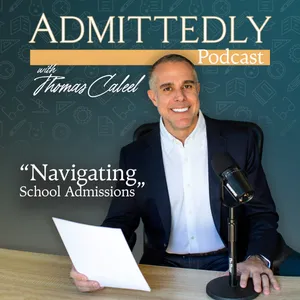
Does thinking about applying to college, grad school, or prep school make your head spin? The Admittedly Podcast is for both parents and students preparing for or navigating school admissions. We aim to demystify the admissions process and share with you what you really need to know to succeed. Our host, Thomas Caleel, former director of MBA admissions and financial aid for the Wharton School at the University of Pennsylvania, is here to help. He is a lifelong entrepreneur and CEO of a global admissions consulting agency where he works with families worldwide to help them achieve their educational goals. New episodes go live every Tuesday and Thursday. Learn from our guest speakers, live coaching sessions, and weekly solo episodes. Have admissions questions you'd like answered on the show? Apply to be coached by Thomas himself on one of our upcoming recordings. In this podcast, we don't promise easy answers or quick fixes. But with decades of experience under his belt, Thomas will address the practical aspects of applying to school and how to think like an admissions officer to improve your college or prep school application.
Latest Episodes
The most recent episodes — sign up to get AI-powered summaries of each one.
- 1 weeks ago15 min
S5E23: How to Choose Your High School Classes for College Admissions | AP, IB, A-Levels & More
🎓 Need help building your academic and college admissions strategy? Learn more about Admittedly and how our team of former Ivy+ admissions officers helps students make strategic decisions Course selection is one of the most important—and often overlooked—parts of building a competitive college application. The classes you choose don't just determine your GPA; they show admissions officers how you've challenged yourself, where your academic interests lie, and how you've taken advantage of the opportunities available to you. In this episode of The Admittedly Podcast, Thomas Caleel breaks down how students should approach course selection across AP, IB, A-Level, and other academic systems. He also explains how to think ahead from middle school through senior year—and what students can do if they realize they need to strengthen their academic trajectory or their school doesn't offer the courses they need. Key Takeaways Why course selection and academic rigor matter beyond your GPA How early academic decisions can shape your options later in high school How to approach AP, IB, A-Level, honors, and other advanced curricula Why your most rigorous courses should align with your intended academic interests How to use outside courses, community colleges, and other options to strengthen your academic trajectory What to do if you realize you're behind or made the wrong course choices Why senior year should represent the strongest point in your academic progression Conclusion There isn't one perfect high school schedule for every student. The goal is to build an academic trajectory that makes sense for your interests, your goals, and the opportunities available at your school—and to think ahead before individual course decisions limit your options. And if you haven't followed the ideal path so far, there may still be ways to strengthen it. 🎓 Need help building your academic and college admissions strategy? Learn more about Admittedly and how our team of former Ivy+ admissions officers helps students make strategic decisions around course selection, testing, extracurriculars, college lists, applications, and more. 📱 Follow Admittedly for more college admissions advice: Instagram & TikTok: @admittedlyco
- 2 weeks ago16 min
S5E24: How to Start High School the Right Way: A 9th Grade Walkthrough to College Admissions
🎓 Want help building a thoughtful high school and college admissions strategy? Learn more about Admittedly and how our team of former Ivy+ admissions officers helps students and families plan academics, extracurriculars, summers, testing, college lists, applications, and more. Freshman year isn't about building the perfect college application. It's about building the habits, academic foundation, relationships, and curiosity that will give you more options later. In this episode of The Admittedly Podcast, Thomas Caleel shares what ninth graders (and their parents) should actually be thinking about as they begin high school. From choosing rigorous courses and building relationships with teachers to exploring extracurriculars, asking for help early, and making the most of freshman summer, Thomas explains how to start strong without turning ninth grade into an admissions pressure cooker. Key Takeaways Why your ninth-grade academic choices can shape your options later in high school How to build strong relationships with teachers from day one Why freshman year is the time to explore activities How to recognize academic struggles early and ask for help before you're playing catch-up Why intellectual curiosity matters more than knowing your future major at 14 How parents can support exploration without imposing their own expectations What to start thinking about now to make freshman summer meaningful Conclusion Ninth grade is a transition, and no student needs to have everything figured out. But for students with highly selective college ambitions, drifting through freshman year isn't a strategy either. Focus on strong academic habits, explore what genuinely interests you, build relationships, ask for help when you need it, and use this year to create a foundation you can build on throughout high school. 🎓 Want help building a thoughtful high school and college admissions strategy? Learn more about Admittedly and how our team of former Ivy+ admissions officers helps students and families plan academics, extracurriculars, summers, testing, college lists, applications, and more. 📱 Follow Admittedly for more college admissions strategy: Instagram & TikTok: @admittedlyco
- 3 weeks ago24 min
S5E23: How to Approach Your College Application Essays (What Admissions Officers Notice & What to Avoid)
*]:pointer-events-auto R6Vx5W_threadScrollVars scroll-mb-[calc(var(--scroll-root-safe-area-inset-bottom,0px)+var(--thread-response-height))] scroll-mt-[calc(var(--header-height)+min(200px,max(70px,20svh)))]" dir="auto" data-turn-id= "request-698ba4c4-86c0-8332-bb91-d1ab5e770345-0" data-turn-id-container= "request-698ba4c4-86c0-8332-bb91-d1ab5e770345-0" data-testid= "conversation-turn-12" data-turn="assistant"> Get Expert Feedback on Your College Essay Not sure if your essay is ready to submit? Admittedly's Essay Review Service gives students direct, strategic feedback on their essays from experts who understand how admissions officers actually evaluate an application. Our team can help identify what's working, what's missing, and where your essay could be stronger—without rewriting it for you or replacing your voice. ✍️ Learn more about Admittedly's Essay Review Service Here - In this episode of The Admittedly Podcast, Thomas Caleel goes inside the college essay review process from an admissions officer's perspective. With admissions readers moving through thousands of applications, a "beautiful" essay isn't enough—your essays need to communicate something meaningful about who you are and make sense within the larger story of your application. Thomas breaks down the Common App personal statement, supplemental essays, additional information, and circumstances essays—and the role each should play. He also tackles some of the most common mistakes he sees, from manufactured trauma and résumé-style essays to copying successful essays, misusing AI, and letting parents over-edit a student's voice. Key Takeaways Why your essays need to support the strategy of your entire application What admissions officers are actually trying to learn from your personal essay Why great essays need a strong hook—but shouldn't start with one Common essay topics and approaches that often miss the mark How to use supplemental, additional information, and circumstances essays strategically Why copying "essays that worked" can actually make your writing less effective Where parents and AI can—and shouldn't—fit into the writing process Your college essay shou
- Aug 19, 202620 min
S5E22: Are You Taking the Right Classes? How Course Selection Shapes Your College Admissions Chances
🎓 Want help building the right admissions strategy? Learn more about Admittedly and how our team of former Ivy+ admissions officers helps students make strategic decisions around course selection, extracurriculars, testing, college lists, applications, and more. - A strong GPA only tells part of the story. In highly selective college admissions, admissions officers are also looking closely at how much you challenged yourself within the opportunities available to you. In this episode of The Admittedly Podcast, Thomas Caleel breaks down academic rigor and how families should think strategically about course selection from middle school through senior year. From AP, IB, and A-Level programs to math sequencing and intended majors, Thomas explains why individual course decisions need to be considered as part of a much longer academic trajectory. Key Takeaways Why GPA alone doesn't tell admissions officers enough How course selection can shape your options years later What "academic rigor" actually means at highly selective colleges How AP, IB, A-Level, and advanced courses factor into admissions Why your intended major should influence your academic trajectory Conclusion Academic rigor isn't about taking the hardest class simply because it exists. It's about building a thoughtful academic trajectory that demonstrates curiosity, preparation, and the ability to succeed in the field you hope to pursue. The strongest course strategy looks beyond this semester and asks: What does this choice make possible next year... and the year after that? 🎓 Learn more about Admittedly and how our team of former Ivy+ admissions officers helps students make strategic decisions around course selection, extracurriculars, testing, college lists, applications, and more. 📱 Follow Admittedly for more college admissions strategy: Instagram & TikTok: @admittedlyco
- Aug 7, 202624 min
S5E21: How College Transfer Admissions Really Work | Strategy, Timing, & What Top Schools Look For
In this episode of The Admittedly Podcast, Thomas Caleel is joined by Sonam Aidasani, Director of Product & Strategy at Admittedly and former Duke admissions officer, to break down one of the most misunderstood areas of college admissions: transferring. Is transferring actually an easier way into a highly selective college? What makes a compelling reason to transfer? And if you're already thinking about transferring before freshman year even begins, what should you be doing now? Thomas and Sonam unpack the different paths students take—from community college to four-year universities, to students realizing their current college simply isn't the right fit, to families considering transfer as a deliberate admissions strategy. They also explain why transfer admissions is its own process and why strong college grades alone aren't enough. Key Topics: The different reasons students pursue transfer admissions (and which ones make the strongest case) Why your high school transcript can still matter in transfer admissions The importance of college grades, professor relationships, recommendations, and campus involvement Why admissions officers scrutinize your reason for leaving your current institution Whether you can reuse essays from your original freshman application How SAT and ACT scores can factor into a transfer application Transfer vs. gap year: what students should consider before choosing either path Why every college's transfer policies, requirements, priorities, and credit rules need to be researched individually Considering a Transfer? Admittedly's transfer programs are designed for students preparing to apply now as well as students who are earlier in college and want to position themselves strategically for a potential transfer later. From course selection and academic performance to campus involvement, recommendations, testing, school selection, and the application itself, the decisions you make before applying can significantly shape your options. 📅 Speak with the Admittedly team about your transfer strategy: Apply for a Complimentary Strategy Call 📱 Follow Admittedly: Instagram & TikTok: @admittedlyco
- Jul 30, 202620 min
S5E20: The Middle School Advantage | How to Build the Right Foundation for College Admissions
To speak with an advisor and learn more about Admittedly's Middle School Program, book a Complimentary Strategy Call: https://admittedly.co/middle-school/ Parents often think college admissions starts in high school. In reality, many of the habits, skills, and decisions that shape a student's future begin much earlier. In this episode, Thomas Caleel explains why middle school isn't about building a college résumé... it's about building the foundation for future success. From developing study skills and exploring interests to understanding academic pathways and preparing for the transition to high school, Thomas shares how families can support students without creating unnecessary pressure. Key Takeaways Why middle school should focus on exploration. How study habits and executive functioning become long-term advantages. Why extracurricular involvement is about curiosity and discipline, not checking boxes. The importance of preparing for the transition into ninth grade. How early academic decisions can impact future course options. Why parents should guide the process without taking it over. How Admittedly's Middle School Program helps families prepare with confidence. Middle school isn't about getting ahead for the sake of getting ahead. It's about giving students the time, support, and confidence to discover who they are before the stakes get higher. A thoughtful foundation today creates more opportunities tomorrow. To speak with an advisor and learn more about Admittedly's Middle School Program, book a Complimentary Strategy Call: https://admittedly.co/middle-school/ Watch our Middle School Episode With Dr. Peggy: https://youtu.be/2pNkKqLh1CU?si=guJKzHZnroSokVIk Watch our Episode About Executive Functioning: https://youtu.be/ywv1arlTbkY?si=eYGOLSxhZ7y5lz_h Instagram & TikTok: @admittedlyco
- Jul 17, 202634 min
S5E19: Can AI Tell Your Story For You? | AI, Authenticity, & the Human Storytelling That Connect Us All
To speak with an advisor and build a smarter college admissions strategy, book a Complimentary Strategy Call at: 👉 https://admittedly.co/path-to-admissions/ In this episode of The Admittedly Podcast, Thomas Caleel is joined by internationally recognized storytelling expert, podcaster, author, and keynote speaker Gabrielle Dolan to discuss why authentic storytelling matters more than ever in the age of AI. Together, they explore how students can use storytelling to communicate who they are, why authenticity continues to stand out in competitive admissions, and where AI can (and can't) play a role in the application process. From college essays and admissions interviews to personal branding and professional communication, Thomas and Gabrielle unpack what makes stories memorable, why admissions officers connect with authenticity over perfection, and how students can leverage AI as a coach without allowing it to replace their own voice. Key Takeaways Why storytelling is becoming even more valuable in an AI-driven world. How admissions officers distinguish authentic writing from AI-generated content. The right way to use AI as a brainstorming and coaching tool. Why memorable stories are often ordinary moments told honestly. Why the strongest applications tell one cohesive story across every component. Conclusion As AI becomes increasingly common, authenticity is becoming increasingly valuable. The students who stand out aren't necessarily the ones with the most polished applications. They're the ones whose stories feel genuine, memorable, and unmistakably their own. If you're looking for guidance on essays, application strategy, or building a stronger admissions narrative, book a Complimentary Strategy Call here: 👉 https://admittedly.co/path-to-admissions/ 📱 Follow us on Instagram & TikTok: @admittedlyco 📚 Learn more about Gabrielle Dolan and her work: https://gabrielledolan.com/
- Jul 6, 202617 min
S5E18: The 6 Pillars of a Successful Common Application | The NEATER Framework
To speak with an advisor and build a smarter college admissions strategy, book a Complimentary Strategy Call at: 👉 apply.admittedly.co The Common Application is more than a collection of forms and essays; it's a strategic opportunity to tell a cohesive story about who you are and why you belong at your target colleges. In this episode of The Admittedly Podcast, Thomas Caleel introduces the Admittedly NEATER Framework, a six-part approach to building stronger college applications. He explains how narrative, extracurriculars, academics, testing, essays, and recommendation letters work together to create a compelling application (and why students who think strategically throughout the Common App often outperform equally qualified applicants who don't). Key Takeaways Why the Common Application should be approached strategically... not section by section. The six pillars of the NEATER Framework and how they work together. The role of academics, extracurriculars, testing, essays, and recommendation letters in holistic admissions. How to create an application that tells one consistent, memorable story. The strongest college applications are built by presenting a clear, intentional narrative across every part of the application. By approaching the Common App strategically, students can better communicate their interests, strengths, and potential to admissions officers. If you're looking for guidance on building a stronger application strategy, book a Complimentary Strategy Call here: 👉 apply.admittedly.co 🔗 Explore more admissions resources: https://admittedly.co/resources/ 📱 Follow us on Instagram & TikTok: @admittedlyco
About Admittedly: College Admissions with Thomas Caleel
Does thinking about applying to college, grad school, or prep school make your head spin? The Admittedly Podcast is for both parents and students preparing for or navigating school admissions. We aim to demystify the admissions process and share with you what you really need to know to succeed. Our host, Thomas Caleel, former director of MBA admissions and financial aid for the Wharton School at the University of Pennsylvania, is here to help. He is a lifelong entrepreneur and CEO of a global admissions consulting agency where he works with families worldwide to help them achieve their educational goals. New episodes go live every Tuesday and Thursday. Learn from our guest speakers, live coaching sessions, and weekly solo episodes. Have admissions questions you'd like answered on the show? Apply to be coached by Thomas himself on one of our upcoming recordings. In this podcast, we don't promise easy answers or quick fixes. But with decades of experience under his belt, Thomas will address the practical aspects of applying to school and how to think like an admissions officer to improve your college or prep school application.
Customized Recaps
AI-powered recaps with compact key takeaways, quotes, and insights.
Straight to Your Inbox
Get key takeaways from Admittedly: College Admissions with Thomas Caleel in a 5-minute read.
Save Hours Every Week
Stay current on your favorite podcasts without falling behind.
Frequently Asked Questions
What is Podzilla's Admittedly: College Admissions with Thomas Caleel daily summary?
It's a free AI-powered email that summarizes new episodes of Admittedly: College Admissions with Thomas Caleel as soon as they're published. You get the key takeaways, notable quotes, and links & mentions — all in a quick read.
How does the Admittedly: College Admissions with Thomas Caleel podcast summary work?
When a new episode drops, our AI transcribes and analyzes it, then generates a personalized summary tailored to your interests and profession. It's delivered to your inbox every morning.
Is this an official Admittedly: College Admissions with Thomas Caleel product?
No. Podzilla is an independent service that summarizes publicly available podcast content. We're not affiliated with or endorsed by Thomas Caleel.
Can I get summaries of other podcasts too?
Absolutely! The free plan covers up to 3 podcasts. Upgrade to Pro for 15, or Premium for 50. Browse our full catalog at /podcasts.
How often does Admittedly: College Admissions with Thomas Caleel release new episodes?
Admittedly: College Admissions with Thomas Caleel publishes biweekly. Our AI generates a summary within hours of each new episode.
What topics does Admittedly: College Admissions with Thomas Caleel cover?
Admittedly: College Admissions with Thomas Caleel covers topics including Education, How To. Our AI identifies the specific themes in each episode and highlights what matters most to you.
Start getting Admittedly: College Admissions with Thomas Caleel summaries tomorrow morning.
Free forever for up to 3 podcasts. No credit card required.
Free forever for up to 3 podcasts. No credit card required.