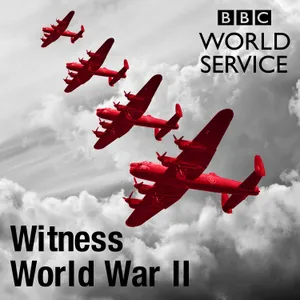
Free Daily Podcast Summary
Witness History: World War Two history: Daily Summaries Delivered
by BBC World Service
D Day, traitors and evacuees
Latest Episodes
The most recent episodes — sign up to get AI-powered summaries of each one.
- Aug 18, 202610 min
The battle of Mandalay in WW2
In March 1945, the British Fourteenth Army were advancing on the city of Mandalay in central Burma, now known as Myanmar, which was held by the Japanese Army. The army was made up of soldiers from across the British Empire, with units from the United Kingdom, India, East and West Africa all fighting side by side. The BBC’s Douglas Cleverdon accompanied those troops into battle, making what is thought to be one of the first ever radio programmes recorded from the front line of a war. Witness History is produced and presented by Tim O’Callaghan, in collaboration with the BBC Archives, using the recordings made by Cleverdon in 1945. Eye-witness accounts brought to life by archive. Witness History is for those fascinated by and curious about the past. We take you to the events that have shaped our world through the eyes of the people who were there. For nine minutes every day, we take you back in time and all over the world, to examine wars, coups, scientific discoveries, cultural moments and much more. Recent episodes explore everything from how the Excel spreadsheet was developed, the creation of cartoon rabbit Miffy and how the sound barrier was broken.We look at the lives of some of the most famous leaders, artists, scientists and personalities in history, including: the moment Reagan and Gorbachev met in Geneva, Haitian singer Emerante de Pradines’ life and Omar Sharif’s legendary movie entrance in Lawrence of Arabia.You can learn all about fascinating and surprising stories, like the invention of a stent which has saved lives around the world; the birth of the G7; and the meeting of Maldives’ ministers underwater. We cover everything from World War Two and Cold War stories to Black History Month and our journeys into space.(Photo: British Indian soldiers at the gates of Fort Dufferin in Mandalay. Credit: Official photographer/Imperial War Museums via Getty Images)
- Sep 3, 202510 min
The Chindits
During World War Two, an unconventional special force was formed. Known as the Chindits, they fought behind enemy lines in Burma, now Myanmar during 1943 and 1944 in the war against Japan.Their leader was the charismatic Orde Wingate, a British Army officer. This programme is made in collaboration with BBC Archives. It contains outdated and offensive language.Produced and presented by Gill Kearsley. Eye-witness accounts brought to life by archive. Witness History is for those fascinated by the past. We take you to the events that have shaped our world through the eyes of the people who were there. For nine minutes every day, we take you back in time and all over the world, to examine wars, coups, scientific discoveries, cultural moments and much more. Recent episodes explore everything from the death of Adolf Hitler, the first spacewalk and the making of the movie Jaws, to celebrity tortoise Lonesome George, the Kobe earthquake and the invention of superglue. We look at the lives of some of the most famous leaders, artists, scientists and personalities in history, including: Eva Peron – Argentina’s Evita; President Ronald Reagan and his famous ‘tear down this wall’ speech; Thomas Keneally on why he wrote Schindler’s List; and Jacques Derrida, France’s ‘rock star’ philosopher. You can learn all about fascinating and surprising stories, such as the civil rights swimming protest; the disastrous D-Day rehearsal; and the death of one of the world’s oldest languages.This programme has been updated since the original broadcast to add additional context.(Photo: The Chindits in 1944. Credit: Getty Images)
- Aug 4, 202510 min
Nagasaki bomb
On 9 August 1945, the United States dropped an atomic bomb on Nagasaki, Japan, killing at least 74,000 people. It led to the end of World War Two in Asia, with Japan surrendering to the Allies six days later. The Nagasaki bomb, alongside the Hiroshima bomb on 6 August, remain the only times nuclear weapons have been used in a war.In an interview he gave to the BBC in 1980, British prisoner of war Geoff Sherring describes how he survived the explosion. Produced and presented by Rachel Naylor. This programme was made in collaboration with BBC Archives. Eye-witness accounts brought to life by archive. Witness History is for those fascinated by the past. We take you to the events that have shaped our world through the eyes of the people who were there. For nine minutes every day, we take you back in time and all over the world, to examine wars, coups, scientific discoveries, cultural moments and much more. Recent episodes explore everything from the death of Adolf Hitler, the first spacewalk and the making of the movie Jaws, to celebrity tortoise Lonesome George, the Kobe earthquake and the invention of superglue. We look at the lives of some of the most famous leaders, artists, scientists and personalities in history, including: Eva Peron – Argentina’s Evita; President Ronald Reagan and his famous ‘tear down this wall’ speech; Thomas Keneally on why he wrote Schindler’s List; and Jacques Derrida, France’s ‘rock star’ philosopher. You can learn all about fascinating and surprising stories, such as the civil rights swimming protest; the disastrous D-Day rehearsal; and the death of one of the world’s oldest languages.(Photo: The Nagasaki bomb on 9 August 1945. Credit: Universal History Archive/Universal Images Group/Getty Images)
- Jun 9, 202510 min
World War Two’s Rome escape line
Between September 1943 and June 1944 in World War Two, the Italian capital Rome was occupied by German soldiers.Italy had surrendered and thousands of Allied prisoners of war had escaped from internment camps in the country. An Irish priest, Monsignor Hugh O’Flaherty, who was working for the neutral state of Vatican City set in the heart of Rome, did everything he could to help the escaped prisoners evade capture by the Nazis. Tim O’Callaghan has been speaking to his nephew – also named Hugh O’Flaherty about his uncle's life. Eye-witness accounts brought to life by archive. Witness History is for those fascinated by the past. We take you to the events that have shaped our world through the eyes of the people who were there. For nine minutes every day, we take you back in time and all over the world, to examine wars, coups, scientific discoveries, cultural moments and much more. Recent episodes explore everything from football in Brazil, the history of the ‘Indian Titanic’ and the invention of air fryers, to Public Enemy’s Fight The Power, subway art and the political crisis in Georgia. We look at the lives of some of the most famous leaders, artists, scientists and personalities in history, including: visionary architect Antoni Gaudi and the design of the Sagrada Familia; Michael Jordan and his bespoke Nike trainers; Princess Diana at the Taj Mahal; and Görel Hanser, manager of legendary Swedish pop band Abba on the influence they’ve had on the music industry. You can learn all about fascinating and surprising stories, such as the time an Iraqi journalist hurled his shoes at the President of the United States in protest of America’s occupation of Iraq; the creation of the Hollywood commercial that changed advertising forever; and the ascent of the first Aboriginal MP.(Photo: Hugh O'Flaherty. Credit: The O'Flaherty family)
- May 8, 20259 min
VE Day celebrations
The end of the Second World War in Europe came on 8 May 1945, after more than five years of conflict.British Prime Minister Winston Churchill announced that people could allow themselves "a brief period of rejoicing". Crowds in their thousands gathered outside Whitehall and Buckingham Palace.BBC correspondents, including Richard Dimbleby, capture the scenes of joy across the city - from the East End to Piccadilly Circus.This programme was produced by Simon Watts using material from the BBC Archives recorded on VE Day in 1945.It was first broadcast in 2020.Eye-witness accounts brought to life by archive. Witness History is for those fascinated by the past. We take you to the events that have shaped our world through the eyes of the people who were there. For nine minutes every day, we take you back in time and all over the world, to examine wars, coups, scientific discoveries, cultural moments and much more. Recent episodes explore everything from football in Brazil, the history of the ‘Indian Titanic’ and the invention of air fryers, to Public Enemy’s Fight The Power, subway art and the political crisis in Georgia. We look at the lives of some of the most famous leaders, artists, scientists and personalities in history, including: visionary architect Antoni Gaudi and the design of the Sagrada Familia; Michael Jordan and his bespoke Nike trainers; Princess Diana at the Taj Mahal; and Görel Hanser, manager of legendary Swedish pop band Abba on the influence they’ve had on the music industry. You can learn all about fascinating and surprising stories, such as the time an Iraqi journalist hurled his shoes at the President of the United States in protest of America’s occupation of Iraq; the creation of the Hollywood commercial that changed advertising forever; and the ascent of the first Aboriginal MP.(Photo: VE Day in London. Credit: Getty Images)
- Apr 25, 20259 min
The death of Adolf Hitler
On 30 April 1945 Adolf Hitler killed himself in a bunker in the German capital Berlin as Soviet Red Army soldiers closed in. But first he married his lover Eva Braun, and dictated his will. In 1989, Traudl Junge, one of Hitler’s secretaries who was in the bunker when he died, shared her testimony with Zina Rohan. This episode was first broadcast in 2013.Eye-witness accounts brought to life by archive. Witness History is for those fascinated by the past. We take you to the events that have shaped our world through the eyes of the people who were there. For nine minutes every day, we take you back in time and all over the world, to examine wars, coups, scientific discoveries, cultural moments and much more. Recent episodes explore everything from football in Brazil, the history of the ‘Indian Titanic’ and the invention of air fryers, to Public Enemy’s Fight The Power, subway art and the political crisis in Georgia. We look at the lives of some of the most famous leaders, artists, scientists and personalities in history, including: visionary architect Antoni Gaudi and the design of the Sagrada Familia; Michael Jordan and his bespoke Nike trainers; Princess Diana at the Taj Mahal; and Görel Hanser, manager of legendary Swedish pop band Abba on the influence they’ve had on the music industry. You can learn all about fascinating and surprising stories, such as the time an Iraqi journalist hurled his shoes at the President of the United States in protest of America’s occupation of Iraq; the creation of the Hollywood commercial that changed advertising forever; and the ascent of the first Aboriginal MP.(Photo: Adolf Hitler. Credit: Getty Images)
- Apr 21, 202510 min
Exercise Tiger: Disastrous D-Day rehearsal
In April 1944, the Allies planned Exercise Tiger to practise their landing on France's Normandy beaches ahead of D-Day. During the rehearsal, a German fleet attacked, sinking two allied ships. Around 749 US servicemen died.The Allies’ military leaders ordered troops not to discuss the disaster because they didn’t want to damage morale or give away the D-Day plans. So, Exercise Tiger was largely forgotten for decades.Ben Henderson tells the story using archive interviews with Paul Gerolstein, who was on board one of the ships that came under attack.Eye-witness accounts brought to life by archive. Witness History is for those fascinated by the past. We take you to the events that have shaped our world through the eyes of the people who were there. For nine minutes every day, we take you back in time and all over the world, to examine wars, coups, scientific discoveries, cultural moments and much more.Recent episodes explore everything from football in Brazil, the history of the ‘Indian Titanic’ and the invention of air fryers, to Public Enemy’s Fight The Power, subway art and the political crisis in Georgia. We look at the lives of some of the most famous leaders, artists, scientists and personalities in history, including: visionary architect Antoni Gaudi and the design of the Sagrada Familia; Michael Jordan and his bespoke Nike trainers; Princess Diana at the Taj Mahal; and Görel Hanser, manager of legendary Swedish pop band Abba on the influence they’ve had on the music industry. You can learn all about fascinating and surprising stories, such as the time an Iraqi journalist hurled his shoes at the President of the United States in protest of America’s occupation of Iraq; the creation of the Hollywood commercial that changed advertising forever; and the ascent of the first Aboriginal MP.This programme has been updated since the original broadcast.Archive: Exercise Tiger Memorial Ltd courtesy of Dean Small and Laurie Bolton, audio/visual maintained by Chris Kirsten of CeeVisk David FitzGerald(Photo: US troops ahead of D-Day. Credit: AP)
- Jan 16, 202510 min
'I wrote Schindler's List'
In 1980, Australian author Thomas Keneally stumbled across the story of Oskar Schindler while buying a briefcase in Beverly Hills, in the USA.The owner of the shop, a Polish Jew called Leopold Pfefferberg, told Thomas that a Nazi party member had saved him, his wife and many others from the Holocaust, by employing them in his enamel factory.Thomas tells Rachel Naylor why Oskar was such a compelling subject, full of contradictions, and why he believes his book has lasting appeal.Eye-witness accounts brought to life by archive. Witness History is for those fascinated by the past. We take you to the events that have shaped our world through the eyes of the people who were there. For nine minutes every day, we take you back in time and all over the world, to examine wars, coups, scientific discoveries, cultural moments and much more.Recent episodes explore everything from football in Brazil, the history of the ‘Indian Titanic’ and the invention of air fryers, to Public Enemy’s Fight The Power, subway art and the political crisis in Georgia. We look at the lives of some of the most famous leaders, artists, scientists and personalities in history, including: visionary architect Antoni Gaudi and the design of the Sagrada Familia; Michael Jordan and his bespoke Nike trainers; Princess Diana at the Taj Mahal; and Görel Hanser, manager of legendary Swedish pop band Abba on the influence they’ve had on the music industry. You can learn all about fascinating and surprising stories, such as the time an Iraqi journalist hurled his shoes at the President of the United States in protest of America’s occupation of Iraq; the creation of the Hollywood commercial that changed advertising forever; and the ascent of the first Aboriginal MP.(Photo: Thomas Keneally at his home in Bilgola Beach, Australia, in 1981. Credit: Martin James Brannan/Fairfax Media via Getty Images)
Get Witness History: World War Two history summaries in your inbox
Free AI-powered daily recaps. Key takeaways, quotes, and mentions — in a 5-minute read.
Get Free Summaries →Free forever for up to 3 podcasts. No credit card required.
You Might Also Like
Listeners also like.

The History Hour
A weekly compilation of recent Witness History programmes covering global historical events.
Witness History: Archive 2012
BBC World Service

The WW2 Podcast
A military history podcast exploring diverse aspects of World War II.
Witness History
First-hand accounts of pivotal historical moments, from global events to cultural milestones, told by those who lived them.
History's Heroes
Profiles real-life historical figures whose courage, innovation, or resilience changed the course of history.

Dramas
Original dramas from the BBC World Service, including stories about Japanese American soldiers in WWII and the Fukushima nuclear disaster.

The History of WWII Podcast
A biweekly deep dive into the events and people of World War II, narrated by a history enthusiast with a focus on detailed storytelling.

World War II with Tom Hanks
A narrative history of World War II exploring its causes, global battles, and lasting impact through Tom Hanks' perspective.
D-Day: The Tide Turns
Follows the personal stories of those who lived through the planning, execution, and aftermath of the 1944 Normandy landings.
WW2 Pod: We Have Ways of Making You Talk
Al Murray and James Holland examine World War II history, blending expert insight and humor on battles, leaders, and key events of the conflict.
Voices of the First World War
BBC Radio 4

Nuremberg: The Trial of the Nazi War Criminals
Dramatic reconstructions tell the Nuremberg trial through the perspectives of those who witnessed it, from interpreters to reporters.
About Witness History: World War Two history
D Day, traitors and evacuees
Customized Recaps
AI-powered recaps with compact key takeaways, quotes, and insights.
Straight to Your Inbox
Get key takeaways from Witness History: World War Two history in a 5-minute read.
Save Hours Every Week
Stay current on your favorite podcasts without falling behind.
Frequently Asked Questions
What is Podzilla's Witness History: World War Two history daily summary?
It's a free AI-powered email that summarizes new episodes of Witness History: World War Two history as soon as they're published. You get the key takeaways, notable quotes, and links & mentions — all in a quick read.
How does the Witness History: World War Two history podcast summary work?
When a new episode drops, our AI transcribes and analyzes it, then generates a personalized summary tailored to your interests and profession. It's delivered to your inbox every morning.
Is this an official Witness History: World War Two history product?
No. Podzilla is an independent service that summarizes publicly available podcast content. We're not affiliated with or endorsed by BBC World Service.
Can I get summaries of other podcasts too?
Absolutely! The free plan covers up to 3 podcasts, any in the catalog. Basic raises that to 15, Pro to 40 and Max to 100. Browse our full catalog at /podcasts.
How often does Witness History: World War Two history release new episodes?
Witness History: World War Two history publishes monthly. Our AI generates a summary within hours of each new episode.
What topics does Witness History: World War Two history cover?
Witness History: World War Two history covers topics including History, Culture, Journals, Society & Culture, Personal Journals. Our AI identifies the specific themes in each episode and highlights what matters most to you.
Start getting Witness History: World War Two history summaries tomorrow morning.
Free forever for up to 3 podcasts. No credit card required.
Free forever for up to 3 podcasts. No credit card required.