Free Daily Podcast Summary
Voices of the First World War: Daily Summaries Delivered
by BBC Radio 4
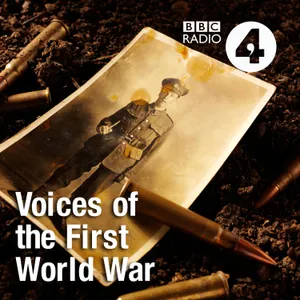
Dan Snow brings together the sound archive collections of the Imperial War Museums and the BBC to tell the story of World War I through the voices of those who were.
Latest Episodes
The most recent episodes — sign up to get AI-powered summaries of each one.
- Dec 25, 201856 min
25/12/2018
In an omnibus edition of selected programmes from the final series, Dan Snow looks at some of the key events of 1918, from the German Spring Offensive in March, to the impact that the arrival of massed American troops had on the war. In interviews recorded by the BBC and the Imperial War Museums, those who were there recall the devastation caused by the Spanish Flu epidemic from May onwards, and the rapid advances made in the autumn as the Germans retreated. Finally Dan looks at the closing moments of the war on 11th November 1918, when the armistice took effect. When 11 o'clock came, alongside relief, disbelief, and celebrations, veterans recall that there was also an empty feeling, and a looming question that seemed to trouble many of them: what were they going to do now? Presented by Dan Snow Produced by Megan Jones for BBC Wales, and then
- Nov 9, 201813 min
11 o'clock
Dan Snow presents the final episode of Voices of the First World War, veterans recall what they were doing when the armistice took effect at 11 o'clock on 11th November 1918, and how they felt now the end of the war had at last arrived. Alongside relief, disbelief, and celebrations, there was also an empty feeling, and a looming question that seemed to trouble many of them: what were they going to do now? Presented by Dan Snow Produced by Megan Jones for BBC Wales
- Nov 8, 201813 min
Mutiny in the High Seas Fleet
Dan Snow hears accounts of those who witnessed the restlessness, disorder and eventual mutiny of the sailors of the German High Seas Fleet in early November 1918, and recollections of one of the most remarkable sights in British Naval history, 10 days after the Armistice. The German Fleet, as a condition of the Armistice, surrendered to the Allies, and arrived in the Firth of Forth on the 21st. Members of the British Grand Fleet, some privileged to be above deck, some peeking through port holes, remembered a stunning sight as both fleets met off the coast of Scotland, against the backdrop of a large, red setting sun.Presented by Dan Snow Produced by Megan Jones for BBC Wales
- Nov 7, 201813 min
Open Country
'Green fields, no barbed wire, nothing…'. Those who were there recall what it felt like to be advancing at last in the autumn of 1918, after years of stalemate. After a series of assaults on the Hindenburg line, the vast system of German trenches, many remember excitement as they advanced so far they lost contact with their command. But there were pockets of fierce resistance, and an eerie feeling as they set about reclaiming abandoned villages where snipers and booby traps might lie in waiting for them. Presented by Dan Snow Produced by Megan Jones for BBC Wales
- Nov 6, 201813 min
Amiens
In August 1918 after years of disappointment, bloodshed and stalemate, Allied troops launched a surprise overwhelming attack on the German Army - a short, four day battle in which the Allied forces advanced 12 miles, more than the total advance of the Somme and Passchendaele offensives combined. Veterans recall how they did it. Presented by Dan Snow Produced by Megan Jones for BBC Wales
- Nov 5, 201813 min
Torpedo
Across 50 programmes, in a major series throughout the commemorative period, Voices of the First World War has been tracking the story of the war through archive interviews with those who experienced it, year by year. Presented by Dan Snow, the programmes have featured recollections recorded by the BBC for the Great War series in 1964, and by the Imperial War Museums for their oral history collection in the 1970s and 80s. Speakers recall in great detail, as though it were yesterday, the conditions of the trenches, the brutality of the battlefield, the experience of seeing their first casualty and hearing their first shell, their daily and nightly routines as soldiers, pilots or navy members of all ranks, and their psychological state in the face of so much trauma. In the final series of five programmes, presented by Dan Snow, we hear from those who experienced the closing stages of the war, including those present at one of its most significant turning points, the Battle of Amiens. At last breaking the deadlock of trench warfare, veterans recall the excitement of advancing rapidly though open country, and the eerie feeling of reclaiming abandoned villages where snipers and booby traps might lie waiting for them. We also hear from German officers recalling the collapse in morale from October onwards, and those present at the mutiny of the German High Seas Fleet. Finally, in ’11 o’clock’, soldiers recall how they felt at the news of the Armistice. While there were celebrations and relief, the men report that there was also disbelief, an empty feeling, and a looming question that seemed to trouble many of them: what were they going to do now? In the first episode, Brian de Courcy-Ireland recalls a torpedo strike - the prolonged, terrifying ordeal that had led to the deaths of thousands of sailors during the war: the steel hull buckled and twisted by the blast, passageways blocked, hatches jammed, lights dimmed, and the slow, unstoppable ingress of seawater... He survived without injury, but the psychological impact would reveal itself soon after, and remain with him for many years.Presented by Dan Snow Produced by Megan Jones for BBC Wales
- Apr 6, 201813 min
Enter America
Dan Snow hears the recollections of US soldiers who were sent to fight in France in 1918, and looks at the reactions of British and German soldiers to their arrival. They had received formidable physical training, but were naturally regarded as naïve by the battle-hardened 'old sweats' who'd served on the front for several years. But at the Battle of Bellau Wood, the Americans fought as tenaciously as any veteran unit, and helped to turn the tide of the war.
- Apr 5, 201813 min
Spanish Flu
It was a tragedy beyond comprehension. Soldiers who had survived the trenches, civilians who had weathered shortages and bombardment, now faced a new enemy: influenza. The virus tore through societies already weakened by war in 1918. According to one British nurse who recorded an interview with the Imperial War Museum, 'the mortuaries were so full we had the patients lying one on top of the other'. Dan Snow hears the accounts of those who survived it, from those in the front line and Prisoner of War camps, to those who were schoolchildren at the time in Britain, and were forced to look after their families and neighbours.
Get Voices of the First World War summaries in your inbox
Free AI-powered daily recaps. Key takeaways, quotes, and mentions — in a 5-minute read.
Get Free Summaries →Free forever for up to 3 podcasts. No credit card required.
You Might Also Like
Listeners also like.
In Our Time: History
BBC Radio 4

Witness History
First-hand accounts of pivotal historical moments, from global events to cultural milestones, told by those who lived them.
History's Heroes
Profiles real-life historical figures whose courage, innovation, or resilience changed the course of history.
The WW2 Podcast
A military history podcast exploring diverse aspects of World War II.

The History Hour
A weekly compilation of recent Witness History programmes covering global historical events.

Word of Mouth
BBC Radio 4
The History of WWII Podcast
A biweekly deep dive into the events and people of World War II, narrated by a history enthusiast with a focus on detailed storytelling.

A History of the World in 100 Objects
A director of the British Museum explores human history through 100 artifacts.
Witness History: World War Two history
BBC World Service
Wartime Stories
Veterans recount unexplained, terrifying, and awe-inspiring events from the battlefield and beyond.
Witness History: Archive 2012
BBC World Service
In Our Time: Culture
Discusses popular culture, poetry, music, and visual arts and their roles in society.
About Voices of the First World War
Dan Snow brings together the sound archive collections of the Imperial War Museums and the BBC to tell the story of World War I through the voices of those who were.
Customized Recaps
AI-powered recaps with compact key takeaways, quotes, and insights.
Straight to Your Inbox
Get key takeaways from Voices of the First World War in a 5-minute read.
Save Hours Every Week
Stay current on your favorite podcasts without falling behind.
Frequently Asked Questions
What is Podzilla's Voices of the First World War daily summary?
It's a free AI-powered email that summarizes new episodes of Voices of the First World War as soon as they're published. You get the key takeaways, notable quotes, and links & mentions — all in a quick read.
How does the Voices of the First World War podcast summary work?
When a new episode drops, our AI transcribes and analyzes it, then generates a personalized summary tailored to your interests and profession. It's delivered to your inbox every morning.
Is this an official Voices of the First World War product?
No. Podzilla is an independent service that summarizes publicly available podcast content. We're not affiliated with or endorsed by BBC Radio 4.
Can I get summaries of other podcasts too?
Absolutely! The free plan covers up to 3 podcasts, any in the catalog. Basic raises that to 15, Pro to 40 and Max to 100. Browse our full catalog at /podcasts.
How often does Voices of the First World War release new episodes?
Voices of the First World War publishes daily. Our AI generates a summary within hours of each new episode.
What topics does Voices of the First World War cover?
Voices of the First World War covers topics including History. Our AI identifies the specific themes in each episode and highlights what matters most to you.
Start getting Voices of the First World War summaries tomorrow morning.
Free forever for up to 3 podcasts. No credit card required.
Free forever for up to 3 podcasts. No credit card required.