Free Daily Podcast Summary
Why, Dad?: Daily Summaries Delivered
by Andrew Stolpestad, Paul Wandrey
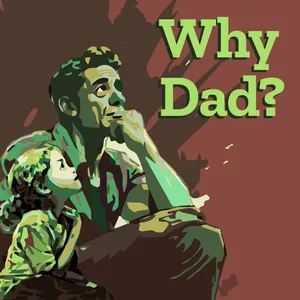
Andrew, an aspiring dad, and Paul, a dad of two, dig deep to find out what it means to be/become the best dad possible, why it matters, and how to do so.
Latest Episodes
The most recent episodes — sign up to get AI-powered summaries of each one.
- 6 days ago44 min
20 Years Later: Brotherhood, Belonging, and Going Back
Paul and Andrew are heading back to New Hampshire for their 20-year high school reunion, which means it’s time to crack open a fairly unusual chapter of their past.In this duosode, they talk about growing up together at an intensely structured all-boys Catholic boarding school, the brotherhood that developed there, and why many of those relationships still hold up two decades later.They discuss:🏕️ Going back for their 20-year reunion🤝 Why shared experiences can create lifelong friendships🧠 The strange fear of reverting to your teenage self around old friends⏰ Life inside an extremely structured boarding school😂 Some truly dumb teenage-boy stories🏠 Finding belonging after growing up homeschooled💪 The good and bad lessons they carried into adulthood👨👧👦 How your past influences you without having to define youUltimately, it’s a conversation about community, friendship, growth, and being grateful for the people who helped shape you along the way.Editor’s note: This episode was recorded before our 20-year reunion, which has since taken place.
- Aug 4, 202638 min
Duosode 56: Not Perfect-But Better Than Before.
This episode of the Why Dad? Podcast explores the pressure many men feel to become the "perfect" husband, father, and provider—and why that pursuit often misses the point. Inspired by a scene from Everybody Loves Raymond, Paul reflects on how one father's simple decision to stop repeating the physical discipline he experienced as a child created a generational shift. The conversation argues that meaningful fatherhood isn't about perfection but about intentionally improving on what we inherited. Andrew expands on that idea by emphasizing the importance of knowing who you are. Rather than letting social media, culture, or comparison define success, he argues that men need a clear set of values and convictions that guide their decisions. Identity isn't static, however; it's refined through reflection, life experience, and a willingness to question and strengthen one's beliefs over time. Together, Paul and Andrew discuss the challenge of finding space for self-reflection in a world full of distractions. Whether it's during a commute, while doing yard work, or simply allowing moments of quiet, they encourage listeners to intentionally create time to think about where they're headed and whether their daily habits align with the person they want to become. The conversation also touches on the dangers of comparison. Seeing others' careers, families, or achievements can easily lead to envy, but the hosts encourage listeners to replace resentment with admiration and curiosity. Everyone is climbing a different mountain, and the only meaningful comparison is whether you're becoming a better version of yourself than you were yesterday. Ultimately, the episode is a reminder that lasting change happens through small, intentional improvements—not overnight transformation. Whether you're a father, future father, uncle, husband, or simply a man striving to grow, your goal isn't to be perfect. It's to identify one thing you can do better than the generation before you and continue building on that foundation. By living according to your values, practicing gratitude, and making steady progress, you can create a legacy that positively impacts the people who come after you.
- Jul 21, 202644 min
Duosode 55: This one stumped us
In this episode of Why, Dad?, Andrew kicks off the conversation by asking Paul a simple question after a weekend of yard work: How important is it to teach our kids practical household skills? What begins as a discussion about landscaping and home maintenance quickly becomes a deeper conversation about fatherhood, intentionality, and the kind of men we hope to raise. Paul reflects on the tension many parents face—wanting to teach their children valuable life skills while recognizing that different seasons of life bring different priorities. Rather than focusing solely on whether children should know how to swing a hammer or operate a lawn mower, the conversation shifts toward the principles those activities develop: perseverance, problem-solving, responsibility, critical thinking, and humility. Using a role-playing game analogy, Paul explains that every man has different strengths. Just as every character in a game has a unique class and role, fathers shouldn't feel pressured to excel at everything. Some men are naturally handy, others excel financially, relationally, or professionally. The goal isn't to master every skill but to discover your strengths, continue growing, and contribute those gifts to your family and community. The conversation also explores the modern pressure to prepare children for every possible scenario. Paul and Andrew argue that no parent can equip their children for every future challenge. Instead, parents should focus on teaching their children how to think rather than simply what to know. Practical skills matter, but the ability to evaluate situations, weigh tradeoffs, solve problems, and seek help when needed will serve them for a lifetime. Throughout the discussion, the hosts emphasize the importance of balance. Whether it's maintaining a home, pursuing fitness, or raising children, striving for perfection often leads to frustration. A balanced, intentional approach—one that aligns with your family's values and your unique calling—is far more sustainable and meaningful than chasing unrealistic ideals presented on social media. The episode concludes with an invitation for every listener—whether you're a father, aspiring father, uncle, or mentor—to ask an important question: Who am I becoming, and how does that shape the people I'm leading? Ultimately, the greatest legacy we leave isn't teaching our kids how to complete every task around the house. It's helping them become capable, resilient, thoughtful people who know how to navigate life's challenges with wisdom, character, and confidence.
- Jul 14, 202645 min
Are Your Unconscious Beliefs Parenting Your Kids? | Tim Shurr
A lot of dads don’t have a motivation problem or a values problem. They have unconscious rules about responsibility, protection, and provision that keep them stuck in work mode, correction mode, or rescue mode, even when they’re home with the people they’re working so hard for. In this episode, Paul and Andrew sit down with Tim Shurr, a father, author, speaker, and expert in unconscious beliefs, to explore the hidden mental rules shaping how we parent, respond to stress, and connect with our kids. Tim explains why dads should spend less time telling children what not to do, how listening changes as kids grow older, and how parents can help children become resilient without protecting them from every painful experience. In this conversation: 🧠 How childhood beliefs become the rules governing our adult lives 👂 Why parenting older children requires more listening and less directing 🧭 How to tell children what to do instead of constantly telling them what not to do ❤️ Tim’s LUV framework: Listen, Understand, and Validate 🛡️ Why a parent’s job is not only to protect children, but to prepare them 🌱 How to intentionally build beliefs such as “I am loved,” “I am enough,” and “I can recover” 💨 Tim’s three-part resilience practice: breathe, ask better questions, and draw on useful resources 🪣 Why mindset techniques often fail when deeper unconscious beliefs remain unchanged 📱 How social media and AI can reinforce distorted stories rather than challenge them Key takeaways: • Misbehavior is often exploration, not merely defiance. • Children learn more from how their parents react than from what their parents say. • Resilience is a skill developed through repeated conversations and experiences, not a personality trait children either have or lack. • Constantly rescuing children may protect them from discomfort today while preventing them from learning how to navigate difficulty tomorrow. • Changing surface-level thoughts helps, but lasting change requires identifying the deeper beliefs driving those thoughts and behaviors. About Tim Shurr: Tim Shurr, MA, is a Mind Architect, author, speaker, father, and creator of the One Shift Away method. For nearly four decades, he has helped people identify and change the subconscious patterns influencing their performance, relationships, habits, and emotional well-being. Connect with Tim: One Belief Away Instagram LinkedIn YouTube Call to action: What is one rule you enforce with your children that you’ve never stopped to question? Share this episode with a dad who works hard for his family but sometimes struggles to leave work mode behind. Follow Why, Dad? and leave a rating or review to help more parents find these conversations.
- Jun 30, 20261h 0m
What the NBA Playoffs Taught Us About Raising Children | Fred Moss
A fake NBA news story sparked an hour-long conversation between Dr. Fred Moss and his adult son that had almost nothing to do with basketball. Instead, it became a conversation about truth, corruption, honesty, relationships, and the kind of connection every parent hopes to have with their children decades from now. We explore why lying, cheating, and stealing destroy trust, what it looks like to own your mistakes as a parent, and why the deepest father-child relationships are built through years of honest conversations—not perfect parenting. In this episode Dr. Fred Moss joins us for one of our most philosophical conversations yet. What begins as a discussion about an NBA playoff controversy quickly turns into something much bigger: truth, integrity, parenting, and how dads can build relationships that last well into adulthood. Fred shares stories about conversations with both his son and daughter, the lessons divorce taught him, why honesty matters more than being right, and how parents can repair relationships when they inevitably make mistakes. We discuss Why great conversations with your adult children don’t happen by accident How lying, cheating, and stealing quietly destroy relationships Why owning your mistakes is one of the greatest gifts a parent can give The importance of seeing every child—not just the loudest relationship Truth versus convenience in parenting and life The surprising ways sports can become conversations about humanity How AI is changing the way we think and work Resources Dr. Fred Moss Website: https://whoisdrfred.com Coaching & Programs: https://drfred360.com LinkedIn: https://www.linkedin.com/in/drfredmoss/ Facebook: https://www.facebook.com/drfredmossmd Instagram: https://www.instagram.com/drfredmoss/ Podcast: Welcome to Humanity
- Jun 23, 202638 min
A Paul Hot Take: Another Duosode
In this duosode of the Why Dad? podcast, Paul and Andrew discuss a parenting influencer whose videos sparked questions about discipline, physical punishment, and teaching children resilience. The conversation begins with an influencer who requires his young son to run suicides (sprint drills) to earn video game time and claims that raising children is "no different than training a dog." While Paul sees value in teaching responsibility and hard work, he is troubled by the comparison and by the use of physical punishment as a primary training method. Throughout the discussion, they explore several key questions: Is physical punishment an appropriate form of discipline? Should children have to "earn" privileges through difficult tasks? What's the difference between meaningful responsibility and arbitrary hardship? How do parents teach resilience without simply demanding obedience? Paul reflects on his own upbringing, acknowledging that he may sometimes overcorrect because of negative experiences with strict discipline. Andrew offers a counterbalance, noting that learning to work for rewards is an important life lesson and that children should understand that privileges are not automatic. As they unpack the issue, both agree that context and purpose matter. Teaching children responsibility, discipline, and perseverance can be valuable—but those lessons should be tied to meaningful goals rather than arbitrary demands. The biggest concern is whether a child is being taught to think and grow as a person or simply being conditioned to obey. The episode concludes with three major takeaways: Parents should regularly evaluate their boundaries and expectations to ensure they are consistent, justified, and serving a meaningful purpose. Social media rarely tells the full story, and it's important not to jump to conclusions based on short clips or limited information. Children deserve explanations, not just commands. Parents should be able to articulate why a rule, responsibility, or challenge exists rather than relying on "because I said so." Ultimately, Paul and Andrew argue that discipline should be intentional, purposeful, and aimed at developing resilient, thoughtful adults—not merely compliant children. The goal is to help kids learn how to face life's challenges while understanding the reasons behind the expectations placed upon them.
- Jun 16, 202652 min
What If Being a Better Dad Starts With Knowing Yourself?
Matthew Jandernoa believes many men know what the right thing is… but don’t really know their own hearts. In this conversation, we explore what happens when fatherhood exposes the parts of ourselves we’d rather avoid. We talk about frustration, patience, humility, comparison, healing, and why becoming a better dad starts long before becoming a dad at all. Matthew shares a powerful story from his time as a missionary that changed how he viewed himself forever, explains why “offer it up” never quite landed for him, and challenges us to stop focusing on our failures and start focusing on who we’re becoming. Along the way we discuss: 🔹 Why many fathers get trapped in self-criticism 🔹 The connection between patience and hope 🔹 How parents unintentionally teach learned helplessness 🔹 Why your children need space to struggle 🔹 The difference between trusting your heart and following every desire 🔹 How humility can actually increase life satisfaction 🔹 What it means to become the man your family needs This is a conversation about fatherhood, but it’s also a conversation about being human. Guest Matthew Jandernoa Founder of Steadfast Life, husband, father of two with a third on the way. Key Takeaways ⚡ You are not your failures. Focusing on your shortcomings creates a feedback loop that makes growth harder. ⚡ Patience is more than waiting. It’s an unwillingness to be overcome by suffering and the ability to see potential where it isn’t fully realized yet. ⚡ Children need opportunities to struggle. Constantly rescuing them teaches learned helplessness instead of resilience. ⚡ The heart contains both good desires and disordered desires. The goal isn’t suppressing the heart but helping direct it toward what is truly good. ⚡ Holiness and fatherhood aren’t destinations. They’re continual acts of returning to who you’re called to become. ⚡ Humility isn’t thinking less of yourself. It’s becoming genuinely happy when good things happen, whether or not they happen to you. Memorable Quotes “The Christian life is perpetual conversion back to God.” “Patience is an unwillingness to be overcome by sorrow.” “A good father would also be a good single person.” “The whole point of parenting is helping our kids aim what comes from the heart, not suppress it.” “Every time your wife or kids make you angry, it’s an opportunity to help them remember who they truly are.” Website: https://www.steadfastlife.net/
- Jun 9, 20261h 1m
The Final Cause of Education
Episode Summary In this episode of Why, Dad?, Paul and Andrew tackle a question every parent eventually faces: What is the real purpose of education? Starting with Paul's search for the best educational path for his children, the conversation quickly moves beyond public school vs. homeschool and into a deeper discussion about what education is actually supposed to accomplish. The hosts challenge the idea that education is simply about getting good grades, earning degrees, or preparing for a career. Instead, they explore whether true education should teach children: How to think critically How to learn independently How to pursue curiosity How to discover their unique gifts and potential How to become better human beings Along the way, they debate everything from homeschooling and public schools to trade education, college, AI, mathematics, and the difference between being "educated" and simply performing well in school. The conversation ultimately lands on a central idea: There is no one-size-fits-all educational path. The best education is the one that helps a child become the fullest version of themselves while cultivating a lifelong love of learning. For parents, the challenge isn't blindly trusting a system—it's staying engaged, asking questions, and helping their children discover how they learn best.
About Why, Dad?
Andrew, an aspiring dad, and Paul, a dad of two, dig deep to find out what it means to be/become the best dad possible, why it matters, and how to do so.
Customized Recaps
AI-powered recaps with compact key takeaways, quotes, and insights.
Straight to Your Inbox
Get key takeaways from Why, Dad? in a 5-minute read.
Save Hours Every Week
Stay current on your favorite podcasts without falling behind.
Frequently Asked Questions
What is Podzilla's Why, Dad? daily summary?
It's a free AI-powered email that summarizes new episodes of Why, Dad? as soon as they're published. You get the key takeaways, notable quotes, and links & mentions — all in a quick read.
How does the Why, Dad? podcast summary work?
When a new episode drops, our AI transcribes and analyzes it, then generates a personalized summary tailored to your interests and profession. It's delivered to your inbox every morning.
Is this an official Why, Dad? product?
No. Podzilla is an independent service that summarizes publicly available podcast content. We're not affiliated with or endorsed by Andrew Stolpestad, Paul Wandrey.
Can I get summaries of other podcasts too?
Absolutely! The free plan covers up to 3 podcasts. Upgrade to Pro for 15, or Premium for 50. Browse our full catalog at /podcasts.
How often does Why, Dad? release new episodes?
Why, Dad? publishes weekly. Our AI generates a summary within hours of each new episode.
What topics does Why, Dad? cover?
Why, Dad? covers topics including Parenting, Kids & Family, Family. Our AI identifies the specific themes in each episode and highlights what matters most to you.
Start getting Why, Dad? summaries tomorrow morning.
Free forever for up to 3 podcasts. No credit card required.
Free forever for up to 3 podcasts. No credit card required.