Free Daily Podcast Summary
Birth of a Parent: Daily Summaries Delivered
by Early Childhood Matters with Michael Feigelson
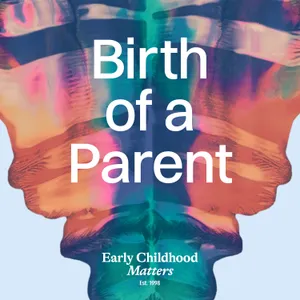
When a baby is born, a parent is born too. But what if that's more than a metaphor? Birth of a Parent explores the emerging science of how parenthood transforms the human mind. Host Michael Feigelson speaks with leading scientists, writers, and thinkers to investigate whether becoming a parent is one of life's most profound – and least understood – developmental stages.
Latest Episodes
The most recent episodes — sign up to get AI-powered summaries of each one.
- 2 weeks ago0 min
Bonus - We’re Finalists, and We Need Your Vote!
Birth of a Parent is a finalist for the Lovie and Signal Awards across 6 categories, and public voting closes October 15. Lovie: • Best New Podcast -- https://tinyurl.com/nhdkrx6k• Best Writing -- https://tinyurl.com/3292zkfuSignal: • Best Editing -- https://tinyurl.com/p9d92y3j• Documentary — https://tinyurl.com/3u6e8d5h• Family & Child-Raising -- https://tinyurl.com/26n4tftx• Thought leadership -- https://tinyurl.com/476wnue2The site asks you to create an account before you can vote.New to the show? Start with Episode 1, or with the finale, The Grandmother Hypothesis. Hosted on Acast. See acast.com/privacy for more information.
- Sep 23, 202639 min
Ep. 12 - The Grandmother Hypothesis (with Alison Gopnik)
Most species don't have grandparents. Humans do. Why? In this final episode of season one, developmental psychologist Alison Gopnik explores a strange feature of human evolution, and what it reveals about childhood, caregiving, and why raising children was never meant to be a job for parents alone.Shownotes: Much of today's conversation draws on Alison Gopnik's bestselling book The Gardener and the Carpenter, in which she argues that the purpose of parenting is not to shape children into a predetermined ideal, but to create the conditions in which children can learn, explore and flourish.The episode explores the Grandmother Hypothesis, the evolutionary theory that humans' unusually long post-reproductive lifespan evolved because grandparents helped raise children and pass knowledge across generations.Alison discusses anthropologist Michael Gurven's research on hunter-gatherer societies, which shows that complex skills such as hunting take decades to master. His work helps explain why older adults—and especially grandparents—play such an important role in passing knowledge from one generation to the next.Many of the ideas discussed build on anthropologist Sarah Blaffer Hrdy's groundbreaking book Mothers and Others, which argues that humans evolved as cooperative breeders, relying on parents, grandparents and other alloparents to raise children.Alison also reflects on anthropologist Polly Wiessner's work on the "joking relationship," suggesting that grandparents don't just preserve traditions, they also help children imagine how the world could be different.This podcast is part of the Early Childhood Matters platform by the Van Leer Foundation. Hosted on Acast. See acast.com/privacy for more information.
- Sep 16, 202643 min
Ep. 11 - The Stories We're Missing (with Franklin Leonard)
Parenthood may be one of the biggest transformations in human life. So why are there so few stories about it? Franklin Leonard, founder of The Black List, has spent his career identifying overlooked stories. In this conversation, he helps us think about one of the biggest stories we may still be struggling to tell.Shownotes: Much of today's conversation draws on Franklin Leonard's work as the founder of The Black List, the annual survey of Hollywood's most-liked unproduced screenplays, which has helped bring acclaimed films including Juno, The King's Speech and Slumdog Millionaire to the screen.Franklin reflects on Shel Silverstein's classic children's book The Giving Tree, one of the earliest stories he remembers, and one that shaped his understanding of generosity, care and what it means to give without expecting anything in return.The conversation explores why the most compelling stories capture moments of transformation. Franklin reflects on films including Juno, Lars and the Real Girl, Aftersun, Moonlight and Nightbitch, each illustrating different ways stories can challenge convention and expand our understanding of parenthood.Franklin also discusses Harvard Business School's research on The Black List, which found that films made from Black List screenplays were twice as likely to be produced and generated about 90% more box office revenue than comparable films of the same budget. Near the end of the episode, Franklin reflects on actor Alan Rickman's observation that, in uncertain times, we need stories to remind us who we are, where we come from and what might be possible.This podcast is part of the Early Childhood Matters platform by the Van Leer Foundation. Hosted on Acast. See acast.com/privacy for more information.
- Sep 9, 202644 min
Ep. 10 - The New Fatherhood Script (with Richard Reeves)
For much of history, becoming a father came with a script. Today, many of those expectations have disappeared. Richard Reeves explores what happens when old ideas about manhood no longer fit, and why fatherhood may be one of the places where a new script is still being written.Shownotes: Much of today's conversation draws on Richard Reeves' bestselling book Of Boys and Men, in which he explores the changing roles of boys and men in modern society, and why fatherhood may be more important than ever—not just for children, but for fathers themselves.Richard is the founding president of the American Institute for Boys and Men, a non-partisan think tank dedicated to the wellbeing of boys, men and families.Richard reflects on the work of sociologist Andrea Doucet, whose groundbreaking book Do Men Mother? explores the experiences of fathers as primary caregivers and asks what happens when men take on roles that have traditionally been associated with motherhood.Richard reflects on a growing body of research suggesting that becoming a father profoundly reshapes men's lives. Recent large-scale studies have found that men's rates of criminal offending begin to decline during pregnancy, even before their child is born.Richard reflects on Sylvia Ann Hewlett's book Creating a Life: Professional Women and the Quest for Children, which sparked a wider conversation about "baby hunger" – the desire to become a parent. Building on that idea, Richard argues that the longing for children is just as real for men, a theme he explores further in his essay Fathers Don’t get to have it all either.Richard discusses genetic research suggesting that, throughout much of human history, far fewer men than women passed on their genes, leaving modern humans with substantially more female than male ancestors.Richard reflects on philosopher L.A. Paul's Transformative Experience, which argues that some life events—such as becoming a parent—cannot truly be understood until they are lived.Richard reflects on journalist Jennifer Senior's observation that parenthood may bring "all joy and no happiness"—a paradox she explores in her bestselling book All Joy and No Fun. The conversation builds on her argument that while raising children is often difficult, it can also become one of life's deepest sources of purpose and meaning.This podcast is part of the Early Childhood Matters platform by the Van Leer Foundation. Hosted on Acast. See acast.com/privacy for more information.
- Sep 2, 202639 min
Ep. 9 - The Questions Without Answers (with Krista Tippett)
Why do children make ordinary things feel extraordinary again? Writer and On Being host Krista Tippett reflects on how becoming a mother transformed the way she sees the world, and why wonder may be one of parenthood's most overlooked gifts.Shownotes: Krista's long-running podcast On Being explores spirituality, ethics, science and what it means to be human.In the episode with Buddhist teacher Sylvia Boorstein Krista reflects on a conversation that reshaped how she understood humility and "new eyes."Krista reflects on the work of bioethicist Laurie Zoloth, whose writing explores what it means to remain in relationship with people who are different from us. Her ethics of encounter suggests that caring for others begins not with agreement, but with a willingness to stay present, even when relationships are difficult.This podcast is part of the Early Childhood Matters platform by the Van Leer Foundation. Hosted on Acast. See acast.com/privacy for more information.
- Aug 26, 202629 min
Ep. 8 - Is a Blade of Grass Enough? (with Nadina Galle)
Before children, a city is something you move through. After children, it's something you start to see. Ecological engineer Nadina Galle explores how parenthood reshapes our relationship with nature—and why even a blade of grass can begin to matter.Shownotes: Nadina's book The Nature of Our Cities explores how technology – from AI to sensors and satellite imagery – can help us better understand, protect and reconnect with urban nature.As a National Geographic Explorer Nadina works at the intersection of ecology, cities and technology.The Internet of Nature is Nadina's concept for using emerging technologies to map, monitor, manage and reconnect people with urban nature.The Emerald Ash Borer natural experiment is one of the strongest pieces of evidence discussed in the episode: The widespread loss of ash trees across North America and its measurable impact on human mortality.Nadina discusses BioBlitzes – community events where people work together to identify as many plants and animals as possible in a given area. These citizen science projects help monitor biodiversity while encouraging people to reconnect with the nature around them, an approach that sits at the heart of Nadina's Internet of Nature framework.Nadina discusses the Philadelphia LandCare Program, an initiative that transforms vacant lots into simple green spaces by removing debris and planting grass. A series of studies found that these low-cost interventions were associated with reductions in gun violence, improvements in mental health and stronger neighbourhood cohesion, illustrating how nature can reshape not only environments, but communities.The Belgian study on green space and children's IQ is research showing that children growing up in greener neighbourhoods scored higher on measures of cognitive development, even after controlling for socioeconomic factors.Forest bathing for postpartum mothers is the pilot programme discussed by Nadina, exploring how guided nature experiences may improve maternal wellbeing, sleep and parent–infant bonding.This podcast is part of the Early Childhood Matters platform by the Van Leer Foundation. Hosted on Acast. See acast.com/privacy for more information.
- Aug 19, 202632 min
Ep. 7 - The World’s Best Managers (with Emily Oster)
Every parent eventually becomes the CEO of a small, chaotic organization. Economist and data expert Emily Oster explains what parenting can teach us about decision-making, leadership, and why good management matters more than perfect answers.Shownotes: Much of today's conversation draws on Emily Oster's book The Family Firm, in which she argues that families can benefit from applying principles of good management – such as deliberate decision-making, clear communication and long-term planning – to everyday family life.The episode also touches on Emily's earlier bestselling books, Expecting Better and Cribsheet, which introduced millions of parents to her evidence-based approach to pregnancy and the early years of parenting.Emily reflects on taking part in developmental psychologist Katherine Nelson's research as a child. Nelson's pioneering work explored how conversations between parents and children shape language, memory and the development of autobiographical identity.When discussing negotiation and conflict, Michael references Getting to Yes, the classic book developed through the Harvard Negotiation Project, whose ideas continue to influence negotiation in diplomacy, business and everyday life.This podcast is part of the Early Childhood Matters platform by the Van Leer Foundation. Hosted on Acast. See acast.com/privacy for more information.
- Aug 12, 202641 min
Ep. 6 - The Illusion of Knowing (with Lulu Miller)
The human brain loves a good explanation. Parenthood has other plans. Science journalist and Radiolab host Lulu Miller explores why we are so determined to make sense of the world, and what happens when life refuses to fit the story.Shownotes: Much of today's conversation draws on Lulu Miller's bestselling book Why Fish Don't Exist, a meditation on our deep human desire to impose order on the natural world, and why embracing uncertainty may ultimately be more liberating.Lulu reflects on the life of David Starr Jordan, the pioneering ichthyologist whose lifelong quest to classify every species of fish became the starting point for Why Fish Don't Exist. His story ultimately led Lulu to explore the promises – and dangers – of our desire to impose order on a messy world.Lulu also reflects on The Eleventh Word, her essay for The Paris Review, in which she explores how her son's first words reshaped the way she thinks about language, parenthood and our illusion of understanding the world.Many of the ideas in this episode continue in Terrestrials, Lulu's award-winning podcast for children, where science, storytelling and play invite young listeners to stay curious about the natural world. For Father's Day, Lulu teamed up with Michael Feigelson for a special episode exploring the surprising diversity of fatherhood in the animal kingdom – from seahorses and poison dart frogs to owl monkeys – and what these stories can teach us about human dads.This podcast is part of the Early Childhood Matters platform by the Van Leer Foundation. Hosted on Acast. See acast.com/privacy for more information.
Get Birth of a Parent summaries in your inbox
Free AI-powered daily recaps. Key takeaways, quotes, and mentions — in a 5-minute read.
Get Free Summaries →Free forever for up to 3 podcasts. No credit card required.
You Might Also Like
Listeners also like.

Parenting is a Joke
Comedians share candid stories about parenting and childhood, exploring the chaos and humor of raising kids while questioning if they’re truly fine.

Raising Parents with Emily Oster
An economist examines data-driven approaches to modern parenting challenges, from child independence to teen mental health.

After Bedtime with Big Little Feelings
Honest conversations about modern parenting challenges with practical advice and emotional support from experienced guides.

Raising Good Humans
A developmental psychologist discusses evidence-based parenting approaches with experts and parents to support raising resilient, empathetic children.

Parenting With Psychology
A clinical psychologist offers practical parenting advice based on psychological research to help families manage challenges and strengthen relationships.
Good Inside with Dr. Becky
A clinical psychologist provides practical guidance for handling common parenting challenges and improving parent-child relationships.

Two Parents & A Podcast
Two parents navigate raising kids, building a relationship, and tackling topics from entrepreneurship to dental industry critiques.
Care and Feeding | Slate's parenting show
Parents discuss real-life challenges and solutions for raising children from toddlers through teens.

The Whinypaluza Podcast
A parenting podcast offering advice and support through expert interviews on raising children, marriage, and family life.

Focus on the Family Parenting Podcast
A Christian parenting podcast offering practical advice and faith-based encouragement for raising children from toddlers to teens.

The ManFlu | Exploring Gender Dynamics, Partnerships & Raising Boys Who Care
Explores gender roles, emotional labor, and parenting to foster equitable partnerships and raise emotionally connected boys.
Life Kit: Parenting
Practical parenting advice based on science and expert insights to help navigate challenges of raising children.
About Birth of a Parent
When a baby is born, a parent is born too. But what if that's more than a metaphor? Birth of a Parent explores the emerging science of how parenthood transforms the human mind. Host Michael Feigelson speaks with leading scientists, writers, and thinkers to investigate whether becoming a parent is one of life's most profound – and least understood – developmental stages.
Customized Recaps
AI-powered recaps with compact key takeaways, quotes, and insights.
Straight to Your Inbox
Get key takeaways from Birth of a Parent in a 5-minute read.
Save Hours Every Week
Stay current on your favorite podcasts without falling behind.
Frequently Asked Questions
What is Podzilla's Birth of a Parent daily summary?
It's a free AI-powered email that summarizes new episodes of Birth of a Parent as soon as they're published. You get the key takeaways, notable quotes, and links & mentions — all in a quick read.
How does the Birth of a Parent podcast summary work?
When a new episode drops, our AI transcribes and analyzes it, then generates a personalized summary tailored to your interests and profession. It's delivered to your inbox every morning.
Is this an official Birth of a Parent product?
No. Podzilla is an independent service that summarizes publicly available podcast content. We're not affiliated with or endorsed by Early Childhood Matters with Michael Feigelson.
Can I get summaries of other podcasts too?
Absolutely! The free plan covers up to 3 podcasts. Upgrade to Pro for 15, or Premium for 50. Browse our full catalog at /podcasts.
How often does Birth of a Parent release new episodes?
Birth of a Parent publishes weekly. Our AI generates a summary within hours of each new episode.
What topics does Birth of a Parent cover?
Birth of a Parent covers topics including Education, Fitness, Parenting, Health & Fitness, Kids & Family, Mental Health. Our AI identifies the specific themes in each episode and highlights what matters most to you.
Start getting Birth of a Parent summaries tomorrow morning.
Free forever for up to 3 podcasts. No credit card required.
Free forever for up to 3 podcasts. No credit card required.