Welcome to this episode of What Follows - the podcast where we explore the people shaping aviation today, and the ideas defining what comes next.In this episode, host Nate Thuli speaks with David “Dave” Edwards, Chief Executive of the Royal Aeronautical Society, about a life in aviation and the responsibility of leading one of the world’s oldest aerospace institutions. Dave traces his path from earning a pilot’s license at 17 through roles spanning airlines, business aviation, charter operations, Gama Aviation, Wheels Up, and Qatar Executive.The conversation looks back to the Royal Aeronautical Society’s founding in 1866, when questions about bird flight and aerial navigation pointed toward a future that had not yet arrived. Dave identifies the moments that changed aerospace, from powered flight and global navigation to systems management, space exploration, automation, and artificial intelligence. His central lesson is that innovation rarely moves in a straight line: ideas return when technology, economics, regulation, and public trust are finally ready.Nate and Dave also examine what greater autonomy could mean for pilots, passengers, and the wider aviation system. They discuss the difference between technical capability and public acceptance, why safety and trust must develop alongside automation, and how humans and machines may share responsibility in future flight operations.The episode closes by turning from history to stewardship. Dave explains why the future of aerospace depends on giving young people access, inspiration, and room to create their own defining moments. From Kitty Hawk to the next breakthrough in aviation or space, progress continues when one generation is prepared to pass the torch to the next.Key TopicsEarning a pilot’s license at 17 and building a career across commercial and business aviationLeadership at the Royal Aeronautical Society and the responsibility of stewarding a 160-year institutionThe Society’s 1866 origins in questions about bird flight and aerial navigationMajor inflection points in aerospace history and the conditions that made them possibleThe evolution from direct aircraft control to navigation, automation, and systems managementCurrent innovations shaping the future of aviation and aerospaceThe expanding role of space exploration within the aerospace imaginationArtificial intelligence, automation, and the future division of responsibility in flightThe gap between technological capability, regulatory acceptance, and passenger trustHuman-machine collaboration in safety-critical environmentsWhy older aerospace ideas often return when enabling technologies catch upKitty Hawk as a reminder that transformative moments can initially appear modestCreating access and inspiration for the next generation of aerospace professionalsKey FrameworksAerial Navigation Evolution: aerospace progressed from the challenge of controlling flight to navigating, coordinating, and managing increasingly complex systemsTechnology Adoption Curve in Aerospace: invention alone is insufficient; certification, economics, infrastructure, safety evidence, and public trust determine when an idea becomes operational realityHuman-Machine Collaboration: automation is most credible when roles, accountability, oversight, and intervention are clearly designedCircular Innovation: concepts can disappear and return as materials, computing, energy systems, regulation, or market conditions changeInstitutional Stewardship: the value of a long-lived professional society lies in preserving knowledge while creating pathways for the people who will surpass itThemesThis episode treats aerospace history as a living source of perspective rather than a museum of completed achievements. The Royal Aeronautical Society began before powered flight, when even the language of aerial navigation was aspirational. Dave’s account shows how professional communities help difficult questions survive long enough for science, engineering, and society to answer them.A second theme is that technological readiness and human readiness are different. AI may be capable of performing more flight-deck functions, but capability does not automatically create confidence. Trust emerges through evidence, transparency, regulation, experience, and a clear understanding of where responsibility sits when systems make decisions.The conversation also presents innovation as cyclical. Aerospace repeatedly revisits ideas that once exceeded the available technology or business case. What appears new may be an older ambition made practical by better computing, materials, propulsion, navigation, or infrastructure. Recognizing that pattern helps distinguish enduring problems from temporary hype.Finally, Da
Podzilla Summary coming soon
Sign up to get notified when the full AI-powered summary is ready.
Free forever for up to 3 podcasts. No credit card required.
Listen to This Episode
More from What Follows
Andrew Broom on Innovation, Safety, and the Future of Business Aviation
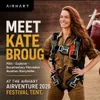
Meet Kate Broug at AirVenture Oshkosh 2026
Aircraft Financing: Learn from an Industry Insider at EAA AirVenture 2026
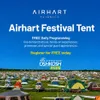
Airhart Oshkosh 2026 Festival Tent Program
Get summaries like this every morning.
Free AI-powered recaps of What Follows and your other favorite podcasts, delivered to your inbox.
Free forever for up to 3 podcasts. No credit card required.