Free Daily Podcast Summary
Weight & Measure: Daily Summaries Delivered
by Michael Donnelly-Boylen and Zach Niemiec
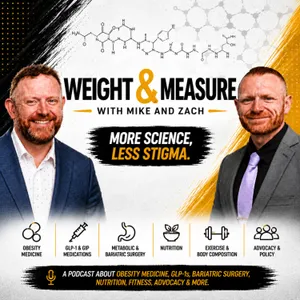
Weight & Measure with Mike and Zach is an obesity podcast featuring conversations with patients, obesity medicine physicians, metabolic & bariatric surgery experts, researchers, dietitians, and advocates. We explore GLP-1 medications, obesity management medications (OMMs), weight loss medications, bariatric surgery, nutrition, body composition, obesity research, patient advocacy, insurance access, and long-term obesity treatment. Every episode combines lived experience with clinical expertise to support patients and healthcare professionals.
Latest Episodes
The most recent episodes — sign up to get AI-powered summaries of each one.
- Today10 min
Can GLP-1s Change How a Mammogram Looks? | Obesity Research Roundup
Can GLP-1s change how a mammogram looks? In this November 27 edition of the Weight & Measure Research Roundup, Zach unpacks a preliminary conference study that found changes in breast density on mammograms after GLP-1 treatment. What might explain the change, and what can an image tell us about cancer risk? Jump to 07:06 for this segment. The study did not establish that GLP-1 medications increase breast cancer risk.Zach also looks at what happened 10 years after sleeve gastrectomy with and without an added ring. The study found no clear difference in weight loss, but the leading reasons people needed another operation differed: weight recurrence after standard sleeve and regurgitation after sleeve with a ring.Plus: What happened when 17 adults receiving dialysis switched from semaglutide to tirzepatide, and what a study on meal timing after bariatric surgery might tell us about getting enough protein.Chapters & Sources00:00 Welcome to Weight & Measure00:12 What does success look like 10 years after sleeve surgery?01:00 Standard sleeve vs. sleeve with a ring: the 10-year results03:08 Switching from semaglutide to tirzepatide while on dialysis04:47 Meal timing and protein after bariatric surgery07:06 GLP-1s, mammograms, and breast density09:30 The one paper Zach recommends reading GLP-1 treatment and breast density on mammograms — RSNA, November 24 · Preliminary conference findingsTen-year outcomes after sleeve gastrectomy with and without a ring — Obesity Surgery, November 25Switching from semaglutide to tirzepatide in adults receiving dialysis — Diabetes, Obesity and Metabolism, November 23Meal timing in the first year after bariatric surgery — Obesity Surgery, November 23Find more episodes and research at WeightAndMeasurePod.com.
- 4 days ago30 min
GLP-1s for Kids? New Semaglutide & Tirzepatide Trials | Discovery to Impact: What Patients Measure
Discovery to Impact: What Patients MeasureA special Weight & Measure series produced in collaboration with The Obesity Society.Could new obesity medications change the trajectory of childhood obesity?At ObesityWeek 2026 in Washington, D.C., two major clinical trials are generating important conversations about the future of pediatric obesity care.STEP Young investigated semaglutide in children ages 6–11, while SURMOUNT Adolescents studied tirzepatide in teenagers. Both trials reported substantial reductions in BMI, raising important questions about treatment effectiveness, safety, childhood development, and what earlier intervention could mean for the next generation.In the premiere episode of Discovery to Impact: What Patients Measure, Mike and Zach sit down with Dr. Aaron Kelly, Professor of Pediatrics at the University of Minnesota and lead author of SURMOUNT Adolescents, to explore these findings and their implications for patients and families.Drawing on their own experiences growing up with childhood obesity, Mike and Zach explore what it could mean for children today to have treatment options that were unavailable to previous generations.STEP Young: What a 13.5% average BMI reduction with semaglutide could mean for children ages 6–11.SURMOUNT Adolescents: How tirzepatide produced an average 18.5% BMI reduction over 72 weeks and improved measures beyond weight.Safety and development: What researchers know about gastrointestinal side effects, growth velocity, puberty, and the unanswered questions surrounding long-term treatment.Beyond the scale: Why physical comfort, cardiometabolic health, and quality of life matter when evaluating treatment success.Medication versus intensive lifestyle treatment: A head-to-head study comparing semaglutide plus lifestyle support with intensive behavioral treatment alone.Access and affordability: Why losing coverage for effective obesity treatment can have significant consequences, especially for adolescents.The future of pediatric obesity medicine: What needs to happen before emerging clinical evidence translates into accessible treatment options for families.Clinical trial results are only the beginning.Dr. Kelly explains why pediatric obesity treatment requires careful monitoring, shared decision-making, and a better understanding of obesity as a chronic, biologically driven disease.The conversation also addresses one of the most important challenges facing families: ensuring that scientific progress leads to meaningful, sustainable access to care.For parents who have spent years navigating stigma, frustration, and limited treatment options, these discoveries offer a reason for hope.Dr. Aaron Kelly is a Professor of Pediatrics at the University of Minnesota and a leading researcher in pediatric obesity medicine. His research focuses on developing and evaluating treatments for children and adolescents living with obesity, including clinical trials of obesity management medications.Produced in collaboration with The Obesity Society, this special Weight & Measure series brings emerging research, expert perspectives, and important conversations from ObesityWeek 2026 to a broader audience.Mike and Zach speak with leading researchers and clinicians to explore what new discoveries mean for patients, healthcare professionals, and the future of obesity care.Because scientific discovery only matters when patients can feel its impact.More Science. Less Stigma.Subscribe for more conversations about obesity science, obesity management medications (OMMs), metabolic and bariatric surgery, and patient-centered care.Website: https://weightandmeasurepod.comYouTube:https://www.youtube.com/@WeightandMeasurePodcastThis episode is for educational purposes and is not a substitute for individualized medical advice. Medication decisions for children and adolescents should be made with qualified healthcare professionals.
- 6 days ago10 min
What’s New in Obesity Treatment? GLP-1 Research, Bariatric Surgery & Access to Care| Research Round Up 11.21.2026
What do new semaglutide and tirzepatide trials tell us about treating obesity in children and teenagers? And what does better obesity care look like after surgery—or when insurance coverage stands in the way?In this Weight & Measure Research Roundup, Zach breaks down four publications following ObesityWeek 2026, explaining the findings, their limitations, and what they could mean for patients and families.We explore STEP Young, which studied semaglutide in children ages 6–11, and SURMOUNT-ADOLESCENTS, which evaluated tirzepatide in adolescents ages 12–17. Zach explains why BMI reduction differs from body weight reduction and why results from separate trials cannot establish which medication works better.The episode also examines weight recurrence after metabolic & bariatric surgery, the evolving role of Obesity Management Medications (OMMs), and the JAMA Summit Report’s proposals for improving access to comprehensive care.In this episodeSemaglutide in children: STEP Young results and remaining questionsTirzepatide in adolescents: BMI changes, physical comfort, and tolerabilityWhy treatment adherence affects reported trial estimatesWeight recurrence versus an insufficient initial response after surgeryCombining medications and surgery within continuing obesity careCoverage barriers, interdisciplinary support, and outcomes beyond weightComing Monday, November 23Dr. Aaron Kelly joins Weight & Measure to discuss STEP Young and SURMOUNT-ADOLESCENTS as part of Discovery to Impact, our special series in collaboration with The Obesity Society.Research discussedSTEP Young: Semaglutide for Obesity in Children Ages 6 to Under 12 — New England Journal of Medicine, November 16, 2026SURMOUNT-ADOLESCENTS: Tirzepatide in Adolescents With Obesity — JAMA, November 15, 2026Managing Post-Bariatric Weight Recurrence With New Obesity Management Medications — Nature Reviews Endocrinology, November 19, 2026The JAMA Summit Report on Obesity — JAMA, November 17, 2026Read the weekly Research Roundup and subscribe on YouTube. Follow Weight & Measure wherever you listen, and tell us which research questions you’d like us to cover next.More science. Less stigma.Educational information only, not personal medical advice. Discuss treatment decisions with a qualified healthcare professional.
- 1 weeks ago47 min
Should I Skip My GLP-1 for the Holidays?
Should I Skip My GLP-1 for the Holidays?The holidays are here, and for people taking GLP-1 medications like Wegovy, Zepbound, or Ozempic, that can bring up a question: Should I skip my GLP-1 so I can enjoy holiday meals?In this special crossover episode of Weight & Measure with Mike and Zach and Your GLP-1 Bestie, Mike is joined by registered dietitian, certified personal trainer, and author Gianna Beasley to talk about navigating the holiday season while taking obesity management medications (OMMs).From Thanksgiving dinner and family gatherings to changing appetites, food noise, and gastrointestinal side effects, Mike and Gianna explore what it means to enjoy the holidays when your relationship with food may look different than it once did.And perhaps most importantly, they challenge the idea that enjoying the holidays requires putting your health goals or treatment on hold.Should you skip your GLP-1 for the holidays? Why some people consider delaying or skipping doses around holiday meals and the importance of discussing medication changes with your prescriber.Managing GLP-1 side effects: Practical considerations for navigating nausea, fullness, and digestive discomfort when traditional holiday foods are on the menu.Holiday eating without guilt: How to enjoy your favorite foods, honor your appetite, and move away from all-or-nothing thinking.Food noise and changing traditions: How GLP-1 medications can reshape the way we experience food-centered celebrations.Navigating family gatherings: Handling unwanted comments, food pressure, and conversations about your body or medication.Building healthier holiday traditions: Finding joy in the season beyond what's on your plate.Mike and Gianna also share their personal experiences with holiday traditions, favorite foods, and the freedom that can come from changing your relationship with food.We're excited to announce our partnership with The Obesity Society for From Discovery to Impact: What Patients Measure, a special series connecting the latest obesity research with the experiences and priorities of people living with obesity.We'll bring conversations from ObesityWeek with researchers, clinicians, and patient advocates about emerging treatments, metabolic health, food noise, and what the science means for patients.Gianna Beasley, RDN, CPTPodcast: Your GLP-1 BestieInstagram: @dietitian.giannaBook: The GLP-1 SolutionObesity science doesn't have to be complicated, and nobody should have to navigate it alone.If you enjoyed this conversation, follow Weight & Measure on your favorite podcast platform, subscribe to our YouTube channel, and share this episode with someone navigating the holidays while taking a GLP-1 medication.Website: https://weightandmeasurepod.comYouTube: https://www.youtube.com/@WeightandMeasurePodcastWeight & Measure — Obesity science translated for the people living it.More science. Less stigma.Disclaimer: This podcast is intended for educational and informational purposes only and is not a substitute for individualized medical advice. Always consult your prescribing healthcare professional before changing your medication schedule.
- 2 weeks ago13 min
Do GLP-1s Cause Muscle Loss? Tirzepatide vs. Semaglutide | Research Round Up 11.13.2026
Do GLP-1 medications cause muscle loss? And why can two people taking the same obesity medication have very different results?In the first Weight & Measure Research Roundup, Zach breaks down three new papers in under 14 minutes. We start with a study comparing tirzepatide and semaglutide: the difference in lean mass loss narrowed from 2.1 to 0.1 percentage points after researchers accounted for total weight lost. Zach explains what a body composition scan can tell us, why lean mass and skeletal muscle are different, and why strength and physical function belong in the conversation.We also look at whether rare genetic variants might help explain differences in semaglutide response, and what a map of 517 GLP-1 trials leaves unanswered about using Obesity Management Medications (OMMs) before or after metabolic & bariatric surgery.Chapters00:00 Welcome to the Research Roundup01:32 GLP-1 muscle loss headlines: What did the study measure?04:57 Could genetics influence semaglutide response?08:24 What 517 GLP-1 trials tell us about medication and surgery11:24 What should we measure beyond weight loss?Studies discussedTirzepatide vs. semaglutide and lean mass in routine care — npj Exercise Medicine and HealthRare GLP1R variants and response to semaglutide or tirzepatide — Nature MetabolismA systematic evidence map of 517 GLP-1 clinical trials — Obesity SurgeryWould you like more short research episodes between our regular conversations? Tell us what question you’d like us to cover next. Follow Weight & Measure wherever you listen, subscribe on YouTube, and read the weekly Research Roundup.More science. Less stigma.
- 2 weeks ago33 min
FNCE 2026: GLP-1s, Protein Hype & What Dietitians Want You to Know
GLP-1 medications are transforming nutrition care, protein is being added to everything, and nutrition misinformation continues to challenge patients and practitioners. So what did we learn at FNCE 2026?In this special episode of Weight & Measure with Mike and Zach, we're sharing our reactions and biggest takeaways from the Academy of Nutrition and Dietetics' Food & Nutrition Conference & Expo (FNCE) 2026 in San Antonio.We discuss the growing challenge of nutrition misinformation, the importance of compassionate childhood obesity care, and why metabolic dysfunction-associated steatotic liver disease (MASLD) deserves greater attention.We also explore health equity in GLP-1 and diabetes treatment, the food industry's obsession with protein, the growing conversation around fiber, and the challenges of maintaining adequate nutrition, muscle, and physical performance while taking obesity management medications.Along the way, we reflect on our experiences at the conference, the evolving role of registered dietitians, and how our own experiences with nutrition counseling shape the way we view obesity care today.Our biggest takeaway? Better obesity care requires more than medications or weight loss. It requires evidence-based nutrition guidance, individualized support, and healthcare professionals who understand the people they're treating.Join us for a candid conversation about what caught our attention, what surprised us, and what we hope patients and practitioners take away from FNCE 2026.More Science. Less Stigma.Explore more and subscribe: https://weightandmeasurepod.com
- 3 weeks ago46 min
Do You Have to Stay on GLP-1s Forever?
Do You Have to Stay on GLP-1s Forever?Guests: Ana Reisdorf, MS, RD & Melissa Mitri, MS, RDCan you stop taking GLP-1 medications and maintain your weight loss? What happens when hunger and food noise return? And is staying on treatment long-term really necessary?In this special episode from our FNCE 2026 coverage, Mike and Zach sit down with registered dietitians Ana Reisdorf and Melissa Mitri to explore one of the most common questions in obesity medicine: Do you have to stay on GLP-1 medications forever?Ana shares her own experiences stopping and restarting GLP-1 treatment, including how those experiences challenged her professional assumptions about weight management. Melissa offers insights from her work with patients navigating long-term treatment, medication interruptions, and sustainable nutrition habits.Together, they discuss what current research tells us about discontinuation, where evidence for tapering and maintenance dosing remains limited, and why weight reoccurrence should never be treated as a personal failure.Topics include:What research tells us about stopping GLP-1 medicationsThe science and uncertainty surrounding tapering and maintenance dosesHunger, food noise, and appetite after discontinuationWhy healthy habits don't necessarily replace chronic disease treatmentNutrition, protein, physical activity, and muscle healthThe psychological transition from active weight loss to maintenanceWeight reoccurrence, medication restarts, and removing shameMaking individualized treatment decisions with your healthcare teamThe central takeaway: Long-term obesity treatment is not about proving you can manage without medication. It's about finding the tools and care that support your health over time.Website: https://weightandmeasurepod.comYouTube: https://www.youtube.com/@WeightandMeasurePodcastMore science. Less stigma.This podcast is for educational purposes and does not replace individualized medical advice.
- Oct 27, 20261h 9m
GLP-1 Weight Loss: Are We Measuring Success All Wrong?
Are GLP-1 medications like Ozempic, Wegovy, and Zepbound changing how we define successful weight loss? And is the number on the scale telling us the whole story?What about muscle loss, strength, physical activity, long-term health, and access to obesity treatment?In this special episode of Weight & Measure with Mike and Zach, recorded in connection with FNCE 2026, we sit down with three experts to explore a fundamental question: Are we measuring GLP-1 success the wrong way?Joining us:Dr. Angela Fitch, Founder and Chief Medical Officer of knownwell, discusses what successful obesity treatment should look like beyond pounds lost and why individualized, long-term care matters.Dr. John Jakicic, Professor at the University of Kansas Medical Center, breaks down the science of GLP-1 medications, lean mass, muscle loss, strength, and exercise.Dr. Tracy Zvenyach, Vice President of Advocacy & Research at the Obesity Action Coalition, explores the barriers patients face in accessing treatment, including insurance coverage, affordability, Medicare, Medicaid, and obesity care policy.Are we too focused on weight loss when measuring GLP-1 treatment success?What's the difference between losing lean mass, muscle mass, and strength?Do GLP-1 medications cause muscle loss, and what should patients understand about the research?How can resistance training and physical activity support health during obesity treatment?What improvements should patients look for beyond the number on the scale?Why do people with similar medical needs have different access to GLP-1 medications?What could Medicare coverage changes and the Treat and Reduce Obesity Act mean for patients?How can patients advocate for better access to comprehensive obesity care?The bigger question: If successful obesity treatment is about improving health and quality of life, shouldn't we measure more than pounds lost?Whether you're currently taking a GLP-1 medication, considering treatment, living with obesity, or working in healthcare, this conversation offers a broader perspective on what meaningful treatment success can look like.Hosted by Mike Donnelly-Boylen and Zach Niemiec, Weight & Measure translates obesity science for the people living it.We explore obesity medicine, GLP-1 and other obesity management medications, metabolic & bariatric surgery, nutrition, physical activity, and patient advocacy through evidence-based conversations with researchers, clinicians, and people with lived experience.More science. Less stigma.Subscribe to Weight & Measure on YouTube:https://www.youtube.com/@WeightandMeasurePodcastFind all our episodes and listening platforms:https://weightandmeasurepod.comSpotify:https://open.spotify.com/show/45vJYXZC0ciTNpfwoc9CVIApple Podcasts:https://podcasts.apple.com/us/podcast/weight-measure/id1886848263Amazon Music:https://music.amazon.com/podcasts/183597e3-d4de-4d93-a7c0-55f0cc6018bd/weight-measureWhat does successful obesity treatment mean to you beyond weight loss?Have improvements in your strength, mobility, health, or quality of life changed how you measure your progress?Share your perspective in the comments. We want to hear from you.#GLP1 #WeightLoss #ObesityMedicineDisclaimer: This episode is intended for educational purposes and does not replace individualized medical advice. Medication and treatment decisions should be made with a qualified healthcare professional.
Get Weight & Measure summaries in your inbox
Free AI-powered daily recaps. Key takeaways, quotes, and mentions — in a 5-minute read.
Get Free Summaries →Free forever for up to 3 podcasts. No credit card required.
You Might Also Like
Listeners also like.

Diabetes Nerd
Discusses diabetes research, technology, management strategies, and personal stories through candid conversations.

The Dr. Gabrielle Lyon Show
Discusses health, longevity, and mental resilience through science-based conversations with medical and wellness experts.

Peptide of The Week
Peptides, performance optimization, and health protocols explored through science and real-world experience.

Live Like a Girl with Dr. Mindy Pelz
Dr. Mindy Pelz explores women's health through hormone science and wellness conversations to help women live in rhythm with their bodies.
Kelly's Kounts Macros
Kelly Mozdy

Weight Loss for Busy Physicians | Helping Women Physicians Lose Weight for the Last Time
Helps women physicians lose weight by addressing stress eating, exhaustion, and time constraints in their demanding careers.

Sam Miller Science
Sam Miller

The Dr. Hyman Show
Explores root causes of chronic disease and promotes functional medicine, nutrition, and preventive health through expert discussions.

Muscle for Life with Mike Matthews
Discusses science-based strategies for building muscle, losing fat, and improving overall health and well-being.
The Real Weight Loss Coach
A nutritionist examines the root causes of weight gain and health issues through expert interviews and science-based discussions on metabolism, food, and mindset.

ZOE Science & Nutrition
Experts break down cutting-edge health and nutrition science to help you make better choices for your body and gut.

Mind Pump: Raw Fitness Truth
Three fitness experts debunk myths and expose science-backed truths about training, nutrition, and health in the fitness industry.
About Weight & Measure
Weight & Measure with Mike and Zach is an obesity podcast featuring conversations with patients, obesity medicine physicians, metabolic & bariatric surgery experts, researchers, dietitians, and advocates. We explore GLP-1 medications, obesity management medications (OMMs), weight loss medications, bariatric surgery, nutrition, body composition, obesity research, patient advocacy, insurance access, and long-term obesity treatment. Every episode combines lived experience with clinical expertise to support patients and healthcare professionals.
Customized Recaps
AI-powered recaps with compact key takeaways, quotes, and insights.
Straight to Your Inbox
Get key takeaways from Weight & Measure in a 5-minute read.
Save Hours Every Week
Stay current on your favorite podcasts without falling behind.
Frequently Asked Questions
What is Podzilla's Weight & Measure daily summary?
It's a free AI-powered email that summarizes new episodes of Weight & Measure as soon as they're published. You get the key takeaways, notable quotes, and links & mentions — all in a quick read.
How does the Weight & Measure podcast summary work?
When a new episode drops, our AI transcribes and analyzes it, then generates a personalized summary tailored to your interests and profession. It's delivered to your inbox every morning.
Is this an official Weight & Measure product?
No. Podzilla is an independent service that summarizes publicly available podcast content. We're not affiliated with or endorsed by Michael Donnelly-Boylen and Zach Niemiec.
Can I get summaries of other podcasts too?
Absolutely! The free plan covers up to 3 podcasts, any in the catalog. Basic raises that to 15, Pro to 40 and Max to 100. Browse our full catalog at /podcasts.
How often does Weight & Measure release new episodes?
Weight & Measure publishes weekly. Our AI generates a summary within hours of each new episode.
What topics does Weight & Measure cover?
Weight & Measure covers topics including Medicine, Fitness, Health & Fitness. Our AI identifies the specific themes in each episode and highlights what matters most to you.
Start getting Weight & Measure summaries tomorrow morning.
Free forever for up to 3 podcasts. No credit card required.
Free forever for up to 3 podcasts. No credit card required.