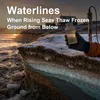
When Rising Seas Thaw Frozen Ground from Below
Takeaway: Rising seas can thaw Arctic permafrost from the side because salty groundwater stays liquid at temperatures where fresh groundwater would freeze.Arctic coasts are changing in ways people can see: cliffs crumble, waves reach farther inland, and roads and buildings sit on less certain ground. This episode looks at a harder-to-see change happening underground, where rising seas can push salty water into coastal permafrost and help thaw it from the side, not just from the warming air above. We unpack how salt lowers water’s freezing point, why that matters for frozen soil, and what this could mean for Arctic communities, coastal infrastructure, groundwater, and carbon stored in once-frozen ground.The paper follows a modeling study, not a single field site, so we talk about both its power and its limits: it brings together groundwater flow, heat, salt movement, freezing and thawing, and salt left behind as ice forms. The result is a clearer picture of a hidden coastal feedback: sea-level rise does not only flood the surface; it can change the freezing rules underground.Citation: Guimond, J. A., Mohammed, A. A., Walvoord, M. A., Bense, V. F., & Kurylyk, B. L. (2021). Saltwater intrusion intensifies coastal permafrost thaw. Geophysical Research Letters, 48, e2021GL094776. https://doi.org/10.1029/2021GL094776Disclosure: This Waterlines episode package is written for production with AI-generated voices.
Podzilla Summary coming soon
Sign up to get notified when the full AI-powered summary is ready.
Free forever for up to 3 podcasts. No credit card required.
Listen to This Episode
More from Waterlines: How Water Shapes Our World

When the Shoreline Moves Toward the Well: Saltwater, Erosion, and Island Drinking Water
When Snowmelt Finds Hidden Pipes in Frozen Soil
When Frozen Ground Starts Leaking: Permafrost, Groundwater, and the Hidden Paths of Thaw
When Frozen Ground Still Drinks: Snowmelt Shortcuts Beneath Prairie Grasslands
Get summaries like this every morning.
Free AI-powered recaps of Waterlines: How Water Shapes Our World and your other favorite podcasts, delivered to your inbox.
Free forever for up to 3 podcasts. No credit card required.