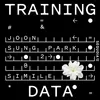
The race to build superintelligence is producing models that keep getting better at objective problems, but not at behaving like actual people. Joon Sung Park, founder and CEO of Simile and creator of Stanford's "Smallville" generative agents study, argues that simulating human society requires a fundamentally different kind of model. He frames today's frontier models as the "CPU of intelligence"—rational, superhuman at problems with right answers—and Simile as creating the "GPU of intelligence," built to encode the diversity of people's values, preferences, and tastes. It simulated 1,000 Americans and predicted their behavior 85% as accurately as people reproduce their own answers. CVS uses it for concept testing; some customers simulate their own earnings calls. Joon's larger bet: a "CERN of human society" that could one day model bank runs, climate cooperation, or the early signals of a collapsing democracy. Hosted by Sonya Huang, Sequoia Capital
Podzilla Summary coming soon
Sign up to get notified when the full AI-powered summary is ready.
Free forever for up to 3 podcasts. No credit card required.
Listen to This Episode
More from Training Data
Building the Automated AGI Lab: Core Automation's Jerry Tworek and Rohan Anil
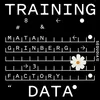
Factory's Matan Grinberg: The Coming ‘Dark Factory’ Where Software Builds Itself
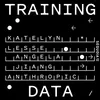
Anthropic's Katelyn Lesse & Angela Jiang: Building an Ecosystem, not a Walled Garden
Inside Zipline's Autonomous System: 140M Miles, Zero Incidents
Get summaries like this every morning.
Free AI-powered recaps of Training Data and your other favorite podcasts, delivered to your inbox.
Free forever for up to 3 podcasts. No credit card required.