Free Daily Podcast Summary
Training Data: Daily Summaries Delivered
by Sequoia Capital
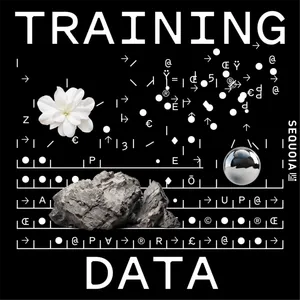
Join us as we train our neural nets on the theme of the century: AI. Sonya Huang, Pat Grady and more Sequoia Capital partners host conversations with leading AI builders and researchers to ask critical questions and develop a deeper understanding of the evolving technologies—and their implications for technology, business and society.
Latest Episodes
The most recent episodes — sign up to get AI-powered summaries of each one.
- 5 days ago1h 5m
Box's Aaron Levie: On Reinventing Yourself in the AI Age and Enterprise Diffusion
Starting a company is hard. Reinventing your company for AI as a public company with quarterly earnings results is even harder. Aaron Levie has pulled off the transition with Box and offers hard-won advice for founders. The cofounder and CEO of Box argues the value isn't only in the model; it's in the bridge from a model's raw capability to the actual workflow inside a bank, a law firm, or a pharma company. That's the case for the application layer, and Box is building it: an agent harness tuned so tightly to its own file system, permissions, and search that it beats handing the raw API to Claude or ChatGPT on both accuracy and latency. Aaron explains why token subsidies from the labs can't last, why you want a model-agnostic company routing your tokens rather than the one selling them, and why coding diffused fast while the rest of knowledge work won't. (There's no "give us your GitHub" for a sales rep.) His prediction: within five years, 90% of enterprise tokens go to work no human user ever initiated.
- 2 weeks ago52 min
Making Cities Awesome: Peregrine’s Nick Noone & Ben Rudolph
Most public safety technology companies grow by collecting more data. Peregrine inverted the model: no sensors, no new data, a business built on connecting the data and information cities already own. Co-founders Nick Noone and Ben Rudolph received more than two dozen no's before San Pablo PD let them in the door in February 2018. Today, Peregrine powers law enforcement, emergency medical services, fire and rescue, and other services in more than 400 cities and communities globally. Nick and Ben explain their north star for data sovereignty, and discuss how Peregrine's philosophy and privacy-first approach to data access and ownership preserves individual privacy and cities' sovereignty. They walk through how AI and long-horizon agents are being deployed: a cold case agent that reproduced an exoneration detectives had reached by hand, a Wisconsin county that placed a suspect using cell records buried in 300GB of evidence, identifying threats to a synagogue, root-causing an escalation in weather-related incidents, and more. 00:00 Introduction 02:07 What Forward Deployed Engineering Means 03:58 What Silicon Valley Gets Wrong 05:23 UNHCR, Dimagi And Downstream Data Problems 08:25 Why Cities, Why Safety 10:45 Two Dozen Nos And San Pablo PD 14:19 Building Through Defund The Police 18:16 The Inversion Of The Collection Model 21:20 Data Ownership And Governance 22:57 From Nice Search To Deep Analysis 29:59 Agents Writing The Integrations 31:45 The Cold Case Agent 35:02 The Anti-Network-Effect Proposition 38:40 Facial Recognition And Hard Decisions 40:48 Technology For The Underdogs 42:54 Trusting The Individual Contributor 48:50 Ten Thousand Cities
- 3 weeks ago55 min
Search Was Built for Humans. Parallel's Parag Agrawal Is Rebuilding It for Agents
Parag Agrawal is making a bet that goes against two decades of web search: agents will query the web a thousand times more than humans ever have, and the infrastructure built around human clicks is wrong for them. The former Twitter CEO, now founder and CEO of Parallel Web Systems, explains why Parallel treats human click data as a bug and trains on agent feedback instead. He unpacks the counterintuitive choice to ship a search agent before a search engine, building an index incrementally, and how the new Turbo product cut agentic search to 200 milliseconds. But the problem Parag keeps returning to is economic: the ad-supported internet collapses when agents show up instead of people. His fix draws on Shapley values to pay content owners for the value their pages provide agents, with real dollars reaching publishers, he predicts, within 12 to 24 months. Hosted by Sonya Huang and Andrew Reed, Sequoia Capital
- Aug 18, 202653 min
Rich Sutton and Khurram Javed: Why AI Models Stop Learning, and How to Start It Again
Rich Sutton, who helped pioneer reinforcement learning and wrote the seminal AI essay The Bitter Lesson, has now cofounded Oak Lab with his former student Khurram Javed. Their goal: to build agents that continuously learn from their own experience rather than from us. Rich doesn't think he holds a radical view: "I'm not weird. The field is weird." He says all learning is continual, and the field is the one that needed a new name for it. Rich and Khurram argue synthetic data is "a big mistake." Their "big world hypothesis" is that the world is massively more complex than any agent or simulator, so approximations have to be updated continuously rather than frozen at deployment. Rich calls LLMs an unanticipated scientific breakthrough, but says they represent roughly a quarter of intelligence. He says catastrophic forgetting is "totally curable" with the ideas behind their continual backprop algorithm. Khurram explains why the frontier labs can't follow: they sit in a local minimum where a new paradigm gets worse before it gets better. Their target, five to ten years out, is a trillion-parameter mind that keeps learning, stays coherent, and runs on 20 watts. Hosted by Sonya Huang and Alfred Lin, Sequoia Capital
- Aug 4, 202647 min
Chai Discovery's Bitter Lesson: Drug Design Is Another Scaling Problem
Most people treat biology as a bespoke, messy science. Josh Meier and Matt McPartlon, co-founders of Chai Discovery, treat it as an engineering problem. They make the case that drug design obeys the bitter lesson: scale data, models, and compute, and the model can learn what a hand-built pipeline simply couldn't capture. The results are concrete: Chai-2 pushed de novo antibody design from a sub 0.1% hit rate to 16%, turning a needle-in-a-haystack search into something more like designing a key to fit a lock. Josh argues, counterintuitively, that biology is more verifiable than code, and explains why the goal should be more lab experiments, not fewer. Their bet: a design suite that collapses drug discovery from nine months to nine days, and arms the pharma industry rather than competing with it. Hosted by Pat Grady and Sonali Singh, Sequoia Capital 00:00 Introduction 01:52 From Discovery to Design 03:25 Protein AI Breakthroughs Timeline 06:04 Why Start in 2024 10:13 Diffusion Models Intuition 11:41 Building the Avengers Team 15:22 Hit Rates and Scaling Laws 25:01 Molecular CAD Vision 25:24 Faster Design Loops 26:32 Future Drug Discovery 28:37 Platform Business Model 31:14 Partnering Reality Check 33:44 Data Flywheel Explained 37:16 Staying Ahead at Scale 39:44 Culture and What's Next
- Jul 29, 202649 min
Building the Automated AGI Lab: Core Automation's Jerry Tworek and Rohan Anil
Jerry Tworek led reasoning at OpenAI, convinced that scaling reinforcement learning was the path to AGI. Rohan Anil co-led Gemini pre-training and built the Shampoo optimizer. Now they've teamed up at Core Automation on a contrarian premise: the transformer has carried us as far as it can, and the bottleneck to smarter systems is no longer scale — it's the architecture itself. The missing capability is continual learning, models that adapt at test time, which transformers can't do. In-context learning taps out fast (Codex needs compacting after ~20 minutes) and fine-tuning invites catastrophic forgetting. Rohan argues pre-training and RL should be optimized end-to-end, and that transformers spend computation inefficiently. They lay out why the largest labs won't chase alternatives while locked in the coding-agent race, and why building the world's most automated lab starts with automating kernel generation—the one place frontier models still lose to a high-taste human. Hosted by Sonya Huang and Pat Grady, Sequoia Capital
- Jul 21, 202651 min
Factory's Matan Grinberg: The Coming ‘Dark Factory’ Where Software Builds Itself
Factory started building fully autonomous coding agents in April 2023, two years before enterprises were ready. Matan Grinberg now says this is indistinguishable from being wrong. The Factory co-founder and CEO explains how the company survived its "journey in the desert," including the decision to hand nearly all of its revenue back to customers when the product wasn't making developers obsessed. Matan makes the contrarian technical case that a model-agnostic harness beats the model-and-harness co-design that labs like OpenAI and Anthropic favor, because exposing a harness to many models keeps it from overfitting to any single one. He argues open-weight models like GLM will capture the majority of tokens by staying one generation behind the frontier at a fraction of the cost, and that CIOs will soon justify every incremental token the way they justify headcount. Looking ahead, he predicts 90% of coding tokens will run asynchronously—the "dark factory" where software builds itself. Hosted by Sonya Huang and Pat Grady, Sequoia Capital
- Jul 14, 202648 min
Anthropic's Katelyn Lesse & Angela Jiang: Building an Ecosystem, not a Walled Garden
Katelyn Lesse and Angela Jiang lead the team building Anthropic's developer platform - the layer that both outside builders and Anthropic's own products run on top of. Angela frames the platform as a three-layer stack: knowledge, execution, and coordination. She argues the real leverage is what’s at the top: "strategies," or meta-harnesses that give each token a different job, from advising to executing to reflecting to memory. On the question of open ecosystem vs. walled garden, they say they aren't precious about owning the stack. Katelyn points to Anthropic's self-hosted sandboxes with partners like Modal, Vercel, and Cloudflare. Whether the work runs on Anthropic's infrastructure or someone else's, what really matters to them is that the architecture is sound. The deeper bet is standards: they hand skills and MCP to the whole industry, build connectors on the MCP spec, and help agents (Claude and non-Claude) work together. The one place they stay closed is model routing: they argue harnesses should be tuned to a model family, so they're designing for Claude rather than routing across models. Angela's frame for the ecosystem bet is electricity: transformative only because everyone could plug in, and no company wired it alone.Hosted by Sonya Huang and Lauren Reeder, Sequoia Capital 00:00 Introduction 01:49 Two North Stars 02:27 External Builders And Primitives 03:54 What To Externalize 06:00 From Messages To Agents 08:19 Managed Agents Adoption 09:07 Three Layer Cake 10:22 Execution Harnesses Explained 11:09 Coordination Strategies Roadmap 12:13 Ecosystem Standards And Safety 15:39 Open Ecosystem Not Walled 17:12 Vertical Products And Form Factors 22:26 Claude Tag Under The Hood 26:04 Harness Best Practices 38:13 Token Costs And Whats Next
Get Training Data summaries in your inbox
Free AI-powered daily recaps. Key takeaways, quotes, and mentions — in a 5-minute read.
Get Free Summaries →Free forever for up to 3 podcasts. No credit card required.
You Might Also Like
Listeners also like.

Latent Space: The AI Engineer Podcast
Explores AI engineering breakthroughs in foundation models, code generation, and AI agents through interviews with researchers and developers.

The Twenty Minute VC (20VC): Venture Capital | Startup Funding | The Pitch
Interviews with top venture capitalists and successful founders about startup funding, investing, and building technology companies.

No Priors: Artificial Intelligence | Technology | Startups
Discusses AI advancements and implications with researchers, engineers, and founders shaping the future of artificial intelligence.

The AI XR Podcast.
Industry insiders interview top founders and executives on AI, spatial computing, VR/AR, and synthetic media.
Me, Myself, and AI
AI leaders from top companies share real-world strategies for turning artificial intelligence into measurable business results.
Unsupervised Learning with Jacob Effron
Conversations with leading AI experts to understand current breakthroughs and future implications for technology and business.
OpenAI Podcast
Conversations with OpenAI researchers and builders exploring how frontier AI models are developed and used in practice.
NVIDIA AI Podcast
Explores how artificial intelligence and emerging technologies are driving innovation across science, sustainability, and industry.

AI and I
Interviews with professionals who use AI tools in their work, exploring how AI affects creativity, thinking, and daily life through live demonstrations.

Silicon Valley Girl: AI, Tech and Career Growth
Explores how AI, technology, and entrepreneurship can accelerate career growth, build wealth, and create a purpose-driven life.
The Deep View: Conversations
Discusses AI advancements and leadership with innovators from labs, enterprises, and startups shaping the industry.
"The Cognitive Revolution"
Interviews with AI developers and researchers exploring the transformative impact of artificial intelligence on society and technology.
About Training Data
Join us as we train our neural nets on the theme of the century: AI. Sonya Huang, Pat Grady and more Sequoia Capital partners host conversations with leading AI builders and researchers to ask critical questions and develop a deeper understanding of the evolving technologies—and their implications for technology, business and society.
Customized Recaps
AI-powered recaps with compact key takeaways, quotes, and insights.
Straight to Your Inbox
Get key takeaways from Training Data in a 5-minute read.
Save Hours Every Week
Stay current on your favorite podcasts without falling behind.
Frequently Asked Questions
What is Podzilla's Training Data daily summary?
It's a free AI-powered email that summarizes new episodes of Training Data as soon as they're published. You get the key takeaways, notable quotes, and links & mentions — all in a quick read.
How does the Training Data podcast summary work?
When a new episode drops, our AI transcribes and analyzes it, then generates a personalized summary tailored to your interests and profession. It's delivered to your inbox every morning.
Is this an official Training Data product?
No. Podzilla is an independent service that summarizes publicly available podcast content. We're not affiliated with or endorsed by Sequoia Capital.
Can I get summaries of other podcasts too?
Absolutely! The free plan covers up to 3 podcasts. Upgrade to Pro for 15, or Premium for 50. Browse our full catalog at /podcasts.
How often does Training Data release new episodes?
Training Data publishes weekly. Our AI generates a summary within hours of each new episode.
What topics does Training Data cover?
Training Data covers topics including Technology, Business. Our AI identifies the specific themes in each episode and highlights what matters most to you.
Start getting Training Data summaries tomorrow morning.
Free forever for up to 3 podcasts. No credit card required.
Free forever for up to 3 podcasts. No credit card required.