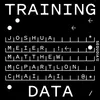
Chai Discovery's Bitter Lesson: Drug Design Is Another Scaling Problem
Most people treat biology as a bespoke, messy science. Josh Meier and Matt McPartlon, co-founders of Chai Discovery, treat it as an engineering problem. They make the case that drug design obeys the bitter lesson: scale data, models, and compute, and the model can learn what a hand-built pipeline simply couldn't capture. The results are concrete: Chai-2 pushed de novo antibody design from a sub 0.1% hit rate to 16%, turning a needle-in-a-haystack search into something more like designing a key to fit a lock. Josh argues, counterintuitively, that biology is more verifiable than code, and explains why the goal should be more lab experiments, not fewer. Their bet: a design suite that collapses drug discovery from nine months to nine days, and arms the pharma industry rather than competing with it. Hosted by Pat Grady and Sonali Singh, Sequoia Capital 00:00 Introduction 01:52 From Discovery to Design 03:25 Protein AI Breakthroughs Timeline 06:04 Why Start in 2024 10:13 Diffusion Models Intuition 11:41 Building the Avengers Team 15:22 Hit Rates and Scaling Laws 25:01 Molecular CAD Vision 25:24 Faster Design Loops 26:32 Future Drug Discovery 28:37 Platform Business Model 31:14 Partnering Reality Check 33:44 Data Flywheel Explained 37:16 Staying Ahead at Scale 39:44 Culture and What's Next
Podzilla Summary coming soon
Sign up to get notified when the full AI-powered summary is ready.
Free forever for up to 3 podcasts. No credit card required.
Listen to This Episode
More from Training Data
Box's Aaron Levie: On Reinventing Yourself in the AI Age and Enterprise Diffusion
Making Cities Awesome: Peregrine’s Nick Noone & Ben Rudolph
Search Was Built for Humans. Parallel's Parag Agrawal Is Rebuilding It for Agents
Rich Sutton and Khurram Javed: Why AI Models Stop Learning, and How to Start It Again
Get summaries like this every morning.
Free AI-powered recaps of Training Data and your other favorite podcasts, delivered to your inbox.
Free forever for up to 3 podcasts. No credit card required.