Free Daily Podcast Summary
The Wealthy Gym Owners Podcast: Daily Summaries Delivered
by Pat Rigsby
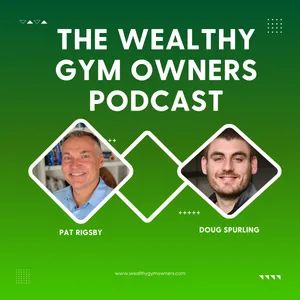
Pat Rigsby and Doug Spurling are two successful entrepreneurs who are here to give you tips and advice to build wealth through your fitness business.
Latest Episodes
The most recent episodes — sign up to get AI-powered summaries of each one.
- 4 days ago24 min
Wealthy Gym Owners - 93 - Retention Isn't a Problem. It's a System.
Get more at WealthyGymOwners.com Client Retention: The First 28 Days Can Change Your Gym Business For years, gym owners have been told that better marketing is the key to growing a successful fitness business. But as more people become familiar with gyms, fitness, and wellness—and as competition increases—another factor is becoming increasingly important: client retention. In this episode of The Wealthy Gym Owner, Pat Rigsby and Doug Spurling break down why retention may be one of the biggest competitive advantages for gym owners and fitness business owners going forward. They take a deep dive into the first 28 days of a new gym member's experience and explain how a well-designed onboarding process can improve the client experience, reduce gym member churn, build stronger relationships, and create longer-lasting customers. Doug shares how his team has developed a structured first 28 days that includes a scripted first workout, personalized communication, client recognition, onboarding videos, FAQs, programming communication, visit milestones, and personal positive reach-outs. You'll also learn why retention can't simply be solved with contracts, why the client experience becomes more challenging as a gym grows, and how understanding your ideal client avatar can help you design a better onboarding and retention strategy. In this episode, you'll learn: Why client retention is becoming a major competitive advantage for gyms How to structure the first 28 days for new gym members Why your first workout should be intentional and highly structured How onboarding begins before a client ever walks through the gym door Ways to reduce uncertainty and anxiety for new members How to use simple videos and communication to improve the onboarding experience Why personalization matters when building relationships with clients How to identify and address common future objections like travel and injuries Why different gym member avatars require different client experiences How to create a better client onboarding system The importance of certainty and variety in fitness programming How personal and positive reach-outs can strengthen member relationships Why communicating your programming can improve member engagement How to use visit milestones and recognition to improve retention Why gym owners should track churn and attrition How reducing monthly churn can take pressure off your marketing and sales Why referrals and gym culture can improve when members stay longer How retention fits into the larger demand, conversion, and delivery engine of a fitness business If you're a gym owner, personal trainer, fitness entrepreneur, or fitness business coach looking for practical strategies to increase gym member retention, reduce churn, improve the client experience, and build a more profitable fitness business, this episode is for you. The goal isn't to eliminate attrition. It's to build a business and client experience that gives people more reasons to stay. #GymOwners #GymMemberRetention #FitnessBusiness #GymMarketing #ClientRetention #FitnessBusinessGrowth #GymOwnerTips #FitnessEntrepreneur #GymManagement #PersonalTrainingBusiness #WealthyGymOwner
- 1 weeks ago20 min
Wealthy Gym Owners - 92 - Gym Owners: Inspect What You Expect
Get more at WealthyGymOwners.com Your Business Systems Don't Work Unless You Inspect Them Having systems in your gym business is important—but simply creating an SOP, playbook, or process doesn't mean your team will actually follow it. In this episode of The Wealthy Gym Owners, Doug and Pat break down the reality of building systems that work in the real world—and why the most successful fitness business owners don't just create systems, they implement, inspect, train, and continuously improve them. With today's technology and AI tools, creating a business playbook is easier than ever. The real challenge is execution. Doug and Pat discuss how gym owners can build better systems for lead follow-up, sales, client onboarding, coaching standards, team training, and facility management, while creating accountability around those systems. You'll learn why "inspect what you expect" is such an important principle for gym owners, how to train employees through demonstration and role-playing, and practical ways to inspect coaching quality and operational standards without micromanaging your team. They also explain why your systems should never be considered "finished." Your gym's playbook should evolve as you discover what's working, what's falling short, and what needs to be retrained. In this episode, you'll learn: Why creating systems isn't the hardest part of running a fitness business The difference between creating, implementing, and inspecting business systems How gym owners can use SOPs and playbooks to build consistency How to train your team to actually execute your systems Why demonstration and role-playing are critical for team development How to inspect coaching quality without micromanaging Practical ways to audit your gym's facility and operations Why your business systems should constantly evolve How to identify whether a problem is with the system or the employee's execution Why implementation—not information—is often the biggest obstacle to business growth If you're a gym owner, fitness entrepreneur, coach, or business owner looking for practical business help, better systems, stronger leadership, and strategies to build a more scalable fitness business, this episode is for you. The goal isn't simply to have a playbook. The goal is to build a team that can consistently execute it.
- 2 weeks ago19 min
Wealthy Gym Owners - 91 - Your Gym Doesn't Need a Consultation
Get more at WealthyGymOwners.com If you're a gym owner generating leads but struggling to turn those leads into paying members, the problem may not be your marketing - it may be what happens after someone raises their hand. In this episode of The Wealthy Gym Owners, Pat Rigsby and Doug dive into a question every fitness entrepreneur should be asking: Should your gym still require an in-person consultation? Consumer behavior has changed. People want convenience, control, and less friction - and that means gym owners may need to rethink the traditional sales process. Pat and Doug break down why moving the initial consultation to a phone call can make it easier for prospects to take the next step, while still giving you the opportunity to uncover their goals, build value, use social proof, create urgency, and ultimately close the sale. You'll learn: Why generating leads isn't necessarily the hardest part of gym marketing How to reduce friction between a lead and their first workout Why adding too many qualifying steps can actually cost you sales How to use phone consultations without turning them into another hurdle Why showing up may be the most important qualification of all How social proof becomes even more important when prospects haven't physically visited your gym How to create urgency and close the prospect on the call Why collecting payment and booking the first workout immediately matters How to create a stronger first-day experience for new members Why your onboarding process needs to be scripted and intentional How a strong guarantee can remove risk and make it easier for prospects to say yes Why gym owners need to design their sales process around the way today's consumer actually wants to buy The goal isn't to eliminate the consultation. The goal is to make it easier for the right person to say yes. If you own a gym, run a personal training business, or are building a fitness business, this conversation will give you some practical ideas for improving your gym sales process, lead conversion, personal training sales, fitness marketing, and member acquisition. Because more leads don't automatically mean more members. Sometimes you don't need more leads. You just need fewer obstacles between the lead and the front door.
- 3 weeks ago16 min
Wealthy Gym Owners - 90 - Your Prospects Don't See You As Different | How People Buy
Get More At: WealthyGymOwners.com How do people actually choose which gym to join? In this episode of The Wealthy Gym Owners, Doug and Pat break down the psychology behind how consumers choose between competing gyms, personal training businesses, boutique fitness studios, and other fitness options. As the fitness industry becomes more competitive, simply offering great coaching, small group training, accountability, or a good customer experience isn't always enough. Gym owners have to clearly communicate why their gym is different, who it is for, what problem it solves, and why someone should choose it over the other options in their market. Doug and Pat discuss the importance of gym positioning, fitness business marketing, pricing strategy, premium positioning, niche marketing, differentiation, consumer psychology, and convenience. They explain why prospects often default to factors like price, proximity, familiarity, and convenience when gym owners fail to give them better reasons to choose. You'll also hear why small group training and semi-private training gyms should consider positioning themselves against personal training rather than low-cost gyms, how creating a recognizable concept can help a fitness business stand out, and why gym owners need to understand what their prospects actually want—not simply what they think their prospects want. The conversation also explores how businesses like F45 and Orangetheory turned familiar fitness training methods into recognizable concepts and brands, and what independent gym owners can learn from that approach. If you're a gym owner, personal trainer, fitness entrepreneur, boutique gym owner, small group training business owner, or fitness business coach, this episode will give you practical ideas for improving your gym marketing strategy, fitness business positioning, sales process, messaging, lead generation, and customer acquisition. In this episode, you'll learn: How consumers choose between competing gyms and fitness businesses Why price and convenience can win when your positioning isn't clear How gym owners can differentiate their business in a crowded fitness market Why your prospects may see your gym as being "the same" as every other gym How to use premium positioning to influence how prospects perceive your services Why semi-private and small group gyms should consider anchoring against personal training How to create a unique fitness business concept instead of simply describing your services Why being specific about your target market makes your gym marketing more effective How to discover what your customers actually want Why gym owners need to sell the outcome, not just the training method How convenience and reduced friction influence modern buying decisions Why proximity can be a major competitive advantage for a gym What independent gym owners can learn from brands like F45 and Orangetheory Why gym marketing and messaging must continue to evolve as the market becomes more sophisticated Key Takeaway The market is always changing. What worked for your gym five or ten years ago may still work today—but it may not work as well because your competitors, consumers, and the marketplace have changed. The gym owners who win aren't necessarily the ones with the newest equipment, the biggest facility, or the lowest price. They're the ones who can clearly communicate: Who they help. What makes them different. What their customers actually want. And why their solution is worth choosing. If you're serious about building a wealthy, sustainable fitness business, this is a conversation worth listening to.
- Aug 20, 202617 min
Wealthy Gym Owners - 89 - Meta Ads
Get more at WealthyGymOwners.com Meta Ads Aren't an ATM: How Gym Owners Should Really Use Facebook Advertising Meta ads can still be one of the most powerful lead-generation tools for a gym...but only if you have realistic expectations about how they actually work. In this episode of The Wealthy Gym Owners, Doug and Pat break down why gym owners often misunderstand Facebook and Instagram advertising. Some expect Meta ads to produce ready-to-buy prospects immediately. Others treat advertising like a short-term campaign they can turn on for a month, generate a few members, and shut off. The reality is different. Meta advertising works more like a pipeline than an ATM. The people who see your ads are at different stages of their buying journey. Some are ready to act now. Others are simply thinking about getting in shape. Some may not become customers for six months...but if you've stayed in front of them, built trust, shared social proof, and followed up consistently, you can be the gym they choose when they're finally ready. Pat and Doug discuss how successful gym owners are using Meta ads today, including why year-round consistency, strong offers, user-generated content, specific messaging, social proof, and proper lead nurturing matter more than simply chasing cheap leads. They also explain why gym owners shouldn't judge Meta ads solely by direct attribution or whether someone joins immediately after clicking an ad. In today's buying environment, Meta is often one piece of a much larger customer journey. If you're a gym owner, fitness business owner, or coach using Facebook or Instagram ads...or considering starting...this episode will help you understand what Meta ads can realistically do for your business and how to get more return from your advertising investment. In This Episode Why Meta ads are still a primary lead generator for growing gyms The difference between treating advertising like a pipeline vs. a bucket Why Facebook leads aren't necessarily "low quality" leads Why most people who opt in aren't ready to buy immediately Why Meta ads should be run consistently year-round How lead nurturing creates a marketing flywheel Why broad messaging attracts too many unqualified prospects How to use your gym's specific customer avatar in your ad messaging Why user-generated content can outperform polished or AI-generated creative How client testimonials and social proof influence local buying decisions Why not every Meta ad should directly ask someone to join your gym Using lead magnets, information packets, testimonials, and educational content Why the customer journey is no longer linear Why gym owners shouldn't obsess over perfect attribution How to evaluate Meta ads based on customer acquisition cost and profitability What gym owners should expect from Facebook and Instagram advertising today Key Takeaway Meta ads aren't an ATM. They're a pipeline. The goal isn't necessarily to turn every person who sees your ad into a customer today. The goal is to consistently create awareness, generate leads, build relationships, nurture prospects, and become the obvious choice when those prospects are ready to buy. The gym owners who understand that distinction can use Meta ads as a long-term growth engine instead of constantly turning campaigns on and off based on short-term results.
- Aug 13, 202616 min
Wealthy Gym Owners - 88 - The Fall Marketing Playbook for Gyms
Fall is one of the most overlooked growth opportunities for gym owners—and it could be the perfect time to generate more leads, sign more members, reactivate past clients, and drive referrals. In this episode of The Wealthy Gym Owners, Doug and Pat break down a practical fall marketing playbook for gym owners. They explain why September and October can be especially strong months for training gyms, how seasonal changes affect your ideal client's mindset, and why your marketing message needs to evolve with the season. You'll learn how to: Create a fall marketing strategy that aligns with how your market actually behaves Identify the specific pain points your ideal gym client is facing in September and October Shift your messaging from summer fitness goals to fall priorities Build effective seasonal offers, trials, and membership incentives Use referrals and bring-a-friend campaigns to generate new gym members Reconnect with former clients and create reactivation opportunities Use simple engagement questions like "What's your fall fitness plan?" to start conversations Make the most of paid advertising for your gym without constantly changing your ad budget Turn consistent summer marketing into fall leads and memberships Use workshops, client events, and community events to generate leads and referrals Get more strategic about gym marketing instead of simply turning ads on and off If you're a gym owner, personal trainer, fitness entrepreneur, or training gym owner looking for ways to grow your gym, improve your marketing, generate more leads, and add more members this fall, this episode gives you a proven framework you can put into action. The biggest takeaway? Don't treat fall like a slower version of summer. Treat it like a new marketing season with a different customer mindset. #GymMarketing #GymOwners #FitnessBusiness #GymBusiness #GymGrowth #PersonalTrainingBusiness #GymLeads #GymMemberships #FitnessMarketing
- Aug 6, 202619 min
Wealthy Gym Owners - 87 - Fill Your Gym Before You Open
Get more at WealthyGymOwners.com If you're opening a new gym, expanding to a second location, or simply want to generate more members before your doors even open, this episode is your blueprint. In this episode of The Wealthy Gym Owners, Pat Rigsby and Doug Spurling break down the exact pre-sale strategy that helped generate 80 founding members before opening day - creating immediate recurring revenue, confidence, and momentum before a single workout was delivered. This isn't theory. It's a proven gym marketing system that's been refined over multiple successful launches. You'll learn how to build demand, attract qualified leads, create an irresistible founders membership, and close sales over the phone - all while avoiding the costly mistakes most gym owners make during a pre-sale. Inside this episode, you'll discover: How to structure a gym pre-sale that fills your membership before opening Why refining your messaging matters more than offering bigger discounts The founders membership strategy that creates urgency and exclusivity The marketing channels producing the majority of qualified gym leads How paid ads, Google, direct mail, and local partnerships work together The follow-up system that dramatically increases sales conversions Why selling memberships over the phone can outperform in-person consultations How to use scarcity ethically to increase commitment and protect your gym's capacity The simple systems that make every new gym launch more successful than the last The biggest takeaway? Successful gym owners don't rely on luck - they rely on repeatable systems. The best pre-sales aren't built on flashy offers. They're built on clear messaging, disciplined follow-up, and a process that consistently turns interest into paying members. Whether you're launching your first fitness business, opening another location, or looking for better gym marketing strategies to grow your membership, this episode gives you a practical playbook you can put to work immediately. If you want to build a wealthier gym...not just a busier one...this episode is for you.
- Jul 2, 202657 min
Wealthy Gym Owners - 86 - People Don't Buy the Way They Used To
Get more at WealthyGymOwners.com Get more at: WealthyGymOwners.com/project-500 --- Most gym owners are still marketing like it's 2019... and it's costing them clients. The way people buy fitness services has changed. Today's prospects don't see one ad, book a trial, and immediately become members. They discover your gym across multiple touchpoints, build trust over time, and choose the business they believe gives them the best chance of success. Listen and learn as Pat Rigsby explains how modern buyers actually make decisions in 2026 and beyond - and how to build a marketing system that attracts more members, increases conversions, and helps you grow a profitable fitness business. If you're a gym owner, personal trainer, sports performance coach, or fitness entrepreneur looking to build a business that creates long-term wealth instead of constantly chasing leads, this episode will change the way you think about marketing. In this episdoe, Pat covers: * Why the traditional marketing funnel is losing effectiveness * How today's gym members actually decide where to train * The Client Decision Loop that builds trust before the sale * Why most "unqualified leads" simply aren't ready yet * How to use content, testimonials, and social proof to generate more memberships * The importance of becoming the trusted authority in your local market * How to remove friction and increase gym membership conversions * Why relationships - not sales tactics - build long-term business success * The marketing strategies that will help fitness businesses thrive in 2026 and beyond Whether you're trying to increase gym memberships, improve your lead conversion rate, retain more clients, or build a business that creates real financial freedom, these principles will help you stand out in an increasingly competitive fitness market. 00:00 Why Buying Keeps Changing 02:49 The Old Funnel Playbook 05:32 How People Buy Now 10:24 Not Ready Not Unqualified 14:54 More Options Less Trust 20:42 Selling the Future Self 25:14 Client Decision Loop 25:55 Awareness and Discovery 28:21 Observation Builds Familiarity 31:19 Safety Trust and Risk 34:36 Engagement to First Experience 42:20 Make the Experience Exceed 43:48 Content That Fits Each Stage 50:42 Three Mile Famous Locally 55:30 Be Seen Remembered Chosen 57:21 Wrap Up How People Buy
About The Wealthy Gym Owners Podcast
Pat Rigsby and Doug Spurling are two successful entrepreneurs who are here to give you tips and advice to build wealth through your fitness business.
Customized Recaps
AI-powered recaps with compact key takeaways, quotes, and insights.
Straight to Your Inbox
Get key takeaways from The Wealthy Gym Owners Podcast in a 5-minute read.
Save Hours Every Week
Stay current on your favorite podcasts without falling behind.
Frequently Asked Questions
What is Podzilla's The Wealthy Gym Owners Podcast daily summary?
It's a free AI-powered email that summarizes new episodes of The Wealthy Gym Owners Podcast as soon as they're published. You get the key takeaways, notable quotes, and links & mentions — all in a quick read.
How does the The Wealthy Gym Owners Podcast podcast summary work?
When a new episode drops, our AI transcribes and analyzes it, then generates a personalized summary tailored to your interests and profession. It's delivered to your inbox every morning.
Is this an official The Wealthy Gym Owners Podcast product?
No. Podzilla is an independent service that summarizes publicly available podcast content. We're not affiliated with or endorsed by Pat Rigsby.
Can I get summaries of other podcasts too?
Absolutely! The free plan covers up to 3 podcasts. Upgrade to Pro for 15, or Premium for 50. Browse our full catalog at /podcasts.
How often does The Wealthy Gym Owners Podcast release new episodes?
The Wealthy Gym Owners Podcast publishes weekly. Our AI generates a summary within hours of each new episode.
What topics does The Wealthy Gym Owners Podcast cover?
The Wealthy Gym Owners Podcast covers topics including Business, Entrepreneurship, Fitness, Health & Fitness. Our AI identifies the specific themes in each episode and highlights what matters most to you.
Start getting The Wealthy Gym Owners Podcast summaries tomorrow morning.
Free forever for up to 3 podcasts. No credit card required.
Free forever for up to 3 podcasts. No credit card required.