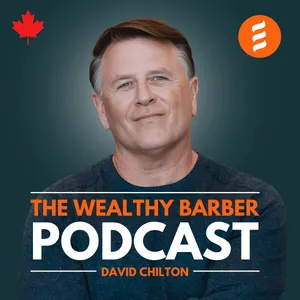
Free Daily Podcast Summary
The Wealthy Barber Podcast: Daily Summaries Delivered
by The Wealthy Barber Inc.
Get key takeaways, quotes, and insights from The Wealthy Barber Podcast in a 5-minute read. Delivered straight to your inbox.
Latest Episodes
The most recent episodes — sign up to get AI-powered summaries of each one.
- 1 weeks ago34 min
#56 — Daniel Glazier: Appraisals & How to Avoid Family Conflict Over Your Estate
Our guest this episode is Daniel Glazier — a Certified Personal Property Appraiser (CPPA) with more than 25 years in the designation. Daniel spent decades in the used furniture and antiques trade before moving into appraisals full-time and has now completed over 1,000 appraisal reports for families, executors, lawyers and financial institutions across Southern Ontario. In this episode, Dave and Daniel dive into the often-overlooked world of personal property appraisals and why so many family fights after a death have nothing to do with money and everything to do with stuff. They cover the endowment effect, Daniel's "VHS system" for identifying the items most likely to cause conflict, how to resolve disputes over contested belongings and why making a plan ahead of time is one of the most important and overlooked parts of estate planning. Whether you're working on your own estate plan, helping a parent downsize or settling an estate as an executor, this episode is packed with practical insights that could save your family real money and a lot of unnecessary conflict. Show Notes Intro & Disclaimer Intro to Daniel Glazier Daniel's Origin Story: Used Furniture & Strip Joints The Endowment Effect & The Used Furniture Market The VHS System for Identifying Items That Could Cause Family Conflict Resolving Conflicts Over Contested Items by Selling Them Make a Plan Ahead of Time to Avoid Family Conflict The Research on Sentimental Items A Solution to the Wedding Ring Dilemma Handling Non-Monetary Heirlooms The Appraiser's Role in Estate Planning The $5,000 Lamp Nobody Noticed Will AI Replace Personal Property Appraisers? Getting the Appraiser Involved Early How Clients Find Daniel Why Sold Prices Beat Asking Prices Location & Charitable Auctions Skewing Values Conclusion
- 2 weeks ago56 min
#55 — Mark McGrath: All-in-One ETFs, Rent vs. Buy and Financial Trade-Offs
Our guest this episode is Mark McGrath — one of Canada's top voices on evidence-based personal finance and a returning guest from episode #12. Mark recently came out of semi-retirement to launch his own advice-only practice called Phynance which focuses on helping physicians with financial planning. He is also co-author of "Wealthier: The Investing Field Guide for Canadian Millennials." In this episode, Dave and Mark dive into all-in-one ETFs and why simplicity often beats last-mile portfolio optimization for the typical Canadian. They also discuss the renting vs. buying debate as Mark’s family has recently decided to sell their house and become renters. The conversation also explores the limits of the 4% rule, how safe withdrawal rates differ across countries, and whether retirees are more comfortable holding stocks today than they used to be. Along the way, Mark talks about calling out charlatans on Twitter and shares which personal finance opinions he has changed his mind on over the years. Whether you're a DIY investor, a homeowner weighing your options, or anyone trying to cut through the noise of online personal finance commentary, this episode is packed with practical, evidence-based perspective from one of Canada's most trusted financial voices. Show Notes Intro & Disclaimer Intro to Mark McGrath Mark's Semi-Retirement and His New Firm Phynance The Evolution of the Financial Planning Industry All-in-One ETFs Explained Simplicity Over Last-Mile Optimization The Case for a Home-Country Investing Bias Why Mark's Family Decided to Sell Their House & Become Renters Renting With Young Kids & Schools Why Mark Didn't Like Being a Landlord Homeowners Are Often Out of Touch With Costs What The 4% Rule Leaves Out Safe Withdrawal Rates Across Countries Are Retirees More Comfortable Holding Stocks Now Than in the Past? Voices Mark and Dave Respect in the Financial Industry Getting Assessed for ADHD Wife's Take on Personal Finance Calling Out Charlatans on Twitter Why Market Forecasters Keep Getting Booked Why Mark Stepped Away from Twitter What Personal Finance Opinions Has Mark Changed His Mind On Phynance Already Has a Waitlist Conclusion
- 3 weeks ago42 min
#54 — Frederick Vettese: Retirement Planning Advice on CPP, Annuities and More
Our guest this episode is Frederick Vettese — former Chief Actuary at Morneau Shepell (now Telus Health), longtime Globe & Mail columnist and one of Canada’s leading voices on retirement planning. Fred is also the author of four books on retirement, including the bestselling “Retirement Income for Life.” In this episode, Dave and Frederick cover a wide range of retirement topics from why many Canadians may be more prepared than they think to how annuities can fit into a retirement income plan. They also discuss reverse mortgages, whether it makes sense to delay OAS, RRSP meltdown strategies and how thinking around withdrawals has evolved over time. Along the way, Frederick shares thoughtful perspectives on carrying a mortgage into retirement, gifting to adult children, universal life insurance and his own estate planning approach. Whether you’re approaching retirement or simply want to better understand the key decisions that shape it, this episode is packed with practical insights and real-world advice from one of Canada’s top experts. Show Notes Intro & Disclaimer Intro to Fred Vettese How Fred Comes Up With Writing Topics for The Globe & Mail Fred’s Career as an Actuary & Author Why Many Canadians Are Better Prepared for Retirement Than They Think Longevity Risk & the Case for Delaying CPP to 70 The Role of Annuities in Retirement Income When Reverse Mortgages Make Sense Delaying CPP: Why Canadians Are Finally Coming Around Should You Also Delay OAS to Age 70? RRSP Meltdown Strategy & Income Smoothing How the Industry Shifted on RRSP Withdrawal Thinking Will People Get Married for the Financial Benefits in Retirement? Insurance Products: Universal Life & When They Make Sense Carrying a Mortgage Into Retirement Gifting Money to Adult Children & The Risk to Your Own Retirement Fred’s Own Estate Planning & Will Strategy Fred’s Personal Investment Mistakes & Lessons How the Financial Advice Industry Has Improved Some Grandparents are Upsizing Conclusion
- 4 weeks ago54 min
#53 — Brian Orlando: The Case for Keeping Your Finances Simple
Our guest this episode is Brian Orlando — CPA and creator of the fast-growing Canadian personal finance account @CalmMoneyCoach. Brian has over 15 years of experience across accounting, finance and tech, before recently leaving the corporate world to pursue financial coaching full time. His mission is simple: reduce money stress and help people build plans they can actually stick to. In this conversation, Dave and Brian explore why simplicity is often the most powerful strategy in personal finance — from automating savings and avoiding high-fee products to cutting through common misconceptions around RRSPs and investing. They also dive into real-world challenges Canadians are facing today, including the rising cost of living, lifestyle inflation and the pressure to “keep up.” Along the way, Brian shares practical insights on everything from the Smith Maneuver to employer RRSP matching, renting vs. buying, insurance decisions and how to make smarter financial choices in your 30s and beyond. If you’re looking for straightforward, no-nonsense financial advice that actually works in the real world, this episode is packed with practical takeaways you can implement right away. Show Notes Intro & Disclaimer Intro to Brian Orlando (The Calm Money Coach) Brian’s Background & Career Path How Brian Grew His Audience for Calm Money Coach Why Simplicity Beats Complexity in Investing Automating Savings & Paying Yourself First The Downside of Fintech Platforms & Expensive Investment Products The Rising Cost of Living & Financial Desperation The Smith Maneuver Explained Financial Advice for Canadians in Their 30s Canada is Lucky to Have Great Financial Educators RRSP Misconceptions & Tax Efficiency Getting Good Advice for Retirement is Financially and Emotionally Beneficial Will People Get Married in Retirement for the Tax Advantages? Rent vs. Buying a Home The FHSA & Its Triple Tax Advantage Term vs. Whole Life Insurance Employer Matching on Group RRSP & Fees Overspending on Cars & Lifestyle Inflation Conclusion
- Apr 14, 202645 min
#52 — Moira Rose Váně: RESPs & How to Save for Your Kids’ Education
Our guest this episode is Moira Rose Váně — a full-time lawyer and Qualified Associate Financial Planner® who specializes in helping Canadian families save for their kids’ education through RESPs. In this conversation, Dave and Moira take a deep dive into everything you need to know about RESPs — from how they work to how to invest inside them to the often-overlooked pitfalls like high fees and estate planning risks when grandparents are involved. They also break down strategies for maximizing government grants, optimizing withdrawals and why family RESPs can be such a powerful tool. Along the way, Moira shares her perspective on passive investing, her unique career path as both a lawyer and financial planner and the financial planning challenges that disproportionately impact women. Whether you’re a parent, grandparent or planning to have kids in the future, this episode is packed with clear, practical advice to help you make the most of RESPs and avoid costly mistakes. Show Notes Intro & Disclaimer Intro Moira Rose Váně Being a Lawyer and a Financial Planner Why Moira is Focusing on RESPs RESP Basics: What Is It & How It Works How to Invest Inside Your RESP Index Funds & The Evidence for Passive Investing The Problem With Group RESPs Best Platforms for Self-Directed RESPs Getting Grandparents Involved in RESPs The Impact of Fees on RESPs Estate Planning Risks When Grandparents Are Subscribers How Taxes Work With RESPs Why Dave and Moira Like Family RESPs Withdrawing from Your RESP: Strategies & Common Mistakes Financial Planning Challenges Unique to Women Moira’s 12-Month Implementation Advice Model Conclusion
- Apr 7, 202642 min
#51 — Doug Hoyes: Bankruptcy, Consumer Proposals and the State of the Canadian Consumer
Our guest this episode is Doug Hoyes — Co-Founder of Hoyes Michalos, Licensed Insolvency Trustee and one of Canada’s leading experts on debt and personal insolvency. Doug has spent decades helping Canadians navigate financial hardship and is a passionate advocate for ensuring people understand their options and find the right path forward. In this episode, Dave and Doug dive into the world of debt, bankruptcy and consumer proposals — what they are, how they work and when each option might make sense. They break down how Licensed Insolvency Trustees operate, how consumer proposals are negotiated and what actually happens if you file for bankruptcy (what you keep, what you lose and who typically ends up choosing each path). Doug also shares insights into why so many Canadians are struggling with debt today, from inflation and the “K-shaped” economy to mortgage renewals, rising vehicle costs and the financial impact of divorce. The conversation also explores some of the lesser-discussed drivers of debt including gambling, travel spending and lifestyle creep, along with practical advice on when to seek help and why early action can make a significant difference. Doug brings decades of real-world experience to highlight common mistakes and what people can do to avoid them. If you want a clear, practical understanding of debt and insight into the Canadian economy from someone with boots on the ground, this episode is packed with insights you won’t want to miss. Show Notes Intro & Disclaimer Intro to Doug Hoyes Why Debt Education is So Important Inflation and the K-Shaped Economy Consumer Proposal vs. Bankruptcy Explained How the Trustee Negotiates Consumer Proposals Who Ends Up Filing Bankruptcy vs. Consumer Proposal? Who Should Talk to a Licensed Insolvency Trustee and When? If You Claim Bankruptcy, What Do You Lose vs. Keep? How Do People Get Into Trouble with Debt? Gambling's Role in Insolvency Historical Homeownership Rates Among Insolvency Clients Mortgage Resets and the Condo Crash Vehicles Can Be a Major Financial Trap Divorce and the Financial Cost of Separation Travel and Debt No One Cares About Your Money More Than You Do Rapid Fire Questions Conclusion
- Mar 31, 202654 min
#50 — Ben Felix (Returns): Investing Insights and Rapid-Fire Q&A
Our guest this episode is Ben Felix — Chief Investment Officer at PWL Capital, co-host of the Rational Reminder podcast and creator of one of the most respected investing YouTube channels, @BenFelixCSI. Ben is a returning guest from Episode #5, one of our most popular episodes to date. In this episode, Dave and Ben go through a rapid-fire Q&A on some of the most important (and misunderstood) topics in investing. They cover everything from the biggest mistakes investors make to the difference between investing and gambling to why professional investors struggle to beat the market and common misconceptions about dividends. Ben and Dave also break down the flaws with covered call funds, market timing, and touch on other topics like annuities, crypto, homeownership, life insurance and all-in-one ETFs. If you want clear, evidence-based answers to your biggest investing questions this is an episode you won’t want to miss. Tune in now on our website, YouTube, Apple Podcasts, Spotify and all other podcasting platforms! Show Notes Intro & Disclaimer Intro to Ben Felix A Huge Investor Mistake: Not Owning Enough Equities The Difference Between Investing and Gambling Increasing Your Income is One of the Best Things You Can Do for Your Personal Finances Dave and Ben’s Advice: Don’t Trade Options Why Professional Investors Struggle to Beat the Market Misunderstandings About Dividends Why Covered Call Funds Underperform Over the Long Run Even Experts Can’t Effectively Time the Market High Valuations and Expected Returns Behavioural Traps: Overconfidence and Pessimism The Role of Annuities in Retirement Planning Crypto and Prediction Markets Renting vs. Owning a Home The True Maintenance Costs of Home Ownership and “While We’re At It” Is Life Insurance a Good Investment Product? How Often Should You Check Your Portfolio? The Benefits of All-in-One Asset Allocation ETFs The Behaviour Gap in Investing The Positive Evolution of the Financial Advice Industry Conclusion
- Mar 24, 202645 min
#49: Ron Butler (Returns): Mortgages & Real Estate in 2026
Our guest this episode is Ron Butler — owner of Butler Mortgage and a 30-year veteran of the Canadian mortgage brokerage industry. Ron returns as a repeat guest after being a fan favourite when he first joined us back in episode #8. He’s widely known for his blunt takes on the housing market through social media and the Angry Mortgage Podcast. In this conversation, Dave and Ron tackle the current state of Canada’s housing and mortgage markets — from what Ron calls “the Ontario real estate disaster” to his outlook for real estate in 2026. They discuss the looming shortage of new single-family construction, whether municipalities will have to cut development fees and why housing prices remain so high relative to incomes. Ron also explains mortgage basics, why using a mortgage broker can matter, the hidden risks of co-signing a mortgage and the growing issue of homeowners sitting on mortgages with little or no equity. They also explore several major trends shaping the market right now, including the huge wave of mortgage renewals coming in 2026, the rise of extended amortizations, questionable behaviour in the private mortgage market and why moving homes is often far more expensive than people realize. Along the way, Ron and Dave discuss their thoughts on inflation, job security, the future of real estate investors and even how AI could begin affecting white-collar employment. If you want a candid, big-picture look at where Canada’s housing market might be headed, this episode is packed with insight, strong opinions and practical perspective. Show Notes Intro & Disclaimer Intro to Ron Butler Real Estate Market Update: The Ontario Disaster Is a Real Estate Crash Good for Young Canadians? 2026 Real Estate Forecast The Looming Crisis of No New Single-Family Construction Do Municipalities Have to Cut Their Development Fees? Mortgage Basics The Impact of the War in the Middle East on Mortgage Rates Housing is Still Expensive Relative to Incomes Inflation and Its Impact on the Bottom 50% of Income Earners The Hidden Dangers of Co-Signing a Mortgage Underwater Mortgages With No Equity Why Should Someone Use a Mortgage Broker? 2026 Will Be the Biggest Year for Mortgage Renewals in Canadian History Are Many Canadians Extending Their Amortization The Vanishing Starter Home: Why We Only Build Big Private Mortgage Misbehaviour Moving is Way More Expensive Than People Realize The Collapse of Rural Real Estate as Offices Call People Back Are Lenders Concerned About Job Security? Are Real Estate Investors Going to Come Back to the Market? How AI Is Already Cutting White Collar Hiring Conclusion
Get The Wealthy Barber Podcast summaries in your inbox
Free AI-powered daily recaps. Key takeaways, quotes, and mentions — in a 5-minute read.
Get Free Summaries →Free forever for up to 3 podcasts. No credit card required.
You Might Also Like
Listeners also like.

Build Wealth Canada Podcast
Kornel Szrejber: Investor

Wealth On Main Street
Richard Canfield & Jayson Lowe
For The Wealth of It
Jared Tanimoto, Jay Boekeloo

Wealth Strategy Secrets of the Ultra Wealthy Podcast
Dave Wolcott

Rich Dad Radio Show: In-Your-Face Advice on Investing, Personal Finance, & Starting a Business
The Rich Dad Media Network
The Canadian Money Roadmap
Evan Neufeld, CFP

The Beavis Wealth Podcast
Brandon Beavis, Marc Beavis

The WealthAbility Show with Tom Wheelwright, CPA
The Rich Dad Media Network

Wealth Wisdom Financial Podcast
Brandon Neely and Amanda Neely, CFP

Stay Wealthy Retirement Podcast
Taylor Schulte, CFP

Burn Your Boats Wealth
David Shaw & Clark Lunt

Rich Habits Podcast
Austin Hankwitz and Robert Croak
About The Wealthy Barber Podcast
The Wealthy Barber Podcast is Canada’s go-to source for approachable, entertaining, and free financial education. Hosted by none other than David Chilton—former Dragon on CBC’s ”Dragons’ Den” and the best-selling author of ”The Wealthy Barber” and ”The Wealthy Barber Returns”—this podcast is here to help Canadians manage their money better. Much better.Dave Chilton has spent over 35 years demystifying personal finance, offering understandable, unbiased, and actionable advice that has empowered millions of Canadians to achieve their financial goals. Now, he’s bringing that same wisdom to your favourite podcasting platforms, with regular episodes designed to make personal finance simple, relatable, and yes, even entertaining.Episodes of The Wealthy Barber Podcast features Dave in conversation with expert guests from across the spectrum of Canadian personal finance. From investing and real estate to taxes, RESPs, and even money psychology, no topic is off-limits. Plus, don’t miss our sp
Customized Recaps
AI-powered recaps with compact key takeaways, quotes, and insights.
Straight to Your Inbox
Get key takeaways from The Wealthy Barber Podcast in a 5-minute read.
Save Hours Every Week
Stay current on your favorite podcasts without falling behind.
Frequently Asked Questions
What is Podzilla's The Wealthy Barber Podcast daily summary?
It's a free AI-powered email that summarizes new episodes of The Wealthy Barber Podcast as soon as they're published. You get the key takeaways, notable quotes, and links & mentions — all in a quick read.
How does the The Wealthy Barber Podcast podcast summary work?
When a new episode drops, our AI transcribes and analyzes it, then generates a personalized summary tailored to your interests and profession. It's delivered to your inbox every morning.
Is this an official The Wealthy Barber Podcast product?
No. Podzilla is an independent service that summarizes publicly available podcast content. We're not affiliated with or endorsed by The Wealthy Barber Inc..
Can I get summaries of other podcasts too?
Absolutely! The free plan covers up to 3 podcasts. Upgrade to Pro for 15, or Premium for 50. Browse our full catalog at /podcasts.
How often does The Wealthy Barber Podcast release new episodes?
The Wealthy Barber Podcast publishes weekly. Our AI generates a summary within hours of each new episode.
What topics does The Wealthy Barber Podcast cover?
The Wealthy Barber Podcast covers topics including Business, Investing. Our AI identifies the specific themes in each episode and highlights what matters most to you.
Start getting The Wealthy Barber Podcast summaries tomorrow morning.
Free forever for up to 3 podcasts. No credit card required.
Free forever for up to 3 podcasts. No credit card required.