Free Daily Podcast Summary
The Vignette Effect: Daily Summaries Delivered
by Raquel Furman
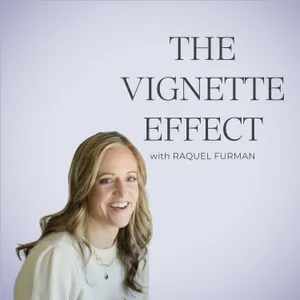
The Vignette Effect is where creativity and business intersect. Hosted by brand strategist and visual storyteller Raquel Furman, this podcast dives into what transforms a brand from transactional to truly engaging, creating a world people want to step into.Through candid conversations, behind-the-scenes insights, and expert strategies, you'll learn how to craft a brand identity that captivates, visuals that resonate, and a marketing approach that feels as good as it looks. Whether you’re a creative entrepreneur, small business owner, or marketing pro, The Vignette Effect helps you refine your brand and marketing strategy in a simple yet sophisticated way.
Latest Episodes
The most recent episodes — sign up to get AI-powered summaries of each one.
- 2 days ago23 min
Starting Before You’re Ready: Lessons From 75 Days on Camera
After 75 days of creating daily face-to-camera videos, getting on camera went from something Raquel resisted to something she simply does.In this behind-the-scenes episode, Raquel uses that experience to explore what it takes to begin before you can create the fully realized version you have in mind. She shares why identifying the obstacle you’re actually trying to solve matters when choosing support, how repetition can reduce visibility discomfort, and what becomes possible when you stop asking every piece of content to be brilliant or business-changing.This episode is also a reminder that the time will pass either way. Starting small, following through, and learning through implementation can create clarity and opportunities you can’t access while you’re standing still.In this episode:How to identify the obstacle you actually need help solvingWhy the most popular or least expensive support may not be the right fitHow starting with a simpler version can help you build toward a bigger visionA key tip for easier content editingWhat repetition can do for visibility discomfort and overthinkingWhy every pieceStarting Before You’re Ready: Lessons From 75 Days on Camera of content doesn’t need to carry your entire messageHow to evaluate results that don’t appear in public engagement numbersWhat it means to say, “I’ll go first”Why following through matters even when every attempt doesn’t feel meaningfulHow small, connected actions compound into larger changes over timeHow to turn a short-term experiment into a sustainable part of your processLinks and resources:Follow Raquel on Instagram at @raquel.furman Book a discovery call with Raquel Mike Ganino on Instagram @mikeganino
- 1 weeks ago16 min
Who’s Directing Your Marketing?
You could do a hundred things to improve your marketing. That doesn’t tell you what you should do.As marketing has become more specialized, it’s gotten easier to hire someone for almost every individual piece of it. That expertise can be incredibly valuable, but someone still needs to understand how all those pieces work together.In this episode of The Vignette Effect, Raquel talks about developing a director-level view of your own business so you can make better decisions about where your time, money, and attention should go.She explains why your customer experiences one brand rather than a collection of marketing tactics, how to use both numbers and customer feedback as data, and why an underperforming result doesn’t automatically tell you what to fix.You’ll also hear a real example of a successful launch followed by a disappointing one, and how looking at what had actually changed led to a much more useful set of questions than simply assuming the offer or marketing needed to be overhauled.The goal isn’t to become an expert in every area of marketing. It’s to understand enough about how the pieces work together to diagnose what’s happening, identify opportunities, and give better direction to the people you hire.Before you invest more time, money, or energy into marketing, zoom out and look at what’s already happening in the business.If you want help looking across your brand and marketing and figuring out what deserves your attention next, book a discovery call with Raquel here. Or come find her on Instagram @raquel.furman
- 2 weeks ago19 min
Transactional Marketing vs. Brand Experience: What Makes People Want to Buy
Your marketing can give people every detail they need and still leave them without much of a reason to want what you’re selling.Transactional marketing focuses on the information and mechanics of buying: what the product or service is, what it includes, what it costs, when it’s available, and whether there’s a discount or deadline. Those details matter. They help people evaluate and confirm a purchase.But brand experience has a different job. It creates the feeling that comes first: “I want that,” “That’s the one,” or “This is exactly what I’ve been looking for.”In this episode, Raquel explores:What transactional marketing looks like for product and service businessesWhy promotional emails can start to feel uncomfortable or repetitiveHow emotion and logic work together in a buying decisionThe difference between creating desire and creating urgencyHow your visual presentation, messaging, website, content, and emails contribute to brand experienceWhy your marketing should act like the hostess of your brandHow to evaluate whether your current marketing gives people a reason to want what you sellYou’ll also hear one particularly useful question to ask about your marketing:If you removed the discount or the deadline, would there still be something creating desire?The transactional information gives people the logic they need to make the purchase. The brand experience creates the emotional response that makes them want it. You need both, but they have different jobs.If there are areas of your brand or marketing that need attention, you can book a discovery call with Raquel at the link below or find her on Instagram.Book Your CallConnect on Instagram @raquel.furmanVisit the Vignette Brand Studio website: vignettebrandstudio.com
- 3 weeks ago17 min
Brand and Marketing Tools Are Everywhere (Expertise Isn’t)
Marketing has become incredibly accessible. You can learn how to make a reel, build an email funnel, redesign your website, create graphics, run ads, and do almost any other individual marketing task online. But access to the tools doesn’t automatically teach you the logic underneath them. That’s where marketing starts to feel like a giant guessing game. You can be doing a lot of things and still not know whether they’re the things your business actually needs. You may have a website, an email list, an audience, a content strategy, and even outside support, but the pieces aren’t necessarily working together or leading people toward what you want them to do. In this episode, I’m talking about how to step back and look at your branding and marketing as a connected system. Are enough of the right people finding you? When they do, do they understand why your work is relevant to them? Is there a clear path from interest to buying? Where are people losing interest or dropping off? And what is your data already telling you? Because depending on the answer, you may need to pull a completely different lever. That could mean clearer positioning, stronger messaging, a better customer journey, more focused marketing, or creative direction that helps the whole experience make sense. Very often, you don’t need to redo everything. You need to understand what you’re looking at. I also talk about why founders benefit from developing this understanding themselves, even if they eventually outsource parts of their marketing. You don’t need to personally create every reel, write every email, or update every webpage. But knowing how the pieces work together helps you direct the people you hire, evaluate what’s working, and make better decisions about what deserves your time and money. In this episode: Why access to marketing tools isn’t the same as marketing expertise How disconnected marketing tactics create unnecessary complexity Why more visibility won’t solve every business problem What happens after a piece of content, media feature, or campaign gets attention How brand strategy, marketing strategy, and creative direction work together Why hiring a specialist may not reveal the larger gap in your business How to recognize where potential customers are dropping off Why founders should understand their marketing before outsourcing all of it How testing, refinement, and consistency allow marketing to compound How to identify which brand or marketing lever to pull next If you’ve been piecing your branding and marketing together and you’re ready to have someone look at the whole thing with you, you can learn more about working with me through 1:1 brand coaching. Explore 1:1 brand coaching: Book an Intro CallFind me on Instagram: @raquel.furmanVisit Vignette Brand Studio: vignettebrandstudio.com If you enjoyed the episode, share it with another founder who’s tired of guessing what their marketing needs. You can also leave a review wherever you listen. It helps more people discover The Vignette Effect.
- Aug 20, 202656 min
Visibility, Thought Leadership, and Finding Your Zone of Genius with Katie Radel
If you know you need to “put yourself out there” more but immediately picture LinkedIn humble brags, performative personal branding, or constantly talking about yourself, this conversation is for you. Raquel is joined by Katie Radel, founder and CEO of Ripple Consulting Group, to talk about what visibility can look like when it’s built around real expertise, useful ideas, and stories that actually sound like you. Katie works with executives, founders, and organizations to raise their profiles and become more visible to the audiences who matter. A big part of that work is helping accomplished, often multi-passionate leaders identify what she calls their “zone of genius”: the expertise, perspective, and experiences they can build thought leadership around. Raquel and Katie talk about why so many smart, successful people resist becoming the face of their business, and why visibility doesn’t have to mean performing, oversharing, or turning every accomplishment into a LinkedIn post. They also dig into storytelling and PR, including how seemingly small personal details can become some of the most interesting parts of a leader’s story, why the stories closest to us are often the ones we overlook, and how visibility creates a ripple effect that can lead to media coverage, podcast appearances, stronger relationships, credibility, and new business opportunities. Katie also shares her own unconventional story of growing up in her family’s funeral home, building a career in corporate PR and marketing, and eventually realizing she wanted to approach both work and life differently. In this episode: Why accomplished founders and executives still resist visibility How to build a personal brand without feeling self-promotional What Katie means by finding your “zone of genius” How to decide what you want to be known for The relationship between visibility, thought leadership, PR, and personal branding Why authentic storytelling creates stronger connections How to find stories in experiences you might otherwise overlook Why leaders don’t have to share everything to be relatable How LinkedIn can support executive visibility and thought leadership Why PR and visibility are long games that compound over time How to start becoming more visible without trying to do everything at once Why getting your messaging right comes before simply posting more Connect with Katie Radel: On LinkedIn Visit the Ripple Consulting Group website Connect with Raquel: Website: vignettebrandstudio.com Instagram: @raquel.furman Book a discovery call with Raquel
- Aug 13, 202650 min
Clarity Is a Discipline: A Founder's Guide to Positioning, with Krista Patterson
In this episode, Krista Patterson, CEO and co-founder of Positioning Collective, joins me, Raquel, to talk about why clarity is the foundation every founder skips, and what it costs them when they do. Krista has spent over 20 years helping founders, leaders, and executives clarify what makes them different and turn it into growth. She built Positioning Collective in 2020 after years of watching companies chase logos and taglines before they'd done the harder work of defining their position. In this conversation, we cover: Why Krista says clarity is less an exercise and more a discipline, and why it has to start with leadership before it ever reaches marketing The "gap analysis" Krista runs with new clients, and what it reveals when a leader's self-perception doesn't match how their team or customers see them Why resistance to this work usually means someone doesn't believe there's a gap at all The difference between building a personal brand and simply being human, and why you don't have to choose the first to do the second Why confidence isn't loud; it's aligned, and what changes inside a team once that alignment happens The Volvo example: how the clearest positioning doesn't narrow you; it gives you room to grow The story behind Datrium, a client Krista took from "we need a new logo" through a full brand overhaul and eventual acquisition by VMware Why trust can't be claimed, only proven through consistent action over time What AI is actually good at right now (gathering information, process, tasks) and where it still falls short (storytelling, nuance, discernment) The branding myth Krista wants gone for good Connect with Krista Patterson at positioningcollective.com or on LinkedIn. Connect with Raquel on Instagram @raquel.furman Book a call with Raquel here.
- Aug 6, 202612 min
Start Your Holiday Marketing Now (This Works Year-Round Too)
Holiday marketing prep starts in summer, not November. Learn why sales are a lagging indicator and what to fix before your business gets busy. If you're thinking about holiday marketing prep, Black Friday promotions, or just wondering why your marketing doesn't seem to be working, this episode is your sign to start now instead of waiting until things feel urgent. Your sales today aren't a reflection of what you're doing today. They're the result of the marketing and branding you've been building for weeks, months, even a year. Raquel calls this "sales are a lagging indicator," and once you understand it, it changes how you time every promotion, launch, and campaign you'll ever run, holiday or not. In this episode, you'll learn: Why holiday marketing prep needs to start in the summer, not October or November How gift guide pitches and press deadlines actually work behind the scenes Why "more marketing" is rarely the fix, and what actually moves the needle instead The hidden friction points costing businesses sales: too many links, too many options, too many competing calls to action What creative direction really means for a small business owner Why every business, no matter how experienced, has blind spots it can't see on its own Who this episode is for: Small business owners, creative entrepreneurs, product-based brands, and service providers who want to build momentum before the holiday season, or at any point in the year. Key takeaway: Marketing has a ramp-up time. Whatever result you want in November, or next quarter, or three months from now, starts with what you fix and refine today. Mentioned in this episode: 1:1 brand coaching with Raquel, opening for September through November [Book a discovery call] Email: raquel@vignettebrandstudio.com Instagram: @raquel.furman Timestamps: 0:42 – Why this conversation matters now, even in the middle of summer 1:38 – Why marketing doesn't work all at once 3:36 – The gift guide example: how far in advance holiday press is decided 5:40 – Where to look for friction before the busy season hits 6:31 – What creative direction actually means 7:36 – The pattern of too many options making it harder for people to buy 10:53 – How to work with Raquel this fall
- Jul 30, 202610 min
Your Dashboard Deserves As Much Attention As Your Mood Board
What if your most valuable marketing strategy isn't another messaging framework or copywriting exercise? In this episode of The Vignette Effect, I'm sharing why your business data deserves just as much attention as your branding and creative direction. Too many founders invest in beautiful websites, professional photography, visual branding, social media, and advertising without taking the time to uncover what their business is already telling them. Your analytics aren't just reports. They're a window into how real people think, what captures their attention, what creates hesitation, and what inspires them to take action. We talk about why data is really about people, not numbers, and how paying attention to website analytics, email engagement, customer feedback, testimonials, inquiries, and conversations can completely change the way you approach your marketing. Whether you're building a personal brand, growing a small business, or refining your marketing strategy, this episode will help you make smarter marketing decisions with more confidence and less guessing. In this episode, we discuss: Why your dashboard deserves as much attention as your mood board How analytics reveal what your audience actually cares about The difference between manipulating people and understanding them Why good marketing is really good communication Where to find valuable customer insights beyond Google Analytics How testimonials, email replies, and client conversations improve your messaging Why understanding customer behavior makes sales feel more natural How data helps founders make better branding and marketing decisions Mentioned in this episode Connect with me on Instagram:@raquel.furman Learn more about brand coaching:https://vignettebrandstudio.com Book a Discovery Call HERE If you enjoyed this episode, I'd love it if you'd subscribe, leave a review, or share it with another founder who's trying to make marketing decisions with more confidence. Topics: Brand strategy, marketing strategy, branding for small business, marketing analytics, business analytics, customer insights, brand messaging, marketing communication, founder marketing, small business marketing, website analytics, Google Analytics, customer behavior, ideal client research, marketing data, creative direction, brand coach, marketing decisions, business growth, The Vignette Effect.
About The Vignette Effect
The Vignette Effect is where creativity and business intersect. Hosted by brand strategist and visual storyteller Raquel Furman, this podcast dives into what transforms a brand from transactional to truly engaging, creating a world people want to step into.Through candid conversations, behind-the-scenes insights, and expert strategies, you'll learn how to craft a brand identity that captivates, visuals that resonate, and a marketing approach that feels as good as it looks. Whether you’re a creative entrepreneur, small business owner, or marketing pro, The Vignette Effect helps you refine your brand and marketing strategy in a simple yet sophisticated way.
Customized Recaps
AI-powered recaps with compact key takeaways, quotes, and insights.
Straight to Your Inbox
Get key takeaways from The Vignette Effect in a 5-minute read.
Save Hours Every Week
Stay current on your favorite podcasts without falling behind.
Frequently Asked Questions
What is Podzilla's The Vignette Effect daily summary?
It's a free AI-powered email that summarizes new episodes of The Vignette Effect as soon as they're published. You get the key takeaways, notable quotes, and links & mentions — all in a quick read.
How does the The Vignette Effect podcast summary work?
When a new episode drops, our AI transcribes and analyzes it, then generates a personalized summary tailored to your interests and profession. It's delivered to your inbox every morning.
Is this an official The Vignette Effect product?
No. Podzilla is an independent service that summarizes publicly available podcast content. We're not affiliated with or endorsed by Raquel Furman.
Can I get summaries of other podcasts too?
Absolutely! The free plan covers up to 3 podcasts. Upgrade to Pro for 15, or Premium for 50. Browse our full catalog at /podcasts.
What topics does The Vignette Effect cover?
The Vignette Effect covers topics including Education, Business, Marketing, Entrepreneurship, How To. Our AI identifies the specific themes in each episode and highlights what matters most to you.
Start getting The Vignette Effect summaries tomorrow morning.
Free forever for up to 3 podcasts. No credit card required.
Free forever for up to 3 podcasts. No credit card required.