Free Daily Podcast Summary
The Taiwan History Podcast: Formosa Files: Daily Summaries Delivered
by John Ross and Eryk Michael Smith
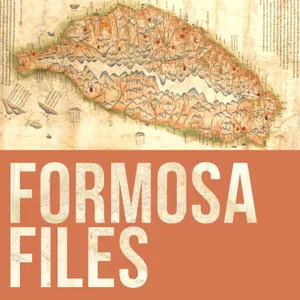
Formosa Files is a Taiwan history podcast that uses an engaging storytelling format and is non-chron游戏副本
Latest Episodes
The most recent episodes — sign up to get AI-powered summaries of each one.
- 4 days ago36 min
Ballots and Missiles: Taiwan’s First Presidential Election (1996) – S6-E27
Eryk and John look back at Taiwan’s first direct presidential election: the protests and constitutional reforms that made it possible, Lee Teng-hui’s controversial visit to Cornell University, and the Chinese missile tests that turned an election campaign into the Third Taiwan Strait Crisis.On March 23, 1996, with two US carrier groups sent to the region and ROC soldiers on alert, more than ten million Taiwanese went to the polls. The leading candidates were incumbent KMT president Lee Teng-hui and the DPP’s Peng Ming-min, a veteran democracy activist and former political exile.Held in the shadow of PLA missiles, the election was a landmark in Taiwan’s democratization.
- 4 days ago37 min
VIDEO - Ballots and Missiles: Taiwan’s First Presidential Election (1996) – S6-E27
NOTE: We know non-Spotify users may not be able to view this from here, but the program is also available on YouTube. Thanks.Eryk and John look back at Taiwan’s first direct presidential election: the protests and constitutional reforms that made it possible, Lee Teng-hui’s controversial visit to Cornell University, and the Chinese missile tests that turned an election campaign into the Third Taiwan Strait Crisis.On March 23, 1996, with two US carrier groups sent to the region and ROC soldiers on alert, more than ten million Taiwanese went to the polls. The leading candidates were incumbent KMT president Lee Teng-hui and the DPP’s Peng Ming-min, a veteran democracy activist and former political exile.Held in the shadow of PLA missiles, the election was a landmark in Taiwan’s democratization.
- 1 weeks ago30 min
The History of Comic Books in Taiwan – S6-E26
John is joined by writer, artist and comics enthusiast Ray Hecht for a journey through Taiwan’s manga history. This story is sometimes reduced to Japanese comics and their Taiwanese spinoffs. Ray and John, however, get into the forgotten influence of Shanghai liánhuán túhuà – “linked-picture” storybooks – in the post-WWII years. Also, central to today’s episode is the humble neighborhood rental bookstore, which put cheap popular reading into the hands of generations of Taiwanese. These books and shops were too popular at times for the government. Censorship and crackdowns were needed to protect the citizens. Enter the Comics Cleansing Movement. And listen and learn why the censors once objected to illustrations of talking animals.We wrap up with a mention of Ray’s anthology Memories of Taiwan: 37 stories about life in Taiwan by 19 artists from around the world. It’s being released with support from a Kickstarter campaign. To learn more about Ray Hecht, visit his Linktree profile.The main source for today was the excellent Taiwan Comics: History, Status, and Manga Influx 1930s-1990s by Lee I-Yun (translated by Timeea Cosobea).
- 1 weeks ago26 min
VIDEO - Drones: From Toys to Weapons, with Bryce Barros – S6-E25
Apple Podcast users will need to visit YouTube to view this.Defense analyst Bryce C. Barros tells Formosa Files about M.I.T. drones and their surprising connection to Taiwan's remote-controlled toy industry.Before China became the "world's factory," Taiwanese companies emerged as major manufacturers of inexpensive toys and electronics during the 1960s, 1970s, and 1980s, producing them for customers globally. The skills in the production of small motors, electronics, and plastics, as well as precision manufacturing, for remote-controlled toy planes, helicopters, boats, and cars would later lay the groundwork for Taiwan's early drone industry, providing the skills and supply chains.But beginning in the 1990s, Taiwan lost ground as manufacturing moved across the Taiwan Strait and China invested heavily in research and development and in large-scale drone production. Chinese companies such as DJI, founded in Shenzhen in 2006, have emerged and now lead China's dominance in the global commercial drone market, holding a lead in military drones as well.With Russia's full-scale invasion of Ukraine in 2022 demonstrating the growing importance of inexpensive and attritable unmanned systems to modern warfare, Taiwan has accelerated efforts to build a domestic drone industry, reduce reliance on Chinese components, and incorporate drones into its war plans -- with roots going back to those skills gained from producing remote-controlled toys decades ago. NOTE: The opinions shared by Mr. Barros are his own and do not reflect existing or previous affiliations.
- 1 weeks ago24 min
Drones: From Toys to Weapons, with Bryce Barros – S6-E25
Defense analyst Bryce C. Barros tells Formosa Files about M.I.T. drones and their surprising connection to Taiwan's remote-controlled toy industry.Before China became the "world's factory," Taiwanese companies emerged as major manufacturers of inexpensive toys and electronics during the 1960s, 1970s, and 1980s, producing them for customers globally. The skills in the production of small motors, electronics, and plastics, as well as precision manufacturing, for remote-controlled toy planes, helicopters, boats, and cars would later lay the groundwork for Taiwan's early drone industry, providing the skills and supply chains.But beginning in the 1990s, Taiwan lost ground as manufacturing moved across the Taiwan Strait and China invested heavily in research and development and in large-scale drone production. Chinese companies such as DJI, founded in Shenzhen in 2006, have emerged and now lead China's dominance in the global commercial drone market, holding a lead in military drones as well.With Russia's full-scale invasion of Ukraine in 2022 demonstrating the growing importance of inexpensive and attritable unmanned systems to modern warfare, Taiwan has accelerated efforts to build a domestic drone industry, reduce reliance on Chinese components, and incorporate drones into its war plans -- with roots going back to those skills gained from producing remote-controlled toys decades ago. NOTE: The opinions shared by Mr. Barros are his own and do not reflect existing or previous affiliations.
- 2 weeks ago2 min
TAIWAN IN TIME VIDEO - The Keelung Ghost Festival
We understand that APPLE Podcasts is not showing these videos. We will try to fix this issue, but in the meantime, they can be seen on YouTube. Here is the link for this one. Created with Han Cheung from TAIWAN IN TIME.
- 2 weeks ago28 min
The 1652 Revolt: The Guo Huaiyi Rebellion – S6-E24
John is joined by writer and historian Scott Crawford to recount the bloodiest episode in the history of Dutch Formosa. A revolt, led by Guo Huaiyi, resulted in the deaths of several thousand Chinese. We look at what drove farmers to rebellion and the tragic events of September 1652. This episode grew out of John and Scott’s special ten-part read-along of Dr. Chen Yao-Chang’s novel A Tale of Three Tribes in Dutch Formosa, which follows Dutch, Chinese and Siraya characters in the mid-seventeenth century. You can follow that series on our sister podcast, Bookish Asia with Plum Rain Press.Podcast and Book LinksBookish Asia with Plum Rain Press - Apple Podcasts: https://podcasts.apple.com/tw/podcast/bookish-asia-with-plum-rain-press/id1756322103Bookish Asia with Plum Rain Press - Spotify: https://open.spotify.com/show/4f6I46PkxVv4VM6dqTGngXA Tale of Three Tribes in Dutch Formosa - E-book (Plum Rain Press): https://www.plumrainpress.com/product-page/a-tale-of-three-tribes-in-dutch-formosa-e-bookA Tale of Three Tribes in Dutch Formosa - Paperback / Collector’s Edition (Plum Rain Press): https://www.plumrainpress.com/product-page/a-tale-of-three-tribes-in-dutch-formosa
- 2 weeks ago3 min
VIDEO - WHO WAS TAIWAN'S FIRST OLYMPIAN? feat. Taiwan in Time
This is a test video to see how it works on Spotify and Apple. These shorts can also be found on YouTube. Created with Han Cheung from TAIWAN IN TIME.
Get The Taiwan History Podcast: Formosa Files summaries in your inbox
Free AI-powered daily recaps. Key takeaways, quotes, and mentions — in a 5-minute read.
Get Free Summaries →Free forever for up to 3 podcasts. No credit card required.
You Might Also Like
Listeners also like.

The Ezra Klein Show
Conversations on pressing political, social, and cultural issues with experts and thinkers.

The Team House
Deep-dive conversations on national security with special operations veterans, intelligence professionals, and frontline reporters.
Our Fake History
Explores the blurred line between historical events and the myths surrounding them.

History That Doesn't Suck
A bi-weekly podcast delivering well-researched, engaging stories from American history.
The Why Files: Operation Podcast
Explores mysteries, myths, and legends with well-researched, fresh takes delivered in a fun and lighthearted style.

Revisionist History
Re-examines overlooked or misunderstood events, people, and ideas from the past to question accepted narratives.

History Unplugged Podcast
Features interviews with history authors and answers to listener questions on a wide range of historical topics.

Fighter Pilot Podcast
Explores military aviation through stories of fighter pilots, aircraft, weapons systems, and emerging technologies like AI in air combat.
The History of Literature
A deep dive into world literature, exploring great works from ancient epics to modern classics.

Timcast IRL
Tim Pool discusses politics, culture, and current events with guests, emphasizing free speech, government overreach, and tech censorship.

The Last Archive
A historical exploration of truth, knowledge, and the cultural forces shaping belief in the modern era.

Interesting Times
Explores global shifts and emerging trends through interviews and analysis on the evolving world order.
About The Taiwan History Podcast: Formosa Files
Formosa Files is a Taiwan history podcast that uses an engaging storytelling format and is non-chron游戏副本
Customized Recaps
AI-powered recaps with compact key takeaways, quotes, and insights.
Straight to Your Inbox
Get key takeaways from The Taiwan History Podcast: Formosa Files in a 5-minute read.
Save Hours Every Week
Stay current on your favorite podcasts without falling behind.
Frequently Asked Questions
What is Podzilla's The Taiwan History Podcast: Formosa Files daily summary?
It's a free AI-powered email that summarizes new episodes of The Taiwan History Podcast: Formosa Files as soon as they're published. You get the key takeaways, notable quotes, and links & mentions — all in a quick read.
How does the The Taiwan History Podcast: Formosa Files podcast summary work?
When a new episode drops, our AI transcribes and analyzes it, then generates a personalized summary tailored to your interests and profession. It's delivered to your inbox every morning.
Is this an official The Taiwan History Podcast: Formosa Files product?
No. Podzilla is an independent service that summarizes publicly available podcast content. We're not affiliated with or endorsed by John Ross and Eryk Michael Smith.
Can I get summaries of other podcasts too?
Absolutely! The free plan covers up to 3 podcasts. Upgrade to Pro for 15, or Premium for 50. Browse our full catalog at /podcasts.
How often does The Taiwan History Podcast: Formosa Files release new episodes?
The Taiwan History Podcast: Formosa Files publishes 2x weekly. Our AI generates a summary within hours of each new episode.
What topics does The Taiwan History Podcast: Formosa Files cover?
The Taiwan History Podcast: Formosa Files covers topics including History. Our AI identifies the specific themes in each episode and highlights what matters most to you.
Start getting The Taiwan History Podcast: Formosa Files summaries tomorrow morning.
Free forever for up to 3 podcasts. No credit card required.
Free forever for up to 3 podcasts. No credit card required.