Free Daily Podcast Summary
Taiwan Salon: Daily Summaries Delivered
by Global Taiwan Institute
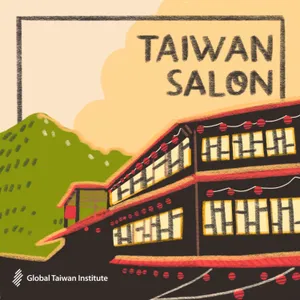
Taiwan Salon is a podcast produced by the Global Taiwan Institute (GTI), a 501(c)3 policy think tank in Washington, DC. Hosted by members of GTI’s staff, Taiwan Salon examines Taiwan’s cultural policy and approach to soft power from perspectives both inside and outside the government. Through interviews, the series illuminates how Taiwan’s unique history and culture interacts with policy and pinpoints opportunities and challenges for future “soft” engagement between Taiwan and the United States. Intro and outro music for the series is by I’mdifficult 我是機車少女.
Latest Episodes
The most recent episodes — sign up to get AI-powered summaries of each one.
- 2 weeks ago29 min
S5 E5: Moving Taiwan beyond Earth: Exploring Taiwan’s Space Policy and Technology ft. Andie Wang (Taiwan Space Generation)
Taiwan’s space capabilities are taking off. From developing indigenous satellites to strengthening communication resilience, Taiwan is building its own space industry and seeking more cooperation with international actors.In this episode, former GTI Communications Associate Yuchen Lee and Research Associate Jessica Shiao interview Andie Wang, President of Taiwan Space Generation (TSG). She explores the evolution of Taiwan’s space programs and the policy ecosystem behind it. Andie discusses Taiwan’s satellite program, the role of the Taiwanese government, academia, and civil society, as well as opportunities to deepen US-Taiwan cooperation in this field.As space is an increasingly strategic domain, Taiwan has opportunities and challenges ahead in participating in international space cooperation. Listen to this episode to learn how Taiwan is building its place in the global space community and how space technology can be an avenue for Taiwan’s international engagement and soft power.
- Jul 31, 202619 min
S5 E4: Is AI a New Form of Colonization? Defending Indigenous Sovereignty in A Tech World ft. Margaret Yun-Pu Tu
In the fourth episode of Taiwan Salon Season 5, former GTI Communications Associate Yuchen Lee and GTI Ya-Hui Chiu Summer Fellow Cara Bilson interview Margaret Yun-Pu Tu, a PhD candidate in Law at the University of Washington and co-founder of the Seattle-based NGO Pacific Alliance for Autonomous Traditions, Indigenous Sovereignty (PAFATIS). Ms. Tu explores the impact of AI on indigenous cultures and how maintaining data sovereignty is essential for indigenous groups globally and within Taiwan.Ms. Tu discusses how unauthorized data collection through large language models (LLMs) and careless AI-generated content undermines the autonomy Indigenous communities have fought hard to achieve. Moreover, such exploitation extends beyond technology into broader diplomatic practices when it comes to Indigenous cultural diplomacy. However, she also highlights how solutions may be found in grassroots tech initiatives and responsible legislation that elevate Indigenous perspectives in the crafting of public policy.
- May 4, 202620 min
S5 E3: Indigenous Peoples, Global Ties: Reimagining Taiwan through Its Pacific Roots ft. Margaret Yun-Pu Tu (a.k.a. Nikal Kabala’an)
“Taiwan is not only a geopolitical hotspot—it's part of a much longer Indigenous history across the Pacific.”In Taiwan Salon Season 5 Episode 3, GTI Communications Associate Yuchen Lee and Spring 2026 Intern Cara Bilson speak with Margaret Yun-Pu Tu, a PhD candidate in Law at the University of Washington and co-founder of the Seattle-based NGO Pacific Alliance for Autonomous Traditions, Indigenous Sovereignty (PAFATIS). Margaret shares her experience representing Taiwan at the United Nations Permanent Forum on Indigenous Issues (UNPFII), where Taiwanese Indigenous communities can circumvent diplomatic constraints and engage directly with Indigenous movements worldwide.Facing shared struggles—from language loss to land rights—Taiwan's Indigenous peoples and global Indigenous communities have naturally formed a sibling bond. Margaret explains how connecting with broader Pacific Indigenous networks empowers Taiwan's Indigenous movements to amplify their voices and reshape narratives about Taiwan's identity.Useful Links:UNPFII: https://social.desa.un.org/issues/indigenous-peoples/unpfiiPAFATIS (Pacific Alliance For Autonomous Traditions, Indigenous Sovereignty) website: https://www.pafatis.org/about-1Upcoming event in Seattle by PAFATIS: https://calendar.washington.edu/Id-Do-Anything-to-Survive-Life-Stories-of-Taiwans-Indigenous-Peoples-in-the-Interstices-of-Authoritarian-Rule/E197857780
- Mar 30, 202626 min
S5 E2: When K-POP Meets Hakka: The International Engagement of Hakka TV ft. Paul Shiang and I-Li Lo
“When we saw Leeteuk from Super Junior speak Hakka at his concert, I was really moved because at that moment I realized this was no longer just a television program. It has become a sincere cultural exchange.”In 2024, Hakka TV launched its first international co-production: Hakka Kitchen, a reality show that brings K-pop stars like Super Junior's Leeteuk together with Taiwanese artists to run a Hakka restaurant. This collaboration marked a breakthrough in Taiwan's media landscape—proving that ethnic media content and global pop culture can thrive together.In this episode, GTI Communications Associate Yuchen Lee sits down with Paul Shiang (向盛言), Director of Hakka TV, and I-Li Lo (羅亦娌), Program Manager of Hakka TV. I-Li walks us through the behind-the-scenes of this Taiwan-Korea collaboration, while Paul explores Hakka TV’s evolving role in fostering resilience among global democracies.Useful linksHakka TV website: https://www.hakkatv.org.tw/The trailer of Hakka Kitchen 2: https://www.youtube.com/watch?v=Wzg7KPkdQsoThe trailer of Trails to Hakka: https://www.youtube.com/watch?v=FumQZflLVSg
- Mar 11, 202626 min
S5 E1: Can Television Save a Language? The Story of Hakka TV ft. Paul Shiang and I-Li Lo
“Hakka culture is not mainly about grand buildings or eye-catching symbols. It's not only about history and festivals. Instead, it lives quietly in everyday life, in our food, our language and our family relationships.”Characterized by their hospitality and distinctive food culture, the Hakka (客家) are one of Taiwan’s major ethnic groups, comprising about 20 percent of the population. Over the years, however, the Hakka language has experienced a sharp decline in everyday use. Hakka TV (客家電視), a public media platform, leverages creative programming to foster appreciation of Hakka culture while working to revive this beautiful language. Today, it is also expanding its reach to engage a broader international audience.In the first episode of Taiwan Salon Season 5, GTI Communications Associate Yuchen Lee interviews Paul Shiang (向盛言), Director of Hakka TV, and I-Li Lo (羅亦娌), Program Manager of Hakka TV. Through various TV programs, their work not only sheds light on the vibrant Hakka culture, but also engages in a dialogue with the broader world through their unique Hakka perspectives.Useful linksHakka TV website: https://www.hakkatv.org.tw/The trailer of Black Tide Island: https://youtu.be/FNxWjoJgPKI?si=9C8DJ24SL-fNHUeiThe trailer of Gold Leaf: https://youtu.be/7ysn_oBRv_w?si=2RatZkQVbqgqoh82TV Program Octopus News special series on the Russo-Ukraine War: https://www.youtube.com/watch?v=mDS7YdawwCI
- Feb 2, 202641 min
Taiwan Salon Season 4 Episode 7: Ipa Chiu on Building Democracy through Open-Source Technologies
“Don’t ask why nobody is doing this, you are the NOBODY.”Confronted with frequent natural disasters—such as earthquakes and typhoons—and ongoing political challenges, including Chinese coercion, Taiwan has cultivated a resilient and highly creative civil society. Within this dynamic ecosystem, civic technology stands out as a distinctive force, blending grassroots activism with digital innovation to tackle complex social and governance problems.In this episode of Taiwan Salon, GTI Communications Associate Yuchen Lee and Summer 2025 Intern Tracy Weener interview Ipa Hsiao-wei Chiu (瞿筱葳), the Co-Founder of Taiwan’s largest civic tech community, g0v (台灣零時政府). Ipa explains what makes Taiwan's civic tech community unique and how it thrives throughout this past decade, highlighting ‘openness’ as the core value of this long-standing digital activism.Useful linksg0v’s website: https://g0v.tw/intl/en/The book on Taiwan’s civic tech community and the story of g0v, “The NOBODY Movement: Civic Hackers and Digital Activism in Taiwan”: https://a.co/d/6QI27cPg0v Summit 2026: https://summit.g0v.tw/2026/Sch001 零時小學校 (g0v Elementary School): https://sch001.g0v.tw/The Minecraft Project by g0v Elementary School : https://www.youtube.com/watch?v=nj4M7d3qBtk
- Nov 18, 202547 min
Taiwan Salon Season 4, Episode 6: Aiong Taigi on Preserving Taiwanese and Learning the Inner Language
Taiwanese (台語), also known as Tâi-gí, is the most widely spoken native language in Taiwan. During both the Japanese colonial period and subsequent martial law era (1949-1987), Taiwanese and other indigenous languages faced severe repression. While democratization has restored the freedom to speak Taiwanese openly, new challenges have emerged. As fewer young people speak the language, the question looms: how can this once-flourishing mother tongue survive in an era of globalization?In this episode of Taiwan Salon, GTI Communications Associate Yuchen Lee and 2025 Ya-Hui Chiu Summer Fellow Carissa Cheng interview Aiong Taigi, a Taiwan-based American YouTuber dedicated to preserving and promoting Taiwanese. Aiong shared his experience learning Taiwanese as a foreigner, and how Taiwan’s language policies have evolved from the martial law period to today’s democratic society.Useful linksAiong Taigi: https://www.youtube.com/@AiongTaigi/featuredChiok-eng-tâi 足英台三聲道磅米芳: https://www.youtube.com/@saveTaiwanese/featuredMary Knoll Taiwanese Textbooks: https://journeytothewestresearch.com/tag/maryknoll-taiwanese/Taiwanese singer Hsieh Ming-yu (謝銘祐): https://open.spotify.com/artist/38kvukZeDwVBlhLnVVCKWwWebsite that archives lyrics of Taiwanese songs (台語正字歌詞): https://hackmd.io/@Et47FKHKRS2m83n-aEjwAA/HkqwImgdU
- Oct 30, 202537 min
Taiwan Salon, Season 4, Episode 5: Honghong Tinn on Island Tinkerers and Semiconductors
In this episode of Taiwan Salon, GTI Senior Programs Manager Adrienne Wu and Intern Trinity Tai interview Honghong Tinn, the author of Island Tinkerers and an assistant professor at University of Minnesota, Twin Cities. Drawing upon her research of influential Taiwanese “tinkerers,” Dr. Tinn talks about how Taiwan’s rise in high-tech industries has contributed to its international image and engagement.
Get Taiwan Salon summaries in your inbox
Free AI-powered daily recaps. Key takeaways, quotes, and mentions — in a 5-minute read.
Get Free Summaries →Free forever for up to 3 podcasts. No credit card required.
You Might Also Like
Listeners also like.
Technically Speaking: An Intel Podcast
Explores how technological advancements, from computer chips to medical implants, are developed and shaping the future of society.
The Team House
Deep-dive conversations on national security with special operations veterans, intelligence professionals, and frontline reporters.

Close All Tabs
A tech journalist explores how digital culture, internet trends, and AI shape real-world behavior and societal norms.
The Truth of the Matter
Breaks down complex global policy issues through informed, balanced discussions without spin or sensationalism.

Gloss Angeles
Two beauty journalists analyze makeup, skincare, and wellness trends through pop culture and celebrity influence.
Tech Won't Save Us
A critical look at the tech industry’s influence on society and the political consequences of its promises.
Taylor Lorenz’s Power User
Examines how technology and internet culture reshape society, fame, and free speech through weekly deep dives and policy discussions.
硅谷101
一档探讨硅谷科技、思想与人物精神的深度访谈播客。

Townhall Review | Full Interviews & Monologues
A conservative talk-radio show offering weekly political commentary and analysis from leading voices in U.S. and global news.
TechSurge: Deep Tech Podcast
Explores emerging technologies, startup challenges, and investment trends through interviews with tech leaders, founders, and investors.
Pekingology
A deep dive into Chinese politics, the Communist Party’s operations, and the global implications of China’s domestic and foreign policies.

The Lawfare Podcast
Discussions with experts on national security, law, and policy covering foreign policy, intelligence, cybersecurity, and governance.
About Taiwan Salon
Taiwan Salon is a podcast produced by the Global Taiwan Institute (GTI), a 501(c)3 policy think tank in Washington, DC. Hosted by members of GTI’s staff, Taiwan Salon examines Taiwan’s cultural policy and approach to soft power from perspectives both inside and outside the government. Through interviews, the series illuminates how Taiwan’s unique history and culture interacts with policy and pinpoints opportunities and challenges for future “soft” engagement between Taiwan and the United States. Intro and outro music for the series is by I’mdifficult 我是機車少女.
Customized Recaps
AI-powered recaps with compact key takeaways, quotes, and insights.
Straight to Your Inbox
Get key takeaways from Taiwan Salon in a 5-minute read.
Save Hours Every Week
Stay current on your favorite podcasts without falling behind.
Frequently Asked Questions
What is Podzilla's Taiwan Salon daily summary?
It's a free AI-powered email that summarizes new episodes of Taiwan Salon as soon as they're published. You get the key takeaways, notable quotes, and links & mentions — all in a quick read.
How does the Taiwan Salon podcast summary work?
When a new episode drops, our AI transcribes and analyzes it, then generates a personalized summary tailored to your interests and profession. It's delivered to your inbox every morning.
Is this an official Taiwan Salon product?
No. Podzilla is an independent service that summarizes publicly available podcast content. We're not affiliated with or endorsed by Global Taiwan Institute.
Can I get summaries of other podcasts too?
Absolutely! The free plan covers up to 3 podcasts. Upgrade to Pro for 15, or Premium for 50. Browse our full catalog at /podcasts.
How often does Taiwan Salon release new episodes?
Taiwan Salon publishes occasional. Our AI generates a summary within hours of each new episode.
What topics does Taiwan Salon cover?
Taiwan Salon covers topics including Government. Our AI identifies the specific themes in each episode and highlights what matters most to you.
Start getting Taiwan Salon summaries tomorrow morning.
Free forever for up to 3 podcasts. No credit card required.
Free forever for up to 3 podcasts. No credit card required.