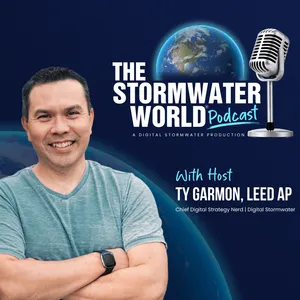
Free Daily Podcast Summary
The Stormwater World Podcast: Daily Summaries Delivered
by Ty Garmon
After over fourteen years in the stormwater industry, I feel like I’ve only scratched the surface. There is more to learn than ever! Whether you are brand new to the industry or a seasoned veteran, I’m sure you feel the same way. I’m talking to subject matter experts across the industry, so you don’t have to. My name is Ty Garmon, and I’ll be your host. Join me as we learn together about what is happening in the Stormwater World!
Latest Episodes
The most recent episodes — sign up to get AI-powered summaries of each one.
- 2 days ago44 min
Stormwater World Episode 075: The Invisible Industry with Matt Fishbune, CEO of Duke’s
Did you know that this podcast is produced by Digital Stormwater? Digital Stormwater B2B Visibility & Digital Marketing, making a difference in stormwater 1 click at a time! They do all things digital. Check them out at DigitalStormwater.com because the best-known beats best every time. Key Topics Collecting data isn't the same as using it. Matt cites a Black & Veatch survey: 70% of utilities collect operational data, only 19% use it well, and 71% of those blame staffing and skills. Map first. You can't prioritize what you haven't identified, and many storm systems still live on paper maps or in one veteran's head. Select sourcing: when the GIS "department" is one overloaded person, a partner can handle mapping, basin studies and inspections so in-house crews can stay proactive. AI speeds up the work but doesn't replace it. AI-assisted camera inspection lets operators focus on getting in and out of the pipe and on QA/QC of defect codes. The workforce gap is widening. Matt says utilities run about a 10% vacancy rate and a third of the workforce could retire in the next 5 to 10 years. The skilled trades are a career, not a fallback. Your skill times your clarity equals your AI leverage, but you're still the judge. Verify what the tool gives you. Make it actionable: one page, green, yellow, red. Fix the red first, then the yellow. Growth means getting local: more "dots on the map" so crews are close to the customers and the funding. In this episode, host Ty Garmon sits down with Matt Fishbune, CEO of Duke’s. Most people only think about stormwater when it's coming through their front door. Matt calls it the invisible industry with an invisible workforce: underground infrastructure nobody sees until something fails. Matt has tripled Duke's in revenue, EBITDA and headcount, to $100M+ in annual revenue, 400 employees and 2,500 customers nationwide. Matt traces Duke's from a 1940s HVAC shop in Syracuse, NY to a national sanitary sewer maintenance company, and how customers pulled the team into stormwater as funding grew. He and Ty get into why stormwater still earns the worst grades on the ASCE infrastructure report card, why so many systems still aren't mapped, and why AI won't replace the skilled labor it takes to inspect, maintain and rehab pipe underground. They also cover recruiting into the trades, the "skill × clarity = AI leverage" line on the sticker on Ty's monitor, and Matt's green-yellow-red approach to making data something decision makers can act on. The views expressed are that of the individual and do not represent the opinions of any companies past, present or future. Connect with Matt Fishbune: LinkedIn: https://www.linkedin.com/in/mattfishbune/ Duke's: https://www.dukes.com/ Careers at Duke's: https://www.dukes.com/careers/ Connect with Ty Garmon, LEED AP: Connect with Ty on LinkedIn: https://www.linkedin.com/in/tygarmon/ Sign up to be a guest: https://forms.gle/whijSz9Tio3iZda57 Check out The Stormwater World Podcast on YouTube: https://www.youtube.com/channel/UC9hVXVJ5oXplf_V9XOPpR6A Podcast Website: https://stormwaterworld.com Stay Informed! Sign-up for the Stormwater World Newsletter: https://stormwaterworld.com/newsletter-sign-up/ Please don't forget to rate, comment, and subscribe to Stormwater World Podcast on Apple, Spotify, or wherever you listen to podcasts!
- 2 weeks ago47 min
Institutional Knowledge Transfer with Joseph Blackman, founder of Vitendo Training Solutions
Did you know that this podcast is produced by Digital Stormwater? Digital Stormwater B2B Visibility & Digital Marketing, making a difference in stormwater 1 click at a time! They do all things digital. Check them out at DigitalStormwater.com because the best-known beats best every time. Key Topics Joseph Blackman is the founder of Vitendo Training Solutions and host of the Public Works Podcast. Vitendo is Swahili for "teach." What Vitendo does: goes on location, puts an agency's best practices on video, and makes them easy to find, so the knowledge is still there when the next hire arrives. "Document, don't produce." Film the operator doing the real job and talking it through, instead of staging a scripted shoot. The asset list: 50 to 250 topics that keep a week of filming on track. Getting crews comfortable on camera: you never have to look at the lens, the video stays internal, and filler words and pauses get edited out. What lost knowledge costs: Ty's story of the one veteran worker who found a buried cleanout in two tries, and Joseph’s about the equipment that sits idle because the only person who could run it retired. Why trainers should film every session: shoot it once and you have it forever. Turning video into quizzes, step-by-step guides, and audio with AI. Training as retention. People leave when they do not feel valued, and access to training tells them they are. The silver tsunami, and why Joseph will not knock the younger workforce: competence breeds confidence. Why canned safety videos fall short of training filmed on your own trucks, in your own dirt. Quotes "Training isn't something you've done, it's something that you do." ~Joseph Blackman "If you shoot it once, you have it forever." ~Joseph Blackman In this episode, host Ty Garmon sits down with Joseph Blackman, founder of Vitendo Training Solutions and host of the Public Works Podcast. Joseph captures the institutional knowledge that walks out the door when experienced public works and utility staff retire, by filming crews doing the real work and turning it into training the next hire can pull up in the field. They cover how simple the process is, how to get camera-shy operators talking, what lost knowledge costs taxpayers, and why training is one of the best ways to keep good people. The views expressed are that of the individual and do not represent the opinions of any companies past, present or future. Connect with Joseph Blackman: LinkedIn: https://www.linkedin.com/in/josephblackman/ Vitendo Training Solutions: https://vitendo.us Public Works Podcast: https://vitendo.us/public-works-podcast Email: joe@vitendo.us Connect with Ty Garmon, LEED AP: Connect with Ty on LinkedIn: https://www.linkedin.com/in/tygarmon/ Sign up to be a guest: https://forms.gle/whijSz9Tio3iZda57 Check out The Stormwater World Podcast on YouTube: https://www.youtube.com/channel/UC9hVXVJ5oXplf_V9XOPpR6A Podcast Website: https://stormwaterworld.com Stay Informed! Sign-up for the Stormwater World Newsletter: https://stormwaterworld.com/newsletter-sign-up/ Please don't forget to rate, comment, and subscribe to Stormwater World Podcast on Apple, Spotify, or wherever you listen to podcasts!
- Sep 30, 202647 min
Understanding Floating Treatment Wetlands with Coy Clark from Atlan Stormwater
Did you know that this podcast is produced by Digital Stormwater? Digital Stormwater B2B Visibility & Digital Marketing, making a difference in stormwater 1 click at a time! They do all things digital. Check them out at DigitalStormwater.com because the best-known beats best every time. Key Topics Coy's path into floating wetlands: thirty years in water, a LinkedIn video of a 16,000 square foot wetland in Brisbane, and a cold email to the CEO that became the job. Who Atlan is: a 50+ year Australian manufacturer, formerly SPEL, with an 18-year floating wetland product and a US arm Coy has been building for about a year and a half. The module: triangular HDPE, about four and a quarter square feet, with a removable basket of pea gravel instead of soil so you do not muddy the water you came to clean. The point most people miss: the plant builds the habitat; it does not eat the pollution. Roots, biofilm and oxygen support a microbial community that can grow three to four times over. Daphnia: one can consume upwards of 35,000 algal or bacterial cells a day, part of what Atlan's CEO calls the concentrated wetland effect. Versus a constructed wetland: soil treats roughly the top twelve inches, while floating roots hang a meter or more into the water column. Maintenance: eyes on it every four months to check for invasives, connector pins and anchors. Routine plant harvesting is not necessary. Anchoring: cast aluminium earth anchors most of the time, and boat anchors sized for hurricane winds in the Village of Pinecrest, Florida. The plastic question: UV-stabilized HDPE with a ten year warranty and a hundred year design life. Where it works: warm ponds three to five feet deep, and creeks as litter traps. Where it does not: the middle of a deep lake, or a pond too clean to feed the plants. Sizing: Florida's five percent rule, Australia's roughly 0.85 percent of the watershed, and Atlan's new online calculator. In the field: 120 modules protecting a stocked pond at the University of Kentucky, and Georgia volunteers collecting 15 to 20 pounds of litter every five or six weeks. The rest of the range: Atlan Filter, Flow Filter, Flow Guard, Atlan Trap, and the Atlan Cube, rated around 42 metric tons per square meter. INSTALLATION TIME LAPSE VIDEO LINK Quotes "The role of the plant is to create the habitat underneath the wetland, because that habitat will draw in life." ~Coy Clark "It's nature on steroids. My boss calls it the concentrated wetland effect." ~Coy Clark "Expect this to be a generational stormwater asset. It's a hundred year design life." ~Coy Clark In this episode of the Stormwater World Podcast, host Ty Garmon talks with Coy Clark of Atlan Stormwater about floating treatment wetlands: what they are, what they do, and where they belong. Coy explains why the plants are not the treatment, but the habitat that draws in the microbes and microfauna that are. He is equally direct about the limits: a deep lake is the wrong place, and no floating wetland is a silver bullet for an algae bloom. The views expressed are that of the individual and do not represent the opinions of any companies past, present or future. Connect with Coy Clark: LinkedIn: https://www.linkedin.com/in/coyaclark/ Atlan Stormwater: https://atlanstormwater.com Connect with Ty Garmon, LEED AP: Connect with Ty on LinkedIn: https://www.linkedin.com/in/tygarmon/ Sign up to be a guest: https://forms.gle/whijSz9Tio3iZda57 Check out The Stormwater World Podcast on YouTube: https://www.youtube.com/channel/UC9hVXVJ5oXplf_V9XOPpR6A Podcast Website: https://stormwaterworld.com Stay Informed! Sign-up for the Stormwater World Newsletter: https://stormwaterworld.com/newsletter-sign-up/ Please don't forget to rate, comment, and subscribe to Stormwater World Podcast on Apple, Spotify, or wherever you listen to podcasts!
- Sep 3, 202626 min
Clean Streets = Cleaner Waters | Sweeper Summit 2026 with Seth Brown, PhD, P.E. and Greg McPartlin
Did you know that this podcast is produced by Digital Stormwater? Digital Stormwater B2B Visibility & Digital Marketing, making a difference in stormwater 1 click at a time! They do all things digital. Check them out at DigitalStormwater.com because the best-known beats best every time. Key Topics Impromptu StormCon sit-down with Seth Brown, PhD, P.E., Executive Director of the National Municipal Stormwater Alliance (NMSA), and Greg McPartlin of the Clean Streets = Cleaner Waters initiative. Sweeping has been a maintenance checkbox with little measurement of what was picked up or how, even though it is source-control pretreatment. The 15th annual Sweeper Summit is November 3 and 4 in San Antonio: "one summit, two industries, one national discussion," bringing power sweeping and MS4 professionals together. Guests describe sweeping as six to ten times cheaper than downstream treatment, while extending BMP life, reducing inlet clogging, and cutting local flooding. Research since the 1970s consistently shows cost-effective removal in Florida, California, Minnesota, and New England; early mixed results reflected study design, not the practice. Policy is the gap. Chesapeake Bay’s crediting, Minnesota's organic-debris phosphorus calculator, New Hampshire's refinement, and Mile High Flood Control District’s interest are the exceptions. NMSA wants consistent national crediting for actual removal, not assumed lane miles, so contracts can pay for performance instead of lowest-bidder checkbox work. Onboard tech already logs GPS, brush engagement, RPM, angle, volume, and moisture for near real-time reporting, aligning with EPA e-reporting. About 31 states have no real sweeping policy, and operator skill is a top performance factor. Manufacturers including ODRA, TYMCO, Elgin, and Schwarze, plus NAPSA (North American Power Sweeping Association) and 1-800-Sweeper, funded phase one. Next: STEPP verification, an ASTM sweeping-performance standard, training, and a half-day researcher workshop with PDHs at the Summit. Texas partners include WEAT, the San Antonio River Authority, and TCEQ. Quotes "The research has been done. What hasn't been done is connecting this research with policy. The real way to get this moving forward is connecting these two worlds through policy." ~Seth Brown In this episode, host Ty Garmon sits down with Seth Brown, PhD, P.E., Executive Director of the National Municipal Stormwater Alliance, and Greg McPartlin of the Clean Streets = Cleaner Waters initiative, live from StormCon. They make the case that street sweeping is pretreatment and one of the most cost-effective MS4 tools available, by unpacking the research-to-policy gap, performance-based crediting, and Sweeper Summit in San Antonio as the first time the sweeping and stormwater industries meet as one national discussion. The views expressed are that of the individual and do not represent the opinions of any companies past, present or future. Connect with Seth Brown, PhD, P.E.: Seth Brown (NMSA): https://www.linkedin.com/in/sethbrownpe NMSA: https://ms4nmsa.org/ Email: seth.brown@nationalstormwateralliance.org Connect with Greg McPartlin: Greg McPartlin (Urban Quarries): https://www.linkedin.com/in/gregory-l-mcpartlin-b47305a9 Sweeper Summit: https://www.sweepersummit.com/ Connect with Ty Garmon, LEED AP: Connect with Ty on LinkedIn: https://www.linkedin.com/in/tygarmon/ Sign up to be a guest: https://forms.gle/whijSz9Tio3iZda57 Check out The Stormwater World Podcast on YouTube: https://www.youtube.com/channel/UC9hVXVJ5oXplf_V9XOPpR6A Podcast Website: https://stormwaterworld.com Stay Informed! Sign-up for the Stormwater World Newsletter: https://stormwaterworld.com/newsletter-sign-up/ Please don't forget to rate, comment, and subscribe to Stormwater World Podcast on Apple, Spotify, or wherever you listen to podcasts!
- Aug 20, 20261h 3m
Stormwater Beyond NPDES with Caleb Rennaker from IDEM
Did you know that this podcast is produced by Digital Stormwater? Digital Stormwater B2B Visibility & Digital Marketing, making a difference in stormwater 1 click at a time! They do all things digital. Check them out at DigitalStormwater.com because the best-known beats best every time. Key Topics Caleb Rennaker's role as Watershed Planning and Restoration Section Chief with IDEM, and his introduction as the podcast's first guest from a state regulatory agency. Why public communication matters for non-point source pollution, since roughly 70 to 80 percent of impacted water bodies stem from non-point sources rather than a single regulated pipe. The challenge of translating acronym heavy regulatory language into messaging the public can understand and act on. How urbanization creates both challenges and opportunities, since converting agricultural or undeveloped land into an MS4 regulated area brings new water quality controls into play. MS4 programs as a practical framework connecting local planning, public education, infrastructure partnerships, and measurable water quality outcomes, beyond simple permit compliance. The Clean Water Act Section 319 grant program, which funds non-point source management through watershed planning and implementation, typically covering most project costs through a cost share model. How Indiana builds watershed management plans that meet EPA's nine key elements before becoming eligible for implementation funding. EPA's Nonpoint Source Success Stories database, where Indiana submitted thirteen stories in 2025, the most of any state that year, documenting improvements tracked over 10 to 20 year periods. Total Maximum Daily Load basics, including how pollutant load allocations are calculated for a watershed and how MS4 stormwater contributions are estimated using land based area rather than direct outfall measurement. The TMDL program's consent decree era, when states focused on hitting numerical quotas, and how Indiana now prioritizes watersheds where a TMDL can lead directly into implementation work. The importance of data sharing between regulated entities, watershed groups, and IDEM, including Indiana's growing use of externally submitted data that meets state QA and QC standards. Quote "We're not gonna solve the challenges that we have today by just attacking the problems in our little micro programs that are often understaffed and under-resourced. We really need the buy-in from the public." ~Caleb Rennaker In this episode, host Ty Garmon sits down with Caleb Rennaker, Watershed Planning and Restoration Section Chief at IDEM, for the podcast's first conversation with a state regulator. Caleb explains why public education on non-point source pollution is difficult, walks through how the Clean Water Act Section 319 program funds watershed planning and implementation, and unpacks Total Maximum Daily Loads and their overlap with MS4 permits. The conversation covers Indiana's push to document success stories, the value of sharing environmental data, and why partnerships beat going it alone. The views expressed are that of the individual and do not represent the opinions of any companies past, present or future. Connect with Caleb Rennaker: LinkedIn: https://www.linkedin.com/in/caleb-rennaker-2a321191 IDEM Nonpoint Source Program: https://www.in.gov/idem/nps/ Email: crennake@idem.in.gov Connect with Ty Garmon, LEED AP: Connect with Ty on LinkedIn: https://www.linkedin.com/in/tygarmon/ Sign up to be a guest: https://forms.gle/whijSz9Tio3iZda57 Check out The Stormwater World Podcast on YouTube: https://www.youtube.com/channel/UC9hVXVJ5oXplf_V9XOPpR6A Podcast Website: https://stormwaterworld.com Stay Informed! Sign-up for the Stormwater World Newsletter: https://stormwaterworld.com/newsletter-sign-up/ Please don't forget to rate, comment, and subscribe to Stormwater World Podcast on Apple, Spotify, or wherever you listen to podcasts!
- Jul 31, 202640 min
Dewatering Without the Ditch with Michael Bensdorf from Flocate Industries
Did you know that this podcast is produced by Digital Stormwater? Digital Stormwater B2B Visibility & Digital Marketing, making a difference in stormwater 1 click at a time! They do all things digital. Check them out at DigitalStormwater.com because the best-known beats best every time. Key Topics Michael's path: a Purdue civil engineering degree, utility design, an MBA, management consulting, and then buying Flocate outright in February. How the deal happened: retiring owners with no one to sell to, a broker who made the introduction, and family backing. What Flocate does: anionic polymer pulls sediment out of turbid groundwater so contractors can discharge clean and stay NPDES compliant. The original system: towable trailers that replaced hand-dug swales, so crews stopped excavating a channel just to get water onto polymer. The new small-footprint tub: a patented 3D printed insert spins incoming water into a whirlpool, so it hits the polymer over and over instead of once. Why that matters on site: no excavator, no Bobcat, no haul truck. One person can carry two or three units and set them anywhere. Capacity: roughly 50 to 100 gallons per minute per unit today, with a manifold concept to reach 200 to 400. Why polymer beats dewatering bags on clay soils, and why bags clog and slow the job down. The adoption problem nobody talks about: no upside for the county reviewer who approves a new technology, and all the downside if it fails. AI as leverage for a one-person company, and the hard limit Michael draws on what it can actually do. Where Flocate goes next: get genuinely good first, then polymer distribution and a consulting arm for inventors facing agency approvals. Quotes “AI is never gonna take dirt out of water.” ~Michael Bensdorf In this episode of the Stormwater World Podcast, host Ty Garmon talks with Michael Bensdorf, who bought Flocate Industries in February and is learning the stormwater industry in public. Michael explains how anionic polymer pulls sediment out of turbid groundwater, why a new patented tub with a 3D printed insert puts water in contact with polymer over and over in a footprint one person can carry, and why the hardest part of selling something new is that no county reviewer gets rewarded for going first. He also makes a case for AI as the great equalizer for small business, while noting it is never going to take dirt out of water. The views expressed are that of the individual and do not represent the opinions of any companies past, present or future. Mentioned in This Episode: How the Flocate system works: https://flocate.com/how-it-works/ Barry Fagan on the pod, Episode 015: https://stormwaterworld.com/the-best-management-practice-with-barry-fagan-p-e-from-fagan-llc/ IECA Annual Conference & Expo, February 21-24, 2027, Reno NV: https://www.access-ieca.com/2027-annual-conference-expo Connect with Michael Bensdorf: LinkedIn: https://www.linkedin.com/in/michael-bensdorf/ Website: https://flocate.com/ Email: info@flocate.com Connect with Ty Garmon, LEED AP: Connect with Ty on LinkedIn: https://www.linkedin.com/in/tygarmon/ Sign up to be a guest: https://forms.gle/whijSz9Tio3iZda57 Check out The Stormwater World Podcast on YouTube: https://www.youtube.com/channel/UC9hVXVJ5oXplf_V9XOPpR6A Podcast Website: https://stormwaterworld.com Stay Informed! Sign-up for the Stormwater World Newsletter: https://stormwaterworld.com/newsletter-sign-up/ Please don’t forget to rate, comment, and subscribe to Stormwater World Podcast on Apple, Spotify, or wherever you listen to podcasts!
- Jul 15, 202631 min
Jeff King, CPESC from American Excelsior, Why is Curlex S.U.P.E.R.?
Did you know that this podcast is produced by Digital Stormwater? Digital Stormwater B2B Visibility & Digital Marketing, making a difference in stormwater 1 click at a time! They do all things digital. Check them out at DigitalStormwater.com because the best-known beats best every time. Key Topics Curlex and American Excelsior Company are the originators of the rolled erosion control industry, dating back to the early 1960s. A breakdown of the three primary erosion control fiber types: straw, coconut, and aspen Excelsior. How to select the right blanket based on slope gradient, desired product longevity, and shear stress requirements for channel applications. The SUPER framework for understanding why Curlex performs: Sustainable, Unique, Performance, Engineered, and Resources. Curlex does not float during hydraulic events due to its Velcro-like expansion and contraction when wet. The greenhouse effect created by Curlex fibers holding moisture, which accelerates vegetation establishment and leads to cleaner stormwater discharges. The difference between stitch-bonded and woven erosion control products. Material cost versus total landed project cost, and why selecting a performance-based product up front reduces callbacks, repairs, and project delays. Oklahoma as a standout state for stormwater BMP adoption and enforcement over the past 18 years. The importance of matching the right product to the right application. Jeff's expanding territory of approximately 15 states and the succession planning underway ahead of his father's retirement after 33 years with American Excelsior. The IECA South Central Chapter Conference and Expo: October 6 through 8 in Denton, Texas, featuring a field tour, a kickoff reception sponsored by Haynes Geo Components, a full conference day with a vendor reception, and strong municipal stormwater content developed in partnership with the North Central Texas Council of Governments. Quotes "Sometimes it costs a little more to do the right thing and do things right the first time. I see people taking shortcuts or taking the less expensive route and not getting the results that they could have gotten if they'd just done it right the first time."~Jeff King "Every BMP, when it's installed properly, has its place. There's no silver bullet for every single application."~Jeff King In this episode of the Stormwater World Podcast, Ty Garmon sits down with Jeff King, Territory Manager at American Excelsior and President of the South Central IECA chapter, for a practical conversation about erosion control blankets, product selection, and why performance matters more than choosing the cheapest option. Jeff breaks down the different fiber types used in erosion and sediment control blankets, including straw, straw/coconut blends, and Aspen Excelsior Curlex products. He explains why each material behaves differently in the field, how slope and channel conditions affect product selection, and why Curlex’s unique fiber structure helps it cling to soil, retain moisture, and support vegetation growth. The views expressed are that of the individual and do not represent the opinions of any companies past, present or future. Connect with Jeff King: LinkedIn: https://www.linkedin.com/in/jeff-king-a0ba9282/ SCIECA Conference: https://www.ieca.org/IECA/IECA/_IECA_Core/Events/Event_Display.aspx?EventKey=SOCEN26 Connect with Ty Garmon, LEED AP: LinkedIn: https://www.linkedin.com/in/tygarmon/ Sign up to be a guest: https://forms.gle/whijSz9Tio3iZda57 The Stormwater World Podcast on YouTube: https://www.youtube.com/channel/UC9hVXVJ5oXplf_V9XOPpR6A Podcast Website: https://stormwaterworld.com Stay Informed! Sign-up for the Stormwater World Newsletter: https://stormwaterworld.com/newsletter-sign-up/ Please don't forget to rate, comment, and subscribe to Stormwater World Podcast on Apple, Spotify, or wherever you listen to podcasts!
- Jun 18, 202610 min
Elkhart County’s Water Quality of Life Manual with Todd Clark
Did you know that this podcast is produced by Digital Stormwater? Digital Stormwater B2B Visibility & Digital Marketing, making a difference in stormwater 1 click at a time! They do all things digital. Check them out at DigitalStormwater.com because the best-known beats best every time. Key Topics Ty introduces this short bonus clip recorded at the Indiana MS4 Annual Partnership Meeting, held separately from the main award-winner episode Todd Clark, Elkhart County SWCD: His impressions of the Indiana MS4 Partnership, the value of the training and newsletter, and why the annual meeting is a top networking opportunity Todd’s role as Stormwater Project Manager: managing Stormwater Pollution Prevention Plan reviews and site inspections for the City of Goshen, City of Elkhart, Elkhart County, the Town of Bristol, and non-MS4 towns (MCM 4 and 5) The unique perspective of serving multiple MS4s at once, and the recurring conference theme that every MS4 is different and openness in sharing information makes everyone stronger The Pay Dirt conference: how Elkhart County brings the agricultural and stormwater worlds together to find common ground on water management The Water Quality of Life Manual: why it is intentionally not called a “technical field guide,” and how it spans construction BMPs, agricultural practices, and small-scale residential actions How small individual actions – from cover crops and grass waterways to rain barrels and rain gardens – collectively add up to a large positive impact on water quality and property values A teaser for a future full episode and deep dive into the manual with Todd and Jim In this bonus clip of the Stormwater World Podcast, host Ty Garmon shares a conversation recorded at the Indiana MS4 Annual Partnership Meeting in Plainfield, IN, with Todd Clark, Stormwater Project Manager for the Elkhart County Soil and Water Conservation District. Todd offers a behind-the-scenes look at how Elkhart County coordinates stormwater compliance across multiple communities and explains the thinking behind the district’s new Water Quality of Life Manual. Rather than a dry technical field guide, the manual is designed to reach everyone – contractors, farmers, and homeowners alike – with practical best management practices at every scale. From construction site stabilization to cover crops to backyard rain gardens, the throughline is simple: every small action adds up to cleaner water and a higher quality of life. Be sure to check out the full Water Quality of Life Manual linked below. Download the Water Quality of Life Manual: Elkhart County SWCD – Water Quality of Life Manual (PDF) The views expressed are that of the individual and do not represent the opinions of any companies past, present or future. Connect with Todd Clark: Elkhart County Soil & Water Conservation District: https://www.elkcoswcd.org/ Learn more about the Pay Dirt Conference: https://www.elkcoswcd.org/event/pay-dirt/ Connect with Ty Garmon, LEED AP: Connect with Ty on LinkedIn: https://www.linkedin.com/in/tygarmon/ Sign up to be a guest: https://forms.gle/whijSz9Tio3iZda57 Check out The Stormwater World Podcast on YouTube: https://www.youtube.com/channel/UC9hVXVJ5oXplf_V9XOPpR6A Podcast Website: https://stormwaterworld.com Stay Informed! Sign-up for the Stormwater World Newsletter: https://stormwaterworld.com/newsletter-sign-up/ Please don’t forget to rate, comment, and subscribe to Stormwater World Podcast on Apple, Spotify, or wherever you listen to podcasts!
Get The Stormwater World Podcast summaries in your inbox
Free AI-powered daily recaps. Key takeaways, quotes, and mentions — in a 5-minute read.
Get Free Summaries →Free forever for up to 3 podcasts. No credit card required.
You Might Also Like
Podcasts in similar categories.

The Jamie Kern Lima Show
Entrepreneur Jamie Kern Lima interviews experts and celebrities about overcoming self-doubt and building self-belief.

The Ezra Klein Show
Conversations on pressing political, social, and cultural issues with experts and thinkers.

The Mel Robbins Podcast
A motivational podcast offering research-backed tools and personal stories to help listeners make positive life changes.

Hidden Brain
Explores human behavior and the unconscious patterns that shape our decisions, relationships, and society through science and storytelling.

The Level Up Podcast w/ Paul Alex
A former detective shares real stories and practical strategies on building passive income, financial freedom, and entrepreneurial success.

The Diary Of A CEO with Steven Bartlett
Raw, unfiltered conversations with influential figures and experts exploring personal growth, mindset, and the realities of success.
SmartLess
Three hosts engage in improvised conversations with a mystery guest, blending humor and personal stories through authentic dialogue.
The Ramsey Show
Provides practical advice on personal finance and debt management through caller questions answered by Dave Ramsey and financial experts.
About The Stormwater World Podcast
After over fourteen years in the stormwater industry, I feel like I’ve only scratched the surface. There is more to learn than ever! Whether you are brand new to the industry or a seasoned veteran, I’m sure you feel the same way. I’m talking to subject matter experts across the industry, so you don’t have to. My name is Ty Garmon, and I’ll be your host. Join me as we learn together about what is happening in the Stormwater World!
Customized Recaps
AI-powered recaps with compact key takeaways, quotes, and insights.
Straight to Your Inbox
Get key takeaways from The Stormwater World Podcast in a 5-minute read.
Save Hours Every Week
Stay current on your favorite podcasts without falling behind.
Frequently Asked Questions
What is Podzilla's The Stormwater World Podcast daily summary?
It's a free AI-powered email that summarizes new episodes of The Stormwater World Podcast as soon as they're published. You get the key takeaways, notable quotes, and links & mentions — all in a quick read.
How does the The Stormwater World Podcast podcast summary work?
When a new episode drops, our AI transcribes and analyzes it, then generates a personalized summary tailored to your interests and profession. It's delivered to your inbox every morning.
Is this an official The Stormwater World Podcast product?
No. Podzilla is an independent service that summarizes publicly available podcast content. We're not affiliated with or endorsed by Ty Garmon.
Can I get summaries of other podcasts too?
Absolutely! The free plan covers up to 3 podcasts, any in the catalog. Basic raises that to 15, Pro to 40 and Max to 100. Browse our full catalog at /podcasts.
How often does The Stormwater World Podcast release new episodes?
The Stormwater World Podcast publishes monthly. Our AI generates a summary within hours of each new episode.
What topics does The Stormwater World Podcast cover?
The Stormwater World Podcast covers topics including Science, Education, Government, Earth Sciences. Our AI identifies the specific themes in each episode and highlights what matters most to you.
Start getting The Stormwater World Podcast summaries tomorrow morning.
Free forever for up to 3 podcasts. No credit card required.
Free forever for up to 3 podcasts. No credit card required.