Free Daily Podcast Summary
The Soviet Life: Daily Summaries Delivered
by Kate Saba
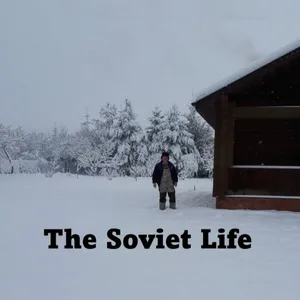
The Soviet Life is a podcast that brings the past to life through personal stories and honest conversations about everyday experiences behind the Iron Curtain. Hosted by Kate, who grew up in 1970s–80s Belarus, the show explores how people lived, loved, worked, and endured during the final decades of the USSR — and what followed after its collapse. Featuring voices from across the former Soviet republics, the West, and beyond, each episode bridges generations and cultures to uncover the human side of history. Whether you're a former citizen, a curious learner, or a student of the Cold War, The Soviet Life offers insight, connection, and a powerful reminder of our shared humanity.
Latest Episodes
The most recent episodes — sign up to get AI-powered summaries of each one.
- 2 weeks ago25 min
23: Two Young Americans Visit Moscow
What is Moscow really like when you experience it for yourself?In this episode of The Soviet Life, host Kate Saba sits down with Maria and Sonya (who goes by Sophia) following their recent trip to Moscow, where they traveled to visit their grandmother and experience the city through their own eyes.We hear so much about Russia through news reports, politics, and social media—but this conversation is about something different. It is about personal experience.Maria and Sonya share their first impressions of Moscow, what surprised them most, what they noticed about everyday life, and how being there compared with the image of Russia they had formed before their trip. They talk about the city, the people, family, culture, and some of the unexpected moments that stood out during their visit.For Kate, the conversation is especially meaningful. Having grown up in the Soviet Union, she carries her own memories and perspective of this part of the world. Maria and Sonya, however, are experiencing Moscow through completely different eyes—as young Americans and as part of a new generation with family ties to the region.Together, their conversation explores the interesting space between expectation and reality, past and present, and being both a visitor and someone with a personal connection to the place you're visiting.At its heart, this episode isn't about politics or trying to define an entire country through one experience. It's about family, curiosity, cultural connection, and what we can learn when we have the opportunity to experience a place for ourselves.In this episode, we talk about:• Maria and Sonya's trip to Moscow• Visiting their grandmother and reconnecting with family• Their first impressions of the city• What surprised them most• Expectations versus their actual experience• Everyday life in modern Moscow• Russian culture and family life• Experiencing Russia through the eyes of a younger generation• Kate's perspective growing up in the Soviet Union• How family connections and cultural heritage can span generationsIf you enjoy stories about growing up in the Soviet Union, life after the USSR, immigration, culture, traditions, family, and the experiences that connect our past with our lives today, follow The Soviet Life so you don't miss future episodes.I'd also love to hear from you. Have you visited Moscow or another part of the former Soviet Union? Did Maria and Sonya's experience surprise you? Or perhaps you have a Soviet or post-Soviet story of your own that you'd like to share.Reach out anytime at kate@thesovietlife.com. I always love hearing from listeners.Thank you for listening and for being part of The Soviet Life community.— Kate SabaHost of The Soviet Life
- Aug 9, 202634 min
22: Summer Behind the Iron Curtain: What We Actually Did
In this episode of The Soviet Life, host Kate Saba takes listeners back to the unforgettable summers of the Soviet Union, when summer wasn’t simply a vacation — it was an entire season of life. Through personal memories of growing up in Belarus and the broader story of everyday Soviet life, Kate explores how adults spent their much-anticipated vacations, where families traveled, and how children filled those seemingly endless months away from school. From dachas, summer camps, and weeks spent with grandparents to mushroom picking, forest adventures, sanatoriums, trips to the sea, and long days of childhood freedom outdoors, this episode captures a side of Soviet life rarely found in history books. Along the way, Kate reflects on the small things — like the smell of lilacs — that can suddenly transport us back to another place and time and asks why the summers of our childhood remain among the memories we hold onto the longest.Key Topics• The meaning of summer in the Soviet Union• Vacation practices for Soviet workers and families• How Soviet children spent their long summer break• Pioneer and summer camps• Spending summers with grandparents• Life at the dacha and its cultural significance• Outdoor childhood games and adventures• Mushroom and berry picking• Family vacations and travel within the USSR• Soviet sanatoriums and organized holidays• The role of grandparents in children's upbringing• Childhood freedom and independence• Nostalgia and the memories we carry from childhoodSound Bites“Summer wasn't simply a two-week vacation.”“Summer was a full season of life.”“The feeling of freedom, peace, and happiness.”Chapters00:00 — Introduction to Soviet Summer Memories01:07 — The Personal Connection: Lilacs and Childhood Nostalgia03:01 — What Summer Meant in the Soviet Union04:20 — Vacation Duration and Planning in the USSR06:10 — Children's Summer Activities and Camps07:36 — Living with Grandparents and Family Traditions08:55 — Outdoor Play and Nature Exploration10:19 — Family Trips and Travel Destinations14:32 — The Dacha: A Symbol of Soviet Summer19:01 — Grandparents' Role in Summer Life21:23 — Summer Outdoors: Games, Nature, and Exploration25:12 — Gathering Mushrooms and Forest Adventures27:23 — Family Vacations and Sanatoriums30:13 — The Rhythm and Reflection of Soviet Summers32:09 — Childhood Freedom and Nostalgia34:06 — Reflections on Summer and Cultural Memories35:27 — Connecting Across Cultures and Sharing Stories36:18 — Closing Remarks and Contact InformationIf you grew up in the Soviet Union or another former Soviet republic, what did summer mean to you? Did you spend it at the dacha, with your grandparents, at camp, or traveling with your family? What smell, food, place, or tradition immediately takes you back?Share your memories with The Soviet Life, reach out to Kate at Kate@thesovietlife.com. Every story helps preserve another small piece of everyday history.
- Jul 4, 202630 min
21: Celebrating Independence Day Across Two Worlds
SummaryIn this special Independence Day episode, Kate Saba reflects on celebrating two nations that have shaped her life: Belarus and the United States. Recorded on the Fourth of July during America's 250th anniversary celebration, she explores the history behind Belarus's Independence Day, the different dates that hold meaning for Belarusians, and how national identity can be both complex and deeply personal. Through historical context and personal stories, Kate shares what it means to honor the country where she was born while celebrating the country she now proudly calls home. This episode is an invitation to reflect on freedom, resilience, gratitude, and the many ways our histories shape who we become.Key TopicsThe history and significance of Belarus's Independence Day on July 3Why Belarus has multiple dates associated with independence and sovereigntyThe impact of World War II on Belarus and its national identityComparing Independence Day celebrations in Belarus and the United StatesLiving between two cultures as a Belarusian-AmericanThe role of immigrants in shaping AmericaPersonal reflections on gratitude, freedom, and belongingHonoring the past while embracing the futureSound Bites"Independence means different things to different nations, but its value is universal.""You don't have to choose between where you came from and where you've built your future.""Our stories are bridges between cultures and generations.""Freedom is not only a historical event—it is something we continue to cherish every day.""Honoring one homeland doesn't diminish the love for another."Chapters00:00 Introduction: Celebrating Two Independence Days03:10 The History Behind Belarus's Independence Day10:15 Why Belarus Has More Than One Significant Independence Date16:45 Comparing Independence Day Traditions in Belarus and America23:30 Living Between Two Cultures30:10 America's 250th Anniversary and the Immigrant Experience36:00 Family Traditions, Gratitude, and Final ReflectionsFollow The Soviet Life for more stories that connect history, culture, and real human experiences from the former Soviet world. Reach out to Kate at Kate@thesovietlife.com.
- Jun 21, 202635 min
20: Summer Camps in the USSR
In this episode of The Soviet Life, host Kate Saba explores the fascinating world of Soviet summer camps and the lasting impact they had on generations of children across the Soviet Union. Drawing from both historical context and personal experience, Kate examines how these camps were designed not only as places for recreation, but also as institutions that promoted community, independence, discipline, and shared cultural values.Listeners will learn about the structure of camp life, daily routines, traditions, and the role camps played in shaping childhood experiences throughout the USSR. Kate also discusses some of the most famous camps, including Artek, and explains why attending these prestigious camps was considered a dream for many Soviet children.The episode further explores how summer camps evolved after the collapse of the Soviet Union, what traditions survived the transition, and how Russian-speaking communities in the United States and Western countries continue to preserve aspects of this cultural heritage through diaspora camps today. Through a thoughtful comparison of Soviet and Western camp models, Kate reflects on what these institutions reveal about society, childhood, and the values passed from one generation to the next.Key topicsThe purpose and ideology of Soviet summer campsStructure and daily routines of Soviet campsFamous camps like Artek and their significancePost-Soviet changes in camp culture and structureRussian-speaking camps in America and cultural preservationSound Bites"Camps served to promote fitness, discipline, and Soviet values.""Artek was the crown jewel of Soviet childhood.""Camps reflected society's view of childhood and future citizens."Chapters00:00 - Introduction to Soviet Summer Camps03:48 - The Purpose of Soviet Camps03:57 - Structure and Daily Life in Soviet Camps18:44 - Famous Soviet Camps: Artek and Others22:07 - Post-Soviet Camp Evolution26:05 - Comparing Soviet and American Camps28:01 - Russian-Speaking Camps in America31:36 - Reflections on Childhood and HeritageFollow The Soviet Life for more stories that connect history, culture, and real human experiences from the former Soviet world. Reach out to Kate at Kate@thesovietlife.com.
- Jun 7, 20261h 4m
19: Alex Tokmin: Books, Freedom, and Life Beyond the USSR
In this episode of The Soviet Life, host Kate Saba interviews Alex Tokmin, who shares his unique experiences growing up in the Soviet Union and his journey to the United States. Alex reflects on his childhood memories, the influence of literature, and the challenges of adapting to life in a new country. He discusses the cultural differences he encountered, the importance of education, and the impact of his past on his present life. The conversation also touches on the psychological aspects of personal growth and the struggles of immigration. In this conversation, Alex Tokmin shares his experiences with language, culture, and life transitions from the Soviet Union to the United States. He discusses the nuances of English accents, particularly Cockney, and reflects on the impact of the Soviet Union's dissolution on his life. Alex contrasts his experiences in America with his past, highlighting the differences in societal norms and personal freedoms. He also touches on his career choices, the importance of family, and his daughter's artistic aspirations, while expressing nostalgia for the food and culture of his childhood in the Soviet Union.TakeawaysChildhood happiness is universal, regardless of circumstances.Literature played a significant role in shaping Alex's worldview.The experience of reading censored literature was profound.Education in the Soviet Union was limited but impactful.Alex's transition to the US was filled with cultural shocks.Resourcefulness is a key trait among immigrants.The concept of 'liquid currency' highlights the economic realities of the Soviet era.Psychology and self-awareness are crucial for personal growth.Cultural identity can be complex for immigrants from the former USSR.Language barriers can create significant challenges for newcomers. Alex discusses the differences between British and American English.He reflects on the fall of the Soviet Union and its impact on his life.Alex shares his experiences with corruption in the Soviet Union.He values the freedom and opportunities available in America.Alex emphasizes the importance of family and his daughter's artistic pursuits.He expresses nostalgia for the food from his childhood in the Soviet Union.Alex shares his thoughts on the importance of peace and communication.He reflects on the cultural differences between the U.S. and the Soviet Union.Chapters00:00 - Introduction to Alex Tokman and His Background01:05 - Growing Up in the Soviet Union: Early Memories04:39 - Literature and Its Impact on Alex's Life09:28 - Education and School Experiences in the USSR13:27 - Transition to University and Career Path16:57 - Resourcefulness and DIY Culture19:08 - Alcohol Culture and Its Impact21:14 - Cultural Identity and Perceptions of Nationality22:32 - The Impact of War on Rostov-On-Don23:53 - Cultural Heritage and Food in Southern Russia25:25 - Journey to the United States and Career at IBM26:23 - Psychology and Personal Development28:47 - Mikhail Litvak and the Evolution of Psychology31:32 - Coping with Soviet Legacy and Personal Responsibility34:58 - Language Barriers and Cultural Adjustments in America38:36 - Reflections on the Fall of the Soviet Union41:29 - Environmental Concerns and Global Responsibility44:12 - Life in America vs. Life in the Soviet Union45:27 - Corruption and Regulations in Society46:47 - Life Choices and Career Paths46:59 - Family Dynamics and Education Choices49:52 - Cultural Heritage and Food Memories52:53 - Reflections on the Soviet Union and Personal GrowthFollow The Soviet Life for more stories that connect history, culture, and real human experiences from the former Soviet world. Reach out to Kate at Kate@thesovietlife.com.
- May 9, 202625 min
18: Victory Day: Not Just History, But Memory
What does it mean to remember a war that took 27 million lives?In this deeply personal episode of The Soviet Life, host Kate Saba takes you into the heart of Victory Day (May 9th)—a day that is not just about history, but about identity, memory, and the stories carried across generations.Growing up with the legacy of World War II, Kate reflects on how this day shaped millions of lives across the former Soviet Union—and why, even decades later, it still brings people together in powerful and emotional ways.From the devastating human cost of the war…to the deeply symbolic traditions like laying red carnations…to a moving modern-day celebration in Washington, D.C.—This episode explores what happens when memory crosses borders, generations, and even political divides.You’ll hear:Why Victory Day is one of the most emotional holidays in the former USSRHow families continue to honor those who never came homeWhat it felt like to witness a Victory Day march in the U.S.—filled with music, unity, and reflectionAnd how, even in a complicated present, people still come together to remember a shared pastThis is not just a story about war.It’s a story about what we carry forward.Key Moments in This Episode00:00 – A personal reflection: what Victory Day means today01:52 – Why May 9th matters: the history behind the date06:18 – The human cost of war: understanding the scale of loss11:38 – Victory Day as a symbol of unity across nations14:44 – A powerful Victory Day celebration in Washington, D.C.17:49 – Why red carnations became the flower of remembrance20:01 – How different generations connect to this history22:00 – Reflections on unity, memory, and why remembering together still mattersWhy This Episode MattersVictory Day is more than a holiday.It’s a reminder that:History is not just something we learn—it’s something we inheritUnity, even if just for a moment, can still be feltAnd remembering—together—can be one of the most powerful things we doSound Bites“27 million lives lost in the war.”“Unity and camaraderie are deeply missed.”“Even if it’s just for a day—unity is powerful.”Follow The Soviet Life for more stories that connect history, culture, and real human experiences from the former Soviet world. Reach out to Kate at Kate@thesovietlife.com.
- Apr 21, 202628 min
17: Money and Economy after the Fall of the USSR - From Rubles to Chaos
What did it really feel like to live through the collapse of the Soviet Union? In this episode of The Soviet Life, host Kate Saba explores the dramatic fall of a superpower and the economic and cultural shockwaves that followed.From the moment the Soviet system dissolved in 1991, millions of people were thrust into a completely new reality. Savings disappeared overnight due to hyperinflation, currencies lost value, and privatization reshaped entire economies—often creating vast inequality and giving rise to powerful oligarchs. But beyond the economics, this episode captures something deeper: the human experience of uncertainty, adaptation, and resilience.Through personal insight and storytelling, Kate walks listeners through what it meant to go from a structured, planned economy to a free-market system with no guidebook—where suddenly, everything from jobs to identity was in flux.💬 “It felt like a family breaking apart.”💬 “Money became critical—but unreliable.”Key Topics:The collapse of the Soviet Union in 1991Hyperinflation and currency instability in post-Soviet statesPrivatization and the rise of oligarchsTransition from planned economy to capitalismCultural and psychological impact of rapid economic changeHuman resilience during times of uncertaintyChapters:00:00 – The Collapse of the Soviet Union08:21 – Economic Chaos and Hyperinflation15:07 – Privatization and the Rise of Oligarchs22:51 – Cultural Shock: From Planned Economy to Free Market32:04 – The Psychological Impact of Economic Transition39:02 – Different Paths: Economies of Former Soviet RepublicsTakeaways:Economic systems can collapse quickly—but rebuilding takes yearsHyperinflation can erase wealth and destabilize everyday lifePrivatization created both opportunity and inequalityCultural identity and mindset shift dramatically during systemic changeHuman resilience is often strongest during times of crisis🎧 Follow The Soviet Life for more stories that connect history, culture, and real human experiences from the former Soviet world. Reach out to Kate at Kate@thesovietlife.com.
- Mar 29, 202646 min
16: How Money Worked in the USSR - From Rubles to Survival
In this episode of The Soviet Life, host Kate Saba takes you inside a world where money didn’t work the way we expect - it existed and often couldn’t buy what people actually needed. With personal insight and historical perspective, she explores a system where salaries were stable, yet shelves were empty, where long lines and shortages defined daily life, and where the most valuable currency wasn’t rubles, but relationships. From controlled prices and state banking to black markets and the sudden collapse that wiped out savings overnight, Kate reveals how an entire society learned to survive - and even thrive - when money alone wasn’t enough.Key TakeawaysMoney didn’t equal access. In the USSR, you could have a steady salary - but still struggle to find basic goods on store shelves. The economy was controlled, not driven by demand. Prices and production were set by the state through central planning, not by what people actually needed. Shortages shaped everyday life. Long lines, limited choices, and waiting became a normal part of survival. Relationships were the real currency. The blat system - using personal connections - often mattered more than rubles when it came to getting goods or services. Income was stable, but opportunity was limited. Most people earned similar wages, but there was little chance to build wealth or improve living standards. There were two economies. The official system and an unofficial world of favors, exchanges that helped people get by. Luxury existed—but not for everyone. Special stores and access points created hidden inequality within a “supposedly equal” society. Banking didn’t function like in the West. Savings had limited purpose because there were few goods to spend money on. When the system collapsed, money collapsed with it. Inflation wiped out savings, showing how fragile the system really was. People adapted and found ways to survive. Resourcefulness, community, and resilience became essential life skills.Key topics:Planned economy and five-year plansSoviet ruble and kapeikasSalaries and income stabilityShortages and lines in storesRole of connections and BLAT systemBanking system in the USSRLuxury goods and special storesCollapse of the Soviet economy and inflationCultural significance of relationshipsSound Bites:• "In the USSR, money often had nothing to buy."• "Relationships were the most valuable currency."• "The money began to behave like a chirp - flowing away."Connect with us:Please share your thoughts and stories, reach out at kate@thesovietlife.com. Follow us and leave a review to support the podcast!
Get The Soviet Life summaries in your inbox
Free AI-powered daily recaps. Key takeaways, quotes, and mentions — in a 5-minute read.
Get Free Summaries →Free forever for up to 3 podcasts. No credit card required.
You Might Also Like
Listeners also like.
The Last Soviet
A stranded cosmonaut orbits Earth as the Soviet Union collapses, interwoven with stories of amateur radio operators, space dreams, and Cold War-era ambitions.
Svetlana! Svetlana!
A playwright investigates the bizarre post-defection life of Joseph Stalin’s daughter in America.

Easy Russian: Learn Russian with native speakers | Учим русский с носителями языка
Two native Russian speakers discuss language, culture, and answer listener questions, offering insights into Russian as it's truly spoken.

Lives Less Ordinary
True stories of love and resilience from around the world, shared by people who’ve lived them.

Putin
Explores Vladimir Putin’s life and decisions through accounts from those who have studied or interacted with him.

The Spy Who
Real spy stories from intelligence operatives who risked everything in high-stakes missions for national or personal interests.

The Real Story
Experts and decision makers analyze and debate major news stories.

Not Lost
A journalist and a friend travel to cities across North America, sharing meals with locals to explore cultures and personal identity.

To Die For
A journalist investigates the life of Aliia Roza, a woman who claims to have been trained as a Russian sex spy for the SVR.

Finally! A Show
Women share unfiltered, real-life stories from morning to night, offering intimate glimpses into their daily experiences.

Far From Home
A journalist travels to remote regions and cultural hotspots, documenting immersive stories from across the globe.

The Experiment
Explores how individuals navigate conflicts between personal beliefs and American ideals.
About The Soviet Life
The Soviet Life is a podcast that brings the past to life through personal stories and honest conversations about everyday experiences behind the Iron Curtain. Hosted by Kate, who grew up in 1970s–80s Belarus, the show explores how people lived, loved, worked, and endured during the final decades of the USSR — and what followed after its collapse. Featuring voices from across the former Soviet republics, the West, and beyond, each episode bridges generations and cultures to uncover the human side of history. Whether you're a former citizen, a curious learner, or a student of the Cold War, The Soviet Life offers insight, connection, and a powerful reminder of our shared humanity.
Customized Recaps
AI-powered recaps with compact key takeaways, quotes, and insights.
Straight to Your Inbox
Get key takeaways from The Soviet Life in a 5-minute read.
Save Hours Every Week
Stay current on your favorite podcasts without falling behind.
Frequently Asked Questions
What is Podzilla's The Soviet Life daily summary?
It's a free AI-powered email that summarizes new episodes of The Soviet Life as soon as they're published. You get the key takeaways, notable quotes, and links & mentions — all in a quick read.
How does the The Soviet Life podcast summary work?
When a new episode drops, our AI transcribes and analyzes it, then generates a personalized summary tailored to your interests and profession. It's delivered to your inbox every morning.
Is this an official The Soviet Life product?
No. Podzilla is an independent service that summarizes publicly available podcast content. We're not affiliated with or endorsed by Kate Saba.
Can I get summaries of other podcasts too?
Absolutely! The free plan covers up to 3 podcasts. Upgrade to Pro for 15, or Premium for 50. Browse our full catalog at /podcasts.
How often does The Soviet Life release new episodes?
The Soviet Life publishes monthly. Our AI generates a summary within hours of each new episode.
What topics does The Soviet Life cover?
The Soviet Life covers topics including Leisure, History, Education. Our AI identifies the specific themes in each episode and highlights what matters most to you.
Start getting The Soviet Life summaries tomorrow morning.
Free forever for up to 3 podcasts. No credit card required.
Free forever for up to 3 podcasts. No credit card required.