Free Daily Podcast Summary
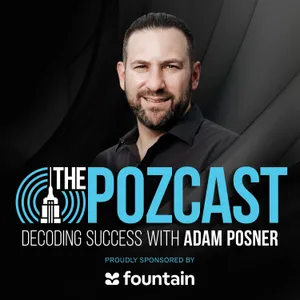
The POZCAST: Decoding Success with Adam Posner: Daily Summaries Delivered
by NHP Talent Group, Adam Posner
Get key takeaways, quotes, and insights from The POZCAST: Decoding Success with Adam Posner in a 5-minute read. Delivered straight to your inbox.
Latest Episodes
The most recent episodes — sign up to get AI-powered summaries of each one.
- Today16 min
We Went from Doing More to Doing Better: HR Tech Analyst Kyle Lagunas's State of the Union on AI (LIVE @ Transform 2026)
These episodes of #thePOZcast, live from Transform 2026 in Las Vegas, are proudly brought to you by our friends at PIN. AI recruiting tools that automate candidate sourcing, screening, and scheduling across 850M+ profiles. Built for recruiters, agencies, and hiring teams. Learn more and check out a demo: https://www.pin.com/book-a-demo?via=adam-posner Thanks for listening, and please follow us on Insta @NHPTalent and www.youtube.com/thePOZcast For all episodes, please check out www.thePOZcast.com TAKEAWAYS: 1. The Industry Shifted From Doing More to Doing Better Kyle's State of the Union in a single sentence: a year ago, AI was being applied to do more things faster. In 2026, the question has become whether those things are being done better. Volume was the first wave. Quality is the second. The vendors who survive the next cycle will be the ones who can demonstrate genuine outcome improvement, not just efficiency gains. 2. The Consolidation Bloodbath Is Over — and the Race Is Back On The expected wave of vendor exits didn't fully materialize, but AI gave surviving vendors the ability to ship value to customers faster than ever before. The competitive dynamics haven't eased — they've intensified. The companies still standing are moving faster, not slower. 3. Build vs. Buy Is Now a Real Strategic Question for TA Teams Enterprise talent acquisition teams are building their own AI workflows in-house, and that's changing the calculus for every vendor on the floor. Kyle's framework for go-to-market leaders: track how much building culture exists in your target accounts before burning sales calories. If a prospect is already building, that's not necessarily a lost sale — but it's a fundamentally different conversation. 4. Recruiting Fraud Has Become a National Security Issue The convergence of application agents, high job-seeker volume, and organized bad actors has turned recruiting fraud from an edge case into a genuine organizational risk. Kyle knows first- degree connections who have had the FBI in their office after hiring agents of foreign states. This is not hypothetical. Every company with any sensitive data or infrastructure is a target. 5. Fraud Detection Isn't One Problem — It's a Stack Problem Interview fraud doesn't have a single point of intervention. It needs to be addressed at the ATS, at the top of the funnel, and through identity verification across multiple interview stages. Kyle's benchmark of 12 AI interviewers found screen analysis capabilities — matching visual identity from interview to interview — becoming a standard feature. Manual workflows are a bridge, not a solution. 6. AI Is Finally Making Benefits Personal at Scale Benefits has always been complicated, jargon-heavy, and delivered as a one-size-fits-all package that employees don't understand. AI chat interfaces that know an employee's profile — single, two dogs, no kids — and can explain in plain language which plan makes sense for their specific life are making personalized benefits navigation possible without requiring an HRBP to sit with every employee. That's a meaningful change in how benefits gets delivered. 7. Candidates Are Getting Smarter About Total Comp — And Recruiters Need to Keep Up Kyle's observation from the market matches what Adam hears in the trenches: candidates are increasingly asking about the full picture of compensation, including employer contributions to healthcare, equity, and benefits value. Recruiters who can't articulate total comp in real numbers are at a disadvantage — and companies that can are converting more offers. 8. The Trust Gap Between Candidates and AI Is a Communication Failure, Not a Technology Failure The friction candidates are experiencing with AI in the hiring process isn't primarily a product problem — it's a communication problem. Employers are deploying AI interviewing, screening, and assessment tools without telling candidates how to use AI, what to expect, or why these tools actually benefit them. That vacuum is being filled by Reddit misinformation and candidate frustration. Simple, proactive communication could close most of that gap. 9. AI Interviewers Eliminate Ghosting — and That Matters More Than People Admit Kyle's case for AI interviewers directed at frustrated candidates: no ghosting (every candidate gets an interview option), 24/7 scheduling flexibility, the ability to self-select out of a bad fit, and a genuine touchpoint with a company that otherwise might never respond. The value proposition is real. The problem is nobody
- Yesterday15 min
You Can't Improve What You Can't See: The Origin Story of BrightHire: Teddy ChestnutL (LIVE @ Transform 2026)
These episodes of #thePOZcast, live from Transform 2026 in Las Vegas, are proudly brought to you by our friends at PIN. AI recruiting tools that automate candidate sourcing, screening, and scheduling across 850M+ profiles. Built for recruiters, agencies, and hiring teams. Learn more and check out a demo: https://www.pin.com/book-a-demo?via=adam-posner Thanks for listening, and please follow us on Insta @NHPTalent and www.youtube.com/thePOZcast For all episodes, please check out www.thePOZcast.com Takeaways: 1. You Can't Improve What You Can't See The founding insight of BrightHire — and one of the most durable frameworks in this series — is that hiring is the most consequential activity in any business, yet it produces almost no data. Interview conversations happen, and then they're gone. Capturing them isn't surveillance; it's the minimum requirement for actually improving the process. 2. Comp Comes Up in Fewer Than 2% of Candidate Conversations The most surprising data point from BrightHire's 930,000-interview analysis: salary and compensation are almost never what candidates are actually talking about in interviews. What they are asking about: remote and flexible work, company growth trajectory, and product innovation. If your recruitment messaging is leading with comp, you're answering a question most candidates aren't asking. 3. Interview Data Is a Goldmine for Employer Brand Strategy Sliced by seniority, function, and location, BrightHire's interview data tells employers exactly what different candidate segments care about — giving TA teams real intelligence for outbound messaging, recruitment marketing, and preparing recruiters and interviewers to answer the questions candidates are actually going to ask. That's a fundamentally different input for employer brand strategy than surveys or focus groups. 4. Interview Fraud Is Real and Growing — and the Defense Is Already Built The use case nobody anticipated when BrightHire launched: using candidate video profiles to verify that the person who showed up for onboarding is the same person who interviewed. Dozens of customers have built SOPs around this capability. As AI-generated fraud becomes more sophisticated, the ability to cross-reference identity signals across the entire interview process is becoming a core compliance function, not a nice-to-have. 5. AI Interviewers Don't Replace Recruiters — They Give Them Better Candidates Recruiter reaction to BrightHire's AI interviewer product wasn't fear — it was relief. By expanding access at the top of the funnel, AI interviewers surface qualified candidates who would have been passed over due to capacity constraints, giving recruiters a better pool to work from and more time to do the high-value human work of cultivating and closing those candidates. 6. The Recruiter Who Adapts Has a Massive Advantage Teddy's view is direct: recruiting professionals who embrace agentic workflows will be elevated by them. Those who resist are going to find themselves on the wrong side of an irreversible shift. The profession has always evolved — and the ones who leaned into each evolution came out ahead. 7. AI Agents Are Taking on Longer, More Complex Tasks Than Most People Realize Teddy's personal experience in the last six weeks: watching an engineering colleague execute a complex multi-step task by telling his AI agent, 'Find Teddy's Slack and execute on what Teddy asked for' — and then quality-controlling the result. The length and complexity of what agents can handle autonomously is increasing faster than most people outside of engineering teams appreciate. 8. The Right Acquisition Is One That Protects Founder Velocity Teddy's framework for evaluating the Zoom acquisition: founder-led culture at the acquiring company, strong strategic alignment on product thesis, and a track record of enabling acquired companies to retain their brand, culture, and growth trajectory. Workvivo is the proof point. Being acquired by a company where the founder is still running the show at four billion in revenue is a different experience than getting absorbed into a conglomerate. 9. Customers Are Already Building What Vendors Are Selling The most clarifying thing Teddy saw on the conference floor: customers sharing the in-house AI workflows they've already built — and the framework they're using to decide what to outsource. If a tool doesn't touch PII, compliance, or regulatory requirements, they're building it themselves. The bar for defensibility has permanently moved upward, and
- 4 days ago1h 27m
The Part After Cancer Nobody Prepares You For — A Conversation Between Two Survivors: Geoffrey Rogow & Adam Posner
Thanks for listening, and please follow us on Insta @NHPTalent and www.youtube.com/thePOZcast For all episodes, please check out www.thePOZcast.com This special episode is brought to you by our dear friends at Blood Cancer United. An organization very near and dear to me. I’m here to remind you to give to causes that make a difference. You want to help but you don’t know where to start? Blood Cancer United is at the top of my list. They are the global leader in helping patients and families with blood cancer, and your dollars fund research, patient support, and advocacy. Please give today here: Thank you for supporting this important mission. Learn more and donate here: https://pages.lls.org/voy/nyc/nyclls26/aposner CHAPTERS: 00:00 – 500 Episodes: Introducing Geoffrey Rogow Adam opens the milestone episode, introduces Geoffrey Rogow — journalist, survivor, founder, author — and sets the tone for the most personal conversation in the show's seven-year history. 03:00 – Who Were You Before? The Person Before Treatment Geoffrey's life before diagnosis: 30 years old, living in New York and Sydney, feeling infallible, driven by professional ambition. And Adam's contrast — a father of two at 45, diagnosed only because he went to a cardiologist after his brother-in-law died. 07:00 – The Diagnosis: Two Very Different Moments Geoffrey's blood clot in the night that saved his life. Adam's cardiologist scan that caught a mass nobody expected. The two very different ways a diagnosis lands — one like a movie, one like a text message. 13:00 – Four Days vs. Six Weeks: The Window Before Treatment Geoffrey had four days between diagnosis and chemotherapy. Adam had six weeks. What that difference does to your mind, your fear, your processing — and why no two cancer stories are the same. 17:00 – The Thing Nobody Tells Young Adults: Fertility The Vanderbilt study that found 50% of young adults diagnosed with cancer are never told about their fertility options before treatment. Geoffrey's sperm banking story. Adam's moment of levity. The organizations that exist to help — and why you should use them. 23:00 – Chemotherapy: The Reality Nobody Films Steroids that make you feel like Batman. Fatigue that puts you to bed at 1 PM. The taste of treatment — Geoffrey's: a burning Nike Air Max. Adam's: Sour Patch Kids and Shrek's condom. The rhythm of treatment cycles and the crash that follows. 30:00 – Hair Loss: The Moment It Hits You Not just the hair on your head — all of it. Geoffrey's Jewish mohawk and the cat photos. Adam's man bun, the shower, the wall of clumps, the hairdresser call. Why the eyebrows and eyelashes are the part nobody prepares you for. 37:00 – Going Out in Public Without Eyebrows Geoffrey at his best friend's wedding, feeling like a freak. Adam at a bar mitzvah two weeks post-treatment, cancer beanie and all. Why "you look great" hits differently when you don't recognize yourself in the photos. 42:00 – Tribes, Villages & Crisis Language Geoffrey's lesson: his tribe was too small — just his wife and the cat. The mistake he'd change. Adam's: an oversharer married to a shield, learning to lean on his guy friends so his wife didn't have to carry everything. What "crisis language as a couple" actually means. 49:00 – Tolerance for Bullshit: The Larry David Effect What cancer does to your patience for other people's bravado. Geoffrey's bar story, running out into Times Square and crashing full speed into Elmo. The anger that's real, and the work it takes not to carry it forever. 55:00 – The Biannual Check-In: A Framework for Purposeful Change A scheduled, structured personal evaluation every six months — professional path, relationships, health, direction. The check-in that led Geoffrey to leave the Wall Street Journal after 21 years. Why you can't make the changes when the warning lights are flashing; you have to make them later, in clarity. 61:00 – Scanxiety: The Incurable Side Effect of Survivorship Geoffrey's scan is next Wednesday. He started thinking about it two weeks ago. The reality that scanxiety doesn't diminish with time — it sometimes gets worse. What helps, what stops helping, and why there's no permanent answer. 66:00 – After Treatment: The Part Nobody Celebrates The financial reality: bill negotiations, illegal anesthesiologist charges, state-specific protections, hospital programs for lower-income patients. Life insurance rejection at 35. Career decisions constrai
- 5 days ago13 min
Skills Over Experience: How Udemy Rebuilt Its Hiring Framework: Ale Pegnim (LIVE @ Transform 2026)
These episodes of #thePOZcast, live from Transform 2026 in Las Vegas, are proudly brought to you by our friends at PIN. AI recruiting tools that automate candidate sourcing, screening, and scheduling across 850M+ profiles. Built for recruiters, agencies, and hiring teams. Learn more and check out a demo: https://www.pin.com/book-a-demo?via=adam-posner Thanks for listening, and please follow us on Insta @NHPTalent and www.youtube.com/thePOZcast For all episodes, please check out www.thePOZcast.com TAKEAWAYS: 1. Agency Recruiting Builds Skills That In-House Roles Don't Teach Sixteen years on the agency side gave Oli a closer's mentality, a sense of urgency, and an intolerance for avoidable fallout that she carried directly into Udemy. The best in-house recruiters often came from agency backgrounds — and companies that understand that have a sourcing advantage. 2. A 50% Inbound Hire Rate Is a Brand Achievement, Not an Accident Udemy's ability to fill half its roles from inbound applicants is a direct result of employer brand investment. Candidates who apply are already bought in — which means recruiters can spend more energy on screening quality than generating awareness. Inbound is not passive; it's the payoff of deliberate brand-building over time. 3. Skills-Based Hiring Requires Persona-Building, Not Just JD-Writing Udemy's approach goes deeper than listing skills in a job description. They build candidate personas modeled on current top performers — identifying what skills, behaviors, and experiences have actually driven success at the company — and use those personas to train recruiters on what to look for when scanning resumes and running screens. 4. Realignment Is a Sign of a Healthy Recruiting Process, Not a Failure Roles evolve mid-search. What a hiring manager thought they wanted in week one is often different from what they realize they need by week four. Oli's team treats realignment as a normal part of the process — using recruiting managers, people partners, and fresh perspectives to have the calibration conversation before more time is wasted. 5. Referral Bonuses Don't Improve Referral Quality — Culture Does Udemy's research-backed decision to eliminate referral bonuses is one of the most counterintuitive moves in this episode. The finding: happy employees who believe in where they work will refer good people because they want to work with them — not because there's a check waiting. Bonuses attract volume. Culture attracts quality. 6. Referrals Get Prioritized — But Not Protected Even without a bonus, referred candidates at Udemy receive a guaranteed recruiter conversation. But they still go through the same interview process as everyone else. No preferential treatment, no shortcuts. When a senior leader's referral doesn't make it, Oli holds the line — respectfully but firmly. 7. The Career Evolution Exercise Is the Best Antidote to AI Anxiety Oli's team exercise is immediately replicable: ask your recruiters to list what they did at the beginning of their career that they no longer do, then what they do today that didn't exist before. It makes the evolution of the profession visible — and reframes AI as the next chapter of a story that's been changing all along. 8. Turn Job Descriptions Into Job Ads With AI Oli's personal AI workflow is one of the most practical in the series: take a job description, prompt AI to rewrite it as a compelling job advertisement, refine for candidate appeal, then reverse-engineer: where do these people work, and how do I find them? It's a complete sourcing strategy built from a single starting point. 9. FIFO Is the Only Real AI Learning Strategy F around and find out. Oli's philosophy for AI adoption — at the individual and team level — is that the only way to understand what these tools can actually do for your process is to use them, break them, and learn from what happens. Udemy's monthly U Days give the team structured time to experiment in a low-stakes sandbox. 10. For Job Seekers: Network Hard, Stay Persistent, and Use AI to Find the Adjacent Role Oli's advice to candidates in a tough market: your network is your most underused asset — lean on it. Don't let one rejection stop you from applying elsewhere; timing and fit are company- specific, not a verdict on your value. And use AI to map your skills to adjacent industries and roles you might not have considered — your next opportunity might not look exactly like your last one. CHAPTERS: 00:00 –
- 6 days ago8 min
The Best Candidate is in Slot Number One. Pin's CEO Steven Lu on Rebuilding Recruiting Search (LIVE @ Transform 2026)
These episodes of #thePOZcast, live from Transform 2026 in Las Vegas, are proudly brought to you by our friends at PIN. AI recruiting tools that automate candidate sourcing, screening, and scheduling across 850M+ profiles. Built for recruiters, agencies, and hiring teams. Learn more and check out a demo: https://www.pin.com/book-a-demo?via=adam-posner Thanks for listening, and please follow us on Insta @NHPTalent and www.youtube.com/thePOZcast For all episodes, please check out www.thePOZcast.com TAKEAWAYS: 1. Same Tools, Same Results — You Have to Rebuild the Engine The insight at the heart of Pin: giving AI the same Boolean search infrastructure that human recruiters use produces the same mediocre results, just faster. The only way to get genuinely better outcomes is to rebuild the search engine itself so that AI can operate on a fundamentally different foundation. That's what Pin did — and why the results look different. 2. The Best Candidate Should Be First, Not on Page Seven The clearest signal that a recruiting search tool is working: the most qualified candidate for a role appears at the top of results, not buried deep in a list that requires manual excavation. For recruiters who've spent years digging through pages of search results, seeing the right person in slot one is a genuinely disorienting experience — in the best way. 3. Natural Language Filtering Closes the Gap Between Search and Judgment Standard filtering tools handle objective criteria — location, tenure, title. Pin's natural language feature handles the subjective judgment calls that used to require hours of resume scanning: the specific details that determine whether a candidate is actually worth a call. Resolving those questions in two questions or fewer is a meaningful time return for high-volume recruiters. 4. Pattern Recognition Learns Even Without Feedback — But Feedback Makes It Faster Pin's algorithm doesn't require explicit feedback to improve — it reads behavioral patterns in what recruiters accept and reject and adjusts accordingly. But providing reasons for rejections accelerates the learning dramatically. The system is watching, learning, and tuning, whether or not you tell it why. 5. The Curveball Candidate Is a Feature, Not a Bug Periodically surfacing a candidate who sits just outside the current search parameters isn't an error — it's deliberate calibration. When a recruiter declines that candidate, Pin learns where the line actually lies, resulting in increasingly precise results over time. The tool is always running a low-stakes experiment to get better. 6. A Visual Pipeline Changes How You Manage a Search Pin's upcoming Kanban board — drag-and-drop stages from interested through offer made — addresses one of the most persistent frustrations in recruiting: knowing at a glance where every candidate stands without digging through notes or spreadsheets. Pipeline visibility is a workflow problem as much as a sourcing one. 7. MCP + Claude Desktop = Autonomous Sourcing The MCP Server integration is the most forward-looking announcement in this episode: the ability for Claude Desktop to run Pin autonomously, without manual recruiter input, using Claude's broad knowledge base to execute searches and surface candidates. For business development and high-volume sourcing, this is autopilot for the top of the funnel. 8. The Second Company Is Easier Because the Team Already Knows How to Build Together Steven's team story is a blueprint for founder-led companies: seven people from his first venture joined him at Pin, bringing a shared language, shared trust, and a shared understanding of what works and what doesn't. The result is what Steven calls "life on easy mode" — not because the work is easier, but because the team already knows how to do it together. 9. Always Give Feedback to Your AI Tools Every rejection is a data point. Every accept is a signal. The recruiters getting the best results from AI-powered search tools are the ones who treat the interface as a two-way conversation — providing context, reasons, and reactions that train the system toward increasingly precise output. Passive use gets passive results. CHAPTERS: 00:00 – Day 9: The Return of Steven Lu Adam, on day 9 of 10 at Transform, welcomes back Steven Lu — a returning guest and the founder of Pin, the recruiting AI tool Adam uses every day. 02:00 – Why Giving AI Boolean Tools Gets You Boolean Results The core problem Pin was built to solv
- 1 weeks ago14 min
How to Find a Job When Everything Feels Impossible: Angel Cruzado's Secret Sauce (LIVE @ Transform 2026)
These episodes of #thePOZcast, live from Transform 2026 in Las Vegas, are proudly brought to you by our friends at PIN. AI recruiting tools that automate candidate sourcing, screening, and scheduling across 850M+ profiles. Built for recruiters, agencies, and hiring teams. Learn more and check out a demo: https://www.pin.com/book-a-demo?via=adam-posner Thanks for listening, and please follow us on Insta @NHPTalent and www.youtube.com/thePOZcast For all episodes, please check out www.thePOZcast.com TAKEAWAYS: 1. Build Three Distinct Support Communities Before You Need Them Angel's framework for navigating crisis — professional or personal — is built on three tiers: the emotional inner circle (family, closest friends, real-time updates), the logistics home team (practical help, appointments, WhatsApp coordination), and the extended internet community (prayers, encouragement, distant support). Knowing who belongs in each circle saves energy and deepens each relationship. 2. Learning to Receive Is as Important as Learning to Give When you're in crisis, people want to help — sometimes financially, sometimes practically, sometimes emotionally. Angel's experience is that the resistance to accepting generosity is real and deeply wired. Working through that resistance isn't weakness; it's a survival skill. 3. Deep Empathy for Yourself Comes Before Your Resume The most common job search mistake: starting with the resume. Angel's framework starts with a more foundational question — who are you right now, in this exact moment of your life? Your family situation, your financial runway, your emotional state, your real needs. You cannot build a purposeful job search without that honest baseline. 4. Purpose Is Not the Same as Empathy — But You Can't Get There Without It Deep empathy gives you the foundation. Purpose builds on it — it's your current state, your trajectory, your story. It's the answer to "tell me about yourself" that is honest, specific, and actually compelling. Most people skip empathy and land on a purpose that doesn't feel real — because it isn't. 5. Your Old Resume Is Actively Working Against You The resume you built for the Obama administration — or even five years ago — is not your resume today. Angel's advice: start from scratch with a modern platform that parses your actual capabilities, competencies, and skills. Don't update the old document; replace it entirely. 6. LinkedIn Is a Brand, Not a Job Board Most people treat LinkedIn as a passive repository. Angel treats it as a living brand. The formula: 24 words for role, 36 words for quantified impact, a current professional photo, a Canva-designed header, and active storytelling. Dormant profiles don't get found. Active brands do. 7. The Career Prayer Is the Most Powerful Networking Tool Available A LinkedIn post that blends personal humanity (here's where I am in my life right now), professional context (here's what I built and who I built it with), and authentic future direction (here's what I'm looking for) activates dormant networks faster than any cold outreach campaign. If it reads like AI wrote it, it won't work. If it reads like you, it will. 8. Use AI to Identify Who to Reach Out to First Download your full LinkedIn contact list. Feed it into AI along with your resume, LinkedIn profile, and clarity on what you're looking for. Ask it to identify the 20 most relevant people to reach out to — and why. This turns a vague networking intention into a targeted, prioritized outreach list in minutes. 9. The 1-4/14: Plan for 14 Months and 14 Years Simultaneously Angel's framework for living with a terminal diagnosis is a masterclass in holding two truths at once: get your affairs in order (14 months — directives, will, trustees) and commit to building a life and a legacy (14 years — purpose, impact, the people you're fighting for). Both are necessary. Neither cancels the other out. 10. Showing Up Is Its Own Act of Leadership Angel came to Transform 2026 with Stage 4 pancreatic cancer, a 2-3% five-year survival median, and more energy and generosity than almost anyone else in the building. His presence — and his willingness to share his journey publicly — is itself a form of re-inspiration for anyone going through their own version of impossible. CHAPTERS: 00:00 – Day 3 Opens With Angel Adam opens his first interview of day three with Angel Cruzado — a LinkedIn connection turned in-person meeting — and the conversation immediately goes somewhe
- 1 weeks ago16 min
Treat People Like Adults: thredUP's Radical Approach to Work-Life Balance: CPO Natalie Breece (LIVE @ Transform 2026)
These episodes of #thePOZcast, live from Transform 2026 in Las Vegas, are proudly brought to you by our friends at Overalls What if your employees had one central hub to handle real life? Meet Overalls. A smarter way to support your team, combining expert human LifeConcierges™ with AI to solve everyday challenges across healthcare, caregiving, benefits, insurance, finances, life admin, and more. From start to finish, Overalls handles the details — using existing benefits where they fit, and filling in the gaps where they don’t. So employees save time, reduce stress, and stay focused at work, while employers boost engagement and get more value from their benefits. Overalls is redefining how work supports life, helping employee teams from Reddit, Patreon, BeatBox, and more cross pesky to-dos off their lists every day. Learn more at https://getoveralls.com/?utm_source=podcast&utm_medium=podcast&utm_campaign=pozcast Thanks for listening, and please follow us on Insta @NHPTalent and www.youtube.com/thePOZcast For all episodes, please check out www.thePOZcast.com TAKEAWAYS: 1. Post-COVID Candidates Are Evaluating Life Satisfaction, Not Just Salary The candidate conversation has fundamentally changed. Compensation is still important, but Natalie has watched the evaluation criteria expand significantly post-COVID: wellbeing, flexibility, and organizational investment in the whole person are now equally weighted factors in how candidates choose between offers. 2. Share Benefits in the First Round Interview — Not at the Offer Stage thredUP's approach to benefits transparency is a model for the industry: they share the full value proposition starting in the very first interview. Candidates who know what they're getting before they're deep in the process make better decisions — and are more bought-in when they accept. 3. The 4-Day Workweek Works Because of Trust, Not Policy thredUP's Monday-through-Thursday schedule isn't about fewer hours — it's about output over hours and treating employees like adults. The model evolved from an existing maker day culture where meeting-free, work-from-anywhere days were already the norm. The shift to a 4-day work week was less a policy change and more a natural extension of a values-based operating model. 4. Employees Will Trade Compensation for Flexibility Natalie cites research that employees will accept lower compensation in exchange for genuine flexibility — and thredUP's 4-day workweek is living proof. In a talent market where differentiating on salary alone is expensive and unsustainable, flexibility is one of the highest- leverage benefits a company can offer. 5. Peripheral Benefits Are No Longer Peripheral Elder care navigation, childcare support, family-forming benefits, sabbaticals — what used to be considered nice-to-have additions are increasingly the primary evaluation criteria for candidates and employees. Natalie's view: investing in the whole person is no longer a differentiator. It's the expectation. 6. The 4-Day Week Is Also an Elder Care Benefit One of the sharpest reframes in the series: Natalie points out that for employees in the sandwich generation — managing both kids and aging parents — Friday isn't just a day off. It's the day to take Mom to the doctor, handle a care appointment, or just be present for a parent who needs support. The 4-day model makes that possible without burning vacation time. 7. Use the Benefit Yourself First — Then Sell It Natalie's playbook for introducing a new benefit to an organization: use it yourself, let it solve a real personal problem, and lead with that story when you bring it to leadership. Her personal experience finding a therapist for her daughter through a concierge service became the most compelling business case she could have made — because it was real. 8. Real Stories Drive Adoption. Bullet Points Don't. The most actionable framework in this episode: benefits adoption isn't driven by onboarding decks or open enrollment emails. It's driven by one person telling another person what happened when they actually used something. Find your early adopters, capture their stories, and let those stories do the selling. One team member's Spain trip planned through a concierge benefit became the most memorable proof point in thredUP's entire rollout. 9. ROI Lives in Adoption Rate and Retention Conversations Natalie's two-metric framework for measuring the impact of lifestyle benefits: first, are people actually using it? Second, when emplo
- 1 weeks ago16 min
Your Benefits Are Great. Too Bad Nobody Knows About Them: John Cove (LIVE @ Transform 2026)
These episodes of #thePOZcast, live from Transform 2026 in Las Vegas, are proudly brought to you by our friends at Overalls What if your employees had one central hub to handle real life? Meet Overalls. A smarter way to support your team, combining expert human LifeConcierges™ with AI to solve everyday challenges across healthcare, caregiving, benefits, insurance, finances, life admin, and more. From start to finish, Overalls handles the details — using existing benefits where they fit, and filling in the gaps where they don’t. So employees save time, reduce stress, and stay focused at work, while employers boost engagement and get more value from their benefits. Overalls is redefining how work supports life, helping employee teams from Reddit, Patreon, BeatBox, and more cross pesky to-dos off their lists every day. Learn more at https://getoveralls.com/?utm_source=podcast&utm_medium=podcast&utm_campaign=pozcast Thanks for listening, and please follow us on Insta @NHPTalent and www.youtube.com/thePOZcast For all episodes, please check out www.thePOZcast.com TAKEAWAYS: 1. Great Benefits Nobody Knows About Are Wasted Benefits The biggest failure in corporate benefits isn't a weak package — it's a strong package that employees can't find or don't understand. Navigation is the missing layer. If an employee can't get a real-time answer to "my knee hurts, what do I do," they'll go to the emergency room, every time. 2. Healthcare Navigation Is the Next Essential Platform Layer John's view from 20 years in-house: the employers who are winning aren't just offering more benefits, they're offering smarter access to what they already have. A platform that speaks plain English, routes employees to the right care, and answers questions in real time is increasingly non-negotiable. 3. Site-of-Care Redirection Saves Real Money for Everyone Emergency room copays for an ear infection versus urgent care or telemedicine — the difference is significant for both the employee and the employer. Navigation platforms that help employees understand their options and redirect care appropriately are one of the clearest ROI plays in the benefits stack. 4. ROI Models Don't Always Capture the Full Picture John's GLP-1 example is a sharp one: the short-term cost data on weight-loss medications looks difficult, but the downstream impact on joint health, blood pressure, cholesterol, and energy is real and compounding. Sometimes the right benefits decision requires setting the spreadsheet aside and taking a bigger picture view of what it means to help someone get healthier. 5. Stop Keeping Your Benefits a Secret For years, many employers treated their benefits as proprietary information — worried that competitors would copy them. That era is ending. The companies winning on talent are putting their lifestyle support benefits front and center in offer letters, career pages, and recruitment conversations. If you spent the money, get the credit. 6. Real Stories Drive Benefits Utilization More Than Bullet Points John's open enrollment philosophy from nearly two decades of in-house experience: the most effective benefits communication isn't a list of what you offer — it's a real story of how someone used it. Personal examples create emotional connection and drive employees to actually take advantage of what's available to them. 7. Caregiving Benefits Reach Further Than the Employee John's story about using a caregiving support benefit to help his mother through a terminal illness illustrates a point that's easy to miss: when a company helps an employee navigate elder care, legal planning, or family crisis, the benefit extends to the whole family. And when families feel taken care of, employees stay. 8. On-Demand Pediatric Telemedicine Is One of the Most Underappreciated Benefits A 2 AM croup episode that stayed out of the emergency room because of a telemedicine call is worth more to a parent than almost any other benefit in the package. If you're offering this and not talking about it constantly, you're leaving impact on the table. 9. Claims-Based Personalization Is the Most Exciting AI Development in Benefits AI that proactively nudges employees toward preventive care — based on their own claims data — is moving from concept to reality. Annual physicals, colonoscopies, mammograms: catching things before they escalate is better for the employee, cheaper for the employer, and the kind of thing that makes people feel like their company genuinely cares about
Get The POZCAST: Decoding Success with Adam Posner summaries in your inbox
Free AI-powered daily recaps. Key takeaways, quotes, and mentions — in a 5-minute read.
Get Free Summaries →Free forever for up to 3 podcasts. No credit card required.
You Might Also Like
Listeners also like.
The Positive Polarity Podcast
Dave Molenda

Nice To Meet You | Behind The Scene Stories of Busy Professionals
Rob Pene
Headsmack: Conversations with Misfits
Paul Povolni
The Opportunity Podcast
Empire Flippers
The John Poelstra Show
John Poelstra
The Entrepreneur DNA
Justin Colby, Bleav

The Green Brick Road
Ben Shpritz and Brady Schwartz
Leap Academy with Ilana Golan
Ilana Golan

Media Sales: CONFIDENTIAL
Alexander Group
None of Your Business Podcast
Michael Greenfield & Abraham (Ushy) Schwartz
Podcast Junkies - Storytelling Interviews & Conversations with Podcasters Podcasting Passionately
Harry Duran
A Bit of Optimism
Simon Sinek
About The POZCAST: Decoding Success with Adam Posner
Career & Life Journeys: Hosted by Adam Posner, he interviews top experts, entrepreneurs, and thought leaders from the world of Entrepreneurship, Talent Acquisition, Personal Growth, and other world-class amazing humans to decode their success via their insights into their own career journeys and personal growth. The goal of #thePOZcast is to showcase amazing humans who share their stories to inspire you to harness your inner tenacity to drive your life and career forward. Adam Posner is the Founder and Managing Director @ NHP Talent Group- a boutique NYC-based staffing agency with expertise in marketing, media and advertising.
Customized Recaps
AI-powered recaps with compact key takeaways, quotes, and insights.
Straight to Your Inbox
Get key takeaways from The POZCAST: Decoding Success with Adam Posner in a 5-minute read.
Save Hours Every Week
Stay current on your favorite podcasts without falling behind.
Frequently Asked Questions
What is Podzilla's The POZCAST: Decoding Success with Adam Posner daily summary?
It's a free AI-powered email that summarizes new episodes of The POZCAST: Decoding Success with Adam Posner as soon as they're published. You get the key takeaways, notable quotes, and links & mentions — all in a quick read.
How does the The POZCAST: Decoding Success with Adam Posner podcast summary work?
When a new episode drops, our AI transcribes and analyzes it, then generates a personalized summary tailored to your interests and profession. It's delivered to your inbox every morning.
Is this an official The POZCAST: Decoding Success with Adam Posner product?
No. Podzilla is an independent service that summarizes publicly available podcast content. We're not affiliated with or endorsed by NHP Talent Group, Adam Posner.
Can I get summaries of other podcasts too?
Absolutely! The free plan covers up to 3 podcasts. Upgrade to Pro for 15, or Premium for 50. Browse our full catalog at /podcasts.
What topics does The POZCAST: Decoding Success with Adam Posner cover?
The POZCAST: Decoding Success with Adam Posner covers topics including Education, Business, Careers, Entrepreneurship, Self-Improvement. Our AI identifies the specific themes in each episode and highlights what matters most to you.
Start getting The POZCAST: Decoding Success with Adam Posner summaries tomorrow morning.
Free forever for up to 3 podcasts. No credit card required.
Free forever for up to 3 podcasts. No credit card required.