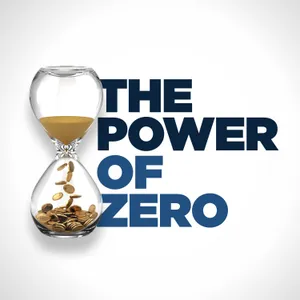
Free Daily Podcast Summary
The Power Of Zero Show: Daily Summaries Delivered
by David McKnight
Tax rates 10 years from now are likely to be much higher than they are today. Is your retirement plan ready? Learn how to avoid the coming tax freight train and maximize your retirement dollars.
Latest Episodes
The most recent episodes — sign up to get AI-powered summaries of each one.
- Yesterday7 min
The Roth Conversion Math Almost Everyone Gets Wrong
Thinking about doing a Roth Conversion? Beware: many people compare the wrong tax rates… a mistake that can lead to the wrong decision in retirement. Join David McKnight to learn which of the two numbers you should be comparing instead and when paying the IRS today makes sense, and when it doesn't. In this episode, David McKnight explains why a lot of people get the math wrong when deciding on a Roth conversion (hint: they compare the wrong tax rates). The common approach is to compare your tax bracket today with the bracket you expect in retirement, but David says that comparison can lead you to the wrong decision. David shares an example of a married couple filing jointly and who are considering a $200,000 Roth conversion. Before converting, their job, interest, dividends,and rental income already fill their standard deduction. Moreover, people also make the opposite mistake on the retirement side, using their highest marginal bracket as the rate on all their IRA withdrawals. In retirement, IRA distributions can be absorbed by deductions first, then flow through the 10%, 12% and 22% brackets – so they aren't all taxed at 24%, even if 24% is your top bracket. The right comparison to make is your incremental effective tax rate on the conversion vs. your effective tax rate in retirement. If you'll have a pension, taxable Social Security, interest and dividends, or rental income filling the lower brackets in retirement, compare your incremental effective rate while working with your incremental effective rate in retirement. Remember: not converting has unintended consequences. Your IRA keeps compounding until RMDs force income onto your tax return, stacked on top of Social Security and pension income. And those RMDs can make more of your Social Security taxable and increase your IRMAA surcharge. When one spouse dies, the survivor keeps most of the same IRA and income but files as a single taxpayer with much narrower brackets, which is the widow's penalty. If your children inherit a traditional IRA, they must liquidate it within 10 years, likely during their peak earning years, with fewer deductions and tax rates that David expects to be higher. David suggests not to ask what your bracket is today vs. in retirement, but what it would cost you to buy out the IRS today vs. what it will cost to pay the IRS during retirement. Sometimes, that analysis says "don't convert!". If you'd pay 32% or 35% now and expect substantially lower rates later, paying the tax today may not make sense. Other times, however, paying 22% or 24% today can help you avoid a much larger lifetime tax bill over a full 30-year retirement. Mentioned in this episode: David's newest USA Today bestselling book: The Secret Order of Millionaires: Seven Principles for Building Tax-Free Wealth DavidMcKnight.com DavidMcKnightBooks.com PowerOfZero.com
- 1 weeks ago7 min
Is Converting Your IRA During a Market Crash Actually a Mistake?
When the stock market crashes, most people freeze. Today, David McKnight explains why a Roth conversion may be one of the smartest retirement moves you can make while prices are down. Find out how to turn a market downturn into a chance to build tax-free income for the rest of your life. In this episode, David McKnight asks whether a stock market crash is really a better time to do a Roth conversion. Every time the market crashes, you hear the same advice from financial advisors: this is a great opportunity to do a Roth conversion. The argument goes like this: if you have $1 million in your IRA and the market falls 30%, you can convert while it's worth only $700,000, pay taxes on the lower value, and let the recovery happen inside your Roth IRA, tax-free. Is a market crash really a better time to do a Roth conversion? David's answer is "not really." To understand why, remember that your traditional IRA isn't one pile of money but two piles commingled in the same account: your pile and the IRS' pile. If you have $1 million in your IRA and a 24% tax rate today and in retirement, $760,000 belongs to you and $240,000 belongs to the IRS. When the market falls 30%, your share drops from $760,000 to $532,000, but the IRS' share also drops from $240,000 to $168,000 – the IRS participates in the decline right alongside you. So when someone says it's a great time to convert because your tax bill just went down, they're only telling you half the story: the bill is lower because the account you're converting is worth less. If you convert the $700,000 at the bottom at 24%, you're effectively paying the IRS $168,000 to buy out its interest, leaving you with $532,000 after tax. When the market recovers, that $532,000 grows proportionally back to $760,000, the same result you'd have gotten without converting. David believes this is where much of the conventional advice about Roth conversions during crashes goes wrong: the market shouldn't determine the tax bracket you're willing to pay, your lifetime tax analysis should. If you've concluded that 24% is an attractive rate and 32% isn't, a 30% decline in the stock market doesn't suddenly make 32% a good deal. So you stick with your plan and still convert $200,000, filling the tax bracket you've already determined makes sense. But something interesting has happened: if your IRA was worth $2 million before the decline, a $200,000 conversion was 10% of the account, and after a 30% drop to $1.4 million, that same conversion is more than 14%. Same conversion, same taxable income, same tax bracket, but you've moved a substantially larger percentage of your remaining tax-deferred account to tax-free. That's the real opportunity: the market decline hasn't created more wealth for you, your existing conversion strategy is now accomplishing more of its objective for the same amount of taxable income. When the market falls, don't say "let's do a bigger Roth conversion", say "let's continue executing the strategy our financial plan already told us makes sense". And don't do a Roth conversion you weren't otherwise planning to do simply because stocks happen to be down. Ultimately there are two completely separate decisions: at what tax rate are you willing to buy out the IRS, and how much of your IRA can you convert at that rate before tax rates go up for good? The stock market doesn't answer the first question, but a major market decline can affect the second. <p dir="lt
- 2 weeks ago9 min
You're Withdrawing From Your Retirement Accounts in the Wrong Order
Most retirees are told to spend one account at a time, but a smarter retirement planning strategy treats every account as part of a single income system. David McKnight shows how to use the quiet early years of retirement to your advantage, and why the order you draw your income may matter less than you think. Show Notes One of the most common pre-retirement questions is which account to spend first: brokerage, IRA, or Roth IRA. Conventional advice says spend taxable money first, then tax-deferred, and Roth last – David agrees with the first part, but not for the usual reason. If you retire at 62, your paycheck disappears, Social Security hasn't started, and RMDs are years away. That's what David calls the "Retirement Income Valley". David recommends to fund your lifestyle from your brokerage account so that you can use your lower brackets to convert your IRA to Roth. You're using your brokerage account to buy tax bracket capacity, typically a five-to-eight-year window before Social Security and RMDs fill those brackets for you. David's advice differs from other experts in that he doesn't want you to convert every last dollar, since drawing your IRA to zero isn't the goal. Even though your working-year deductions vanish in retirement, the IRS still gives you a standard deduction ($32,200 if you retire today). The goal is to keep your IRA/401(k) balance low enough that RMDs stay at or below $32,200. By doing that, you'll be able to benefit from the "holy grail" of financial planning: a tax-free IRA distribution. David shares an analogy: you should think of retirement income as a control panel of faucets: traditional IRA, Roth IRA, Social Security, and a volatility shield. Your job each year is to decide how much to draw from each faucet to fund your lifestyle… all while staying as close or in the 0% tax bracket as possible. The so-called volatility shield, in particular, matters when markets have a bad year. Financial planning guru Suze Orman advocates for keeping five years of living expenses outside the stock market, so that a potential downturn doesn't force you to sell at the wrong time. This is an idea David loves, he explains why you should avoid the sequence of returns risk and opt for living off your volatility shield during down years instead. This approach, he points out, can raise your sustainable withdrawal rate from 4% to as high as 8%, with a 95% success rate. However, David and Orman differ on where to hold that money. His pick is a properly structured, funded Indexed Universal Life insurance (IUL). The reason for David's choice is that, by following this approach, cash value isn't exposed to market losses, has averaged 5-7% net of fees, and can come out 100% tax-free. The overall idea can be boiled down to this: take normal distributions when markets are up, switch to the volatility shield after a downturn – then resume once your portfolio recovers. The finished strategy: live off your brokerage account during the so-called Retirement Income Valley while converting IRA dollars to Roth at comfortable tax rates. You can subsequently coordinate withdrawals across traditional IRA and Roth accounts, and manage RMDs alongside Social Security taxation rather than separately. The result of what David suggests are multiple tax-free income streams that keep you in or near the 0%
- 3 weeks ago11 min
The Retirement Problem No One Can Solve? Not So Fast.
Financial planning expert Rob Berger says the biggest challenge in retirement planning is one that no one can solve, since nobody knows how long retirement will last. David McKnight shares his disagreement, and explains why a financial product designed for exactly this problem – annuities – may be the answer. Show Notes In this episode, David McKnight responds to Rob Berger's video The Retirement Problem No One Can Solve. Rob compares retirement to entering a race without knowing how long it is, how fast you can safely run, or when someone will tell you that you've reached the finish line. David thinks Rob did an excellent job of identifying the problem, but he strongly disagrees with the premise that no one can solve it. The fundamental challenge for every retiree is that you don't know whether your savings will need to support you for five, twenty-five years, or longer than that. David shares a different analogy, inspired by retirement economist Michael Finke: a birthday party with one large cake and no idea how many children will show up. The cake is the pool of money you've accumulated, the children are the years you'll live after retiring, and the slices are your annual retirement income. If you cut the cake into thirty tiny pieces just in case, and only five children show up, everyone gets an unnecessarily small piece and most of the cake goes uneaten – that's traditional retirement planning. You ration your savings as though you might live to 95, 100, or beyond, and if you die earlier than expected, you leave behind a very large portfolio because you were afraid to spend your money. According to David, Rob is wrong in saying that no one can solve this problem, as annuities were literally invented to solve it. Imagine a bakery promising to keep delivering more cake if you run out. You've transferred your longevity risk to the bakery, which is what an insurance company does. An insurance company doesn't need to know how long you personally will live, it only needs to estimate, with reasonable actuarial accuracy, how long a large group of people will live. An annuity doesn't tell you how many children are coming to the party, it guarantees that you won't run out of birthday cake. This isn't a new or controversial concept, economists have been studying it for at least six decades, including in Menahem Yaari's 1965 paper. Annuities can support more retirement income than a portfolio alone because of risk pooling and mortality credits. If you rely exclusively on a stock and bond portfolio, you have to self-insure against the possibility of living to a hundred. Ernst & Young compared investment-only retirement strategies with strategies that integrated permanent life insurance and deferred income annuities, using 1,000 Monte Carlo scenarios. They found that strategies combining investments with deferred income annuities produced more retirement income than investment-only approaches. One integrated strategy produced 5% more retirement income and 19% more projected legacy than the investment-only strategy. Critics often assume an annuity must reduce what you leave to your heirs, but if guaranteed income prevents you from selling investments at the wrong time, you can end up passing more to your children and grandchildren. Sounds interesting? Start by identifying your essential retirement expenses (housing, food, etc.), then subtract reliable income like Social Security and pensions. <p dir
- 4 weeks ago8 min
This TikTok Finfluencer Says His 76-Year-Old Dad Can Spend 7.5% and Still Grow His Portfolio. Let's Check the Math.
Viral TikTok "finfluencer" Tyler Gardner claims his 76-year-old father can stay 100% in stocks. David McKnight breaks down exactly where that approach falls apart. Additionally, he reveals the retirement planning strategy that actually makes a 100% stocks allocation safe, so a market downturn doesn't force you to sell at the worst possible time. Show Notes In this episode, David McKnight fact-checks a viral TikTok video from "finfluencer" Tyler Gardner explaining why his 76-year-old father is still invested 100% in stocks. David stresses that he doesn't have a problem with being invested 100% in stocks under the right circumstances, and that a retiree can absolutely have 100% of his portfolio in stocks. However, Tyler's explanation for why this works is where David says we have some problems, and he breaks down his rationale. Tyler claims that by investing in dividend stocks, he can get about 3.5% return from dividends alone, then sell 4% of his stocks and live off 7.5% per year – all while still having his portfolio grow at 4%. David points out a mistake Tyler made in his calculations: if you take out 3.5% in dividends and sell another 4% of the portfolio, you've removed 7.5% of an 8% total return, leaving roughly 0.5%, not 4%. Tyler predicts his portfolio to be worth three times the initial investment in just 15 years… but David notes that you don't get to spend most of the return and simultaneously compound as though you didn't spend any of it. One thing Tyler forgets to mention in his approach is sequence of returns risks, something that's heavily impacted by the order in which you experience returns whenever you're withdrawing money from your portfolio in retirement. Tyler concludes that even if the market had its worst 20 years in history and returned only 4% a year on average, he'd wind up in the same scenario as if he'd invested 100% in bonds. However, "Average returns aren't a predictor of whether or not your strategy will survive", says David. Two retirees with the exact same return over 20 years, without taking withdrawals, would have identical ending values…unless what considers withdrawals too. If a retiree is forced to sell shares while their portfolio is down, permanently removing shares from the portfolio and preventing them from participating in the eventual recovery, they would find themselves in a very different situation. Despite pointing out various flaws in Tyler's video, David agrees with the moral of the story: before you listen to anyone about your appropriate allocation strategy, crunch the numbers yourself and figure out what's right for you and your risk tolerance. David doesn't think there's anything inherently crazy about a 76-year-old being 100% invested in stocks – what he wants to know is how much of his dad's lifestyle depends on that portfolio. If Tyler's father receives enough Social Security, pension income, or guaranteed lifetime income through annuities to completely cover his basic living expenses, that changes things entirely. If the stock market falls 40%, and your basic living expenses are already covered, you don't have to sell stocks to pay for them. You can give your portfolio a chance to recover before you take further distributions. David is a big believer in creating an income floor in retirement: cover your basic living expenses with reliable lifetime income, create a separate volatility shield for discretionary spending, and then invest the rest of your money in a pedal-to-the-metal, high-octane stock portfolio. David's strategy addresses sequence of returns risk through guaranteed
- Oct 7, 20268 min
Five Years from Retirement? Do This.
The five years before retirement are what David McKnight calls the Retirement Danger Zone, a window where a stock market crash could trigger Sequence of Returns Risk and even derail a well-designed plan. In this episode, he breaks down the retirement planning strategies that build an income floor, create a Volatility Shield, and protect your tax rate before it's too late. Show Notes In this episode, David McKnight talks all things "Retirement Danger Zone", the 5-year time window that precedes your retirement. When you're 20 years from retirement and the stock market crashes, it stings but you still have time to recover. If you're only a few years from retirement, on the other hand, a stock market crash may force you to take distributions from a portfolio that just lost 30 or even 40%. That move may send your portfolio into a death spiral from which it never recovers, also known as Sequence of Returns Risk. Even a well-designed retirement plan can be devastated by that risk. If you're five years from retirement, the first step is to establish an income floor: figure out how much income you'll need each year to cover your essential living expenses. Your essential living expenses may be completely covered but you're still going to have discretionary expenses – which fall into two categories. Those can be so-called shock expenses (e.g. a new roof, an unexpected medical expense, etc.) or aspirational expenses (e.g. vacations, hobbies, etc.). Normally, you would pay for those expenses by taking money from your stock portfolio… but what if the market is down when one of those expenses arises? "This is why, by the time you retire, you should have 3-5 years of discretionary expenses accumulated in a properly structured, properly funded Indexed Universal Life Insurance Policy", stresses David. David explains how a so-called Volatility Shield can help you when the stock market takes a tumble. The strategy shared by David can increase the sustainable withdrawal rate on your stock portfolio from 4% to as high as 8% with a 95% confidence rate. And there's one more critical step to consider during your final five years before retirement: protecting yourself against higher taxes. Mentioned in this episode: David's national bestselling book: The Guru Gap: How America's Financial Gurus Are Leading You Astray, and How to Get Back on Track DavidMcKnight.com DavidMcKnightBooks.com PowerOfZero.com (free video series) @mcknightandco on Twitter @davidcmcknight on Instagram David McKnight on YouTube
- Sep 30, 20268 min
I Have $1 Million in Taxable Accounts and $1 Million in IRAs. How Can I Prepare for Higher Taxes?
If you've built up $1M in your IRA and $1M in taxable investments, David McKnight has a warning: every year that money stays put, the IRS gets to vote on your tax rate. He breaks down a retirement planning strategy for gradually converting your IRA to Roth – fast enough to beat rising rates, slow enough to avoid painful brackets. In this episode, David McKnight looks at what you should do if you have accumulated $1M in taxable investments, and $1M in traditional IRAs and are concerned about the possibility of higher taxes in retirement. He stresses that having money in IRAs is like going into a business partnership with the IRS – every year they get to vote on what percentage of your profits they get to keep… The solution to the IRA problem is relatively straightforward: start doing Roth conversions. True, by doing so, you'll pay taxes on the conversion today, but you'll be doing so at near historically low tax rates. Remember: the key is to convert money slowly enough that you don't rise into a tax bracket that gives you heartburn, but quickly enough that you get all the heavy lifting done before tax rates go up for good. David predicts that, given the trajectory of the American national debt, the window of time to execute that strategy is about ten years. Beware: just because you believe taxes are going to increase, it doesn't mean that you should reflexively convert all your money to tax-free. You want to leave enough money in your traditional IRA to take advantage of your standard deduction in retirement. If you're married and retiring today, your standard deduction is $32,000. Single? Then, it's half that amount. David shares a couple of strategies that can help you skinny down the $1M in your taxable bucket. The first and most efficient way to shrink this bucket is to use it to pay the taxes on your Roth conversions. The second strategy, which applies if you're still working, is to fully fund your Roth 401(k) or Roth 403(b). One challenge with this approach is that those contributions must come out of your paychecks, which may lead you to have less money available to cover your monthly lifestyle. The next strategy comes into play once you retire and it's about living out of your taxable account during the first few years of retirement (which may be the lowest income years of your adult life). Furthermore, you may want to consider repositioning a portion of your taxable account into a properly structured cash value life insurance policy – such as an indexed universal life policy or IUL. David warns that IULs are not for everyone, as they require a sufficient funding period, careful design, and ongoing policy management. However, when structured correctly, IULs can serve as a volatility shield in retirement. The idea is, in the year following a down year in your stock market portfolio, to pay for your living expenses out of your IUL. Doing so gives your portfolio a chance to recover before you take further distributions. That act alone can increase the sustainable withdrawal rate of your stock portfolio from 4% to as high as 8% with a 95% confidence rate. Mentioned in this episode: David's national bestselling book: <a href= "https://www.amazon.com/Guru-Gap-Americas-Financial-Leading/dp/1637746628/ref=sr_1_1?crid=3BI8MQEV3XG6Y&dib=eyJ2IjoiMSJ9.yMbhuNCcjxP9RX4DxGGt5Q.HNodfhEC4W4wnaICHETFSQIY395aINaul81fPmxeuhk&dib_tag=se&keywords=david+mcknight+the+guru+gap&qid=1721901269&sprefix=david+mckinght+f
- Sep 23, 20269 min
Best Reason to Delay Social Security To Age 70
When is a good time to start your Social Security? David McKnight reveals why smart retirement planning means waiting until age 70 for reasons that have nothing to do with a bigger check… and everything to do with the years in between being your best window for Roth conversions. In this episode, David McKnight addresses one of the most common questions he gets from people approaching retirement: "When should I start taking Social Security?" David believes that there's a compelling reason for having 70 as your default Social Security claiming age – and that isn't so that you get a bigger Social Security check… One of the key reasons to wait until 70 is something that rarely comes up in the traditional Social Security discussion: it has to do with taxes. David stresses that the years between retirement and age 70 can be some of the most valuable years of your entire financial life. Why? Because they may represent your best opportunity to execute Roth conversions. David touches upon the so-called Retirement Income Valley and the benefits it brings about. With a wrong approach, you may lock yourself into a permanently smaller Social Security check, and may have caused much of that check to become taxable because you simultaneously do Roth conversions. David suggests a different approach: retiring, delaying Social Security, and spending the next several years aggressively repositioning your tax-deductible dollars to tax-free. Once all that heavy lifting is done, you can then turn on Social Security. By following that strategy you accomplish two things: you lock in a substantially larger Social Security benefit and potentially reduce the other income that could cause that larger benefit to become taxable. Remember: delaying Social Security doesn't automatically make your Social Security tax-free. David talks about the IRMAA objection some may make as they hear his recommended strategy, and also touches upon his so-called "rip the band-aid off" approach to Roth conversions. David stresses that his interest isn't in whether a Roth conversion causes you to pay an extra few thousand dollars in Medicare premiums in one particular year. What he's interested in is whether the strategy reduces the total amount you pay in taxes and Medicare premiums over the balance of your retirement. "Social Security shouldn't be thought of as an investment, it's more like longevity insurance", says David. According to the 2026 Social Security Trustees Report, the Retirement Survivors Trust Fund is projected to exhaust its reserves in 2032 if Congress does nothing. However, that doesn't mean it's going to disappear, ongoing payroll tax revenue would still be sufficient. If higher taxes ultimately become part of the solution, then that only reinforces the importance of getting to tax-free before that happens. Your goal shouldn't simply be to maximize Social Security, it should be to maximize all of your after-tax streams of income. Mentioned in this episode: David's national bestselling book: The Guru Gap: How America's Financial Gurus Are Leading You Astray, and How to Get Back on Track DavidMcKnight.com <a h
Get The Power Of Zero Show summaries in your inbox
Free AI-powered daily recaps. Key takeaways, quotes, and mentions — in a 5-minute read.
Get Free Summaries →Free forever for up to 3 podcasts. No credit card required.
You Might Also Like
Listeners also like.

Ready For Retirement
Provides retirement planning advice on investing, taxes, Social Security, and insurance to help build financial security.

Your Money, Your Wealth
Financial advisors answer personal finance questions on retirement, taxes, investing, and wealth management with a humorous twist.

Retirement Planning Education, with Andy Panko
Covers retirement planning topics including IRAs, taxes, Social Security, Medicare, and estate planning.
Retirement Answer Man
Roger Whitney covers financial planning and personal fulfillment in retirement, including Social Security, taxes, healthcare, and lifestyle design.

The Personal Finance Podcast
A deep dive into personal finance, investing, and wealth-building through stocks, real estate, side hustles, and passive income strategies.
Your Money Guide on the Side
A practical guide to personal finance and investing, breaking down complex topics with expert insights and actionable advice.

Money Guy Show
Teaches wealth-building strategies to help listeners grow their assets and achieve financial goals efficiently.

The Long View
A weekly discussion on long-term investing, retirement planning, and portfolio strategy with finance experts.
Afford Anything | Get Smarter With Money
Explores the five pillars of financial freedom through expert interviews on wealth-building, investing, and behavioral finance.

BiggerPockets Money
Financial experts discuss earning, saving, and growing wealth with guests who’ve achieved financial independence.
The Ramsey Show Highlights
Daily advice on managing money and life from financial experts.
How to Money
Two friends break down personal finance topics like debt payoff and investing in simple, practical terms for everyday listeners.
Customized Recaps
AI-powered recaps with compact key takeaways, quotes, and insights.
Straight to Your Inbox
Get key takeaways from The Power Of Zero Show in a 5-minute read.
Save Hours Every Week
Stay current on your favorite podcasts without falling behind.
Frequently Asked Questions
What is Podzilla's The Power Of Zero Show daily summary?
It's a free AI-powered email that summarizes new episodes of The Power Of Zero Show as soon as they're published. You get the key takeaways, notable quotes, and links & mentions — all in a quick read.
How does the The Power Of Zero Show podcast summary work?
When a new episode drops, our AI transcribes and analyzes it, then generates a personalized summary tailored to your interests and profession. It's delivered to your inbox every morning.
Is this an official The Power Of Zero Show product?
No. Podzilla is an independent service that summarizes publicly available podcast content. We're not affiliated with or endorsed by David McKnight.
Can I get summaries of other podcasts too?
Absolutely! The free plan covers up to 3 podcasts, any in the catalog. Basic raises that to 15, Pro to 40 and Max to 100. Browse our full catalog at /podcasts.
How often does The Power Of Zero Show release new episodes?
The Power Of Zero Show publishes weekly. Our AI generates a summary within hours of each new episode.
What topics does The Power Of Zero Show cover?
The Power Of Zero Show covers topics including Education, Business, Investing, How To. Our AI identifies the specific themes in each episode and highlights what matters most to you.
Start getting The Power Of Zero Show summaries tomorrow morning.
Free forever for up to 3 podcasts. No credit card required.
Free forever for up to 3 podcasts. No credit card required.