Free Daily Podcast Summary
The Power of (STEM)2: Daily Summaries Delivered
by Dr. Michael Hammond-Todd
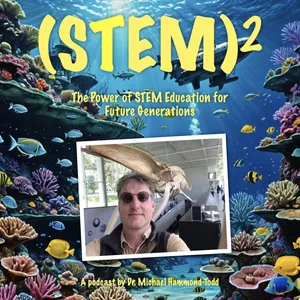
Join us for a series of (STEM)2 podcasts set to explore the diverse STEM fields of science, technology, engineering and mathematics with education. Each episode we will be discussing STEM as it relates to K-12 and community education projects, ideas and creating a more inclusive and diverse system of STEM education for future generations.
Latest Episodes
The most recent episodes — sign up to get AI-powered summaries of each one.
- Aug 17, 202613 min
Series 10 Episode 1: Fall Series - Back to School and Educational Research
Series 10 Episode 1: Fall Series - Back to School and Educational Research — In the first episode of our 10th series we return to school and examine to topics and opportunities in educational research for this year. Key topics graduate and doctoral students might want to explore continue to evolve around how AI is transforming teaching and learning for children including possible negative impacts on student achievements and the environment that data centres may have in many small and rural communities where they are sighted. We also discuss 2026 is proving to be a particularly important year for research related to STEAM education as it relates to changing policies and funding in North America. In the news we look at news related to the new school year. (S10E1) Website Link: Educational Statistics for Canada from Statistics Canada Website Link: Educational Statistics for the United States from NCESEducational Article on AI Effects on Learning: AI Paper on Learning News Article: Smithsonian Article on Data Centres
- Jul 17, 202610 min
(STEM)2 S9E6 Multicultural Inclusion and Decolonizing Island STEAM Education
Series 9 Episode 6 : Multicultural Inclusion and Decolonizing Island STEAM — In the final episode of the summer Island STEAM we are exploring the importance of multicultural inclusion in Island STEAM that also decolonizes teaching and learning processes. More specifically we will be looking at how the sheer cultural and linguistic diversities existing in island communities around the world require educational process that acknowledge the complex educational and colonial histories existing in many of the world’s inhabited worlds today. Like previous episodes in this series, place-based learning that also centres on the cultural practices, perspectives and histories of the world’s diverse communities as it relates to STEAM education requires more collaborative, culturally centred and decolonizing educational practices in teaching and learning that not only benefits our students but the surrounding communities and society as well. In the news we look at island statistics, the impact of colonization on islands and indigenous tourism on Vancouver Island.Math Link: How many islands are there in the world? Education Link: How colonialism still shapes extinctions today, from species losses to disappearing languages. News Link: 5 Indigenous Tours on Vancouver Island
- Jul 5, 202611 min
(STEM)2 S9E5 Bonus Episode - - Who were the ten most influential scientists of the past 250 years?
In this bonus episode we journey through the remarkable history of science by exploring the lives and discoveries of ten of the most influential scientists of the past 250 years. From Albert Einstein's revolutionary theories of relativity and Charles Darwin's explanation of evolution to Marie Curie's pioneering work on radioactivity and Alan Turing's foundations of modern computing, we examine how these extraordinary thinkers transformed our understanding of the natural world and forever changed human society. Along the way, we uncover the stories behind their groundbreaking discoveries, the challenges they overcame, and the lasting impact their work continues to have on medicine, technology, communication, and everyday life. Whether you're a lifelong science enthusiast, an educator, or simply curious about the people who shaped our modern world, this episode offers an inspiring look at the history of scientific discovery and the power of curiosity to change the future.
- Jun 26, 202611 min
Series 9 Episode 4: Island STEAM - Protecting the Past and Fostering the Future in Art and Culture
Series 9 Episode 4: Island STEAM - Protecting the Past and Fostering the Future in Art and Culture — In fourth episode we are examining aesthetics and art-based education in island STEAM. More specifically we will be looking at how the worlds thousands of uninhabited and inhabited islands provide a rich natural and cultural mosaic of curiosity and arts-based inspiration connected to the fields of science, technology, engineering and mathematics. Lessons and activities tied to place-based learning that includes activities, themes, and units connected to the world’s diverse islands enriches learning for all students through the infusion of drawing, journaling, poetry, music and other forms of visual performance. The news in this episode explores how islands around the world are using STEAM to protect and preserve historic and cultural sites from ocean level rise. We also discuss New Zealand’s earth science explorations of how the arts weaves into the sciences and look at the value of nature journaling for students of all ages.
- Jun 19, 202610 min
Series 9 Episode 3: Island STEAM - Engineering & 3D Island Building Activities for Students
Series 9 Episode 3: Island STEAM - Engineering and Ecology that Includes 3D Island Building Activities for Students — In the third episode of our Island STEAM series we explore 3D island modelling and building can enhance students understanding of science and engineers in ways that particularly benefit our visually exceptional learners. Like information presented in previous episodes, the physical construction of islands can be deeply steeped in place-based learning and direct observation of arctic, temperate, tropical, desert and/or volcanic islands as an individual/class based learning activity that can be shared with the rest of your school and families at STEAM nights. In the news we look at the engineering of artificial reef building in Malaysia and geothermal partnerships between Island and Columbia. We have included a link to a middle school island building activity as well for educators wanting to see and example of how 3D island building might be incorporated into the classroom.
- Jun 5, 202611 min
(STEM)2 S9E2 Island STEAM - How Arctic, Desert and Tropical Islands are Utilizing Science and Technology in Schools and Society
In the second episode of our Island STEAM series we explore how science and technology are utilized in helping islands adapt to the technological and environmental challenges posed by climate change explored in our first episode. More specifically we look at how Greenland is using long range drones to document receding ice pack and how small Pacific Island nations and the Canary Islands are integrating renewable energy systems to build more resilient energy and water purification systems. Each of these examples illuminates just one of thousands of ways diverse island communities are adapting in the 21st century that can also be utilized in teaching and learning activities. (Coming Soon)News Link: Windracer Drones in Greenland Climate ResearchNews Link: Pacific Island Nations Invest in Renewable EnergyNews Link: Using Tidal Energy to Desalinate Water in the Canaries
- May 29, 202611 min
Series 9 Episode 1: Island STEAM - Why Teachers & Students Should Explore Island Life in Schools
Series 9 Episode 1: Island STEAM - Why Teachers & Students Should Explore Island Life in Schools — In the first episode of our Island STEAM series we explore STEAM education within the context of the world’s diverse islands and communities. There more than 600,000 diverse islands around the world with at least 11,000 of them inhabited by people. More specifically, we explore how large scientific studied phenomenon such as climate change impact Arctic, desert and tropical islands around the Earth. More specifically we look at how teachers can use islands in STEAM as diverse models for scientific research and change as it relates to how diverse communities adapt to significant environmental challenges in the 21st century. In the news we discuss how Pacific Islander secondary students are advocating for increased scientific literacy in schools and communities and the UN’s recent report on how rising sea levels threaten many low lying islands and communities.
- Apr 17, 202613 min
(STEM)2 S8E8 Earthday - Integrating Diverse Questioning in STEAM Lessons & Activities
Series 8 Bonus Episode 8: Integrating Multicultural & Environmental Questioning into Earth Day STEAM Lessons/Activities - In this bonus episode of the 8th series, we explore the importance of integrating critical questioning strategies into STEAM lessons and activities. More specifically, for Earthday lessons, we look at ways to tie inquiry based learning around the value of community-based and multiculturally inclusive approaches to Earthday lessons for teachers and students. Connecting your lessons to diverse communities, cultures, and ecologies is an increasingly essential skill in todays AI and increasingly robotic world. In the news we look at the environmental impact of AI (click here) and seaside robots studying salt water intrusion and climate change (click here) as secondary case studies for school discussions.
Get The Power of (STEM)2 summaries in your inbox
Free AI-powered daily recaps. Key takeaways, quotes, and mentions — in a 5-minute read.
Get Free Summaries →Free forever for up to 3 podcasts. No credit card required.
You Might Also Like
Listeners also like.
Science of Reading: The Podcast
Discusses research and practical applications in early reading through expert conversations on science of reading topics.
Inquiring Minds
Explores the intersection of science and society through critical thinking and in-depth analysis.
Stanford Psychology Podcast
Students interview psychologists about recent research and its real-world applications in mental health, behavior, and cognition.

The Middle School Mary Poppins Podcast
Practical parenting strategies and brain science to help caregivers understand and support tweens through middle school challenges.
Tumble Science Podcast for Kids
Stories of scientific discovery told for kids and families, featuring interviews with scientists and researchers.

Math & Physics Podcast
Two University of Toronto students discuss topics in math and physics.

Spacewalk with Everyday Astronaut
Answers listener questions and explores space topics with a mix of technical depth and casual conversation.
Let's Learn Everything!
Three science communicators explore diverse topics, teaching each other about science and random curiosities each episode.

The Signal
Explores human-centered innovation in higher education through interviews on AI, enrollment, student success, and institutional change.
Everything Everywhere Daily: History, Science, Geography & More
A daily podcast delivering concise, fact-based stories on history, science, geography, and culture from around the world.
The Engineering Leadership Podcast
Discusses essential practices and insights from top software engineering leaders to advance leadership skills in tech.
Cannabis Cultivation and Science Podcast
Experts discuss science-based organic cannabis cultivation techniques and advancements in growing technology.
About The Power of (STEM)2
Join us for a series of (STEM)2 podcasts set to explore the diverse STEM fields of science, technology, engineering and mathematics with education. Each episode we will be discussing STEM as it relates to K-12 and community education projects, ideas and creating a more inclusive and diverse system of STEM education for future generations.
Customized Recaps
AI-powered recaps with compact key takeaways, quotes, and insights.
Straight to Your Inbox
Get key takeaways from The Power of (STEM)2 in a 5-minute read.
Save Hours Every Week
Stay current on your favorite podcasts without falling behind.
Frequently Asked Questions
What is Podzilla's The Power of (STEM)2 daily summary?
It's a free AI-powered email that summarizes new episodes of The Power of (STEM)2 as soon as they're published. You get the key takeaways, notable quotes, and links & mentions — all in a quick read.
How does the The Power of (STEM)2 podcast summary work?
When a new episode drops, our AI transcribes and analyzes it, then generates a personalized summary tailored to your interests and profession. It's delivered to your inbox every morning.
Is this an official The Power of (STEM)2 product?
No. Podzilla is an independent service that summarizes publicly available podcast content. We're not affiliated with or endorsed by Dr. Michael Hammond-Todd.
Can I get summaries of other podcasts too?
Absolutely! The free plan covers up to 3 podcasts. Upgrade to Pro for 15, or Premium for 50. Browse our full catalog at /podcasts.
How often does The Power of (STEM)2 release new episodes?
The Power of (STEM)2 publishes weekly. Our AI generates a summary within hours of each new episode.
What topics does The Power of (STEM)2 cover?
The Power of (STEM)2 covers topics including Science, Education, Kids & Family, Family. Our AI identifies the specific themes in each episode and highlights what matters most to you.
Start getting The Power of (STEM)2 summaries tomorrow morning.
Free forever for up to 3 podcasts. No credit card required.
Free forever for up to 3 podcasts. No credit card required.