The Fed Has Lost Control: Supply-Side Economics Are The Captain Now
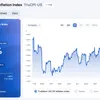
Today’s Episode is brought to you by Figure!Figure’s building the future of capital markets through blockchain with $20B unlocked in equity.Use Democratized Prime for your chance to win big with $25k USDC and Earn ~9% APY. The more you participate, the better your odds!Figure is the only account you need in the DeFi ecosystem. For every dollar you commit, you get another chance to win $25K USDC.Start now and enter to win while earning money on your crypto with Democratized Prime1.To investors,If you listened to the Fed for the last few decades, you made a lot of money. When the Fed was easing, you could have just plowed your money into the market. When the Fed started tightening, all you had to do was sell everything and hide in cash for a few years.Investors have been yelling “don’t fight the Fed” for a long time.But I don’t think that old adage applies the same way anymore. At least it doesn’t apply right now. Let me explain…The US economy, and corresponding financial markets, have been hyper sensitive to the Fed’s monetary policy decisions for the last ~ 30 years. The central bank was cutting rates in the mid-to-late 1990s, which helped propel the internet boom higher. Finally, when the Fed started to raise rates in the second half of 1999, the tech bubble popped shortly afterwards and everything came back down to reality.During the Global Financial Crisis, the Fed invented the insane Quantitative Easing policy that led to a prolonged period of 0% interest rates and hundreds of billions of dollars bring printed. This QE playbook kicked off a decade-long bull market that made every stock market bear look like a fool.Finally, during the 2020 pandemic, the Federal Reserve pulled out the old QE playbook again. Interest rates went to 0% via two emergency cuts and the government decided to print trillions of dollars, which created more than 9% inflation within a 24-month period.The main thing that stopped the 2021 party was the Fed’s decision to reverse course and start hiking interest rates at the fastest pace in history. We went from 0% to over 5% rates in a very short period of time. The regime shift was so abrupt that multiple banks failed because of their inability to navigate the volatility.This brings us back to the “don’t fight the Fed” adage. It made sense because the Federal Reserve would set policy and the world would react to those decisions. Quite literally, the Fed was in control.That doesn’t seem to be the case right now though.The current President and his administration have effectively taken control of the US economy and financial markets. They have implemented a set of policies to reimagine the country, including deregulation, tax cuts, smaller government, and re-shoring of American jobs and manufacturing.In taking this approach, the government is rapidly changing the economic conditions of the market and it is putting the Fed on their back foot. The central bankers already had a hard enough time trying to make monetary policy decisions based on faulty data from the Bureau of Labor Statistics. Now these folks are being asked to understand substantial changes across the economy, including policy differences and advancements in cutting-edge technology like artificial intelligence.This is why I don’t believe the Fed is in control anymore. In fact, I think the exact opposite is true. The market is forcing the hand of the Fed. America’s central bank begrudgingly cut interest rates at the end of 2025 because the labor market was softening at a much faster pace than forecasted. The softness in the labor market was not due to normal business cycle developments, but rather a combination of policy decisions and technology innovation.Jerome Powell essentially said he and his colleagues were more worried about the labor market than about inflation coming back. But the Fed’s fight against the market is not over yet. My base case is that inflation is going to continue falling in the coming months.Truflation is reporting inflation at 1.2% as of last night. If you take the BLS’ methodology, and you replace the ~ 40% of inputs that are estimations with accurate measurements of the input goods, then Truflation shows inflation would be less than 1% year-over-year.The big takeaway from this situation, according to Truflation, is that inflation has collapsed from its rec
Podzilla Summary coming soon
Sign up to get notified when the full AI-powered summary is ready.
Free forever for up to 3 podcasts. No credit card required.
More from The Pomp Letter

The Inflation Data Is Telling A Different Story Than What People Are Feeling

These AI Agents Want To Help You Make Money

My 10 Takeaways From Bitcoin Investor Week

Introducing The World's First Publicly Traded Agentic Finance Firm
Get summaries like this every morning.
Free AI-powered recaps of The Pomp Letter and your other favorite podcasts, delivered to your inbox.
Free forever for up to 3 podcasts. No credit card required.