Free Daily Podcast Summary
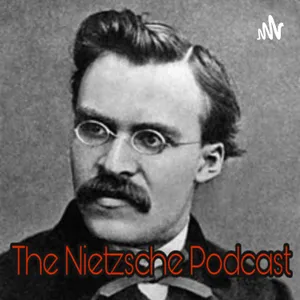
The Nietzsche Podcast: Daily Summaries Delivered
by Untimely Reflections
A podcast about Nietzsche's ideas, his influences, and those he influenced. Philosophy and cultural commentary through a Nietzschean lens.
Latest Episodes
The most recent episodes — sign up to get AI-powered summaries of each one.
- 5 days ago1h 55m
149: The Laṅkāvatāra Sutra
In this episode, we're going to discuss what is likely the founding text of the Zen tradition, the Laṅkāvatāra Sutra. According to some of the earliest sources on Bodhidharma, the founder of Zen in China, the "Lanka" was the teaching whose "abstruse principle" he passed down to his successor, Huike. Within the same story, Huike laments that within only a few generations, the sutra will pass into obscurity - which is exactly what has happened. Though few read this text today, during my time in Zen, I found the Lanka's philosophical presentation of the "mind only" teaching to be uniquely intriguing among all the Buddhist scriptures I'd read. Join me on this exploration of the Buddha's teaching in Lanka, including an analysis of the eight consciousness model of the mind, the concept of paravrrti, the non-reliance on either existence or non-existence, and sublime teaching that the world is nothing other than mind.My Diagram:https://untimely-reflections.blogspot.com/2026/09/lankavatara-sutra-my-diagram-of-eight.html
- 1 weeks ago1h 25m
148: Keiji Nishitani - Religion and Nothingness, part 2
This episode begins with an analysis of Baizhang's wild fox koan found in the Wumenguan, which we will use as a jumping off point for understanding the paradoxical relationship of the enlightened person with karma. This opens up into the general problem of discussing reality from the perspective of sunyata, in which samsara and nirvana become equivalent - because, so long as one approaches from the perspective of conceptual thought, they will remain forever unequivalent, and all such statements will be false or misleading. Join me as we discuss karma, the bodhisattva vow, "plucking out the eye of Buddha and sitting in its hollow", the meaning of "just sitting" in zazen, and the time when St. Francis made the sign of the cross to a cauterizing iron and blessed his brother, fire.
- 2 weeks ago1h 25m
147: Keiji Nishitani - Religion & Nothingness, part 1
Join me for a deep dive into Nishitani's opus, Religion and Nothingness: an intersection of philosophy and religion, east and west, Heidegger and the Mahayana. The topics I choose to emphasize in my reading are: the "double exposure" whereby the two layers of reality (being and nihility) are simultaneously perceived; the mechanization of the world, which serves to objectify the scientific worldview; Nietzsche's answer to this problem, as Nishitani understands it; the religious quest, in which one pushes through nihility, subsuming their entire life and body within the "great doubt"; finally, the standpoint of sunyata in which emptiness is perceived as the ground of being.
- 3 weeks ago1h 39m
146: Extinction (Nietzsche vs Buddhism, pt. 2)
For all that is admirable in Buddhism, Nietzsche fundamentally opposes the movement towards the Last Man that Buddhism not only cannot oppose, but may even help bring forth. Why does the notion of a "European Buddhism" haunt Nietzsche's later writings? We will explore this question here: how a religion that is realistic, empirical, and achieves great practical success in the relief of suffering isnevertheless inevitably aimed at uprooting all action and delivering man to a state of passivity. Here we find another religion of pity, and another denial of the world - merely deprived of the sensualism and moral fanaticism of Christianity. Were such a religion to take hold in the West, Nietzsche believes, the opportunity of moment, which we face as a consequence of the death of God, would be squandered. Join me in exploring more sutras, as well Nietzsche's criticisms of Buddhism in The Gay Science, Daybreak, Beyond Good and Evil, and the Will to Power.
- Aug 18, 20261h 53m
145: The Religion of Self-Redemption (Nietzsche vs Buddhism, pt. 1)
Welcome back to The Nietzsche Podcast, Season Seven! We're beginning with a two-part episode concerning Nietzsche's view of Buddhism. This episode, we will consider some of the basic teachings of Buddhism, and explore why Nietzsche viewed Buddhism with admiration. A repeated refrain in The Antichrist concerns Buddhism's superiority over Christianity. Why is it that Nietzsche considered Buddhism, a religion with a complex metaphysics and cosmology, to be a far more realistic and logical religion than Christianity? We are pointed in the direction of an answer in Nietzsche's description of Buddhism as "the religion of self-redemption".The following episode will concern Nietzsche's criticisms of Buddhism.
- Aug 11, 20262h 51m
Q&A #16
Season seven begins soon! For now, enjoy a selection of fascinating questions.
- Aug 4, 20261h 51m
The Gay Science #25 (V.372-393)
We've finally arrived at the conclusion of The Gay Science. The theme of these final sections is perspectivism - we have opened up a "new infinite", penetrating beyond narrow, limited views of the world that have always made grand claims to universalism but have only ever trapped us in dogmatic certainties. Nietzsche sums up his new affirmative attitude as a quest for "the great health", which one does not possess, but must continually give up. This great health has for its image a kind of abundant playfulness that is both human and superhuman. By making all that was once sacred and serious into our playthings, the true seriousness can begin. We conclude with a reading of one of Nietzsche's "songs". Episode art: Allegory of the Planets and Continents, by Giovanni Battista Tiepolo
- Jul 28, 20261h 37m
The Gay Science #24 (V.364-371)
We incomprehensible ones - how our thought branches in every direction, how willing we are to shed our bark, to grow, to change! In this episode, we discuss, among many other sections, important passages such as "What is Romanticism" - in which Nietzsche explains how he departed from the romantic pessimism of Wagner and Schopenhauer. He opposes the theater to music, fully breaking with his earlier views in Birth of Tragedy. Nietzsche also flips the script on some of his previous views regarding academics, and suggests that the scholarly specialist is a type of higher value than the so-called "man of letters", the master of nothing who represents himself as everything. Here, the hermit and the cynic speak, and Nietzsche spares no one his criticism. Episode art: The Tree of Life by Gustav Klimt
Get The Nietzsche Podcast summaries in your inbox
Free AI-powered daily recaps. Key takeaways, quotes, and mentions — in a 5-minute read.
Get Free Summaries →Free forever for up to 3 podcasts. No credit card required.
You Might Also Like
Listeners also like.
Philosophize This!
Explores the history of philosophy by breaking down key thinkers and ideas in chronological order for a general audience.

The UnMute Podcast
Philosophers discuss current social and political issues with insight, humor, and a drive for change.
In Our Time: Philosophy
Discusses philosophers, theories, and key themes in philosophy, from altruism to Wittgenstein.

Hi-Phi Nation
Philosophy is explored through real-life stories and expert insights on topics like justice, morality, and existence.

Forum Borealis
In-depth interviews with authors and thinkers on unconventional topics in history, science, philosophy, and politics.
Political Theory 101
Explains foundational concepts and thinkers in political theory for a general audience.

Aeon Byte Gnostic Radio
Explores ancient Gnostic, Hermetic, and Cathar wisdom to decode modern conspiracies, AI, UFOs, and the illusion of reality.
The Great Simplification with Nate Hagens
Discussions with experts on energy, ecology, economics, and human behavior to understand the systemic challenges facing civilization.

Psychiatry & Psychotherapy Podcast
Explores psychiatry and psychotherapy through interviews with experts, trainees, and individuals sharing lived mental health experiences.
Stanford Psychology Podcast
Students interview psychologists about recent research and its real-world applications in mental health, behavior, and cognition.

Reading Hannah Arendt with Roger Berkowitz
Close readings of Hannah Arendt’s works paired with interviews exploring her ideas on politics, thought, and the human condition.

The Jordan B. Peterson Podcast
Explores how values, religion, and culture shape individuals and society through interviews and lectures.
About The Nietzsche Podcast
A podcast about Nietzsche's ideas, his influences, and those he influenced. Philosophy and cultural commentary through a Nietzschean lens.
Customized Recaps
AI-powered recaps with compact key takeaways, quotes, and insights.
Straight to Your Inbox
Get key takeaways from The Nietzsche Podcast in a 5-minute read.
Save Hours Every Week
Stay current on your favorite podcasts without falling behind.
Frequently Asked Questions
What is Podzilla's The Nietzsche Podcast daily summary?
It's a free AI-powered email that summarizes new episodes of The Nietzsche Podcast as soon as they're published. You get the key takeaways, notable quotes, and links & mentions — all in a quick read.
How does the The Nietzsche Podcast podcast summary work?
When a new episode drops, our AI transcribes and analyzes it, then generates a personalized summary tailored to your interests and profession. It's delivered to your inbox every morning.
Is this an official The Nietzsche Podcast product?
No. Podzilla is an independent service that summarizes publicly available podcast content. We're not affiliated with or endorsed by Untimely Reflections.
Can I get summaries of other podcasts too?
Absolutely! The free plan covers up to 3 podcasts. Upgrade to Pro for 15, or Premium for 50. Browse our full catalog at /podcasts.
How often does The Nietzsche Podcast release new episodes?
The Nietzsche Podcast publishes weekly. Our AI generates a summary within hours of each new episode.
What topics does The Nietzsche Podcast cover?
The Nietzsche Podcast covers topics including Philosophy, Culture, Society & Culture. Our AI identifies the specific themes in each episode and highlights what matters most to you.
Start getting The Nietzsche Podcast summaries tomorrow morning.
Free forever for up to 3 podcasts. No credit card required.
Free forever for up to 3 podcasts. No credit card required.