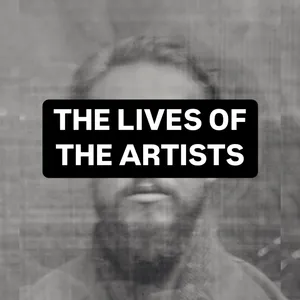
Free Daily Podcast Summary
The Lives Of The Artists: Daily Summaries Delivered
by nicktodhunter
A podcast exploring the lives of the artists and the world of art.
Latest Episodes
The most recent episodes — sign up to get AI-powered summaries of each one.
- Yesterday47 min
#67. Victoria Orr Ewing ~ Scottish Landscape Painter & Traveller
Victoria Orr Ewing (b. 1962) is a Scottish-born contemporary landscape painter whose work explores the emotional and spiritual power of wild, uncultivated places. Trained at the City & Guilds of London Art School, she has travelled extensively, living and painting in Morocco, Asia and southern Spain before returning to Britain. Her paintings of moors, marshes, coastlines and remote landscapes are characterised by pared-back forms, brooding skies and a particular fascination with light emerging from darkness. Rather than simply describing a place, Orr Ewing seeks to capture the atmosphere and feeling of being within it, the mixture of awe, vulnerability and melancholy that comes from confronting nature on a vast scale. Her work moves between representation and abstraction, drawing on sketches made directly in the landscape, memory and observation. https://www.victoriaorrewing.com/about/
- 1 weeks ago27 min
#66. Francis Bacon ~ An Imagined Interview
Francis Bacon (1909–1992) was one of Britain’s most powerful and disturbing painters, known for his raw, distorted figures and haunting images of flesh, violence and isolation. Largely self-taught, he rejected conventional beauty, instead twisting the human body into screaming, contorted forms that seem trapped within cages or dark spaces. His paintings were intensely personal, drawing on photographs, Old Masters and his own turbulent life, and he became one of the defining artists of the post-war era.
- 4 weeks ago8 min
#65. Damien Hirst ~ His Auction, Painting In Exile & His Thoughts On His Hero, Francis Bacon
After his extraordinary 2008 Sotheby’s auction, Beautiful Inside My Head Forever, which raised more than £111 million in two days, Damien Hirst described the sale as the end of an era, a “brutal change” and a chance to move away from the machinery of his career. He subsequently spent time in Bali in 2009, painting and reassessing what painting meant to him. The experience was part of a much more personal return to the canvas: Hirst had spent years making work that deliberately avoided the traditional act of painting, but he increasingly felt he could no longer hide behind mechanical processes such as the Spot and Spin paintings. In Bali, surrounded by the tropical landscape and working directly with paint, he began exploring what he called a “new painting” a quieter, more instinctive direction. At the heart of this return was Francis Bacon, Hirst’s great artistic hero. Hirst first encountered Bacon as a teenager in Leeds and said that when he began painting himself, everything he produced looked like “bad Bacons”, so he eventually stopped painting. Yet Bacon remained lodged in his imagination. Hirst admired the way Bacon could make a recognisable figure dissolve into raw paint, creating something psychological rather than merely descriptive. He said great paintings should work from a distance but dissolve when you approach them, leaving the viewer’s own imagination to create the horror. For Hirst, Bacon represented the courage to confront death, flesh, fear and the darker side of existence and his return to painting was partly an attempt to work through that influence rather than run from it.
- Oct 23, 20263 min
#64. Pablo Picasso ~ Guernica
Picasso’s Guernica, painted in Paris in 1937, is one of the most powerful anti-war paintings ever created. It was inspired by the bombing of the Basque town of Guernica during the Spanish Civil War by German and Italian aircraft supporting Franco. Picasso depicts not the bombing itself, but its human consequences: screaming mothers, a dead child, a wounded horse, a fallen soldier and terrified figures trapped within a shattered world. Painted almost entirely in black, white and grey, its fractured Cubist forms convey chaos, grief and brutality. What began as a response to one particular atrocity became a universal image of the suffering and destruction caused by war.
- Oct 20, 20269 min
#63. David Lynch ~ A Day In The Life
David Lynch (1946–2025) was an American filmmaker, painter, musician and writer whose work transformed the boundaries between cinema, dreams and the subconscious. Born in Missoula, Montana, he initially studied painting before attending the Pennsylvania Academy of the Fine Arts, where he became fascinated by the possibility of making paintings move. His breakthrough came with the nightmarish experimental film Eraserhead (1977), followed by The Elephant Man (1980), Blue Velvet (1986), Wild at Heart (1990) and the television phenomenon Twin Peaks (1990–91), created with Mark Frost. He later made increasingly unconventional films including Lost Highway, Mulholland Drive and Inland Empire, developing a distinctive language of fragmented narratives, eerie sound, dark humour and dreamlike imagery. Alongside filmmaking, Lynch continued to paint, make music, photograph and design, seeing creativity as something that could be cultivated through discipline and routine; he famously practised Transcendental Meditation and believed that ideas were like fish—you had to go fishing for them. His work ultimately became less about explaining a story than creating a mysterious emotional world that the audience could enter and interpret for themselves.
- Oct 18, 202653 min
#62. Jake Auerbach ~ Frank Auerbach’s Son
Frank Auerbach and his son Jake had a complicated but ultimately deeply affectionate relationship. Frank, born in Berlin in 1931, came to Britain as a Jewish refugee as a child, while his parents remained in Germany and were later murdered at Auschwitz; that trauma became an important backdrop to a life devoted to painting people and places again and again, trying to capture their physical presence and permanence. Jake, born in 1958, saw relatively little of his father during childhood, but they reconnected when Jake was 17, and he subsequently became one of Frank’s regular sitters, appearing in portraits over several decades. Jake went on to become a filmmaker, making films about artists and eventually documenting his father, revealing the much more humorous, cultured and sociable man behind the familiar image of the obsessive Camden painter. Their relationship remained close into Frank’s final years, when they would do crosswords together and spend time in London. There is something particularly poignant about the story: Frank had lost his own parents as a child, yet spent his life painting the people closest to him—including his son—while Jake ultimately became one of the people who preserved Frank’s personality and memory for the world. In that sense, their relationship almost mirrors Auerbach’s entire artistic preoccupation: looking at another human being intensely enough to make them remain present, even after they are gone.
- Oct 11, 202657 min
#61. Peter Clossick ~ Figurative Expressionist Painter
Peter Clossick is one of those painters who found the direction of their art early on, a revelatory moment on Hampstead Heath one evening after a day drawing in a shoe design studio in Mayfair, when "looking at a tree and feeling the world, grass, people, the wind, I knew I could draw it as I designed, in a cliched way. But I wanted to draw as I experienced. Which was totally different and the existential question then became how do I approach this thinking and feeling, which became a tactile reaching out into haptic contact. It was my first insight. The years that followed as he returned to art school in the mid-70s, Camberwell, fortunately for him at that time a rare bastion of the Bomberg/Coldstream tradition (colloquially known as the Bombstream') that runs through Frank Auerbach, Leon Kossoff, Lucian Freud even to the present day, reinforced that insight, his almost sculptural use of paint an equivalence of matter set against the physical realities of the people, rooms, still-lifes and occasional landscapes he was painting.
- Oct 9, 202610 min
#60. Vincent Van Gogh ~ The Mystery Of His Final Day
Vincent van Gogh spent his final day, 27 July 1890, in Auvers-sur-Oise, France, before returning to his room at the Auberge Ravoux with a gunshot wound to his abdomen. He claimed he had shot himself in the chest in a nearby wheat field, but the wound and the unusual trajectory of the bullet have led some historians to question the official story. Van Gogh survived for another day and a half, dying on 29 July 1890 in the arms of his brother Theo. The alternative theory is that he was accidentally shot by local teenagers, possibly with a gun they were playing with, and that Van Gogh chose to protect them by saying he had taken his own life.
Get The Lives Of The Artists summaries in your inbox
Free AI-powered daily recaps. Key takeaways, quotes, and mentions — in a 5-minute read.
Get Free Summaries →Free forever for up to 3 podcasts. No credit card required.
You Might Also Like
Listeners also like.
This Cultural Life
BBC Radio 4
Stories of Art
Art historians explore pivotal moments, artists, and hidden narratives that shaped the history of art.
Big Lives
Journalists examine cultural icons' lives using BBC archives to reveal their impact on music, film, and comedy.
The Jealous Curator : ART FOR YOUR EAR
The Jealous Curator
Great Lives
A biographical series where guests select a person who has inspired their lives.

Intelligence Squared: Arts & Culture
Explores pivotal artistic and cultural movements through conversations with leading writers, artists, and thinkers.
Past Lives
Reconstructs the lives of ordinary people across history, from the Stone Age to the modern era, focusing on their daily experiences and roles.
The Great Women Artists
Explores the lives and work of women artists through interviews with artists, curators, and writers.
Weird Studies
Conversations on art and philosophy that explore unsettling ideas and works challenging the boundaries of reality.
HistoryExtra podcast
Historical conversations with leading experts explore gripping stories from the past.
Good Life Project
Deep conversations about building a meaningful life through midlife reinventions, grounded in science and human experience.
In Our Time: Culture
Discusses popular culture, poetry, music, and visual arts and their roles in society.
About The Lives Of The Artists
A podcast exploring the lives of the artists and the world of art.
Customized Recaps
AI-powered recaps with compact key takeaways, quotes, and insights.
Straight to Your Inbox
Get key takeaways from The Lives Of The Artists in a 5-minute read.
Save Hours Every Week
Stay current on your favorite podcasts without falling behind.
Frequently Asked Questions
What is Podzilla's The Lives Of The Artists daily summary?
It's a free AI-powered email that summarizes new episodes of The Lives Of The Artists as soon as they're published. You get the key takeaways, notable quotes, and links & mentions — all in a quick read.
How does the The Lives Of The Artists podcast summary work?
When a new episode drops, our AI transcribes and analyzes it, then generates a personalized summary tailored to your interests and profession. It's delivered to your inbox every morning.
Is this an official The Lives Of The Artists product?
No. Podzilla is an independent service that summarizes publicly available podcast content. We're not affiliated with or endorsed by nicktodhunter.
Can I get summaries of other podcasts too?
Absolutely! The free plan covers up to 3 podcasts, any in the catalog. Basic raises that to 15, Pro to 40 and Max to 100. Browse our full catalog at /podcasts.
How often does The Lives Of The Artists release new episodes?
The Lives Of The Artists publishes weekly. Our AI generates a summary within hours of each new episode.
What topics does The Lives Of The Artists cover?
The Lives Of The Artists covers topics including Arts. Our AI identifies the specific themes in each episode and highlights what matters most to you.
Start getting The Lives Of The Artists summaries tomorrow morning.
Free forever for up to 3 podcasts. No credit card required.
Free forever for up to 3 podcasts. No credit card required.