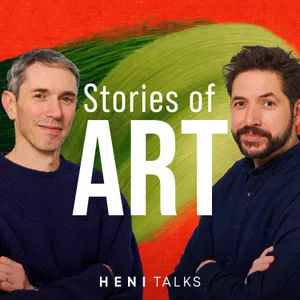
Free Daily Podcast Summary
Stories of Art: Daily Summaries Delivered
by HENI Talks
Stories of Art brings together art historian Dr. James Fox and art critic Alastair Sooke to uncover the most inspiring and compelling stories from the history of art. From the lives of the world’s greatest artists to the turning points that changed art, to the hidden histories of great masterpieces, James and Alastair are your guides to the extraordinary characters and fascinating stories that have shaped art history. Full of insight, expert opinion and humour, Stories of Art is the ultimate deep dive into the history of art.
Latest Episodes
The most recent episodes — sign up to get AI-powered summaries of each one.
- Today1h 4m
The Art Trial of the Century: Whistler vs Ruskin
What led the artist James McNeill Whistler to sue the art critic John Ruskin? And how did this 1877 libel trial set the stage for the debates that have raged about art ever since? Join Alastair and James as they tell the story of the Whistler vs Ruskin libel trial, as Stories of Art becomes a court room drama. If you want to see the artworks discussed in this episode you can switch on video in your podcast app at any time. Artworks in this episode: James McNeill Whistler, Nocturne in Black and Gold, The Falling Rocket, 1875, Detroit Institute of Arts, Detroit Edward Burne-Jones, The Beguiling of Merlin, 1872-77, Lady Lever Art Gallery, Port Sunlight Walter Greaves, Portrait of James Abbott McNeill Whistler, 1871, Private Collection Henri Fantin-Latour, Hommage à Delacroix, 1864, Musee d'Orsay, Paris James McNeill Whistler, Nocturne: Blue and Gold - Old Battersea Bridge, c.1872-75, Tate Britain, London James McNeill Whistler, Arrangement in Grey and Black No. 1, 1871, Musée d'Orsay, Paris James McNeill Whistler, Nocturne: Blue and Silver – Chelsea, 1871, Tate Britain, London James McNeill Whistler, Nocturne, c. 1870-77, White House Collection, Washington, DC James McNeill Whistler, Nocturne, 1875-1880, Philadelphia Museum of Art, Philadelphia James McNeill Whistler, Cremorne Gardens, No. 2, c.1870-80, Metropolitan Museum of Art, New York James McNeill Whistler, Whistler Smoking, 1856-60, Private Collection John Everett Millais, John Ruskin, 1853-54, Ashmolean Museum, Oxford J. M. W. Turner, Norham Castle, Sunrise, c.1845, Tate Britain, London Recommended Reading: Linda Merrill, A Pot of Paint: Aesthetics on Trial in Whistler v Ruskin, 1992 ————————— Follow Stories of Art on Instagram: @storiesofart.heni For more great art content visit www.heni.com or visit the Heni Talks YouTube channel: www.youtube.com/@HENITalks Hosts: Alastair Sooke and Dr James Fox Additional Research: Catherine Ingram Social Producer: Grace Dewar Producer and Editor: Ben Harding Executive Producer: Emma Cahusac
- 1 weeks ago1h 3m
The Birth of Venus: Sandro Botticelli (Part 2)
The Birth of Venus is one of the most famous paintings in the world. So what makes Botticelli's masterpiece so enduringly popular? And why did the artist disappear into obscurity for so long? Join Alastair and James as they conclude the story of the life and work of Sandro Botticelli. If you want to see the artworks discussed in this episode you can switch on video in your podcast app at any time. Artworks in this episode: Sandro Botticelli, The Birth of Venus, c.1485, Uffizi, Florence Sandro Botticelli, Primavera, c.1480s, Uffizi, Florence Sandro Botticelli, The Youth of Moses, 1481-82, The Sistine Chapel, Vatican City Sandro Botticelli, The Temptation of Christ, 1481-82, The Sistine Chapel, Vatican City Cleomenes, son of Apollodorus of Athens, The Medici Venus, late 2nd century B.C.E., Uffizi, Florence Lorenzo Ghiberti, The Baptism of Christ, 1403-24, Baptistery, Florance Sandro Botticelli, Portrait of a Young Woman, 1480-85, Städel Museum, Frankfurt Sandro Botticelli, Venus and Mars, c.1485, The National Gallery, London Sandro Botticelli, Lamentation over the Dead Christ, 1490-92, Alte Pinakothek, Munich Sandro Botticelli, Mystic Nativity, 1500, The National Gallery, London Recommended Reading: Anja Ulbrich, Liam McNamara et al, Aphrodite: The Making of a Goddess, 2026 Ana Debenedetti, Botticelli: Artist and Designer, 2024 Mark Evans, Botticelli Reimagined, 2016 Walter Pater, Studies in the History of the Renaissance, 1873 ————————— Follow Stories of Art on Instagram: @storiesofart.heni For more great art content visit www.heni.com or visit the Heni Talks YouTube channel: www.youtube.com/@HENITalks Hosts: Alastair Sooke and Dr James Fox Additional Research: Catherine Ingram Social Producer: Grace Dewar Producer and Editor: Ben Harding Executive Producer: Emma Cahusac
- 2 weeks ago52 min
Sandro Botticelli: The Golden Age of Florence (Part 1)
Sandro Botticelli created some of the most alluring images of the Italian Renaissance, but who was he and how did he transform the history of art? And was his great masterpiece Primavera originally conceived as an instruction manual for a young bride's wedding night? Join Alastair and James as they begin a two part series on the life and work of a Renaissance master. If you want to see the artworks discussed in this episode you can switch on video in your podcast app at any time. Artworks in this episode: Sandro Botticelli, Primavera, c.1480s, Uffizi, Florence Fra' Filippo Lippi, Madonna and Child with Two Angels, c.1460-65, Uffizi, Florence Sandro Botticelli, Portrait of a Youth, c.1482-85, National Gallery of Art, Washington D.C. Sandro Botticelli, Portrait of a Young Man holding a Roundel, c.1480, Private Collection Jan van Eyck, Portrait of a Man (Self Portrait?), 1433, National Gallery, London Sandro Botticelli, Portrait of Smeralda Bandinelli. c.1475, Victoria and Albert Museum, London Sandro Botticelli, Portrait of a Man with the Medal of Cosimo de' Medici the Elder, c.1474-75, Uffizi, Florence Sandro Botticelli, Portrait of Michele Marullo, c. 1500, Private Collection Sandro Botticelli, Adoration of the Magi, c.1475, Uffizi, Florence Sandro Botticelli, Giuliano de' Medici, 1478-80, Uffizi, Florence Sandro Botticelli, Possible portrait of Lorenzo di Pierfrancesco de' Medici, c.1479, Uffizi, Florence Donatello, David, c.1440s, Bargello, Florence Sandro Botticelli, Pallas and the Centaur, c.1482, Uffizi, Florence Recommended Reading: Ana Debenedetti, Botticelli: Artist and Designer, 2024 Mark Evans, Botticelli Reimagined, 2016 Walter Pater, Studies in the History of the Renaissance, 1873 ————————— Follow Stories of Art on Instagram: @storiesofart.heni For more great art content visit www.heni.com or visit the Heni Talks YouTube channel: www.youtube.com/@HENITalks Hosts: Alastair Sooke and Dr James Fox Additional Research: Catherine Ingram Social Producer: Grace Dewar Producer and Editor: Ben Harding Executive Producer: Emma Cahusac
- 3 weeks ago1h 14m
The Scream
Why has The Scream become one of the most famous artworks in the world? And what happened when this ghoulish image was stolen - not just once, but twice? Join Alastair and James as they explore the remarkable story and surpising afterlife of Edvard Munch's enigmatic portrait of despair. If you want to see the artworks discussed in this episode you can switch on video in your podcast app at any time. Artworks in this episode: Edvard Munch, The Scream, 1893, The National Museum, Oslo Leonardo da Vinci, Mona Lisa, 1503-19, Musée du Louvre, Paris Edvard Munch, Morning, 1884, KODE, Bergen Edvard Munch, The Sick Child, 1885-86, The National Museum, Oslo Edvard Munch, Ashes, 1895, The National Museum, Oslo Edvard Munch, The Dance of Life, 1899-1900, The National Museum, Oslo Edvard Munch, Love and Pain (Vampire), 1895, Munch Museum, Oslo Edvard Munch, Evening on Karl Johan, 1892, Bergen Kunstmuseum, Bergen Edvard Munch, The Scream, 1893, Munch Museum, Oslo Edvard Munch, The Scream, 1910, Munch Museum, Oslo Edvard Munch, The Scream, 1895, Private Collection Edvard Munch, Despair (Sick Mood at Sunset), 1892, Thiel Gallery, Stockholm Edvard Munch, Despair, 1894, Munch Museum, Oslo Andy Warhol, The Scream (after Munch), 1984, Museum of Modern Art, New York Recommended Reading Heidi Bale Amundsen (editor), Edvard Munch: The Scream, 2024 Sue Prideaux, Edvard Munch: Behind The Scream, 2005 Thanks to the Munch Museum. ————————— Follow Stories of Art on Instagram: @storiesofart.heni For more great art content visit www.heni.com or visit the Heni Talks YouTube channel: www.youtube.com/@HENITalks Hosts: Alastair Sooke and Dr James Fox Additional Research: Catherine Ingram Social Producer: Grace Dewar Producer and Editor: Ben Harding Executive Producer: Emma Cahusac
- 4 weeks ago1h 10m
Seurat's Masterpiece: A Sunday on La Grand Jatte - 1884
What makes Georges Seurat's masterpiece 'A Sunday on La Grande Jatte -1884' so revolutionary? What does the picture mean? And why did it become so famous? Join Alastair and James as they explore the mysteries of one of the most beguiling paintings in the history of art. If you want to see the artworks discussed in this episode you can switch on video in your podcast app at any time. Artworks in this episode: Georges Seurat, A Sunday on La Grand Jatte - 1884, 1884-86, Art Institute of Chicago, Chicago Georges Seurat, Bathers at Asnières 1884, The National Gallery, London Georges Seurat, The Diner, 1883-84, Private Collection Georges Seurat, Embroidery; The Artist's Mother, 1882-83, The Metropolitan Museum of Art, New York Jean-Auguste-Dominique Ingres, La Grande Odalisque, 1814, Musée du Louvre, Paris Eugène Delacroix, Jacob Wrestling with the Angel, 1854-61, Saint-Sulpice, Paris Pierre-Cécile Puvis de Chavannes, The Beheading of Saint John the Baptist, c.1869, The National Gallery, London Georges Seurat, Madame Seurat, the Artist's Mother, 1882-83, J. Paul Getty Museum, Los Angeles Georges Seurat, House at Dusk (La Cité), 1881-82, The Metropolitan Museum of Art, New York Georges Seurat, Aman-Jean (Portrait of Edmond François Aman-Jean), 1882-83, The Metropolitan Museum of Art, New York Georges Seurat, Seated Boy with Straw Hat, study for Bathers at Asnières, 1883-84, Yale University Art Gallery, New Haven Georges Seurat, Bathers (Study for "Bathers at Asnières"), 1883-84, National Gallery of Art, Washington D. C. Georges Seurat, Horse and Boats (Study for "Bathers at Asnières"), 1883-84, National Gallery of Art, Washington D. C. Georges Seurat, Boy from Behind, c.1893, Private Collection Arnold Böcklin, Isle of the Dead, 1880, Kunstmuseum, Basel Georges Seurat, The Couple: Study for La Grande Jatte, 1884, The British Museum, London Georges Seurat, La Grande Jatte, 1884, Private Collection Georges Seurat, Monkey, 1884, The Metropolitan Museum of Art, New York Georges Seurat, The Channel at Gravelines, Evening, 1890, Museum of Modern Art, New York Recommended Reading: Alastair Sooke, Seurat: Bathers at Asnieres, 2025 Robert Herbert, Seurat: 1859-1891, 1991 Karen Serres, Seurat and the Sea, 2026 ————————— Follow Stories of Art on Instagram: @storiesofart.heni For more great art content visit www.heni.com or visit the Heni Talks YouTube channel: www.youtube.com/@HENITalks Hosts: Alastair Sooke and Dr James Fox Additional Research: Catherine Ingram Social Producer: Grace Dewar Producer and Editor: Ben Harding Executive Producer: Emma Cahusac
- Oct 12, 20261h 17m
William Hogarth: The Rise and Fall of a Phizmonger (Part 2)
How did William Hogarth help create the modern art world as we know it? Did he really stage the first conceptual art exhibition? And why in the final years of his life was he the subject of ridicule? Join Alastair and James as they chart the life and times of the man that helped transform the story of British art. If you want to see the artworks discussed in this episode you can switch on video in your podcast app at any time. Artworks in this episode: William Hogarth, O the Roast Beef of Old England (‘The Gate of Calais’), 1748, Tate Britain, London Canaletto, London Seen Through an Arch of Westminster Bridge, 1747, Private Collection Jean Siméon Chardin, The Ray, Musée du Louvre, Paris Jean Siméon Chardin, Still-Life with Cuts of Meat, 1730, Musée des Beaux-Arts, Bordeaux Anthony van Dyck, Lord John Stuart and His Brother, Lord Bernard Stuart, c.1638, National Gallery, London William Hogarth, George Arnold, 1738-40, The Fitzwilliam Museum, Cambridge William Hogarth, Heads of Six of Hogarth's Servants, c.1750-55, Tate Britain, London William Hogarth, Portrait of Captain Thomas Coram, c.1740, The Foundling Museum, London William Hogarth, Marriage A-la-Mode: Plates 1-6, 1743, National Gallery, London William Hogarth, Gin Lane, 1751 William Hogarth, Beer Street, 1751 William Hogarth, The Analysis of Beauty, 1753 William Hogarth, The Painter and his Pug, 1745, Tate Britain, London William Hogarth, Sigismunda Mourning over the Heart of Guiscardo, 1759, Tate Britain, London William Hogarth, The Bathos, 1764 Recommended Reading: Jenny Uglow, William Hogarth: A Life and a World, 1998 Mark Hallett, Hogarth, 2007 Jacqueline Riding, Hogarth: Life in Progress, 2022 ————————— Follow Stories of Art on Instagram: @storiesofart.heni For more great art content visit www.heni.com or visit the Heni Talks YouTube channel: www.youtube.com/@HENITalks Hosts: Alastair Sooke and Dr James Fox Additional Research: Catherine Ingram Social Producer: Grace Dewar Producer and Editor: Ben Harding Executive Producer: Emma Cahusac
- Oct 5, 20261h 13m
William Hogarth: The First Modern Artist (Part 1)
How did William Hogarth transcend his humble origins to become one of the wealthiest artists in 18th century Britain? And in doing so, did he invent a new kind of art? Join Alastair and James as they chart the life and times of that most English of artists - William Hogarth. If you want to see the artworks discussed in this episode you can switch on video in your podcast app at any time. Artworks in this episode: William Hogarth, The Painter and his Pug, 1745, Tate, London William Hogarth, Hogarth's Shop Card, 1720 Marcellus Laroon, Sir James Thornhill, c.1712-15, National Maritime Museum, London Sir James Thornhill, The Painted Hall, 1707-26, Old Royal Naval College, Greenwich, London William Hogarth, Self Portrait, c.1735, Yale Center for British Art, New Haven William Hogarth, Falstaff Examining his Recruits, 1730 William Hogarth, The Cholmondeley Family, 1732, Private Collection William Hogarth, A Harlot's Progress, Plates 1-6, 1732 William Hogarth, A Midnight Modern Conversation, c. 1732, Yale Center for British Art, New Haven Recommended Reading: Jenny Uglow, William Hogarth: A Life and a World, 1998 Mark Hallett, Hogarth, 2007 Jacqueline Riding, Hogarth: Life in Progress, 2022 ————————— Follow Stories of Art on Instagram: @storiesofart.heni For more great art content visit www.heni.com or visit the Heni Talks YouTube channel: www.youtube.com/@HENITalks Hosts: Alastair Sooke and Dr James Fox Additional Research: Catherine Ingram Social Producer: Grace Dewar Producer and Editor: Ben Harding Executive Producer: Emma Cahusac
- Sep 28, 20261h 20m
Hieronymus Bosch: The Garden of Earthly Delights
Is The Garden of Earthly Delights the strangest painting in all of art history? Is Bosch's bizarre masterpiece a vision of paradise or apocalyptic doom? And what's with all the giant fruit? Join Alastair and James as they dive headlong into the weird and wonderful world of Hieronymus Bosch. If you want to see the artworks discussed in this episode you can switch on video in your podcast app at any time. Artworks in this episode: Hieronymus Bosch, The Garden of Earthly Delights, 1490-1500, Museo del Prado, Madrid Hieronymus Bosch, Christ Mocked (The Crowning with Thorns), c.1490/1510, The National Gallery, London Hieronymus Bosch, The Adoration of the Magi, c.1494, Museo del Prado, Madrid Salvador Dalí, The Great Masturbator, 1929, Museo Nacional Centro de Arte Reina Sofía, Madrid Recommended Reading: Matthijs Ilsink et al, Hieronymus Bosch, Painter and Draughtsman: Catalogue Raisonné, 2016 ————————— Follow Stories of Art on Instagram: @storiesofart.heni For more great art content visit www.heni.com or visit the Heni Talks YouTube channel: www.youtube.com/@HENITalks Hosts: Alastair Sooke and Dr James Fox Additional Research: Catherine Ingram Social Producer: Grace Dewar Producer and Editor: Ben Harding Executive Producer: Emma Cahusac
Get Stories of Art summaries in your inbox
Free AI-powered daily recaps. Key takeaways, quotes, and mentions — in a 5-minute read.
Get Free Summaries →Free forever for up to 3 podcasts. No credit card required.
You Might Also Like
Listeners also like.

The Jealous Curator : ART FOR YOUR EAR
The Jealous Curator

Art History for All
Explores individual artworks and their broader significance, making art history accessible and meaningful to all audiences.

The Great Women Artists
Explores the lives and work of women artists through interviews with artists, curators, and writers.

Intelligence Squared: Arts & Culture
Explores pivotal artistic and cultural movements through conversations with leading writers, artists, and thinkers.

HistoryExtra podcast
Historical conversations with leading experts explore gripping stories from the past.
The Art World: What If...?!
Leading art figures explore radical ideas about culture, patronage, and the future of the art world with insight and humor.
The Rest Is History
Historians Tom Holland and Dominic Sandbrook analyze major historical events and figures with narrative depth and scholarly insight.

Killer Stories with Harvey Guillén
A weekly exploration of infamous crimes, from heists and cons to serial murders, unpacking what still lingers beneath the surface.

Weird Studies
Conversations on art and philosophy that explore unsettling ideas and works challenging the boundaries of reality.

History's Heroes
Profiles real-life historical figures whose courage, innovation, or resilience changed the course of history.
This Cultural Life
BBC Radio 4
In Our Time: Culture
Discusses popular culture, poetry, music, and visual arts and their roles in society.
About Stories of Art
Stories of Art brings together art historian Dr. James Fox and art critic Alastair Sooke to uncover the most inspiring and compelling stories from the history of art. From the lives of the world’s greatest artists to the turning points that changed art, to the hidden histories of great masterpieces, James and Alastair are your guides to the extraordinary characters and fascinating stories that have shaped art history. Full of insight, expert opinion and humour, Stories of Art is the ultimate deep dive into the history of art.
Customized Recaps
AI-powered recaps with compact key takeaways, quotes, and insights.
Straight to Your Inbox
Get key takeaways from Stories of Art in a 5-minute read.
Save Hours Every Week
Stay current on your favorite podcasts without falling behind.
Frequently Asked Questions
What is Podzilla's Stories of Art daily summary?
It's a free AI-powered email that summarizes new episodes of Stories of Art as soon as they're published. You get the key takeaways, notable quotes, and links & mentions — all in a quick read.
How does the Stories of Art podcast summary work?
When a new episode drops, our AI transcribes and analyzes it, then generates a personalized summary tailored to your interests and profession. It's delivered to your inbox every morning.
Is this an official Stories of Art product?
No. Podzilla is an independent service that summarizes publicly available podcast content. We're not affiliated with or endorsed by HENI Talks.
Can I get summaries of other podcasts too?
Absolutely! The free plan covers up to 3 podcasts, any in the catalog. Basic raises that to 15, Pro to 40 and Max to 100. Browse our full catalog at /podcasts.
How often does Stories of Art release new episodes?
Stories of Art publishes weekly. Our AI generates a summary within hours of each new episode.
What topics does Stories of Art cover?
Stories of Art covers topics including History, Arts, Visual Arts. Our AI identifies the specific themes in each episode and highlights what matters most to you.
Start getting Stories of Art summaries tomorrow morning.
Free forever for up to 3 podcasts. No credit card required.
Free forever for up to 3 podcasts. No credit card required.