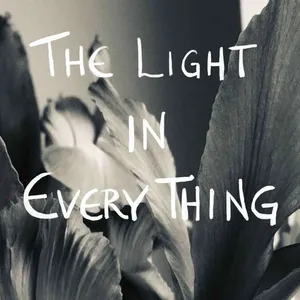
Free Daily Podcast Summary
The Light in Every Thing: Daily Summaries Delivered
by The Seminary of The Christian Community
Deeper conversation on the mysteries of Christianity with Patrick Kennedy and Jonah Evans, directors of the Seminary of The Christian Community in North America. In this podcast we engage the great questions of life and do this through a spiritual approach to Christianity made possible through contemplative inquiry and the science of the spirit known as Anthroposophy. You can support our work and gain access to more unique content if you visit our Patreon: www.patreon.com/ccseminary
Latest Episodes
The most recent episodes — sign up to get AI-powered summaries of each one.
- Yesterday1h 2m
"Seeds of Interdependence: Our Identity in Christ", ep. 10 of the series "The Movement's Purpose"
Jonah and Patrick emphasize in this episode that our interdependence with God comes with a new orientation – the blessing of a new name, which is a new, relational identity. To share a moment when I saw this in action – during my university exchange in Ecuador, I was on a walking tour through the jungle when the guide stopped and pointed out to us a line of leafcutter ants. I’ll never forget the marvel of it: what appeared to be jagged pieces of green leaves with legs tottering along in a seemingly endless line was a magnificent example of interspecies interdependence. He explained that these ants feed this particular toxic leaf to an underground fungus, which, in breaking down the toxins, produces a mushroom. In a mutualistic symbiosis, a tacit agreement to provide life food for each other, this mushroom is the sole food source of the ants.In this episode, Jonah and Patrick carefully differentiate between co-dependence and interdependence. In this leafcutter case, it would be co-dependence if the identity of either actor were diminished by the relationship; instead, they enhance each other’s existence. They couldn’t live without each other, but rather than being lost, the full potential of their individual identities – ant and fungus – are fulfilled in a life-filled way. Together, they function as what is called a ‘superorganism’.I later learned a stunning detail I’m compelled to share here: while the appearance of the line of ants is as innocent and calming as a row of green sailboats bobbing gently on the water, in fact, there are parasitic flies constantly threatening to lay their eggs in the heads of the carrier ants. As a defense, each leaf-carrying ant hosts a tiny (Michaelic) worker ant on its back, whose sole purpose is to scare away the adversaries.Despite the challenges, the ants carry on stalwartly – not for their own existence, but for the life of the colony. For them, it’s self-evident that life is relational. For us, our ego’s infatuation with power and insularity gets in the way. Overcoming that all depends on how we understand God, for certain images of God can then corrupt or stunt how we go about filling our own potential. Our vision of God’s sovereignty is everything; the question is, does it include the possibility of our Creator intentionally entering into powerlessness as part of achieving the end goal? Think of the ants, dear listeners, those underground farmers surrendering all their efforts to the chthonic alchemy that will ultimately yield the source of their life, and the continuance of their colony’s wellbeing…- Mary GrahamChapters0:21 — Weather, seasons and the soul2:24 — Welcome and the light of Christ3:51 — The movement’s mission and its time5:50 — Jonah’s path into the priesthood8:38 — Childhood, confirmation and religious life14:25 — Selfhood, achievement and finding Christ at the altar20:07 — Identity as relationship22:32 — Independence, codependence and spiritual dependence27:22 — Healthy spiritual bonds and the guru question29:22 — Spiritual counsel, ChatGPT and the “realm of the clouds”37:29 — Independence, God and relationship40:30 — Jesus, the Father and divine interdependence50:07 — Baptism, new identity and Jacob53:40 — God’s sovereignty, powerlessness and love58:18 — The movement’s mission and a new consciousnessBiblical ReferencesJohn 8:12: “I am the light of the world.”John 3:16: “God so loved the world that he gave his only Son.”Mark 10:29–30: Jesus’ call to leave house and family for his sake and for the gospel.Romans 6:3–4: Paul on baptism into Christ’s death and walking in newness of life.Genesis 32:22–32: Jacob wrestling with God.Genesis 33:1–11: Jacob’s reconciliation with Esau.Thumbnail photo by Ale Estradas, donated via Pixabay.
- 1 weeks ago55 min
Receiving a New Mind from Christ - Episode 9 of "The Movement's Purpose"
Not that many artists have depicted the scene of Jacob wrestling with the angel but what stands out among the handful of artworks is the intimacy: they depict two opposing forces in a balanced tension reminiscent of love. A friend who enjoys watching wrestling noted that “there’s an old-fashioned truth to it.” It’s an encounter brimming with raw will forces, and contemplating the enormity of Jacob’s will – to keep it up throughout the long, dark night – is inspiring. Are we not also called to fire our wills like that, to keep grasping at the spirit throughout our figurative darkness, until the sun rises and we receive a blessing?Patrick and Jonah talk about how we can find in the sacraments in particular a uniting force that mends all kinds of splits and disintegrations, particularly between our activities of knowing and having faith. The Christian Community can bring us into a right relationship with the world, whereby our seeking for the spirit necessarily includes the experience of our world, even with (and particularly in) the misery and suffering we face there. Taking up the end of Rudolf Steiner’s essay, they address the fear of knowledge and knowing so prevalent among seekers of the spirit. There is a redemption of our activity of knowing that we are called to engage in, and that the sacraments can teach us about. This lies at the heart of the movement. They close the episode by naming the organ of knowing that we must develop, suggesting it as an alternative to one of the big buzzwords today, ‘super-intelligence’. “Yes, we need a super-intelligence!” they exclaim – but different from the one the media is referring to. Enjoy this dynamic episode, dear listeners!
- 2 weeks ago44 min
"Freedom, Love & the Path Between the Adversaries" - Ep. 8 in the series, "The Movement's Purpose"
Parenting came to mind in listening to this episode, and Jonah brought it up as well. I too, have teenage daughters, and can testify that they keep me on the narrow path. There’s one type of temptation – to cling on to precious, nostalgic flights back into the good old days when I felt heard, respected, loved with their Eden-like innocence – it’s that feeling of “let’s keep them ‘my little girls’ forever!”. The other main temptation is just to get this parenting business over with asap: “Let’s just take the easy route forward.” Just about every week I wish for a device that could steer them into good behavior & responsible choices: zap those bad habits away! Let’s just skip all these hard lessons in favor of an ultra-quick, pain-free path into exemplary adulthood! Luckily, the girls themselves don’t allow me to dwell too long in those fantasies – they show me over and over again what they actually need from me as a parent: guidance, freedom of choice, and of course, copious compassion and patience. Following up on the last episode’s importance of seeking an encounter with Christ, this time Patrick and Jonah look at these two very significant forces that pull us away from that. We access the full truth of our being through a relationship with Christ, with Michael acting as our guide, but what if we seek ourselves elsewhere, elsehow? Steiner’s essay mentions other pathways leading to what feels like an enhanced selfhood – only, as it turns out, they don’t lead to full selfhood: “premature”, “not fully human,” “merely a mirror image,” “not free” – are some descriptors we hear in this episode.The one way offers us a Self-experience that feels like a delicious retreat away from all suffering, back into the womb of connection we all deeply long for. The other consists of quick and efficient ways to learn, to know, to feel connected with the spirit; easy ways for us to get to the future and become the creators we were meant to be. These two basic forces crowd in on us, working together to be such powerful temptations that the path to relationship with Christ becomes very narrow, sometimes nearly invisible.Jonah and Patrick round off the conversation by referring again to what The Christian Community can bring to our awareness: the necessary third, albeit narrow, path between these two forces that do their best to lead us astray in myriad ways. What comes up for you, dear listeners, as you hear and think about these two main distractions from walking the path into a moral selfhood?Mary GrahamFurther Notes and References:The temptation in the desert: Matthew 4:1–11, Mark 1:12–13 and Luke 4:1–13, Patrick also mentions the Spirit driving Jesus into the wilderness, which appears in Mark 1:12.Genesis 1:26–31, humanity made in the divine image and "very good." Genesis 2:7, the breath of life, describes the moment referred to as a "second creation."The prodigal son story can be found here: Luke 15:11–32.Rudolf Steiner, “The Michael-Christ Experience of Man,” from Anthroposophical Leading Thoughts (Anthroposophische Leitsätze, GA 26), Leading Thoughts 115-117.English, rsarchive.org translation by Steiner Online LibraryEnglish, Bowen-Wedgwood/Adams translation, titled “Michael-Christ in Man”, in The Michael MysteryGerman, “Das Michael-Christus-Erlebnis des Menschen”Rhonda Byrne, The Secret (New York: Atria Books / Hillsboro, OR: Beyond Words, 2006). Mentioned in the episode as an example of manifesting culture.
- Oct 18, 20261h 3m
"Are You There?" - Episode 7 in the series, "The Movement's Purpose"
In this episode, Patrick and Jonah dive back into the question of the nature of divine presence in the world, and explore through various images the difference between creator and creation: regardless of our experience in beholding a Van Gogh painting, and however much we recognize his signature brushstroke and palette, we are not actually directly encountering the artist (though, as Patrick mentioned, "The encounter with the artist by walking into his artwork is a real thing"). Likewise, experiences in nature can awaken deep religiosity in us, and can be an indirect pathway to the divine, but shouldn’t be confused with a direct encounter with the Creator. What if we look inward? What if we just do our best to dissolve the extraneous stuff that clouds what we feel to be our divine self? There are so many paths available that call us to find unitive connection with the spirit in a way that can feel blissful and bring peace – temporarily— ...leading us to hope that repetition of that experience can eventually lead us to our destination. There is, however, a more direct way, which this movement for religious renewal offers us, and which is particularly apparent in the liturgy of this season that honors Archangel Michael. In the liturgical epistle, Michael turns our awareness to Christ’s sacrifice, the way he picked up the cross and gave himself over to the death experience that is our salvation. The direct route to an encounter with Christ is to follow this path, to pick up our own cross, whatever way that presents itself in our biography. Patrick and Jonah then describe their own moving encounters with Christ, which have always had the hallmark of a certainty down to their marrow that this is their higher, or future, self, and at the same time an overwhelming awe that He is an Other, a more exalted being, separate from themselves: this makes it a true, face-to-face encounter, rather than simply the feeling of union with oceanic feeling that often gets mistaken for an experience of God. Patrick and Jonah wrap up the conversation speaking of Christ’s profound humility and generosity, alluding to the Eucharist at the center of The Christian Community as an expression of His endless giving. There are many other gems, too, in this rich and moving episode. Blessings on your listening experience, dear listener—may you hear what you most need to hear at this moment.Mary GrahamReferences from the EpisodeJohn 8:12 — Quoted near the opening: “I am the light of the world. Whoever follows me will not walk in darkness, but will have the light of life.”Genesis — Mentioned in connection with humanity’s ancient experience of nature and divine presence. No chapter or verse is specified.Revelation — The book is mentioned, but no specific passage is identified.John 10:34 — Patrick paraphrases Jesus’ words, “You are gods,” and says they come from the Gospel of John. The wording is also found in Psalm 82:6, which Jesus quotes in John 10:34.Matthew 7:13–14 — Echoed in the contrast between the wide path that leads to destruction and the narrow path that
- Oct 11, 20261h 14m
"Clear, Concrete and Humanly Deep" - Episode 6 in the series The Movement's Purpose
This week, Jonah and Patrick return to Rudolf Steiner’s Michael-Christ Experience of the Human Being and explore the relationship between modern ways of knowing, faith, and spiritual experience. If scientific thinking can describe the outer world but seems unable to reveal the deepest nature of the human being, where might that knowledge come from?Their conversation turns to Steiner’s claim that our relationship with Christ need not remain vague or merely mystical, but can become “quite concrete, humanly deep, and clearly experienced.” Jonah reflects on experiences from his own life in which an encounter with Christ revealed difficult truths, offered grace rather than condemnation, and opened the possibility of freedom and transformation.They also consider the risks of spiritual experience: projection, wish fulfillment, and becoming enclosed within our own inner lives. How might prayer, meditation, Gospel, and liturgy help us distinguish genuine encounter from what we merely want to be true? And how might an inward encounter with Christ ultimately lead us back into a deeper relationship with the world?
- Sep 20, 20261h 3m
Seeking Ourselves - Episode 5 in the series, "The Movement's Purpose"
Continuing their exploration of Rudolf Steiner’s The Michael–Christ Experience of the Human Being, Patrick and Jonah consider how God’s apparent withdrawal from nature makes room for human freedom. How can we rediscover the spiritual world without rejecting scientific knowledge? Jonah shares his journey from Zen Buddhism to a transformative encounter with Christ through the sacraments, exploring what it means to receive our true selves as a gift. Together, they reflect on spiritual striving, grace, and the intimate relationship with Christ that can transform how we encounter ourselves, one another, and the natural world.
- Sep 13, 20261h 6m
The Mission of the Seminary - episode 4 in the series, "The Movement's Purpose"
Director Emma Heirman joins her co-directors Jonah and Patrick for a conversation about vocation, priesthood, and the work of the Seminary. Together they reflect on what it means to accompany someone toward a particular calling while also carrying responsibility for discernment, preparation, and the possibility that a path may lead somewhere unexpected.The conversation moves through questions of freedom, worthiness, spiritual work, and the dignity of different vocations. What does it mean to offer oneself freely for a task without claiming it as one’s own? And how do we recognize calling without turning it into status?For more information, go to www.patreon.com/ccseminary
- Sep 6, 202653 min
The Sun-Power of Michael's Revelation - Episode 3 in the Series, "The Purpose of the Movement"
Patrick and Jonah continue their exploration of Rudolf Steiner’s Michael Letters by asking what it means to live faithfully in a world that can feel emptied of divine presence. Rather than retreating into nostalgia for an earlier spiritual consciousness, they consider whether the modern experience of separation, materialism, and individual freedom might itself have a role to play.What happens when we learn to see nature not only as matter or resource, but as something capable of bearing spiritual meaning again? The conversation turns toward Steiner’s images of light and warmth, the possibility of a renewed way of knowing, and the question of how the past might be brought into the present without simply returning to it.
Get The Light in Every Thing summaries in your inbox
Free AI-powered daily recaps. Key takeaways, quotes, and mentions — in a 5-minute read.
Get Free Summaries →Free forever for up to 3 podcasts. No credit card required.
You Might Also Like
Listeners also like.

Earth and Spirit Podcast
Earth and Spirit Center

Becoming Something with Jonathan Pokluda
A weekly podcast offering Christian guidance on faith and life for young adults in their 20s and 30s.
Truth & Transcendence
Explores conscious leadership and soulful growth through unscripted conversations with seekers, creatives, and changemakers.

The Esau McCaulley Podcast
A theologian and guests explore the spiritual and cultural themes in movies, music, news, and politics with insight and humor.

The Christian Outlook | Full Interviews
Salem Podcast Network

Space for Life
Honest conversations about creating emotional and spiritual space for a more fulfilling life.

Mind & Life
Discusses the science of the mind, meditation, and contemplative practices.

The Modern Good
The Modern Good
Deepen with Pastor Joby Martin
Pastor Joby Martin and guests explore sermons and Scripture to help listeners grow in their Christian faith.

The Deep End w/Taylor Welch
Explores taboo and controversial topics through in-depth conversations that challenge long-held beliefs.

In Totality with Megan Ashley
A Christian podcast exploring faith, prayer, and obedience through honest discussions about living fully for God.

Faith Matters
Explores the Latter-day Saint faith through deep questions, interfaith dialogue, and thoughtful engagement with religion and life.
About The Light in Every Thing
Deeper conversation on the mysteries of Christianity with Patrick Kennedy and Jonah Evans, directors of the Seminary of The Christian Community in North America. In this podcast we engage the great questions of life and do this through a spiritual approach to Christianity made possible through contemplative inquiry and the science of the spirit known as Anthroposophy. You can support our work and gain access to more unique content if you visit our Patreon: www.patreon.com/ccseminary
Customized Recaps
AI-powered recaps with compact key takeaways, quotes, and insights.
Straight to Your Inbox
Get key takeaways from The Light in Every Thing in a 5-minute read.
Save Hours Every Week
Stay current on your favorite podcasts without falling behind.
Frequently Asked Questions
What is Podzilla's The Light in Every Thing daily summary?
It's a free AI-powered email that summarizes new episodes of The Light in Every Thing as soon as they're published. You get the key takeaways, notable quotes, and links & mentions — all in a quick read.
How does the The Light in Every Thing podcast summary work?
When a new episode drops, our AI transcribes and analyzes it, then generates a personalized summary tailored to your interests and profession. It's delivered to your inbox every morning.
Is this an official The Light in Every Thing product?
No. Podzilla is an independent service that summarizes publicly available podcast content. We're not affiliated with or endorsed by The Seminary of The Christian Community.
Can I get summaries of other podcasts too?
Absolutely! The free plan covers up to 3 podcasts, any in the catalog. Basic raises that to 15, Pro to 40 and Max to 100. Browse our full catalog at /podcasts.
How often does The Light in Every Thing release new episodes?
The Light in Every Thing publishes weekly. Our AI generates a summary within hours of each new episode.
What topics does The Light in Every Thing cover?
The Light in Every Thing covers topics including Religion & Spirituality, Spirituality, Christianity. Our AI identifies the specific themes in each episode and highlights what matters most to you.
Start getting The Light in Every Thing summaries tomorrow morning.
Free forever for up to 3 podcasts. No credit card required.
Free forever for up to 3 podcasts. No credit card required.