Free Daily Podcast Summary
The Lauren Edmunds Podcast: Daily Summaries Delivered
by Pint Size Media
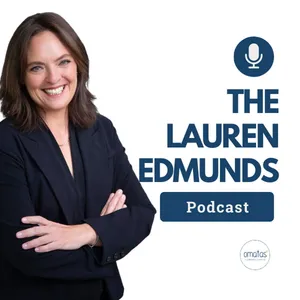
Are you a parent, teacher or caregiver navigating the world of neurodiversity, autism, learning difficulties or special needs?The Lauren Edmunds Podcast delivers practical insights and real conversations to help you better understand and support the children in your life.Hosted by Lauren Edmunds, founder of Omatas Learning Centre — a special-needs school in Johannesburg, South Africa — Lauren brings over 12 years of hands-on experience working with primary school children with remedial and special needs, backed by decades of academic research.Each episode dives deep into education, parenting and child development, giving you the tools, confidence and clarity to make a real difference.New episodes are released weekly. Subscribe wherever you get your podcasts.
Latest Episodes
The most recent episodes — sign up to get AI-powered summaries of each one.
- 3 days ago4 min
Building Thinking Skills Through Reading
Too many children are leaving school without being able to read for meaning, and Lauren Edmunds believes that responsibility sits with both the school and the home. In this episode, Lauren explains what reading fluency is and why practice at home matters as much as the teaching in the classroom. She shares how parents can support their child’s reading by letting teachers lead on phonics, keeping reading practice positive, and reading aloud together for at least 20 minutes every night. Lauren also talks about how stories, conversation around the dinner table and everyday curiosity help children build vocabulary and thinking skills, and why that matters for raising independent young adults. Omatas Learning Centre
- 1 weeks ago9 min
Helping Our Anxious Kids
In this episode, Lauren Edmunds explores how anxiety shows up in children and why no learning can happen when a child’s nervous system is in fight, flight, freeze or fawn. She explains why anxious children first need to feel safe, not just be safe. She also warns that a calm, controlled environment on its own won’t prepare them for life. She draws on Michael Singer’s image of a bird resting on a calm ocean. Then she shows how practising skills like breathwork and grounding during calm moments, and modelling them as a regulated adult, helps children manage anxiety when the waves inevitably come. Omatas Learning Centre
- 3 weeks ago14 min
Why Inclusion Starts Before a Child Joins In
How do we help children feel included when they struggle to join in? I n this episode, Lauren Edmunds explores why inclusion is about more than simply being present. She explains how giving children the time, space and support to participate at their own pace can help them build confidence, develop new skills and feel connected to the world around them. Through practical examples from school, family life and extracurricular activities, Lauren shows how small changes in the way we support children can make a real difference. She also discusses how we respond to mistakes, create opportunities for children to learn and grow, and help them feel that they have a place where they belong. Omatas Learning Centre
- 4 weeks ago12 min
Making Learning Easy
Learning is about more than taking in new information. Children need time to process what they’ve learnt and practise recalling it. In this episode, Lauren Edmunds explores why children with learning difficulties may struggle to remember information and how screen time and distractions at home can affect their concentration. She also shares practical ways to help children prepare for learning, along with sensory techniques parents can use at home to make information easier to remember and help children feel more confident in their learning. Omatas Learning Centre
- Oct 12, 202614 min
Helping Children Manage Big Emotions
When a child loses control of their emotions, it’s easy to see it as bad behaviour. But as Lauren Edmunds explains, there’s a difference between a child acting out and a child who is simply overwhelmed. Dialectical Behaviour Therapy (DBT) offers a useful way to understand emotional dysregulation and what children need when their feelings become too much to handle. In this episode, Lauren explores the window of tolerance and how stress and sensory overload can affect a child’s ability to cope. She looks at the difference between a meltdown and behaviour aimed at getting a response, and shares practical ways to help children regulate their emotions, including breathing techniques, naming feelings and the 5-4-3-2-1 grounding exercise. Lauren also explains the role of co-regulation, showing how a parent’s calm presence can help a child feel safe and gradually learn to manage difficult emotions independently. Omatas Learning Centre
- Sep 28, 20266 min
Are We Accidentally Teaching Our Children They Can't?
We all want the best for our children, but what happens when our good intentions accidentally hold them back? In this episode, Lauren Edmunds explores the concept of “learned helplessness” and how stepping in too quickly to fix a bed, tie a shoe, or finish a task can inadvertently send the message: I don’t trust you to do this. Lauren looks at how children, including neurodivergent and non-verbal students, pick up on our body language and actions just as much as our words. She shares practical ways to change how we communicate, celebrate effort rather than perfection, and give children the trust and space they need to build real capability and self-belief. Omatas Learning Centre
- Sep 14, 202622 min
Rethinking Screen Time: Connection Over Addiction
When parents struggle to get their children off devices, the usual advice is to set strict screen-time limits or use rewards. But when screens become something a child earns, they can end up becoming even more important, with the device taking over a bigger part of their day. Screens are also often used to calm children who are dysregulated or neurodivergent. While this may seem to work in the moment, Lauren explains why it can sometimes lead to a shutdown rather than helping a child properly regulate their emotions. In this episode, Lauren Edmunds looks at the impact of screen dependency on children and what parents can do to create a healthier balance. She explores how excessive screen use can affect physical and cognitive development, why screens cannot replace human connection, and how parents can build stronger relationships with their children. Lauren also shares practical ways to create a screen-free home, set clear boundaries, and help children find motivation through achievement, play, and real-world experiences. Omatas Learning Centre
- Aug 31, 20266 min
Rules vs. Growth
When a child repeatedly breaks a rule, it is easy to respond by tightening discipline and demanding compliance. But forcing children to fall in line rarely addresses the real issue. More often than not, it simply masks what is causing the behaviour in the first place. In this episode, Lauren Edmunds takes a closer look at the role of rules at school and at home. She explains the difference between rigid rules that demand compliance and flexible expectations that help children develop the skills they need. Lauren explores why rule-breaking can be a sign that a child is overwhelmed, lacks the necessary skills, or is avoiding something they find difficult. She also explains why, in many cases, either the expectation needs to be adjusted, or the child needs more support to meet it. It is a practical conversation about moving beyond punishment and creating boundaries that help children learn, grow, and succeed. Omatas Learning Centre
Get The Lauren Edmunds Podcast summaries in your inbox
Free AI-powered daily recaps. Key takeaways, quotes, and mentions — in a 5-minute read.
Get Free Summaries →Free forever for up to 3 podcasts. No credit card required.
You Might Also Like
Listeners also like.

The Middle School Mary Poppins Podcast
Practical strategies for supporting kids ages 10–15 through the challenges of early adolescence.

The Middle School Mary Poppins Podcast
An educator and social worker discusses middle schoolers' emotional and social development to support students, parents, and teachers.

The ADHD Parenting Podcast
Practical strategies for parents to support children with ADHD in managing behavior, emotions, school, and daily routines.

Parenting Out Loud
Discusses current cultural trends, news, and parenting topics with candid, humorous insights for modern parents.

Good Inside with Dr. Becky
A clinical psychologist provides practical guidance for handling common parenting challenges and improving parent-child relationships.

After Bedtime with Big Little Feelings
Honest conversations about modern parenting challenges with practical advice and emotional support from experienced guides.

Think UDL
Think UDL

Homeschool Unrefined
Maren Goerss and Angela Sizer
Mixing it up with Mixter: An Autism Podcast
Kari Thomas
Ask Lisa: Untangling Family Life
Psychologist Lisa Damour answers parents' questions about raising tweens and teens with evidence-based advice on mental health, behavior, and family dynamics.
The Cult of Pedagogy Podcast
Discusses teaching strategies, classroom dynamics, and education reform through interviews with educators and school community members.
Care and Feeding | Slate's parenting show
Parents discuss real-life challenges and solutions for raising children from toddlers through teens.
About The Lauren Edmunds Podcast
Are you a parent, teacher or caregiver navigating the world of neurodiversity, autism, learning difficulties or special needs?The Lauren Edmunds Podcast delivers practical insights and real conversations to help you better understand and support the children in your life.Hosted by Lauren Edmunds, founder of Omatas Learning Centre — a special-needs school in Johannesburg, South Africa — Lauren brings over 12 years of hands-on experience working with primary school children with remedial and special needs, backed by decades of academic research.Each episode dives deep into education, parenting and child development, giving you the tools, confidence and clarity to make a real difference.New episodes are released weekly. Subscribe wherever you get your podcasts.
Customized Recaps
AI-powered recaps with compact key takeaways, quotes, and insights.
Straight to Your Inbox
Get key takeaways from The Lauren Edmunds Podcast in a 5-minute read.
Save Hours Every Week
Stay current on your favorite podcasts without falling behind.
Frequently Asked Questions
What is Podzilla's The Lauren Edmunds Podcast daily summary?
It's a free AI-powered email that summarizes new episodes of The Lauren Edmunds Podcast as soon as they're published. You get the key takeaways, notable quotes, and links & mentions — all in a quick read.
How does the The Lauren Edmunds Podcast podcast summary work?
When a new episode drops, our AI transcribes and analyzes it, then generates a personalized summary tailored to your interests and profession. It's delivered to your inbox every morning.
Is this an official The Lauren Edmunds Podcast product?
No. Podzilla is an independent service that summarizes publicly available podcast content. We're not affiliated with or endorsed by Pint Size Media.
Can I get summaries of other podcasts too?
Absolutely! The free plan covers up to 3 podcasts, any in the catalog. Basic raises that to 15, Pro to 40 and Max to 100. Browse our full catalog at /podcasts.
How often does The Lauren Edmunds Podcast release new episodes?
The Lauren Edmunds Podcast publishes weekly. Our AI generates a summary within hours of each new episode.
What topics does The Lauren Edmunds Podcast cover?
The Lauren Edmunds Podcast covers topics including Education, Self-Improvement. Our AI identifies the specific themes in each episode and highlights what matters most to you.
Start getting The Lauren Edmunds Podcast summaries tomorrow morning.
Free forever for up to 3 podcasts. No credit card required.
Free forever for up to 3 podcasts. No credit card required.