Free Daily Podcast Summary
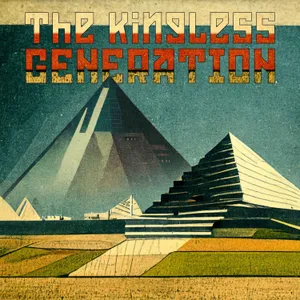
The Kingless Generation: Daily Summaries Delivered
by Fergal Schmudlach
A podcast on the deep history of class struggle, paleo-parapolitics, and the demonology of capital. Hosted on Acast. See acast.com/privacy for more information.
Latest Episodes
The most recent episodes — sign up to get AI-powered summaries of each one.
- 5 days ago1h 26m
China as #1 in Japanese Literature: Battles of Coxinga, pᵗ 1 (Chikamatsu Monzaemon, 1715)
In part one of this second installment of our series on China as a silk road great power in pre-modern Japanese literature, we read Japanese playwright Chikamatsu Monzaemon’s puppet play “The Battles of Coxinga,” about the half-Japanese, half-Chinese hero Coxinga (Zheng Chenggong) who fought the Manchu Qing dynasty in an attempt to restore the Ming dynasty. Chikamatsu’s most successful play in his lifetime, it is striking today for its geopolitical perspective: although ambitions of Japanese conquest and aggrandizement are present, China is looked up to as the indisputably superior center of civilization where we plucky Japanese are happy to be of service, and even if we lack intelligence and refinement, we have a grit and gristle and spirit (and the protection of the Japanese gods) that makes us uniquely able to save the day against the savage and treacherous Manchus of the Qing dynasty, who are depicted in a proto-racist way that we do sometimes see in Early Modern Eurasia, even in the East. Notice how this is the precise opposite worldview of imperial Japan, where the old nothern “barbarian” Altaic peoples were seen as Japan’s natural allies according to modern genetic theories, and everything Han Chinese became primitive or degenerate, and Anglo-American whiteness became the new object of an increasingly violent inferiority complex. Hosted on Acast. See acast.com/privacy for more information.
- 2 weeks ago41 min
China as #1 in Japanese Literature: “Taishokan” [PREVIEW] (Kōwaka ballad, by 1553)
Hosted on Acast. See acast.com/privacy for more information.
- Aug 18, 20261h 42m
Dethrone the Dictaphone
A chatty hangout episode on recent events, the class politics of fashion in our post-cultural moment, and an American (...?) Broadway musical from the End of History as performed in Japanese in air-conditioned chambers surrounded by hordes of shrink-wrapped Teslas on reclaimed land developed Tel Aviv–style in the middle of Tokyo Bay. Hosted on Acast. See acast.com/privacy for more information.
- Aug 11, 202633 min
An Infant ‘West’ meets a Middle-Aged ‘East’ [PREVIEW]: Galland’s retelling of Shams-al-Nahār & Ibn Bakkār (1704–1717)
In this final episode of our first series on the 1,001 Nights, we take up Frenchman Antoine Galland’s adaptation, where we see a Europe that has only begun to see its nearest Afro-Asiatic merchant-capitalist great power as a different , “eastern” civilization whose cultural products must be held at arm’s length and ethnographically explained—rather than adopted wholesale without comment, as stories from the very same 1,001 Nights had been in medieval European literature like the Canterbury Tales (1387–1400) or Orlando Furioso (1516–1532). Galland introduces critical details and disparaging attitudes, writes new scenes not found in the Arabic, and sometimes misreads the Arabic quite dramatically. The things he needs to explain to his readers—that druggists can be respectable members of society, that poetry can express emotions vicariously—reinforce for us the low level of development of “Europe” as it begins to step onto the stage of history for the first time (it was not meaningfully continuous with Greco-Roman antiquity but rather borrowed most from the Arab-Islamicate Mediterranean world from whose side it sprang) and as an awkward newcomer rather than an overwhelmingly powerful main character (it would not even begin to dominate the Eurasian economy until after 1800). Finally, here too Galland’s central interest is evident in the bureaucrat-connected merchant rogues and organized criminals who are able to slip through the cracks of this highly developed and regimented society and accumulate capital—the Sons of the Silk Road who were already the main model for the Crusader bourgeoisie. Hosted on Acast. See acast.com/privacy for more information.
- Aug 4, 20261h 29m
Oriental Despotism comes w/ Occidental Colonization: Ibn Bakkār & Shams-al-Nahār in the Calcutta Ⅱ Nights (1839–42)
In addition to filling in more background knowledge from a scholarly article that I did find on this tale by Jamel Eddine Bencheikh, as well as some musings on the formation of the discipline of Anglophone Japan studies under the influence of Francophone Arabology, we explore this same tale in the nineteenth-century colonial-era British-Indian edition of the now much expanded and more textually baroque version known as Calcutta II. There, we find the first-person narrative interludes removed, or at least refocused away from the process of establishing a secure communication channel between the worker go-betweens, on behalf of the elite patrons. That process also becomes top-down rather than bottom-up, as the negotiation of the connection much more clearly follows an elite commission rather than arising on the initiative of the workers themselves. Meanwhile, textual change has obscured some storytelling choices we saw in the post-1450 version, sometimes strengthening the story but also often leaving loose ends dangling and vestigial inconsistencies that only make sense if we know what the passage used to say. In the way, the text of Calcutta II embodies the growth of oriental despotism or decadence precisely in the time of occidental colonization, both in its form and in its content. Hosted on Acast. See acast.com/privacy for more information.
- Jul 28, 202645 min
Truth and Testimony, Drugs and Attachment in Bourgeois-Revolutionary Baghdad [PREVIEW]: Re-Orienting Ibn Bakkār and Shams-al-Nahār in the Arabic manuscript of the 1,001 Nights
I dust off my Arabic for some weird scenes in Silk Road–era Baghdad: a story of drugs and ego death, deadly secrets and the workers who keep them. The only tragic love story in the Nights, the story of the Persian prince Ibn Bakkār and the courtesan Shams-al-Nahār also features, only in this earliest available Arabic manuscript tradition, a meta-narrative device whereby first-person interviews with certain characters—such as would be collected by a prosecutor as evidence for a trial—are interspersed throughout this story of elite parties, exotic drugs, and forbidden obsessions. Hosted on Acast. See acast.com/privacy for more information.
- Jul 21, 20261h 5m
1,001 Nights: A murdered ancestor to European Romance
Hosted on Acast. See acast.com/privacy for more information.
- Jun 24, 202647 min
Eranos 4 [PREVIEW]: It was us (all along)...
In anticipation of future outings on some of the more interesting figures we've met thus far, we bring our introductory series on the Eranos milieu to a close with a discussion of the final years, as one august old racket came to an end but was simultaneously demolitioned, flipped, spun off, and otherwise psycho-entrepreneurially aufgehoben into various other cultic milieux just as our current moment of cultic conquest of civil society began. Hosted on Acast. See acast.com/privacy for more information.
About The Kingless Generation
A podcast on the deep history of class struggle, paleo-parapolitics, and the demonology of capital. Hosted on Acast. See acast.com/privacy for more information.
Customized Recaps
AI-powered recaps with compact key takeaways, quotes, and insights.
Straight to Your Inbox
Get key takeaways from The Kingless Generation in a 5-minute read.
Save Hours Every Week
Stay current on your favorite podcasts without falling behind.
Frequently Asked Questions
What is Podzilla's The Kingless Generation daily summary?
It's a free AI-powered email that summarizes new episodes of The Kingless Generation as soon as they're published. You get the key takeaways, notable quotes, and links & mentions — all in a quick read.
How does the The Kingless Generation podcast summary work?
When a new episode drops, our AI transcribes and analyzes it, then generates a personalized summary tailored to your interests and profession. It's delivered to your inbox every morning.
Is this an official The Kingless Generation product?
No. Podzilla is an independent service that summarizes publicly available podcast content. We're not affiliated with or endorsed by Fergal Schmudlach.
Can I get summaries of other podcasts too?
Absolutely! The free plan covers up to 3 podcasts. Upgrade to Pro for 15, or Premium for 50. Browse our full catalog at /podcasts.
How often does The Kingless Generation release new episodes?
The Kingless Generation publishes biweekly. Our AI generates a summary within hours of each new episode.
What topics does The Kingless Generation cover?
The Kingless Generation covers topics including Science, Religion & Spirituality, Philosophy, Culture, Society & Culture, Social Sciences. Our AI identifies the specific themes in each episode and highlights what matters most to you.
Start getting The Kingless Generation summaries tomorrow morning.
Free forever for up to 3 podcasts. No credit card required.
Free forever for up to 3 podcasts. No credit card required.