Free Daily Podcast Summary
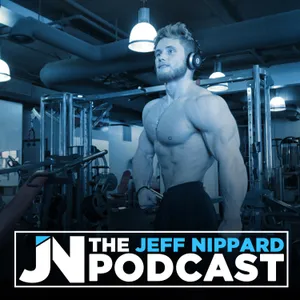
The Jeff Nippard Podcast: Daily Summaries Delivered
by Jeff Nippard
This podcast is dedicated to discussions and interviews with the fitness community's best science-based coaches, researchers and elite level athletes.
Latest Episodes
The most recent episodes — sign up to get AI-powered summaries of each one.
- 5 days ago1h 38m
The Worst Female Fitness Myths (ft. Antonella Schwarz PhD)
- Oct 14, 20261h 23m
This Study Completely Changed How Train To Failure
In this episode, I sit down with exercise scientist Dr. Martin Refalo to discuss his research on reps in reserve (RIR) and what it reveals about how close to failure you need to train to maximize muscle growth. We also explore how exercise selection and fatigue influence your training, and whether low-volume training can be effective for building muscle. Timestamps: 0:00 - Introduction 2:32 - What Is Reps in Reserve (RIR)? 6:21 - My Favorite Study on RIR 27:54 - Should You Train to Failure? 37:43 - Does Exercise Selection Affect RIR? 45:53 - Should You Be Concerned About Fatigue? 1:01:16 - What RIR Maximizes Muscle Growth? 1:08:40 - How Effective Is Low-Volume Training? 1:19:51 - Martin's Hot Take References: Martin's RIR Paper https://pubmed.ncbi.nlm.nih.gov/38393985/ RIR Meta-Analysis https://pubmed.ncbi.nlm.nih.gov/38970765/ Social Media and Mental Fatigue https://pubmed.ncbi.nlm.nih.gov/34000894/ https://pmc.ncbi.nlm.nih.gov/articles/PMC11235674/ Low-Volume Study https://pubmed.ncbi.nlm.nih.gov/40249908/
- Sep 16, 20262h 24m
How People Got Jacked From 1800 To Today
In this podcast episode, I talk with Dr. Conor Heffernan, a historian of sport, fitness, and physical culture, about how lifting and fitness have evolved over the past 140 years. We trace the history decade by decade, starting with Eugen Sandow in the 1890s and going all the way up to the modern social media era of bodybuilding. We discuss how physique standards, nutrition, and training itself have changed along the way. Conor's Website: https://physicalculturestudy.com/ Conor's Substack: https://physicalculture.substack.com/ Timestamps: 0:00 - Introduction 4:35 - How do modern physiques compare to the early 1900s? 24:29 - Was Eugen Sandow the first fitness scammer? 28:20 - How has fitness knowledge evolved with science? 35:43 - What training looked like in the 1890s to 1920s 44:29 - What training looked like in the 1930s 54:45 - What training looked like in the 1940s 59:47 - Barriers women faced in early fitness culture 1:07:41 - What training looked like in the 1950s to 1980s 1:15:19 - What were the first training splits and diets like? 1:30:18 - What training looked like in the 1990s to 2000s 1:40:35 - How social media changed fitness 1:58:30 - Is fitness history repeating itself? 2:03:45 - What was the best physique era? 2:09:39 - Exploring historic fitness paraphernalia Conor's Physical Culture Recommendations: The Strongman Project: https://strongmanproject.com/ Strength Magazine: https://starkcenter.org/exhibits/type/journals/strength-magazine-1914-1930/ Barbell Films: https://www.barbellfilms.co.uk/ Golden Era Bookworm: https://www.goldenerabookworm.com/ Internet Archive: https://archive.org/ The Tight Tan Slacks of Dezso Ban: https://ditillo2.blogspot.com/ Recommended Physical Culture Authors: David L. Chapman John D. Fair Jan Todd Shannon L. Walsh Jason P. Shurley
- Aug 6, 20262h 11m
Low vs High Volume: Which Actually Builds More Muscle? (ft. Dr. Robinson & Dr. Pelland)
In this podcast episode, I talk with Dr. Josh Pelland and Dr. Zac Robinson, two individuals who I think are on the cutting edge of exercise science research. They both co-authored two of the most widely cited meta-analyses published in the past few years: one on training volume and the other on proximity to failure. We take a deep dive into those findings while also touching on topics like individual training responses, "the stretch," and the limitations of research more broadly. __ Check out my training programs here: https://jeffnippard.com/ Download MacroFactor Nutrition 2 weeks free: https://bit.ly/jeffmacrofactor (use code JEFF) Download MacroFactor Workouts 2 weeks free: https://bit.ly/jeffmacrofactorworkouts (use code JEFF) __ Josh & Zac's website: https://www.data-drivenstrength.com/ Follow Dr. Josh Pelland on Instagram: https://www.instagram.com/josh.datadrivenstrength/ Follow Dr. Zac Robinson on Instagram: https://www.instagram.com/zac.datadrivenstrength/ __ References: Volume Meta-Analysis https://sportrxiv.org/index.php/server/preprint/view/460 Proximity to Failure Meta-Analysis https://sportrxiv.org/index.php/server/preprint/view/295 Per-Session Training Volume Meta-Analysis https://www.researchgate.net/publication/390450237
- Feb 1, 202622 min
We Need To Talk About "The Stretch" (Jeremy Ethier's New Study)
In this episode, I talk with fellow YouTuber Jeremy Ethier about a new study that he co-authored that compared muscle growth when training with more tension in the lengthened position versus with more tension in the shortened position. We'll cover what these new findings mean, if this changes our thoughts on "the stretch", and how these findings should be applied to training. Timestamps 0:00 - Intro and Jeremy's new study overview 2:54 - What Jeremy's study did really well 3:56 - Were these results surprising? 7:17 - How much does the stretch actually matter? 9:23 - Stretch implications for exercise selection 13:30 - Big picture takeaways on the stretch 15:25 - Does training experience change the results? 16:52 - Which stretch-biased exercises are worth it? 18:23 - Does science-based lifting keep flip-flopping? 19:20 - Jeremy's main takeaways 20:36 - Final thoughts Jeremy Ethier's video on the study: https://www.youtube.com/watch?v=HJHeGGSp1tQ References: Jeremy Ethier's Study: https://sportrxiv.org/index.php/server/preprint/view/660 New Long vs Short Muscle Length Meta-Analysis: https://www.researchgate.net/publication/399455789 DB vs Cable Lateral Raises: https://pubmed.ncbi.nlm.nih.gov/40692697/ My Lengthened Partials Study: https://pubmed.ncbi.nlm.nih.gov/39959841/ Squats vs Hip Thrusts: https://pmc.ncbi.nlm.nih.gov/articles/PMC10349977/ Standing vs Seated Calf Raises: https://pubmed.ncbi.nlm.nih.gov/38156065/ Calf Lengthened Partials vs Full ROM: https://pubmed.ncbi.nlm.nih.gov/37015016/ Seated vs Lying Hamstring Curls: https://pubmed.ncbi.nlm.nih.gov/33009197/ Leg Extension Seat Angle: https://www.researchgate.net/publication/380457955 Overhead Triceps Extension vs Pressdowns: https://pubmed.ncbi.nlm.nih.gov/35819335/
- Jan 31, 202652 min
How We Transformed Our Physiques In 1 Year (ft. My Brother, Brad)
Watch the youtube video of our muscle gain journey together here: https://youtu.be/PiYSbR2B85w
- Nov 17, 202332 min
Why Long-Length Partials Are Good For Muscle Growth (ft. Dr. Milo Wolf)
Timestamps: 0:00 - How confident is Dr. Wolf in long length partials? 1:33 - What are long length partials? 3:25 - How good are long length partials really? 5:24 - Research on long length partials 7:36 - Examples of long length partials 9:08 - Good and bad exercises for long length partials 16:22 - Integrated partials 20:39 - How much ROM should we use on the partials? 29:07 - Failure discussion (new study) Watch my video on long-length partials: https://youtu.be/ftpH4-xFGQI Watch my video that covers the new failure study: https://www.youtube.com/watch?v=BjyDaxYpW8o Find Dr Milo Wolf here: https://www.youtube.com/@WolfCoaching https://www.instagram.com/wolfcoach_/
- Nov 11, 20221h 8m
Training Minimalism: Can You Get More Gains With Less Work?
Timestamps: 0:00 Intro 1:20 What is training minimalism & minimum dose training 10:25 - Minimalistic training for strength 36:36 - Minimalistic training for strength 59:26 - Exciting new research for Dr. Pak Watch my Minimalism Science Explained video: https://www.youtube.com/watch?v=xc4OtzAnVMI Find Dr. Pak here: https://www.instagram.com/dr__pak/ https://www.youtube.com/channel/UCfLkHRHcMxbdcZDWXfrLkBQ https://www.strongerbyscience.com/coaching/pak-androulakis-korakakis/
Get The Jeff Nippard Podcast summaries in your inbox
Free AI-powered daily recaps. Key takeaways, quotes, and mentions — in a 5-minute read.
Get Free Summaries →Free forever for up to 3 podcasts. No credit card required.
You Might Also Like
Listeners also like.
The Nick Bare Podcast
Nick Bare explores nutrition, human performance, and disciplined habits to help people consistently show up for what matters.
The FastFit Podcast
FastFit
The Jordan Syatt Podcast
Discusses health, faith, politics, and history through candid, unfiltered conversations.

The Model Health Show
Shawn Stevenson explores health and fitness topics including nutrition, sleep, hormones, and exercise with expert guests.

Modern Wisdom
Discussions with experts on psychology, philosophy, and self-improvement to help navigate life’s challenges.
Mind Pump: Raw Fitness Truth
Three fitness experts debunk myths and expose science-backed truths about training, nutrition, and health in the fitness industry.
Muscle for Life with Mike Matthews
Discusses science-based strategies for building muscle, losing fat, and improving overall health and well-being.

FoundMyFitness
A podcast exploring health, science, nutrition, aging, and fitness.
The Stronger By Science Podcast
A science-focused fitness podcast that breaks down research, trends, and practical strategies for strength and health.
TRAINED
Discusses fitness and wellness through interviews with athletes, scientists, and health experts on mindset, nutrition, movement, recovery, and sleep.
Unfinished Business
Audrey Adams and Mason Mahoney

The Genius Life
Explores science-backed strategies for improving health, fitness, and longevity through conversations with experts.
About The Jeff Nippard Podcast
This podcast is dedicated to discussions and interviews with the fitness community's best science-based coaches, researchers and elite level athletes.
Customized Recaps
AI-powered recaps with compact key takeaways, quotes, and insights.
Straight to Your Inbox
Get key takeaways from The Jeff Nippard Podcast in a 5-minute read.
Save Hours Every Week
Stay current on your favorite podcasts without falling behind.
Frequently Asked Questions
What is Podzilla's The Jeff Nippard Podcast daily summary?
It's a free AI-powered email that summarizes new episodes of The Jeff Nippard Podcast as soon as they're published. You get the key takeaways, notable quotes, and links & mentions — all in a quick read.
How does the The Jeff Nippard Podcast podcast summary work?
When a new episode drops, our AI transcribes and analyzes it, then generates a personalized summary tailored to your interests and profession. It's delivered to your inbox every morning.
Is this an official The Jeff Nippard Podcast product?
No. Podzilla is an independent service that summarizes publicly available podcast content. We're not affiliated with or endorsed by Jeff Nippard.
Can I get summaries of other podcasts too?
Absolutely! The free plan covers up to 3 podcasts, any in the catalog. Basic raises that to 15, Pro to 40 and Max to 100. Browse our full catalog at /podcasts.
How often does The Jeff Nippard Podcast release new episodes?
The Jeff Nippard Podcast publishes monthly. Our AI generates a summary within hours of each new episode.
What topics does The Jeff Nippard Podcast cover?
The Jeff Nippard Podcast covers topics including Fitness, Health & Fitness. Our AI identifies the specific themes in each episode and highlights what matters most to you.
Start getting The Jeff Nippard Podcast summaries tomorrow morning.
Free forever for up to 3 podcasts. No credit card required.
Free forever for up to 3 podcasts. No credit card required.