Free Daily Podcast Summary
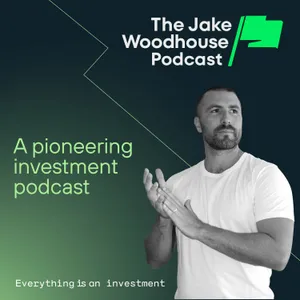
The Jake Woodhouse Podcast: Daily Summaries Delivered
by Jake Woodhouse
Dad, Husband, Investor, MC, & Podcaster | Discussing financial, humanistic, & intellectual investments | Follow to future-proof your happiness, health, & wealth
Latest Episodes
The most recent episodes — sign up to get AI-powered summaries of each one.
- 1 weeks ago45 min
I Made the Money. I Didn't Build the System. (JWP 134)
I spent part of my wife's 40th birthday, on a clifftop that should have been pure celebration, quietly worrying about money. I had built real wealth and then watched a lot of it crumble over the last year. This episode isn't really about that one uncomfortable moment. It's about what it exposed: making money and building financial security are two completely different skills, and I had only ever learned the first.In this episode, I get into:The mistake that made it real this year: committing to a big renovation when Bitcoin was high, never actually funding it, and then being forced to sell into the crash just to pay the invoicesWhy a decision to reallocate is really a decision to sell, and the two separate bets I did not realise I was making at the same timeThe forced sale you quietly schedule for your future self when you take gains and forget the taxThe reframe that changed how I think about income: its job isn't to beat Bitcoin, it's to make sure I'm never forced to sell itThe idea of buying permanence, and the harvest paradox I still haven't solved, where the same rule that would have saved me this year would have cost me the upside that got me hereThis one carries on from the recent episodes on capital, cash flow and optionality, and lands on a question I'm still sitting with: if I'm this convinced Bitcoin is one of the best assets I'll ever own, why did I build a financial life where something completely unrelated to it could decide when I sold it
- 4 weeks ago21 min
Should We Live Here? (JWP133)
Every time I travel somewhere beautiful, the same question shows up within 48 hours: should we live here? This episode isn't really about Bali. It's about what that recurring pattern actually reveals.In this episode, I get into:Why travel gives you perspective, not just a better holiday, and how it quietly rewires what you assume is "normal"The real story of a retired Australian couple I met who built their dream villa in Bali sixteen years ago, and what happened to the view they thought they'd always haveWhy optionality was never meant to be the destination, and what it's actually supposed to buy youThe line that reframed the whole episode for me: a choice you never make isn't wealth, it's just deferred decision-making with better financingWhere my family and I are actually heading next, and why the decision is deliberately undramaticThis one ties together the last two episodes on capital and cash flow, and lands on a question I'm still sitting with: at what point does keeping your options open stop being freedom, and start being the thing stopping you from building the life you actually want?
- Aug 17, 202630 min
Cash Flow Funds Optionality (JWP 132)
In this episode I break down how a tweet about cash flow, ended up explaining a mistake almost every investor makes on the way up, and only notices on the way down. Learn why cash flow isn't just boring income sitting in the background, it's what buys you the ability to wait. I walk through two people with identical net worth but completely different financial lives depending on whether their cash reserve is a reservoir or a stream, why yield looked stupid to me during the bull run and stopped looking stupid the moment Bitcoin fell 60%, and a real story about a holiday with my wife that felt free at the time and expensive in hindsight, plus the pushback from her that reframed how I think about funding lifestyle from cash flow instead of chipping into the capital stack. I also get into why I stopped asking "how do I maximise my returns" and started asking "how do I maximise my ability to stay in the game." So I ask you: what would change in your financial life if you stopped measuring it by what you own, and started measuring it by what it produces?
- Aug 12, 202626 min
What Is Capital? (JWP131)
What if the biggest capital allocation decision you make today has nothing to do with money? This week I sit with a moment of total overwhelm, homeschooling, business, investing, all at once, and the workout that pulled me out of it. That leads back to a conversation with Rev Hodl, whose homestead runs on nine interconnected forms of capital, not just financial ones. We get into why time is a flow you can't bank, why attention is the real scarce resource, and how a single hour, a walk, a workout, reading with your kids, can build several forms of capital simultaneously. I also talk about extraction: how chasing one account (money, status, output) can quietly drain another, and why that's closer to a definition of burnout than most people realise. So: where will your next hour be most productive?
- Aug 3, 202621 min
Dad, what's a Sixpence?
This episode starts with my six-year-old walking up to me one afternoon and asking, "Dad, what's a sixpence?" I follow that question all the way down.I dig into the 400-year life of the sixpence, a British coin quietly debased over decades until there was no silver left in it at all, and finally withdrawn in 1980, largely without anyone noticing while it happened. From there I get into what debasement actually looks like in real time, why every generation assumes the money it grows up with is permanent, and why being a good capital allocator means being a student of change as much as a student of markets.Also covered: the books that have shaped how I think about money (Menger, Lynn Alden, Saifedean Ammous), where Bitcoin fits into this story without being the whole story, and the question I've been sitting with since that conversation: what do I own today that feels permanent, but probably isn't?
- Jul 26, 202627 min
I Asked Bitcoin To Do Too Much (JWP 129)
Between 2023 and 2025, my Bitcoin position grew so fast I thought I'd solved the wealth problem. Then the market turned, hard and fast, and I found out exactly what I'd built.Turns out I was asking one asset to be four things at once: my growth, my income, my emergency fund, and my peace of mind. When volatility hit, all four failed together.In this episode I walk through what actually happened (the renovation, the forced selling, the hardest six months of my marriage) and the framework I'm now using instead: every dollar needs one job, not four.Growth. Purchasing power over the long run.Income. Money through the front door, however you make it.Optionality. Cash and available capital, your buffer to survive and act.Stability. The base layer you never sell, the thing that lets you sleep.The mistake wasn't buying Bitcoin. It was the architecture.If you want to try the exercise: write down everything you own, and one sentence next to each, what job is this actually doing for you. If you can't answer it, you've found the weakest part of your portfolio.
- Jul 5, 202627 min
The Market Intelligence Report: Version 1 (JWP128)
A few weeks ago I sent an early version of my business to 44 people I trust. My main aim: tell me why it wouldn't work. Well over twenty replied. One even told me to get a job. All of it was valuable. What I didn't realise at the time was that I was accidentally building a market intelligence database. This process has fundamentally changed how I think about building Bitcoin Custody Architect. In this episode I share Version 1 of that report. What you'll hear: Why one opinion is interesting but five independent people saying the same thing is evidence How the market moved me from sovereignty to recovery, and from documentation to confidence Why multiple people independently pointed me toward financial advisers as a distribution channel I never asked about Why the annual review is now part of the core offer, not an afterthought Why stories teach better than specifications ever will And the biggest lesson from all of it — which had nothing to do with Bitcoin This is Version 1. I expect it to look very different by Version 10. That's the whole point. If you have a custody story, a recovery experience, an inheritance challenge, or a mistake you learned from, I'd genuinely love to hear from you. Every conversation improves the next version of this report. Reach out on X or head to jakewoodhouse.io/bca
- Jun 25, 202630 min
Could You Recover Your Bitcoin Without Your Provider? (JWP127)
I asked Bitcoin Twitter a simple question this week: if you own meaningful Bitcoin, which worries you more, a 50% price drop, or losing access to it? Almost everyone said losing access. The thread is worth reading: https://x.com/jakewoodhouseio/status/2069199376166301735 One reply put it simply: a 50% drop means you've lost half. Losing access means you've lost it all. That's what this episode is about. I recently reviewed one of my own Bitcoin setups and found a gap. A vault I'd created that wasn't properly documented; specifically the derivation path required to rebuild it independently if my provider disappeared. I've been doing this for over a decade and still found a problem. That's a provider dependency: when your recovery process depends on a specific company, software, or service remaining available. In this episode I cover what that actually means in practice: a friend's Sparrow update prompt and why pausing before clicking yes was the right instinct; the AUSTRAC Travel Rule coming into effect in Australia on 1 July 2026; a Ledger that died inside a 2-of-3 multisig and turned it into a 2-of-2 overnight; and the questions every Bitcoiner should be able to answer about their own setup right now. Self-custody is not a destination. It's a process. If your family cannot recover your Bitcoin without you, you have a Bitcoin dependency. If you cannot recover your Bitcoin without your provider, you have a provider dependency. Both are worth solving. jakewoodhouse.io/bca
Get The Jake Woodhouse Podcast summaries in your inbox
Free AI-powered daily recaps. Key takeaways, quotes, and mentions — in a 5-minute read.
Get Free Summaries →Free forever for up to 3 podcasts. No credit card required.
You Might Also Like
Listeners also like.

Wake Up to Wealth
A real estate expert shares strategies and stories on building wealth through real estate, entrepreneurship, and financial mindset.
The BetterLife Podcast
Real estate investing, wealth building, and lifestyle design through conversations with investors and entrepreneurs.

Hacks and Hobbies with Junaid Ahmed
Creators and entrepreneurs discuss turning hobbies into income through podcasting, content, and personal branding.

How to Money
Two friends break down personal finance topics like debt payoff and investing in simple, practical terms for everyday listeners.

Your Money Guide on the Side
A practical guide to personal finance and investing, breaking down complex topics with expert insights and actionable advice.

Afford Anything | Get Smarter With Money
A weekly discussion on financial freedom covering psychology, income, investing, real estate, and entrepreneurship with experts.

The Paul Morris Podcast
Entrepreneurs and investors share strategies for building wealth, scaling businesses, and leading high-performance teams.

BiggerPockets Business Podcast
Real entrepreneurs share practical advice on starting, growing, and selling businesses, covering hiring, marketing, and raising capital.

The Iced Coffee Hour
Candid conversations with diverse guests about their life journeys, successes, finances, and personal insights.

Get Started Investing
A beginner-friendly guide to investing, covering core concepts and real-life journeys through Q&As and personal stories.

The Investor's Podcast (We Study Billionaires) - The Investor’s Podcast Network
Analyzes the investment strategies of billionaire investors and explores lessons from legendary financiers on wealth, wisdom, and life.

Impact Podcast, Mentorship with Eddie Wilson
A seasoned entrepreneur shares insights on building businesses, leadership, and living with purpose to create meaningful impact.
About The Jake Woodhouse Podcast
Dad, Husband, Investor, MC, & Podcaster | Discussing financial, humanistic, & intellectual investments | Follow to future-proof your happiness, health, & wealth
Customized Recaps
AI-powered recaps with compact key takeaways, quotes, and insights.
Straight to Your Inbox
Get key takeaways from The Jake Woodhouse Podcast in a 5-minute read.
Save Hours Every Week
Stay current on your favorite podcasts without falling behind.
Frequently Asked Questions
What is Podzilla's The Jake Woodhouse Podcast daily summary?
It's a free AI-powered email that summarizes new episodes of The Jake Woodhouse Podcast as soon as they're published. You get the key takeaways, notable quotes, and links & mentions — all in a quick read.
How does the The Jake Woodhouse Podcast podcast summary work?
When a new episode drops, our AI transcribes and analyzes it, then generates a personalized summary tailored to your interests and profession. It's delivered to your inbox every morning.
Is this an official The Jake Woodhouse Podcast product?
No. Podzilla is an independent service that summarizes publicly available podcast content. We're not affiliated with or endorsed by Jake Woodhouse.
Can I get summaries of other podcasts too?
Absolutely! The free plan covers up to 3 podcasts. Upgrade to Pro for 15, or Premium for 50. Browse our full catalog at /podcasts.
How often does The Jake Woodhouse Podcast release new episodes?
The Jake Woodhouse Podcast publishes weekly. Our AI generates a summary within hours of each new episode.
What topics does The Jake Woodhouse Podcast cover?
The Jake Woodhouse Podcast covers topics including Education, Business, Investing, Fitness, Health & Fitness. Our AI identifies the specific themes in each episode and highlights what matters most to you.
Start getting The Jake Woodhouse Podcast summaries tomorrow morning.
Free forever for up to 3 podcasts. No credit card required.
Free forever for up to 3 podcasts. No credit card required.