Free Daily Podcast Summary
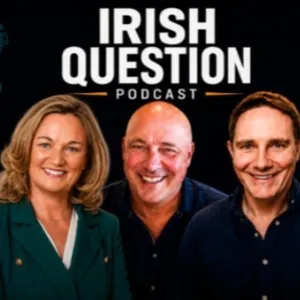
The Irish Question: Daily Summaries Delivered
by The Irish Question
We talk about the questions and topics that everyone is thinking about but most are afraid to say out loud. We don't hold back. We are not told what we can and can't say. You won't agree with everything we say, but we guarantee you the truth, honesty and a very unique podcast. SIgn up to all our social media platforms so we can build a group of like minded people
Latest Episodes
The most recent episodes — sign up to get AI-powered summaries of each one.
- Yesterday1h 20m
Can Ireland Be Saved? with Peadar Tóibín
Would Aontú put Simon Harris or Micheál Martin back in government? Would it work with People Before Profit? And what would the party actually do about Ireland’s falling birth rate?Aontú leader Peadar Tóibín joins Paul Treyvaud, Elaine Mullally and Nick Delehanty on The Irish Question. Nick makes the case for tax cuts as the panel debates the public-sector pay offer, and Tóibín sets out where he wants performance-linked pay. The conversation turns to the cost of raising a family, with Nick putting a direct question to Tóibín on whether Aontú would reverse access to abortion.Tóibín also takes aim at Simon Harris after the Fine Gael ard fheis, explains where Aontú sits on the left–right spectrum, and discusses cutting work permits, a possible pact with Independent Ireland and who he would rule out as a coalition partner.00:00 Peadar Tóibín joins The Irish Question01:11 Aontú’s polling and what it could mean for seats04:08 Public-sector pay rises or tax cuts?12:29 Should senior public servants and politicians have performance-linked pay?19:18 Unions, the EU visit and government spending23:24 Why is Ireland’s birth rate falling?30:08 Would Aontú reverse access to abortion?37:18 What would a pro-family policy look like?41:21 Fine Gael’s ard fheis and the row over the dole44:03 Tóibín takes aim at Simon Harris52:26 Is Aontú left-wing or right-wing?57:35 Immigration, asylum and work permits1:03:09 Tóibín on his family and influences1:09:01 Would Aontú do a deal with Independent Ireland?1:12:46 Paul Murphy, Ruth Coppinger and People Before Profit1:13:55 Who would Aontú go into government with?1:16:19 Could there be an early general election?
- 3 days ago30 min
What are Irish Schools Teaching?
Unpacking Woke Ideology in Education with Kelly HenriquesA deep dive into how curriculum changes are shaping our children's futures.In this episode, Elaine Mullally sits down with Kelly Henriques to discuss the alarming presence of woke ideology in educational systems, particularly in Ireland. Their conversation highlights how educational reforms are shaping not just the curriculum, but the very values and beliefs of future generations.The Roots of Woke Ideology in EducationKelly reflects on her journey into this topic, pinpointing the junior cycle SPHE specification as a catalyst for her growing concern. "I wasn't really paying attention to what was happening in schools until I read that specification," she admits. This specification, she believes, is a precursor to a much larger agenda at play.Kelly argues that the push for gender ideology in schools is just a symptom of a broader ideological overhaul. "These theories bled out of the academy and were normalized in society, leading to division and chaos. We are witnessing the same thing happen here," she asserts. The Shift in Educational PurposeElaine and Kelly discuss the fundamental changes in education since 2019, which Kelly believes have altered the very purpose of schooling. Instead of fostering knowledge, the aim has shifted towards social transformation. "They want a revolution. It's really about social transformation more than it is about education in and of itself," Kelly explains.This transformation, according to Kelly, is not only about indoctrinating children but also about creating a generation that acts as "agents of change" in society. The Role of Teachers and CurriculumThe conversation turns to the role of educators in this shift. Kelly points out that many experienced teachers are leaving the profession due to dissatisfaction with the new curriculum, while younger teachers are being trained under these new ideological frameworks. "Whoever has control of the curriculum has control of the minds of the youth," Kelly states, emphasizing the broader implications of these changes on future society.Policie Enforcing ChangeElaine and Kelly address the policies that enforce these educational changes, such as the B Canalta policy and the well-being framework. These frameworks obligate schools to comply with Diversity, Equity, and Inclusion (DEI) initiatives, which Kelly argues often exclude dissenting views. The Content Exposed to ChildrenFinally, they discuss the content children are being exposed to and the age at which these ideas are introduced. Kelly stresses that the issue is not merely about discussing topics like gender or racism but rather the ideological lens through which these subjects are taught. "It's the way that they're teaching that becomes the issue," she notes.This insightful conversation sheds light on an urgent topic that affects us all, regardless of whether we have children in the education system. It prompts a reflection on how we can engage with these changes and advocate for a more balanced approach to education.For more insights and a deeper dive into the conversation, listen to the full episode.
- 5 days ago33 min
Poland Crisis Continues
Crisis in Poland: Voices from the GroundInsights on the escalating political turmoil in Poland from activistsThe situation in Poland is dire, with ongoing protests and a government that seems increasingly desperate. Anna Krukowska and Viktor Sudnik joins Elaine Mullally to unpack the current crisis.The Protests ContinueAnna emphasizes the resilience of the Polish people, noting the ongoing protests outside the Constitutional Tribunal. "Unfortunately, nothing seems like the government is looking for any sort of de-escalation. The protest keeps on going, with more and more people joining every day," she shares. This growing unrest is a response to what many see as a government coup, with the ruling party scrambling to secure power before the upcoming elections.A Government in CrisisBoth Anna and Viktor express concern over the government's tactics as they foresee losing control in the next elections. "They know they are losing the elections," Anna states, highlighting the urgency of the current protests. Viktor adds, "The Prime Minister started fighting for his life because he knows he's going to jail for a coup d'état." The fear is palpable as they discuss how the government is consolidating power, undermining key institutions like the Constitutional Tribunal, and stifling dissent.Media SilenceA concerning aspect of this crisis is the lack of coverage in mainstream media. "There's very little to practically zero reporting from mainstream media on this," Elaine notes. Anna points out that the government has taken control of the media landscape, leaving independent outlets to bear the burden of reporting the truth.The Future of Democracy in PolandAs the conversation unfolds, the looming question remains: how will this end? Viktor warns, "We cannot allow it to happen. We will be there every day, peacefully protesting, but still making our voices heard." Both guests are committed to holding those in power accountable, stating, "Once the government changes, we will prosecute them with the full extent of the law."The situation in Poland is evolving rapidly, but the determination of its citizens remains strong. The protests are not just about the present but about safeguarding the future of democracy in Poland.Stay informed on this critical issue as we continue to follow the developments in Poland.
- 1 weeks ago1h 6m
Why is Ireland So Woke?
Why is Ireland so Woke? would Fine Gael moving to the centre-right actually change anything?Former Fine Gael councillor and dentist Keith Redmond joins Paul Treyvaud, Elaine Mullally and Nick Delehanty for a lively debate about Simon Harris, the direction of Irish politics and the growing role of the State.Keith and Elaine clash over public-sector strikes: do frontline workers deserve better pay, or should reform come before another across-the-board increase? The panel also discusses pressure on small businesses, media coverage of crimes involving asylum seekers, and demands for clearer crime statistics.Plus: Community Notes and the fact-checkers, Simon Harris’s call for scrutiny of public spending, funding for advocacy NGOs, and what happened to Benefacts—the organisation that tracked Ireland’s nonprofit sector.Finally, the panel challenges the framing of the “manosphere” as a public-health issue, debates Mary McAleese’s comments on infant baptism, and asks whether a smaller State could deliver better outcomes.Join the debate in the comments, subscribe, and share the episode.TIMESTAMPS00:00 Welcome and last week’s audience milestone01:08 Introducing guest Keith Redmond01:45 Simon Harris under pressure: polls and party tensions08:40 Fine Gael’s centre-right motion: real change or political spin?14:08 Leadership, paternity leave and political accountability16:40 Public-sector strikes: the case for better pay18:39 Keith pushes back: spending, staffing and affordability21:39 Small businesses, employment costs and the tax burden24:54 Frontline workers versus across-the-board pay rises28:08 Tralee, IPAS and changing media coverage34:01 The debate over crime statistics and country of origin39:25 Community Notes, fact-checkers and Harris’s spending pledge42:53 NGO funding, political advisers and accountability49:45 What happened to Benefacts—and could it return?51:58 The manosphere: public-health issue or an attack on masculinity?59:40 Anakin Skywalker and young men online1:00:46 Elaine’s Poland mini-podcast1:01:10 Mary McAleese, baptism and parents’ rights1:04:47 Nick’s closing argument for a smaller State1:05:37 Final thoughts and farewell#TheIrishQuestion #IrishPolitics #SimonHarris #FineGael #KeithRedmond
- 1 weeks ago40 min
Constitutional Coup in Poland?
Poland's Constitutional Crisis: A Deep DiveUnderstanding the Constitutional TribunalFilip Styczynski outlines the role of the constitutional tribunal in Poland, likening it to a court that ensures laws passed by parliament align with the constitution. Currently, Poland is experiencing significant political turmoil, with allegations that Prime Minister Donald Tusk has overstepped legal boundaries in an attempt to assert control over this tribunal. In a move reminiscent of authoritarian tactics, Tusk reportedly sent riot police to take over the court while President Karol Nierowski was out of the country, causing a major constitutional crisis.The political landscape in Poland has been shaken by a constitutional crisis that raises serious questions about the rule of law and democracy. In this mini-episode, Elaine Mullally engages with experts Filip Styczynski and Sebastian Meitz to unpack the complexities of the current situation.A Clash of LeadershipThe conflict between President Nierowski and Prime Minister Tusk stems from a power struggle that has evolved since the elections last year. Sebastian Meitz explains, "The current government is actually using whatever means they have in their power to overthrow a constitutional body." He describes Tusk’s actions as a potential ‘constitutional coup,’ highlighting a trend of undermining democratic institutions that began with the takeover of public broadcasting a few years back.The Role of MediaBoth speakers lament the lack of coverage by mainstream media, pointing out that crucial events are often ignored or downplayed. Elaine notes, "Mainstream media are bought by our government... they're not there to represent the people." This absence of reliable information hampers public awareness and discourse around the ongoing crisis.The Future of Polish DemocracyAs the situation develops, concerns grow about the government’s intentions and the possibility of further undermining democratic norms. Meitz warns that if the current trajectory continues, the very foundations of Polish democracy could be at risk. The discussion underscores the importance of vigilance in safeguarding democratic institutions and the need for transparent dialogue among political leaders.This mini-episode offers a crucial lens on the unfolding events in Poland, highlighting the delicate balance between power, law, and democracy. For those interested in understanding the implications of this crisis, the full episode provides deeper insights and analysis.
- 2 weeks ago1h 8m
Is All Hope Lost? Guest Host: Ivan Yates
Is Ireland heading towards another fiscal crisis—and who is prepared to take responsibility?Ivan Yates joins Nick Delehanty, Paul Treyvaud and Elaine Mullally on The Irish Question for a frank discussion about public spending, political accountability, housing, immigration and the future of Irish media.The former politician, businessman and broadcaster explains why he believes Ireland is building permanent spending commitments on unreliable tax revenues, describes the current Dáil as the worst he has seen, and sets out what he would change as Taoiseach.There’s also a spirited debate over the triple lock and neutrality, his account of the controversy surrounding podcast regulation, and practical lessons from his new book, The Game of Life and How to Win.What would YOU change first if you were Taoiseach? Let us know in the comments, and subscribe for more from The Irish Question.TIMESTAMPS00:00 Welcome to The Irish Question00:43 Ivan Yates and The Game of Life and How to Win04:39 “A Garda wouldn’t ask me that!” — Nick tests Ivan’s advice05:35 Turning contacts into relationships06:27 How do you get a politician sacked?14:39 Welfare, public spending and Ivan’s fiscal warning19:02 Mainstream media, housing statistics and RTÉ26:56 What is a fiscal crisis?28:05 “The worst Dáil I’ve ever seen”32:05 The triple lock, defence spending and sovereignty34:11 Ivan’s case on neutrality and Ireland’s defence responsibilities41:30 If Ivan were Taoiseach: housing, planning and infrastructure45:41 What the hosts would change: NGOs, energy and public spending50:25 Leadership and renewable energy planning52:20 Ivan’s views on immigration53:38 Media power and the future of podcast regulation55:38 Ivan’s experience with Coimisiún na Meán56:38 Have Fianna Fáil and Fine Gael abandoned their core voters?1:02:13 Ivan reflects on life, politics and Ireland’s future1:06:26 A racing tip and final thoughts
- 2 weeks ago37 min
What is a Woman? Challanging the Trans Debate
Elaine Mullally sits down to have a conversation with Sall Grover, founder of the app Giggle, as she shares her journey navigating the contentious landscape of gender identity and women's rights. In a recent conversation, she reflects on her legal battles and the implications for women-only spaces.Birth of Giggle Sall Grover's journey began with the creation of Giggle, a social networking app designed exclusively for women. Grover describes it as a space where women could connect on various topics, from motherhood to politics. "It was a really lovely space... I was honored to run it," she shares. However, this endeavor led to unexpected legal challenges when a man attempted to access the app, prompting a significant legal battle that would test the limits of gender identity laws.Pivotal Legal BattleThe case, known as Tickle versus Giggle, became a landmark for gender identity discrimination. Grover faced accusations after removing a user who claimed to be a woman from the app. Despite her efforts, the Australian High Court recently declined to hear the case, leaving Grover to grapple with the financial and emotional fallout. "One of the positives that has come out of this case is that while we may have lost in the court of law, we have won... in the court of public opinion," she reflects.The Challenge of Advocacy In her discussion, Grover highlights the difficulty of maintaining hope in the face of systemic challenges. "Nothing prepares you for how much energy it takes to not become a really cynical person," she notes. Yet, she remains optimistic about the future of women's rights and the importance of public discourse. "We just need to make sure... that women were still included in the one piece of legislation in the country that was created for us."Address MisconceptionsGrover also addresses common misconceptions surrounding gender identity, particularly the narrative that sex is not binary. "Intersex is actually an incredibly outdated term... it doesn’t make you a third sex," she asserts. This underscores her belief in the importance of biological definitions in discussions about gender and rights.Call for ClarityThe conversation delves into the implications of current gender ideologies on societal norms, especially regarding children and education. Grover argues against the notion of fluid gender identity being taught in schools, emphasizing the need for clarity and protection of vulnerable groups. "There’s a fear among parents... that there is a serious push within our school system," she cautions.In the end, Grover’s journey is not just about one app or one legal case; it is about the broader struggle for women's rights in an evolving societal landscape. As she continues to advocate for clarity and women's spaces, her story serves as a poignant reminder of the ongoing conversation surrounding gender and identity. For a deeper dive into Sal Grover's insights and experiences, listen to the full episode.Chapters00:00Introduction to Sal Grover and her background02:13The creation of Giggle for Girls and its purpose04:00The incident with the man claiming to be a woman on the app06:06The legal case: Tickle versus Giggle and its significance07:59The Australian High Court's decision and its implications10:54The societal and legal challenges of gender identity laws13:08The debate over intersex and sex binary concepts16:08The influence of gender ideology on language and law19:04The importance of free speech and public opinion in societal change21:58The role of activism and speaking out against gender laws24:53The future of women's rights and societal debates29:53Sal Grover's ongoing fight and call for support
- 3 weeks ago1h 2m
Is Ireland Next?
Is Ireland learning the right lessons from France? Are trade unions demanding policies their own members will have to pay for? And why is supporting young families so far down the political agenda?Paul Treyvaud, Elaine Mullally and Nick Delehanty return for a packed episode of The Irish Question, covering immigration, Ireland’s demographic future, public-sector strikes, gender legislation, climate politics and more.The discussion opens with the tragic church accident in Ecuador before turning to footage of unrest in France. The panel debates integration, political leadership and social cohesion, asking what Ireland should learn from the experiences of other European countries.Nick then discusses the Irish Government’s long-term demographic projections: falling fertility, an ageing population and the role of migration in sustaining the workforce. The conversation turns to housing costs, the pressures facing young couples and whether government should do more to make starting a family affordable. Paul proposes redirecting resources towards parents, while Elaine argues that decades of housing and economic policy have undermined family life.A lively disagreement follows over public-sector strikes and the role of trade unions. Elaine makes the case for supporting nurses, teachers, prison officers and other workers seeking better pay. Nick challenges the unions’ wider spending and taxation agenda, discussing school meals, schoolbooks, childcare, welfare, carbon taxes and proposals affecting self-employed PRSI. Paul asks whether the self-employed should organise their own response, before the panel considers the relationship between public-sector pay and productivity.On immigration and accommodation, Elaine discusses a renewed planning application in Durrow, County Laois, and calls for ministers to engage directly with local residents. Nick questions whether changes to IPAS spending represent an overall reduction in costs or a shift towards larger centres and other accommodation budgets. The discussion also covers sentencing, freedom of expression, reporting restrictions and the panel’s concerns about equal treatment before the law.The hosts examine Ruth Coppinger’s proposed gender-recognition changes, including the proposed use of an “X” marker on official documents and birth certificates. They debate parental decision-making, children’s interests, the Government’s likely response and the wider influence of campaigning organisations and academia on policy.Internationally, the panel discusses British military-readiness warnings, the war in Ukraine and the possibility of negotiations involving Trump, Putin and Xi. They then turn to Mary Robinson’s comments on gender and climate leadership, Greta Thunberg’s activism, Irish climate targets and Nick’s argument that affordable energy deserves greater political priority.00:00 Welcome & the tragic church accident in Ecuador02:02 Unrest in France: what should Ireland learn?11:27 Falling birth rates, immigration & Ireland’s future16:32 Welfare, solar grants & public-sector strikes20:08 Trade unions: spending demands & who pays24:54 Should higher public-sector pay mean more productivity?25:52 IPAS in Durrow: planning & community concerns30:36 IPAS spending, larger centres & homeless accommodation32:28 Sentencing, free speech & equal treatment37:37 Ruth Coppinger’s bill: “X” markers & birth certificates43:33 Gender recognition & the wider legal debate45:52 Academia, NGOs & family policy48:15 Britain’s war warnings, Ukraine & diplomacy52:31 Mary Robinson, Greta Thunberg & climate politics55:16 Nick’s case for cheaper energy57:05 Leo Varadkar: solutions from the sidelines?59:00 NBC’s Today show comes to Kenmare1:00:41 Final thoughts & goodbye#TheIrishQuestion #IrishPolitics #Ireland
Get The Irish Question summaries in your inbox
Free AI-powered daily recaps. Key takeaways, quotes, and mentions — in a 5-minute read.
Get Free Summaries →Free forever for up to 3 podcasts. No credit card required.
You Might Also Like
Listeners also like.

The Ireland Rugby Social Podcast
Rugby analysis and stories from player Conor Murray, covering key moments, legends, and rivalries in Irish and international rugby.

Pod Save the UK
Comedians and journalists analyze UK politics with guests, offering insight and solutions on current events.

The Interview
In-depth interviews with influential figures across culture, politics, business, and sports exploring their motivations and impact.
The Truth of the Matter
Breaks down complex global policy issues through informed, balanced discussions without spin or sensationalism.

Digital Social Hour
Unfiltered conversations with controversial and influential figures exploring their lives, challenges, and ideas.
The State of Us
Tara Mills and Declan Harvey provide in-depth coverage of news stories for BBC NI.

The Gray Area with Sean Illing
Explores complex cultural, political, and philosophical issues through nuanced conversations with guests.
The Tudor Dixon Podcast
A conservative commentator discusses politics, parenting, and American values with experts and influential figures in media and public life.

Intelligence Squared
Live debates and in-depth discussions on pressing global issues featuring leading experts and thinkers.

The Deprogram
Three hosts from different continents critique late-stage capitalism and challenge ideological norms through sharp anti-system commentary.

Analysis
Examines the ideas and forces shaping public policy in Britain and abroad with writers, journalists, and academics.
Sunday Supplement
BBC Radio Wales
About The Irish Question
We talk about the questions and topics that everyone is thinking about but most are afraid to say out loud. We don't hold back. We are not told what we can and can't say. You won't agree with everything we say, but we guarantee you the truth, honesty and a very unique podcast. SIgn up to all our social media platforms so we can build a group of like minded people
Customized Recaps
AI-powered recaps with compact key takeaways, quotes, and insights.
Straight to Your Inbox
Get key takeaways from The Irish Question in a 5-minute read.
Save Hours Every Week
Stay current on your favorite podcasts without falling behind.
Frequently Asked Questions
What is Podzilla's The Irish Question daily summary?
It's a free AI-powered email that summarizes new episodes of The Irish Question as soon as they're published. You get the key takeaways, notable quotes, and links & mentions — all in a quick read.
How does the The Irish Question podcast summary work?
When a new episode drops, our AI transcribes and analyzes it, then generates a personalized summary tailored to your interests and profession. It's delivered to your inbox every morning.
Is this an official The Irish Question product?
No. Podzilla is an independent service that summarizes publicly available podcast content. We're not affiliated with or endorsed by The Irish Question.
Can I get summaries of other podcasts too?
Absolutely! The free plan covers up to 3 podcasts, any in the catalog. Basic raises that to 15, Pro to 40 and Max to 100. Browse our full catalog at /podcasts.
What topics does The Irish Question cover?
The Irish Question covers topics including News. Our AI identifies the specific themes in each episode and highlights what matters most to you.
Start getting The Irish Question summaries tomorrow morning.
Free forever for up to 3 podcasts. No credit card required.
Free forever for up to 3 podcasts. No credit card required.