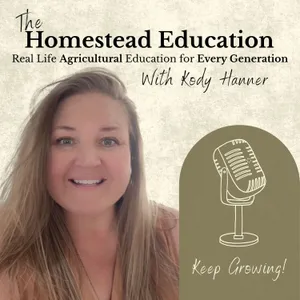
Free Daily Podcast Summary
The Homestead Education Podcast: Daily Summaries Delivered
by Kody Hanner
Everyone deserves an agricultural education — to understand food, land, and responsibility at a scale that fits real life. Hosted by Kody Hanner, agricultural educator, homeschool mom of six, and lifelong rural advocate, The Homestead Education Podcast explores how accessible, small-scale agricultural education can build capable people, strengthen families, and create resilient local food systems. Drawing from generations of rural knowledge, educated in animal science, and years of teaching families outside traditional systems, Kody breaks down complex food and education topics into practical, usable skills for homes, classrooms, and communities. Each week, you’ll hear honest conversations about food systems, small-scale agriculture, homeschooling, and real-world education — designed for families, educators, and anyone who believes we shouldn’t outsource our lives. Whether you live on acreage, in town, or somewhere in between, this podcast will help you understand where your food comes from, why it matters, and how practical agricultural knowledge can create meaningful change.
Latest Episodes
The most recent episodes — sign up to get AI-powered summaries of each one.
- Yesterday52 min
Episode 190: How to Grow Microgreens Without Mold—and Turn Them Into a Business | Mike Hicks
Can you really grow a profitable crop in a few trays, indoors, without acres of farmland? And maybe the more important question for some of us: How do you grow microgreens without turning the whole tray into a science experiment full of mold? In this episode of The Homestead Education Podcast, Kody Hanner sits down with Mike Hicks of Microgreen Business Coaching to talk about how to grow microgreens at home, troubleshoot some of the most common growing problems, and potentially turn those tiny greens into a legitimate small farm business. Mike spent more than two decades working in the restaurant industry before deciding he needed a career change. What started as a plan to grow microgreens and sell them at farmers markets quickly expanded into restaurants, grocery stores, expos, and eventually a full-time business. Now, he helps other growers learn the same process. In This Episode: What microgreens actually are The difference between microgreens, sprouts, and fodder Why microgreens are grown in soil and harvested above the soil line How to grow microgreens at home The basic equipment you need to get started Why Mike recommends broccoli microgreens for beginners How much seed to use in a standard 10x20 tray Why weighting trays during germination matters How long microgreens generally take to grow The most common causes of mold in microgreens Why overwatering may be ruining your trays Choosing a good potting mix How temperature, airflow, moisture, and seed density affect growth Why you should learn to grow successfully before investing thousands of dollars in equipment When inexpensive trays make sense—and when commercial-quality trays are worth the investment How color-coded trays can make a growing system easier for employees or kids to manage Selling microgreens at farmers markets How Mike moved from farmers markets into restaurants and grocery stores Why population and location matter when choosing a highly perishable farm product How to approach chefs and restaurants with samples Why confidence can make such a difference in direct sales How grocery stores discovered Mike's products Working with state agriculture departments and Extension offices Finding grants and resources for small agricultural businesses Using AI as a research and editing tool without letting it replace your own experience and voice How Mike built Microgreen Business Coaching Why there is still room for new growers in the microgreen market How to Grow Microgreens for Beginners Mike's advice for someone who has never grown microgreens before is refreshingly simple: Start small. You don't need a warehouse, elaborate hydroponic setup, or thousands of dollars in equipment. Start with a tray, good-quality potting mix, seeds, water, and light. Mike recommends broccoli as one of the easiest microgreens for a beginner. Spread the seed evenly across the soil without creating dense clumps, water it in, cover and weight the tray during germination, and then move it into light once the seeds begin growing. One of the most important lessons? Don't love your microgreens to death. Overwatering and overly dense seeding can create exactly the warm, damp environment that mold loves. And yes, Kody may finally have figured out why every tray of microgreens she has ever attempted eventually looked like a biology project. Can You Make Money Growing Microgreens? Mike didn't originally set out to build a large operation. The plan was farmers markets. Then customers started asking questions. Restaurants noticed the product. Grocery stores approached them. Expos created more connections. Eventually, what was supposed to be a small side business developed into a full microgreen operation. His advice for anyone thinking about doing the same is important: Grow them first. Eat them. Learn the process. Figure out whether you actually enjoy doing it. Then invest. Buying thousands of dollars worth of equipment before you've discovered whether you even like growing microgreens is an expensive way to learn that you hate your new business. Selling Microgreens to Restaurants One of my favorite parts of this conversation is Mike's approach to restaurant sales. Instead of waiting for chefs to discover him, he researches restaurants that already use microgreens, identifies businesses
- 2 weeks ago1h 17m
Episode 189: How to Stay Sane When Things Go Wrong on the Homestead
How do you stay sane when things go wrong on the homestead? First, you accept that they will go wrong—regardless of how prepared, experienced, careful, or well-funded you are. Ron joins me for an honest and slightly unhinged conversation about the disasters, losses, bad decisions, equipment failures, escaped animals, and moments of absolute chaos that come with raising livestock and building a life around the land. This episode was appropriately cursed from the beginning. We recorded the entire 75-minute conversation once—only to discover that our microphone had been muted the whole time. Take two felt painfully on brand. We share the morning nearly 100 meat chicks escaped through a hole burned into their chicken tractor, forcing our pajama-clad family to chase birds across the pasture and attempt some highly questionable rescue techniques involving a snow rake, leaf blower, flour, gravel, and snacks. We also talk about: Losing a freezer full of home-raised chicken during a power outage Why preparation reduces risk but never eliminates it What happens when the hot wire fails and the pigs notice Separating two 900-pound boars before the fight becomes fatal Ron grounding a powerful electric fence through his dental work Flipping the side-by-side while returning an escaped steer Our ongoing battle with cows that have suddenly learned to scale fences Losing a breech calf after doing everything we could to save him Learning from loss without convincing yourself that every bad outcome was preventable The accidental lard pig who became Uncle Magoo—our 500-pound piglet warmer and unofficial livestock guardian Some homestead problems are funny once everyone survives. Others are expensive, exhausting, or genuinely heartbreaking. Staying sane does not mean pretending those moments do not hurt. It means handling the immediate problem, honestly evaluating what happened, changing what you can, and refusing to let one hard day convince you that the entire life you built was a mistake. Sometimes you improve the system. Sometimes you accept the loss. And sometimes the only reasonable response is to stand in the pasture wearing slippers while your husband uses a leaf blower to shoot flour underneath a shed full of runaway chickens. If your own homestead currently feels more like a poorly supervised circus than a peaceful life in the country, this episode is for you. Episode Links: Ron's IG: https://www.instagram.com/thehannerhomestead Ron's FB: https://www.facebook.com/thehannerhomestead Freezer Thermometer Alarm: https://link.amazon/B0czMrcCB Yardersteader Bundle Only $50 until Nov 1, 2026: https://thehillsidemarket.com/pages/ultimate-yardsteading-collection?sca_ref=5214991.61SYL0S1cP Kody's Links: Homestead Education Curriculum – http://thehomesteadeducation.com/homesteadeducationcurriculum Homestead Family Reading List – https://www.thehomesteadeducation.com/homestead-summer-reading-list/ ESA Funding: https://www.thehomesteadeducation.com/funding/ Instagram – https://instagram.com/homestead_education Facebook – https://facebook.com/thehomesteadeducation Raising Self-Sufficient Kids Book – https://www.thehomesteadeducation.com/product/raising-self-sufficient-children/
- 4 weeks ago56 min
Episode 188: Natural Antibiotics: How to Build a Practical Home Remedy Cabinet with Prep Mart
How to Build a Natural Medicine Cabinet | Natural Antibiotics, Tinctures & Preparedness What should you actually keep in a home remedy cabinet—and where do you even start when natural medicine feels completely overwhelming? In this episode of The Homestead Education Podcast, Kody Hanner sits down with Lesli and Coleen from Prep Mart to talk about natural remedies, preparedness, herbal medicine, and the practical skills families can learn to become more self-reliant. The conversation covers everything from tinctures and essential oils to elderberry, herbal infusions, and what the guests describe as natural antibiotics. Lesli and Coleen also share how their own families' experiences with preparedness and natural living eventually led them to build Prep Mart and begin teaching other families the skills they had spent years learning themselves. In This Episode: What people mean when they talk about natural antibiotics The difference between tinctures, essential oils, teas, and herbal infusions Why different herbal preparations may be used for different purposes How Lesli and Coleen first became interested in natural remedies Building a home remedy cabinet without buying everything at once How to decide which herbs and remedies make the most sense for your individual family Elderberry and why it has become a staple in many homestead medicine cabinets Colloidal silver and the personal experiences that led Coleen to learn more about it Oregano oil and other traditional remedies commonly discussed in natural-living communities Why preparedness is about more than extreme emergencies Creating a 72-hour preparedness plan Slowly building a pantry when you can't afford to stock a year's worth of food at once How unexpected job loss, storms, power outages, and financial difficulties can make preparedness valuable The importance of building a community of farmers, medical professionals, and other skilled people Teaching children science through tinctures, fermentation, cooking, gardening, and homestead projects Why real-life skills naturally become part of homeschool education Raising children who know how to identify problems, find answers, and take responsibility Natural Antibiotics and the Home Remedy Cabinet One of the biggest topics in this conversation is something many families searching for a more self-reliant lifestyle eventually encounter: natural antibiotics. Coleen explains how her family became interested in colloidal silver and describes how she makes it at home. She and Lesli also talk about their personal use of herbal remedies, including oregano oil, elderberry, mullein, tinctures, and essential oils. But one of the most important moments in the episode comes when the conversation turns to serious infection. Kody shares the story of her brother developing cellulitis after a seemingly minor wound while working outdoors. His condition progressed rapidly, eventually contributing to a medical crisis from which he did not recover. That experience is a powerful reminder that self-reliance doesn't mean refusing conventional medicine—it also means learning to recognize when something has moved beyond home care. This episode shares personal experiences and traditional home-remedy practices for educational purposes and is not medical advice. Serious or worsening infections, breathing problems, high fever, cellulitis, or other concerning symptoms should be evaluated by a qualified medical professional. Where Should You Start? One of the best pieces of advice from this conversation is surprisingly simple: Don't try to build your entire natural medicine cabinet overnight. Instead, look at the problems your family actually deals with most often. A family with young children may prioritize completely different remedies than an older couple. Someone who struggles with seasonal respiratory issues may build a different cabinet than a family primarily dealing with bug bites, upset stomachs, or everyday bumps and scrapes. It's the same approach Kody recommends for becoming more self-sufficient with food: identify the five or ten things your family uses most often, then learn how to produce, source, or prepare those things first. Preparedness Doesn't Have to Mean a Bunker Lesli and Coleen also challenge the stereotype that preparedness means preparing for some massive end-of-the-world event. Sometimes preparedness looks like having enough food when you lose your job. Sometimes it's being snowed in for several days. Sometimes it's losing power. Sometimes it's simply having what your family ne
- Oct 13, 202657 min
Episode 187: How to Preserve Heirloom Seeds and Grow a Resilient Garden
Seed saving is about far more than collecting a few seeds at the end of the gardening season. It is a practical way to preserve heirloom varieties, strengthen your garden, and keep more control over your family’s food supply. In this episode, I’m joined by Christopher and Maggie Snow of Autumn Prairie Pumpkins to discuss seed saving, heirloom pumpkins, hand pollination, pest-resistant squash varieties, and the small suburban garden that grew into a micro farm and seed business. Christopher and Maggie explain the difference between heirloom and F1 hybrid seeds—and why seeds collected from a hybrid plant may not produce the same variety the following year. We also walk through their seed-saving process, including covering unopened blossoms, hand-pollinating flowers, preventing unwanted cross-pollination, and labeling the seeds they intend to preserve. We also talk about: Why heirloom seeds matter for food security and resilience How to begin seed saving in your own garden The difference between heirloom and F1 hybrid varieties How squash and pumpkins cross-pollinate Using blossom bags and hand pollination to keep seeds true Choosing squash varieties adapted to local pests and conditions Squash vine borers, cucumber beetles, and natural pest-management methods Growing vertically in a small suburban backyard Preserving unusual culinary pumpkins and their agricultural history Turning a passion for gardening into a small farm business You do not need acres of land, generations of gardening knowledge, or a naturally green thumb to begin growing food and saving seeds. Sometimes it starts with one stubborn pumpkin plant—and a willingness to learn why it survived when the others did not. Learn more about Christopher and Maggie, shop their heirloom seeds, and find their pumpkin cookbook at AutumnPrairiePumpkins.com. Use code HOMESTEAD10 for 10% off your order. Episode Links The Pumpkin Bakery Book: https://link.amazon/B0coHS4gw Ten Tomatoes that Changed the World: https://link.amazon/B0cuEn6db Guns, Germs, & Steel: https://link.amazon/B02DY7mdr Kody's Links Homestead Education Curriculum – http://thehomesteadeducation.com/homesteadeducationcurriculum Homestead Family Reading List – https://www.thehomesteadeducation.com/homestead-summer-reading-list/ ESA Funding: https://www.thehomesteadeducation.com/funding/ Instagram – https://instagram.com/homestead_education Facebook – https://facebook.com/thehomesteadeducation Raising Self-Sufficient Kids Book – https://www.thehomesteadeducation.com/product/raising-self-sufficient-children/
- Sep 22, 202648 min
Episode 186: How to Prepare for Rising Gas Prices & Food Shortages
What happens when rising gas prices don't just hurt at the pump—but begin affecting the cost and availability of nearly everything else? In this episode of The Homestead Education Podcast, I'm joined by my husband, Ron Hanner, to talk about what higher fuel costs can mean for truckers, farmers, food prices, local businesses, and the supply chain—and, more importantly, what ordinary families can actually do about it. This isn't about preparing for the end of the world. It's about preparing for the unprecedented. A job loss. A power outage. A winter storm. A supply-chain disruption. Rapidly rising gas prices. Or simply discovering that the groceries your family buys every week suddenly cost far more than they did a year ago. Ron and I talk through the ripple effect that fuel prices can have across agriculture and transportation, including the pressure on independent truck drivers and the importance of the trucks that move food, fuel, medical supplies, manufacturing materials, and countless everyday necessities. We also discuss why even a short disruption can expose just how dependent modern communities are on products arriving exactly when they're needed. But most of this episode is about what you can do before you're scrambling. In This Episode: How rising gas prices can increase the cost of food and other necessities Why independent truck drivers are especially vulnerable to major fuel-price increases What a transportation or supply-chain disruption could mean for everyday families Why preparedness doesn't have to mean extreme prepping Simple ways to store drinking water How to secure a dependable protein source Buying beef, pork, eggs, and milk directly from local farmers Splitting bulk meat purchases with friends or family to lower the upfront cost Stretching meat across multiple meals Stocking inexpensive staples like potatoes and other root vegetables Preserving grocery-store produce when your garden doesn't produce enough Small-batch canning, freezing, fermenting, and refrigerator pickling Why you don't need to preserve hundreds of pounds of food at once How buying in bulk can make higher-quality food more affordable Getting multiple foods from one ingredient—like turning raw milk into drinking milk, yogurt, cream, butter, or cheese Reducing food waste by creating a more circular household or homestead food system Why supporting your local farmer before a crisis matters so much One of the biggest misconceptions about preparedness is that you need a huge pantry, acres of land, or thousands of dollars to get started. You don't. Start with one thing. Buy an extra staple when it's inexpensive. Find someone locally who sells eggs. Split a bulk beef purchase with another family. Learn how to preserve one food your family already eats. Store a little water. Cook an extra portion and put it away. The goal isn't fear. The goal is creating enough margin in your life that the unexpected doesn't immediately become an emergency. We also talk about one of the most important pieces of preparedness that can't be stored on a pantry shelf: relationships. A functioning local food system exists only when local farmers have enough customers to keep producing food. Waiting until grocery shelves are empty to find your local farmer is too late. Supporting those producers consistently helps ensure that farms, ranches, dairies, and small food businesses are still there when your community needs them. And because this is our family, the conversation naturally includes cows getting ready to calve, a chicken tractor that we accidentally built too large to get off the porch, kids who name animals destined for the freezer, plans for a multigenerational family homestead—and Ron abruptly leaving the podcast when his fire department pager goes off. Real life doesn't stop because you're recording a podcast. Neither does the unexpected. The best time to prepare for it is before you need to. Resources Mentioned Visit The Homestead Education for resources on food production, agriculture, preservation, homesteading, and teaching the next generation practical skills. If you have a question you'd like us to answer in a future episode, reach out at hello@thehomesteadeducation.com. And until next week—keep growing. Epis
- Sep 15, 20261h 23m
Episode 185: How I Actually Get It All Done on a Homestead
In this episode, I’m answering one of the questions I get asked all the time: How do I get it all done? Between running a homestead, raising livestock, homeschooling, managing multiple businesses, traveling, running a co-op, and keeping up with a very full household, the real answer is—I don’t do it all. I’m sharing what actually helps me keep things moving: delegating, building systems, choosing priorities, managing the mental load, using tools that work with my brain, knowing when to hire help, and accepting that sometimes “good enough” really is good enough. I also share plenty of real-life homestead chaos along the way—from new piglets and heritage hogs to chicken disasters, ducks, harvest season, and the reality of trying to prepare for winter while running a business. If you’ve ever felt like you’re working constantly but somehow still falling behind, this episode is for you. Episode Links Autumn of the Homestead Activity Book: https://www.thehomesteadeducation.com/product/seasons-on-the-homestead-autumn-educational-activity-book/ Hanner Homestead: info@hannerhomestead.com 80/20 Rule Book: https://amzn.to/4AeMfTl The Gut Health Product That Changed My Life: https://shareplex.us/share/8qE7_VL Kody’s Link Homestead Education Curriculum – http://thehomesteadeducation.com/homesteadeducationcurriculum Homestead Family Reading List – https://www.thehomesteadeducation.com/homestead-summer-reading-list/ ESA Funding: https://www.thehomesteadeducation.com/funding/ Instagram – https://instagram.com/homestead_education Facebook – https://facebook.com/thehomesteadeducation Raising Self-Sufficient Kids Book – https://www.thehomesteadeducation.com/product/raising-self-sufficient-children/
- Sep 8, 202653 min
Episode: 184 Part 2: Good Food and Stubborn Wives | Living a Natural Life After a Terminal Diagnosis
Kody Hanner and Ron Hanner share a raw, practical story about marriage, parenting, homesteading, and rebuilding health after Ron was told he had end-stage liver disease and might have only a year to live. What follows is a story of fear, grit, and gradual change that led their family to rethink food, home life, and what it means to fight for one another. This episode matters because it connects nutrition, mindset, family systems, and healing in a way that feels lived in rather than theoretical. In this episode: Kody and Ron explain how they met, blended two families, and quickly built a new life together in Oregon Ron describes the shock of being told he was "a little cirrhotic" and later diagnosed with compensated end-stage liver disease at 35 They talk through the emotional fallout, including fear, withdrawal, PTSD, and the strain the diagnosis put on the marriage Kody shares how the doctor’s vague advice to pursue a more natural lifestyle became the first thing she could grab onto They break down the drastic changes they made to food, including cooking from scratch, avoiding preservatives, and sourcing cleaner ingredients The move to homesteading in North Idaho becomes a major turning point as they begin producing more of their own food Ron explains how he managed chronic pain and disability through a spinal cord stimulator instead of narcotics They discuss homeschooling, family meetings, chore systems, and how they learned to make the whole household part of the process Kody and Ron share how they moved toward cleaner living with homemade cleaners, tallow and lard, fewer artificial scents, and more herbal remedies The episode closes on their broader message: be proactive, be intentional, and do not hide from the hard things Ron's Links Hanner Homestead: www.hannerhomestead.com Hanner Homestead IG: www.instagram.com/thehannerhomestead Hanner Homestead FB: www.facebook.com/thehannerhomestead Kody's Links Homestead Education Curriculum – http://thehomesteadeducation.com/homesteadeducationcurriculum Homestead Family Reading List – https://www.thehomesteadeducation.com/homestead-summer-reading-list/ Instagram – https://instagram.com/homestead_education Facebook – https://facebook.com/thehomesteadeducation Raising Self-Sufficient Kids Book - https://www.thehomesteadeducation.com/product/raising-self-sufficient-children/
- Sep 1, 202648 min
Episode: 183 Good Food and Stubborn Wives | Living a Natural Life After a Terminal Diagnosis
Kody Hanner and Ron Hanner share a raw, practical story about marriage, parenting, homesteading, and rebuilding health after Ron was told he had end-stage liver disease and might have only a year to live. What follows is a story of fear, grit, and gradual change that led their family to rethink food, home life, and what it means to fight for one another. This episode matters because it connects nutrition, mindset, family systems, and healing in a way that feels lived in rather than theoretical. In this episode: Kody and Ron explain how they met, blended two families, and quickly built a new life together in Oregon Ron describes the shock of being told he was "a little cirrhotic" and later diagnosed with compensated end-stage liver disease at 35 They talk through the emotional fallout, including fear, withdrawal, PTSD, and the strain the diagnosis put on the marriage Kody shares how the doctor’s vague advice to pursue a more natural lifestyle became the first thing she could grab onto They break down the drastic changes they made to food, including cooking from scratch, avoiding preservatives, and sourcing cleaner ingredients The move to homesteading in North Idaho becomes a major turning point as they begin producing more of their own food Ron explains how he managed chronic pain and disability through a spinal cord stimulator instead of narcotics They discuss homeschooling, family meetings, chore systems, and how they learned to make the whole household part of the process Kody and Ron share how they moved toward cleaner living with homemade cleaners, tallow and lard, fewer artificial scents, and more herbal remedies The episode closes on their broader message: be proactive, be intentional, and do not hide from the hard things Ron's Links Hanner Homestead: www.hannerhomestead.com Hanner Homestead IG: www.instagram.com/thehannerhomestead Hanner Homestead FB: www.facebook.com/thehannerhomestead Kody's Links Homestead Education Curriculum – http://thehomesteadeducation.com/homesteadeducationcurriculum Homestead Family Reading List – https://www.thehomesteadeducation.com/homestead-summer-reading-list/ Instagram – https://instagram.com/homestead_education Facebook – https://facebook.com/thehomesteadeducation Raising Self-Sufficient Kids Book - https://www.thehomesteadeducation.com/product/raising-self-sufficient-children/
Get The Homestead Education Podcast summaries in your inbox
Free AI-powered daily recaps. Key takeaways, quotes, and mentions — in a 5-minute read.
Get Free Summaries →Free forever for up to 3 podcasts. No credit card required.
You Might Also Like
Listeners also like.
Everyday Homesteading
Practical homesteading tips for busy families to grow, cook, and preserve food using proven methods from experienced homesteaders.

Homesteading for Beginners
Teaches beginners how to start and maintain a sustainable homestead with practical steps and personal experience.

The Two Acre Homestead
A couple shares their experiences moving from suburban to rural homesteading, covering gardening, self-sufficiency, and country living.

Simple Farmhouse Life
A mother of eight discusses from-scratch cooking, natural living, handmade projects, and homeschooling alongside home business management.

Keeper of the Home Podcast
A podcast offering encouragement and practical insights for homemakers seeking purpose and joy in managing their homes and families.

The Art of Homemaking
Nessa Black & Shannon Vantrease

Honey! I'm Homeschooling The Kids
Explores alternative education, parenting, and building a joyful, intentional family life.

Homeschool Unrefined
Maren Goerss and Angela Sizer
Everything Ag & Then Some
Explores agriculture and its wide-ranging topics, from farming tech to social media’s role in the industry.
The 1000 Hours Outside Podcast
A podcast exploring how spending time outdoors helps children and adults thrive by choosing real-world experiences over screen-based ones.

School to Homeschool
Helps parents transition from public school to homeschooling with practical advice on academics, socialization, and family learning.

The Christy-Faith Show
A podcast offering educational and homeschooling insights for intentional parents.
About The Homestead Education Podcast
Everyone deserves an agricultural education — to understand food, land, and responsibility at a scale that fits real life. Hosted by Kody Hanner, agricultural educator, homeschool mom of six, and lifelong rural advocate, The Homestead Education Podcast explores how accessible, small-scale agricultural education can build capable people, strengthen families, and create resilient local food systems. Drawing from generations of rural knowledge, educated in animal science, and years of teaching families outside traditional systems, Kody breaks down complex food and education topics into practical, usable skills for homes, classrooms, and communities. Each week, you’ll hear honest conversations about food systems, small-scale agriculture, homeschooling, and real-world education — designed for families, educators, and anyone who believes we shouldn’t outsource our lives. Whether you live on acreage, in town, or somewhere in between, this podcast will help you understand where your food comes from, why it matters, and how practical agricultural knowledge can create meaningful change.
Customized Recaps
AI-powered recaps with compact key takeaways, quotes, and insights.
Straight to Your Inbox
Get key takeaways from The Homestead Education Podcast in a 5-minute read.
Save Hours Every Week
Stay current on your favorite podcasts without falling behind.
Frequently Asked Questions
What is Podzilla's The Homestead Education Podcast daily summary?
It's a free AI-powered email that summarizes new episodes of The Homestead Education Podcast as soon as they're published. You get the key takeaways, notable quotes, and links & mentions — all in a quick read.
How does the The Homestead Education Podcast podcast summary work?
When a new episode drops, our AI transcribes and analyzes it, then generates a personalized summary tailored to your interests and profession. It's delivered to your inbox every morning.
Is this an official The Homestead Education Podcast product?
No. Podzilla is an independent service that summarizes publicly available podcast content. We're not affiliated with or endorsed by Kody Hanner.
Can I get summaries of other podcasts too?
Absolutely! The free plan covers up to 3 podcasts, any in the catalog. Basic raises that to 15, Pro to 40 and Max to 100. Browse our full catalog at /podcasts.
How often does The Homestead Education Podcast release new episodes?
The Homestead Education Podcast publishes weekly. Our AI generates a summary within hours of each new episode.
What topics does The Homestead Education Podcast cover?
The Homestead Education Podcast covers topics including Leisure, Education, Garden, Kids & Family, Home & Garden. Our AI identifies the specific themes in each episode and highlights what matters most to you.
Start getting The Homestead Education Podcast summaries tomorrow morning.
Free forever for up to 3 podcasts. No credit card required.
Free forever for up to 3 podcasts. No credit card required.