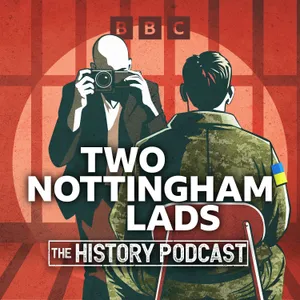
Free Daily Podcast Summary
The History Podcast: Daily Summaries Delivered
by BBC Radio 4
How two British men from Nottingham end up on opposite sides of the war in Ukraine.
Latest Episodes
The most recent episodes — sign up to get AI-powered summaries of each one.
- 6 days ago13 min
The Hitler Diaries Scandal: 2. The Bloodhound
It’s 1976, Hamburg, and star reporter for Stern magazine, Gerd Heidemann, is entertaining old Nazis on board his boat – formerly Herman Göring’s yacht, the Carin II.Known for his dogged pursuit of a scoop, Heidemann’s patch is slowly but surely shifting from war reporting to gathering old Nazi tales. He’s getting obsessed.One of his contacts links him up with a memorabilia collector in the south of Germany who has something interesting to show the journalist - the never-before-seen diary of Adolf Hitler. Writer and broadcaster Andrew Hunter Murray uncovers last century’s biggest ever publishing scandal, a forgery which rocked the world and destroyed reputations. It’s a tale of greed, obsession and mass delusion. It includes Hermann Göring’s yacht, Nazi-themed honeymoons, Idi Amin’s underpants, and more details almost too unbelievable for words. Andrew interviews the people who were there as the diaries were announced to the world, and as the story fell apart - the archivist tasked with authenticating the diaries in Germany, the TV producer led around the homes of retired Nazis to film a promotional documentary for the scoop, and the Fleet Street editor given 24 hours to create a world-beating story based on fraudulent material.In our own time of AI, fake news and disinformation, are there any lessons we can take from the greatest hoax of the last 50 years? Gerd Heidemann tapes part of the Gerd Heidemann collection, Hoover Institute, copyright Stanford University.Presenter: Andrew Hunter Murray Producer: Ruth Abrahams Story Editor: Andrew Dickson Sound Design: Joel Cox Mix Engineer: Nigel Appleton Executive Producers: David Prest and Robert Nicholson Commissioning Editor: Dan ClarkeA Whistledown production for BBC Sounds and Radio 4
- 6 days ago13 min
The Hitler Diaries Scandal: 1. The Crash
On 21 April, 1945, in the hamlet of Börnersdorf, Eastern Germany, a Junkers plane plummets from the sky. It crashes and bursts into flames. A few iron boxes are salvaged from the wreckage. Rumour spreads that Hitler’s personal effects are in those boxes. Could there have been diaries?In the decades that follow, a trade in Nazi memorabilia springs up where genuine documents and fakes cross hands, making dealers big money in a murky underworld. Konrad Kujau, in the south of Germany, has carved out a lucrative niche in this world, embellishing objects with forged certificates and documents. In the late 1970s, he decides it’s time to scale up and try for the ultimate prize – Adolf Hitler’s diary. But will anyone believe it?Writer and broadcaster Andrew Hunter Murray uncovers last century’s biggest ever publishing scandal, a forgery which rocked the world and destroyed reputations. It’s a tale of greed, obsession and mass delusion. It includes Hermann Göring’s yacht, Nazi-themed honeymoons, Idi Amin’s underpants, and more details almost too unbelievable for words. Andrew interviews the people who were there as the diaries were announced to the world, and as the story fell apart - the archivist tasked with authenticating the diaries in Germany, the TV producer led around the homes of retired Nazis to film a promotional documentary for the scoop, and the Fleet Street editor given 24 hours to create a world-beating story based on fraudulent material.In our own time of AI, fake news and disinformation, are there any lessons we can take from the greatest hoax of the last 50 years? Gerd Heidemann tapes part of the Gerd Heidemann collection, Hoover Institute, copyright Stanford University.Presenter: Andrew Hunter Murray Producer: Ruth Abrahams Story Editor: Andrew Dickson Sound Design: Joel Cox Mix Engineer: Nigel Appleton Executive Producers: David Prest and Robert Nicholson Commissioning Editor: Dan ClarkeA Whistledown production for BBC Sounds and Radio 4
- 2 weeks ago30 min
Invisible Hands: The American Century: 6. America First!
It’s 1991 in New Hampshire and a cheerfully pugnacious TV pundit and political insider is announcing his campaign for the Republican nomination. His name is Pat Buchanan and what he is about to say will shock the room.Not only does he challenge sitting President George H W Bush, but the entire post-war order, the vision of America that has persisted for the past half century - America at the head of a free world. Instead, Pat Buchanan says, “It will be time for a new foreign policy that looks out for America first, but not only America first, but also America second and third as well.”This is the story of the idea that governs America’s new vision of its role in the world — America First — and what it really means.Presenter: David Dimbleby Producer: Redzi Bernard Sound Design: Jeff Emtman Executive Producers: Joe Sykes and Dasha Lisitsina Story Editor: Joe Sykes and Dasha Lisitsina Commissioning Editor: Dan ClarkeA Samizdat Audio production for BBC Radio 4
- 3 weeks ago33 min
Invisible Hands: The American Century: 5. Wolfie
A man sits in the Pentagon terrified. The building is shaking. He thinks it’s an Earthquake. In fact it’s 9/11 and this man senses an opportunity. To drag America out of its post Vietnam stupor and re-assert itself on the world stage. The man’s name is Paul Wolfowitz. He’s an academic and political advisor. And he is obsessed with one idea. One idea he thinks will help America become great again. Invading Iraq. This is the story of how in the early 2000s America re-established itself as the leader of the free world and the decision to fight a war that did more than anything else to burn that image to the ground.David Dimbleby tells the story of how, in the middle of the 20th century, one country - America - became a superpower and shaped the world around it.It began with a vision. A vision born out of the ashes of World War Two. A vision of a world shaped not by war but by peace. This vision of America at the head of the free world came to be the defining idea at the center of the past 80 years of world politics. And yet now it is under threat.So how did we get here? How did America become the leader of the free world and why did it go wrong? It’s a story shaped by people. People you have probably never heard of.In the 20th Century, these ‘invisible hands’ wrote the story America came to believe about itself. A story of moral leadership leading to prosperity and peace. But is it a story that has run out of steam?Presenter: David Dimbleby Producer: Redzi Bernard Sound Design: Jeff Emtman Executive Producers: Joe Sykes and Dasha Lisitsina Story Editor: Joe Sykes, Dasha Lisitsina, and Peggy Sutton Commissioning Editor: Dan ClarkeA Samizdat Audio production for BBC Radio 4
- Aug 18, 202633 min
Invisible Hands: The American Century: 4. Rolling Thunder
March 1965 Vietnam. American fighter jets are taking off to bomb munitions depot in the North. A few days later, American ground troops arrive in the jungle. They would stay there for almost a decade, dropping more bombs on Vietnam than in all theatres of World War Two. How did this happen?The answer lies with someone who has evaded the glare of the spotlight. A liberal development theorist called Walt Rostow. A man who started off by advocating to help developing nations become capitalist and who ended up helping to unleash hell on an unsuspecting civilian population of a country on the other side of the world.This is a story of how idealism can lead to disaster. Of how America went from defender of freedom to bearer of destruction.David Dimbleby tells the story of how, in the middle of the 20th century, one country - America - became a superpower and shaped the world around it. It began with a vision. A vision born out of the ashes of World War Two. A vision of a world shaped not by war but by peace. This vision of America at the head of the free world came to be the defining idea at the center of the past 80 years of world politics. And yet now it is under threat. So how did we get here? How did America become the leader of the free world and why did it go wrong? It’s a story shaped by people. People you have probably never heard of.In the 20th Century, these ‘invisible hands’ wrote the story America came to believe about itself. A story of moral leadership leading to prosperity and peace. But is it a story that has run out of steam?Presenter: David Dimbleby Producer: Redzi Bernard Sound Design: Jeff Emtman Executive Producers: Joe Sykes and Dasha Lisitsina Story Editor: Joe Sykes, Dasha Lisitsina, and Peggy Sutton Commissioning Editor: Dan ClarkeA Samizdat Audio production for BBC Radio 4
- Aug 11, 202632 min
Invisible Hands: The American Century: 3. Operation Ajax
1953 Tehran. An American diplomat called Kermit Roosevely III rides through the city’s streets on his way to see the Shah of Iran. Although he can’t see anything because he’s riding in the boot covered in a Persian carpet. He doesn’t want to be seen because he’s on a top secret mission. A mission from the American government. To overthrow Iran’s popular Prime Minister threatening to nationalise the oil industry — Mohamed Mossadegh. Kermit is organising a coup. This is the story of how America came up with a blueprint of how to fight its communist enemies abroad while still looking like the good guy. How it maintained its role as the virtuous superpower while getting rid of people it didn’t like. They decided to do it in secret, using the ultimate invisible hand - the CIA. It’s a tale of oil, money, power and marks the start of a toxic relationship between Iran and the US that is still playing out to this day. David Dimbleby tells the story of how in the middle of the 20th century one country - America - became a superpower and shaped the world around it. It began with a vision. A vision born out of the ashes of World War Two. A vision of a world shaped not by war but by peace. This vision of America at the head of the free world came to be the defining idea at the center of the past 80 years of world politics. And yet now it is under threat. So how did we get here? How did America become the leader of the free world and why did it go wrong? It’s a story shaped by people. People you have probably never heard of.In the 20th Century, these ‘invisible hands’ wrote the story America came to believe about itself. A story of moral leadership leading to prosperity and peace. But is it a story that has run out of steam?Presenter: David Dimbleby Producer: Redzi Bernard Sound Design: Jeff Emtman Executive Producers: Joe Sykes and Dasha Lisitsina Story Editor: Joe Sykes, Dasha Lisitsina, and Peggy Sutton Commissioning Editor: Dan ClarkeA Samizdat Audio production for BBC Radio 4
- Aug 4, 202631 min
Invisible Hands: The American Century: 2. The Prophet
A man wakes up in the middle of the night in Moscow. He is sick. Shivery. Feverish. But he has a mission. A mission that will end up changing the course of world history. After World War Two was over, America was ready for peace. And to continue working with their ideological adversary, the Soviet Union. Franklin Delano Roosevelt even flew to Crimea to make a deal with Churchill and Stalin. But there was one man who was sounding the alarm, all the way from a freezing Moscow winter. A Chekhov-obsessed diplomat called George Kennan who’s witnessed Stalin’s repressions first hand and would live to 101. More than anyone else, he will set the trajectory of American foreign policy in the 20th Century - with a telegram. A telegram he would come to deeply regret.This is the story of how the US and USSR went from allies to enemies. And the man who made this happen - starting what would come to be called the Cold War. David Dimbleby tells the story of how in the middle of the 20th Century one country - America - became a superpower and shaped the world around it. It began with a vision. A vision born out of the ashes of World War Two. A vision of a world shaped not by war but by peace. This vision of America at the head of the free world came to be the defining idea at the center of the past 80 years of world politics. And yet now it is under threat. So how did we get here? How did America become the leader of the free world and why did it go wrong? It’s a story shaped by people. People you have probably never heard of.In the 20th Century, these ‘invisible hands’ wrote the story America came to believe about itself. A story of moral leadership leading to prosperity and peace. But is it a story that has run out of steam?Presenter: David Dimbleby Producer: Redzi Bernard Sound Design: Jeff Emtman Executive Producers: Joe Sykes and Dasha Lisitsina Story Editor: Joe Sykes, Dasha Lisitsina, and Peggy Sutton Commissioning Editor: Dan ClarkeA Samizdat Audio production for BBC Radio 4
- Jul 28, 202632 min
Invisible Hands: The American Century: 1. Mr Nobody
This is the story of the most important person you've probably never heard of. The man who made the dollar the centre of the world. And America along with it. His name is Harry Dexter White and, as an economist at the Treasury, he had a vision of how to ensure another conflict like World War Two would never happen again. To do that he had to upend the whole structure of the world financial system - and make the US Dollar the most important currency on Earth. Standing in his way was the greatest celebrity economist of all time, John Maynard Keynes. The battle between these two men - and Harry Dexter White’s eventual victory - would come to define the next 80 years of world history.And yet, just a few years later, this visionary economist - the man who changed the world - would be dead. Branded as a traitor to his country. Accused of being the worst thing an American could be accused of - a Soviet Spy.In Series 2 of Invisible Hands: The American Century, David Dimbleby tells the story of how, in the middle of the 20th century, America became a superpower and shaped the world around it. It began with a vision. A vision born out of the ashes of World War Two. A vision of a world shaped not by war but by peace. This vision of America at the head of the free world came to be the defining idea at the centre of the past 80 years of world politics. And yet now, it is under threat. So how did we get here? How did America become the leader of the free world and why did it go wrong? It’s a story shaped by people. People you may not know.These ‘invisible hands’ wrote the story America came to believe about itself. A story of moral leadership leading to prosperity and peace. But is it a story that has run out of steam?Presenter: David Dimbleby Producer: Redzi Bernard Sound Design: Jeff Emtman Executive Producers: Joe Sykes and Dasha Lisitsina Story Editor: Joe Sykes, Dasha Lisitsina, and Peggy Sutton Commissioning Editor: Dan ClarkeA Samizdat Audio production for BBC Radio 4
Get The History Podcast summaries in your inbox
Free AI-powered daily recaps. Key takeaways, quotes, and mentions — in a 5-minute read.
Get Free Summaries →Free forever for up to 3 podcasts. No credit card required.
You Might Also Like
Listeners also like.

History Unplugged Podcast
Features interviews with history authors and answers to listener questions on a wide range of historical topics.
The Rest Is History
Historians Tom Holland and Dominic Sandbrook analyze major historical events and figures with narrative depth and scholarly insight.
History's Heroes
Profiles real-life historical figures whose courage, innovation, or resilience changed the course of history.
HistoryExtra podcast
Covers global history from ancient to modern times through expert interviews on events, figures, and eras.
The History Hour
A weekly compilation of recent Witness History programmes covering global historical events.

Dan Snow's History Hit
Dan Snow visits historic sites worldwide to explore the stories behind pivotal events, figures, and monuments.
The History of WWII Podcast
A detailed narrative exploration of World War II, covering its events, battles, and key figures.

The British History Podcast
A narrative exploration of British history focused on the lives, motivations, and personal stories of the people who shaped the nation.

Witness History
First-hand accounts of pivotal historical moments, from global events to cultural milestones, told by those who lived them.
In Our Time: History
Explores historical themes, events, and key figures from Akhenaten to Xenophon.

American History Hit
Examines key events in American history, from colonial conflicts to civil rights, through expert interviews and detailed storytelling.
The WW2 Podcast
A military history podcast exploring various aspects of World War II as it moves beyond living memory.
About The History Podcast
How two British men from Nottingham end up on opposite sides of the war in Ukraine.
Customized Recaps
AI-powered recaps with compact key takeaways, quotes, and insights.
Straight to Your Inbox
Get key takeaways from The History Podcast in a 5-minute read.
Save Hours Every Week
Stay current on your favorite podcasts without falling behind.
Frequently Asked Questions
What is Podzilla's The History Podcast daily summary?
It's a free AI-powered email that summarizes new episodes of The History Podcast as soon as they're published. You get the key takeaways, notable quotes, and links & mentions — all in a quick read.
How does the The History Podcast podcast summary work?
When a new episode drops, our AI transcribes and analyzes it, then generates a personalized summary tailored to your interests and profession. It's delivered to your inbox every morning.
Is this an official The History Podcast product?
No. Podzilla is an independent service that summarizes publicly available podcast content. We're not affiliated with or endorsed by BBC Radio 4.
Can I get summaries of other podcasts too?
Absolutely! The free plan covers up to 3 podcasts. Upgrade to Pro for 15, or Premium for 50. Browse our full catalog at /podcasts.
How often does The History Podcast release new episodes?
The History Podcast publishes daily. Our AI generates a summary within hours of each new episode.
What topics does The History Podcast cover?
The History Podcast covers topics including History. Our AI identifies the specific themes in each episode and highlights what matters most to you.
Start getting The History Podcast summaries tomorrow morning.
Free forever for up to 3 podcasts. No credit card required.
Free forever for up to 3 podcasts. No credit card required.