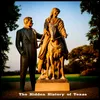
There are rivers that divide a landscape. And there are rivers that divide the imagination. In Texas, the Pecos managed to do both. For generations, the words West of the Pecos meant something. They meant you were leaving one world and entering another. A harder world. A drier world. A place where towns were separated by miles and miles of country that seemed determined to remind human beings that they were not necessarily in charge. Today, we can drive across that country in an air-conditioned automobile. We carry water in plastic bottles. We have GPS. Gas stations. Cell phones. And even then, there are stretches of West Texas where you can look out the window and think: Who in the world decided to live here? Now imagine making that decision in 1881. This is the Hidden History of Texas. And today we're headed west. To Pecos. Before there was a town called Pecos, there was the river. The Pecos begins in the mountains of northern New Mexico and runs south and southeast across an increasingly dry landscape before eventually joining the Rio Grande. The Spanish knew portions of it as the Río Puerco—the dirty river. And depending upon where you encountered it, the Pecos could be a source of life, an obstacle, a landmark, or a warning. For Indigenous peoples, the river and the country surrounding it had been part of a much larger landscape of travel, hunting, trade, and settlement long before Europeans arrived. And that is worth remembering because we have a tendency to tell the history of West Texas as though the country sat empty until ranchers, soldiers, and railroad men arrived. It didn't. People had been crossing and using this landscape for thousands of years. But the environment determined the rules. Water determined where you could travel. Water determined where animals could survive. Water determined where people could stay. And if you didn't understand the country, the country could kill you. By the middle of the nineteenth century, Americans were beginning to move through the region in greater numbers. Soldiers. Surveyors. Freighters. Cattlemen. Travelers heading farther west. The Pecos became one of those psychological markers on the map. Cross the river and you were entering country that seemed even more remote. This was the world in which military posts such as Fort Stockton and Fort Davis became so important. They protected roads. They guarded travelers. They supported military campaigns. And slowly they helped open West Texas to increased settlement. But opening a country and actually convincing people to live there are two very different things. The first Anglo settlements along the Texas portion of the Pecos were sparse. And there was a very good reason. Living there was hard. Not Hollywood hard. Not gunfight-at-high-noon hard. Everyday hard. Finding dependable water. Building shelter. Keeping livestock alive. Surviving summer heat. Surviving winter cold. Getting supplies. Dealing with isolation. Repairing something when the nearest replacement might be days away. Having a child when there wasn't a doctor down the street. Getting sick when there wasn't a hospital. Losing livestock and knowing that your livelihood had just disappeared with them. That kind of hard. The sort of toughness that rarely makes it into Western movies. Then, in 1881, everything changed. The railroad arrived. The Texas and Pacific Railway was pushing westward across Texas toward El Paso. And when those rails reached the Pecos River country, they did something railroads did all across the American West. They created a reason for a town to exist. Pecos began as a cattle camp east of the river, but the developing community shifted westward as the railroad established its depot. For a while it was Pecos Station. Then Pecos City. Eventually simply Pecos. But the railroad was more than transportation. It changed distance. Before the railroad, getting cattle, supplies, equipment, mail, or people across West Texas required time—and a considerable amount of luck. The railroad connected Pecos to markets hundreds of miles away. Suddenly cattle raised in West Texas could reach distant buyers. Supplies could arrive regularly. People could come. Businesses could survive. A settlement became a town. And by the middle of the 1880s, Pecos had about 150 residents. That doesn't sound like much today. But put 150 people in that country in 1885 and you've got yourself a community. And those people needed water. Not simply drinking water. If Pecos was going to become more than a railroad stop and cattle-shipping point, somebody had to figure out how to make the desert produce something. So they turned again to the river. Irrigation wasn't new to the Southwest.
Podzilla Summary coming soon
Sign up to get notified when the full AI-powered summary is ready.
Free forever for up to 3 podcasts. No credit card required.
Listen to This Episode
More from The Hidden History of Texas
The Freedmen’s Bureau: The Promise and the Reality
Episode 97: La Junta de los Ríos, Before There Was a Border
A Nation Rebuilt
From Frontier Forts to Frontier Towns: Fort Davis and Fort Stockton
Get summaries like this every morning.
Free AI-powered recaps of The Hidden History of Texas and your other favorite podcasts, delivered to your inbox.
Free forever for up to 3 podcasts. No credit card required.