Free Daily Podcast Summary
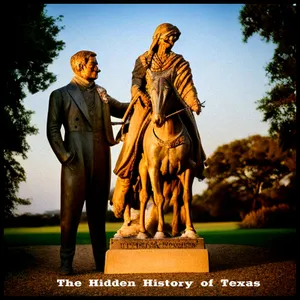
The Hidden History of Texas: Daily Summaries Delivered
by Hank Wilson
The episodes cover Texas history from the earliest days of Indigenous peoples to Spanish exploration, control by Mexico, the Anglo’s take over, Texas becomes part of the U.S., the confederates move in, and back to the U.S. The audio files are accurate and try to tell the story as best as they can from all sides of the issues. The hidden history of Texas is a history replete with heroes and villains of all sorts. There were good and bad people throughout Texas history, just as there were throughout world history.
Latest Episodes
The most recent episodes — sign up to get AI-powered summaries of each one.
- 5 days ago13 min
The Freedmen’s Bureau: The Promise and the Reality
Hello, and welcome to Political Realignment. I'm Hank Wilson. In our last episode, we stood with America at the end of the Civil War and asked a deceptively simple question: How do you rebuild a nation after it has been divided against itself? But there was another question—one that was perhaps even more difficult. Nearly four million people who had once been enslaved were now free. But what did freedom actually mean? It is easy, looking backward, to think of emancipation as an ending. Slavery had been abolished. The enslaved were free. But for the people actually living through 1865, emancipation wasn't simply an ending. It was a beginning. People who had previously been considered property were suddenly expected to participate in an economic and political system that had spent generations excluding them. Many had little formal education. Most owned no land. Many had no money. Families had been separated. And throughout much of the South, the people who had controlled the land, the economy, and local government before the war were still there. Freedom had arrived. But almost none of the institutions necessary to make that freedom meaningful had arrived with it. Congress attempted to address that problem through an organization commonly known as the Freedmen's Bureau. Its formal name was the Bureau of Refugees, Freedmen, and Abandoned Lands. Created in March of 1865, the Bureau was given an extraordinary assignment. It provided food, clothing, and medical assistance. It helped establish schools. It supervised labor agreements. It assisted families separated during slavery and the war. It became involved in disputes involving freedpeople and attempted to provide some measure of legal protection. Those were ambitious goals. And they were, in many respects, admirable ones. But there was an enormous difference between declaring what an agency should accomplish... and giving that agency the ability to accomplish it. To understand that difference, let's leave Washington for a moment. Let's go to Virginia. Thomas P. Jackson Thomas P. Jackson was an English immigrant working as an agent of the Freedmen's Bureau in Virginia. And Jackson's reports provide us with something extraordinarily valuable. They allow us to watch Reconstruction happening on the ground. Not through the speeches of presidents. Not through debates in Congress. But through the reports of a man trying to make the new system actually work. Consider something as basic as medical care. A local physician, Dr. S. C. Harris, had been providing medical services to freedpeople in Jackson's area. But medicine costs money. Doctors have to make a living. And good intentions don't pay for medical supplies. In May of 1867, Jackson wrote to his superior asking the government to provide money so Harris could continue his work. The amount he requested? Twenty-five dollars a month. Jackson wrote that there were people suffering from illnesses, including typhoid fever, and asked for the appropriation on their behalf. Twenty-five dollars. One month later, Jackson wrote again. Dr. Harris could no longer afford to continue providing both his services and medicine without sufficient compensation. Think about what that tells us. The federal government had created an agency charged, among other things, with assisting the medical needs of a population emerging from slavery and war. An agent found a doctor willing to do the work. And the system still struggled to provide enough resources to keep him doing it. Medical care wasn't the only problem. Freedom and Work For generations, the Southern agricultural economy had depended upon enslaved labor. Now that labor had to become something entirely different. Free labor. Employers and workers would negotiate. Contracts would be created. Workers would be paid. At least, that was the idea. Once again, Jackson's reports show us what happened when the idea encountered reality. In September of 1867, he reported that many employers were not treating their workers fairly. The problem became particularly obvious when the agricultural season ended and it was time to settle accounts. Workers who believed they were owed wages discovered that the agreements they thought protected them didn't necessarily provide much protection at all. Some received goods or credit rather than the money their agreements called for. Jackson asked one of the obvious questions. Why accept goods when the contract said you were supposed to receive money? The answer tells us more about the economic reality of Reconstruction than almost any government report could. The workers told him, essentially: We couldn't get the money, and our families had to eat and be clothed. There is an important distinction here. These people were free. But freedom and econ
- 1 weeks ago14 min
Pecos: West of the River
There are rivers that divide a landscape. And there are rivers that divide the imagination. In Texas, the Pecos managed to do both. For generations, the words West of the Pecos meant something. They meant you were leaving one world and entering another. A harder world. A drier world. A place where towns were separated by miles and miles of country that seemed determined to remind human beings that they were not necessarily in charge. Today, we can drive across that country in an air-conditioned automobile. We carry water in plastic bottles. We have GPS. Gas stations. Cell phones. And even then, there are stretches of West Texas where you can look out the window and think: Who in the world decided to live here? Now imagine making that decision in 1881. This is the Hidden History of Texas. And today we're headed west. To Pecos. Before there was a town called Pecos, there was the river. The Pecos begins in the mountains of northern New Mexico and runs south and southeast across an increasingly dry landscape before eventually joining the Rio Grande. The Spanish knew portions of it as the Río Puerco—the dirty river. And depending upon where you encountered it, the Pecos could be a source of life, an obstacle, a landmark, or a warning. For Indigenous peoples, the river and the country surrounding it had been part of a much larger landscape of travel, hunting, trade, and settlement long before Europeans arrived. And that is worth remembering because we have a tendency to tell the history of West Texas as though the country sat empty until ranchers, soldiers, and railroad men arrived. It didn't. People had been crossing and using this landscape for thousands of years. But the environment determined the rules. Water determined where you could travel. Water determined where animals could survive. Water determined where people could stay. And if you didn't understand the country, the country could kill you. By the middle of the nineteenth century, Americans were beginning to move through the region in greater numbers. Soldiers. Surveyors. Freighters. Cattlemen. Travelers heading farther west. The Pecos became one of those psychological markers on the map. Cross the river and you were entering country that seemed even more remote. This was the world in which military posts such as Fort Stockton and Fort Davis became so important. They protected roads. They guarded travelers. They supported military campaigns. And slowly they helped open West Texas to increased settlement. But opening a country and actually convincing people to live there are two very different things. The first Anglo settlements along the Texas portion of the Pecos were sparse. And there was a very good reason. Living there was hard. Not Hollywood hard. Not gunfight-at-high-noon hard. Everyday hard. Finding dependable water. Building shelter. Keeping livestock alive. Surviving summer heat. Surviving winter cold. Getting supplies. Dealing with isolation. Repairing something when the nearest replacement might be days away. Having a child when there wasn't a doctor down the street. Getting sick when there wasn't a hospital. Losing livestock and knowing that your livelihood had just disappeared with them. That kind of hard. The sort of toughness that rarely makes it into Western movies. Then, in 1881, everything changed. The railroad arrived. The Texas and Pacific Railway was pushing westward across Texas toward El Paso. And when those rails reached the Pecos River country, they did something railroads did all across the American West. They created a reason for a town to exist. Pecos began as a cattle camp east of the river, but the developing community shifted westward as the railroad established its depot. For a while it was Pecos Station. Then Pecos City. Eventually simply Pecos. But the railroad was more than transportation. It changed distance. Before the railroad, getting cattle, supplies, equipment, mail, or people across West Texas required time—and a considerable amount of luck. The railroad connected Pecos to markets hundreds of miles away. Suddenly cattle raised in West Texas could reach distant buyers. Supplies could arrive regularly. People could come. Businesses could survive. A settlement became a town. And by the middle of the 1880s, Pecos had about 150 residents. That doesn't sound like much today. But put 150 people in that country in 1885 and you've got yourself a community. And those people needed water. Not simply drinking water. If Pecos was going to become more than a railroad stop and cattle-shipping point, somebody had to figure out how to make the desert produce something. So they turned again to the river. Irrigation wasn't new to the Southwest.
- 3 weeks ago15 min
Episode 97: La Junta de los Ríos, Before There Was a Border
La Junta de los Ríos, Before There Was a Border (Partial Transcript....) If you stand near Presidio, Texas, and look across the Rio Grande toward Ojinaga, Mexico, you're looking at a border. At least that's what the maps tell us. There is Texas on one side, Chihuahua on the other. The United States here. Mexico there. But if you could stand in that same place five hundred years ago, none of those things existed. There wasn't a Texas. There wasn't a United States. There wasn't even a border. What you would have seen instead was one of the most important human crossroads in this part of North America. A place where two rivers came together. And where people had already been coming together for centuries. This is the Hidden History of Texas. And today we're going to La Junta de los Ríos. The meeting of the rivers. The geography explains why people came here. We're in the Chihuahuan Desert, a country where water determines almost everything. But near present-day Presidio and Ojinaga, the Río Conchos flows northward out of Mexico and joins the Rio Grande. Around that junction lies a broad ribbon of fertile floodplain surrounded by desert and mountains. It's an oasis. And people recognized its value a very long time before Europeans arrived. Archaeologists have found evidence of human occupation in the region stretching back thousands of years. By around the year 1200, if not earlier, people were living in established villages along the rivers. They farmed. They hunted. They gathered wild plants. They made pottery. And they traded. La Junta wasn't some isolated little settlement sitting alone in the desert. It was connected to a much larger world. Trade and cultural influences linked the people here with communities toward Casas Grandes in Chihuahua, the Pueblo world farther north and west, the buffalo plains to the northeast, and eventually communities extending deep into what we now call Texas. Archaeologists have even found pieces of East Texas Caddoan pottery at La Junta. Think about that distance for a moment. Long before highways, railroads, or maps showing Texas as a political entity, goods, and presumably the people carrying them, were moving across enormous distances. La Junta was part of that network. And this is where we meet one of the most interesting—and frustrating—people in early Texas history. The Jumano. Except there's a problem. We're not entirely sure exactly who the Jumano were. That's not because nobody wrote about them. The Spanish certainly did. The problem is that Spanish explorers, missionaries, and officials used names for Indigenous peoples according to their own understanding. Sometimes a name described how people looked. Sometimes where they lived. Sometimes what another Indigenous group called them. Sometimes the Spanish apparently invented the name themselves. And sometimes the same name seems to have been applied to different groups. That makes the word “Jumano” considerably more complicated than it first appears. The earliest known Spanish use of the name dates to the late sixteenth century. Over the following century, Spaniards described people they called Jumanos across a huge geographical area—from northern Mexico and the Rio Grande into West Texas, the Pecos country, the Southern Plains, and as far east as the Caddo communities. These people were widely known as traders and travelers. Some Spanish observers called them rayados, the striped people, because of distinctive lines or markings on their faces. They hunted buffalo. They carried goods between communities separated by hundreds of miles. And they became important intermediaries between very different Indigenous worlds. But were the farmers living permanently at La Junta also Jumano? For a long time, many historians said yes. Partial Transcript......
- Aug 15, 20266 min
A Nation Rebuilt
A Nation Rebuilt The war ended, but the constitutional questions had just begun. Hello, and welcome to Political Realignment. I'm Hank Wilson. I'd like to begin with a simple question. How do you rebuild a nation after it has been divided against itself? It's a question every generation hopes it will never have to answer. Yet in the spring of 1865, Americans found themselves facing exactly that challenge. After four long years of conflict, the fighting had ended. The Union had been preserved, slavery had been abolished, and millions of Americans looked toward the future with hope. But peace did not erase the problems that war had created. In many ways, the nation's hardest work was only beginning. The Southern states had suffered tremendous destruction. Railroads, bridges, farms, businesses, and entire communities had been devastated. Families on both sides of the conflict mourned loved ones who would never return home. At the same time, nearly four million formerly enslaved men, women, and children were now legally free, beginning lives unlike anything they or the nation had experienced before. One enormous question stood before the country. What should the United States become now? Should the former Confederate states simply return to the Union as if nothing had happened? Should they be required to meet certain conditions before regaining full representation in Congress? What rights should formerly enslaved Americans possess? Who should protect those rights? And perhaps the largest constitutional question of all... Should individual states decide these issues for themselves, or should the federal government establish national standards? These weren't simply political disagreements. They were constitutional questions that would shape American government for generations. President Abraham Lincoln had begun considering these questions before the war ended. His hope was to restore the Union as quickly as possible while encouraging reconciliation between North and South. Tragically, only five days after General Robert E. Lee surrendered at Appomattox Court House, President Lincoln was assassinated. Vice President Andrew Johnson suddenly found himself responsible for leading a wounded nation through one of the most difficult periods in American history. No one had ever attempted to reunite a nation after a civil war. There was no instruction manual. Congress and the President often disagreed about the best path forward. Some believed the Southern states should regain self-government quickly. Others feared that moving too fast would allow many of the same political leaders and systems that had existed before the war to return to power. Meanwhile, millions of newly freed Americans were asking a fundamental question. What did freedom actually mean? Was it simply the absence of slavery? Or did freedom also include citizenship... voting... education... equal treatment under the law... and the opportunity to participate fully in American society? Those questions would become the heart of one of the most ambitious periods of constitutional change in our nation's history. Over the next twelve years, Congress would pass new constitutional amendments, reorganize Southern governments, station federal troops throughout much of the South, and attempt to redefine the relationship between the federal government, the states, and individual citizens. The period became known as Reconstruction......
- Aug 3, 20268 min
From Frontier Forts to Frontier Towns: Fort Davis and Fort Stockton
Hello friends, and welcome back to Hidden History of Texas. Last time, we visited Alpine, a mountain community that showed us how people learned not simply to travel through West Texas, but to build permanent lives there. Today, we're visiting two communities whose very names remind us of their beginnings. Fort Davis. Fort Stockton. When we hear those names, it's natural to think about soldiers, cavalry patrols, and frontier forts. And certainly, those stories are important. But today I'd like to look beyond the parade grounds. Because I've discovered that the most interesting stories often begin after the soldiers leave. How does a military outpost become a hometown? How does a place built for defense become a place where families raise children, merchants open businesses, churches ring their bells, and neighbors know one another by name? That's the story of Fort Davis and Fort Stockton.
- Jul 22, 202617 min
Episode 95 – Alpine: Where the Mountains Became Home
Episode 95 – Alpine: Where the Mountains Became Home Alpine is often described as the gateway to Big Bend, but its story is far richer than that. In this episode of Hidden History of Texas, we explore a different question: Why did Alpine succeed where so many frontier settlements disappeared? Rather than focusing on dates and famous names, we trace the forces that shaped this remarkable mountain community. We examine how the geography of the Davis Mountains created a more hospitable environment than much of the surrounding desert, why dependable water and grasslands attracted ranchers, and how the arrival of the Southern Pacific Railroad transformed an isolated settlement into a regional center of commerce. The story doesn't end with cattle and railroads. Alpine found a lasting identity through education with the establishment of Sul Ross State University, bringing students, teachers, and new opportunities to one of the most remote parts of Texas. Later, the creation of Big Bend National Park added another chapter, making Alpine a welcoming base for travelers drawn to the beauty and history of the Trans-Pecos. More than the story of a single town, this episode explores how permanent communities take root. Frontier forts made travel possible, but places like Alpine demonstrated what it took to stay. Geography, transportation, ranching, education, and determination all came together to create a community that continues to thrive more than a century later. Join us as we discover why Alpine is not simply a stop on the way to somewhere else—it is one of the places that helps explain how West Texas became home.
- Jul 16, 20267 min
The Frontier Forts: Guarding West Texas
Officers' row (ruins), looking west, before the National Park Service acquired Fort Davis National Historic Site. The Frontier Forts: Guarding West Texas Hello friends, and welcome back to Hidden History of Texas. Last time, we crossed the Pecos River and entered one of the most remarkable landscapes in our state, the Trans-Pecos. We discovered a Texas of mountains instead of rolling hills... deserts instead of forests... vast distances instead of crowded settlements. It is a beautiful country. But it could also be a dangerous one. Today, I'd like to answer a simple question. How did people safely travel through this immense wilderness? The answer lies in a network of frontier forts that stretched across West Texas. Their purpose wasn't to conquer the land. It was to connect it. When we hear the word fort, many of us picture thick stone walls, cannons, and soldiers preparing for battle. The reality on the Texas frontier was often much different. Most frontier forts weren't castles. They were working communities. Soldiers lived there. Families lived there. Blacksmiths, teamsters, doctors, cooks, laundresses, merchants, scouts, and civilians all played a role in keeping these isolated outposts alive. In many ways, a frontier fort was less like a military base and more like a very small town whose primary mission happened to be protecting the frontier. By the 1850s, more settlers, ranchers, and merchants were moving westward. Stagecoaches carried passengers and mail. Freight wagons hauled supplies. Ranches expanded into new country. Yet the farther west people traveled, the farther they moved from established communities. Water became scarce. Distances became immense. Travelers could spend days crossing country where there were few signs of civilization. For many, reaching the next fort meant safety. Among the most important of these posts was Fort Davis. Nestled in the cool elevations of the Davis Mountains, the fort occupied one of the most strategic locations in West Texas. It guarded the San Antonio–El Paso Road, one of the principal overland routes across the Southwest. If you've ever driven Interstate 10 across West Texas, you're following a path not terribly different from the one travelers depended upon more than 150 years ago. The landscape may look timeless. But for generations, this road represented connection. Mail. Commerce. Communication. Hope. Fort Davis also tells another important story. Following the Civil War, many of its soldiers belonged to the African American regiments that history remembers as the Buffalo Soldiers. These men escorted wagon trains... protected mail coaches... constructed roads... and patrolled enormous stretches of difficult country. Their assignments often took them across hundreds of miles of mountains and desert. The work was demanding. The conditions harsh. Yet their contributions became an essential part of opening West Texas to settlement and commerce. Today, Fort Davis remains one of the best-preserved frontier military posts in the nation, allowing visitors to walk through the very buildings where these soldiers lived and served. Farther east stood another important outpost. Fort Stockton. If Fort Davis owed its existence to mountain passes and transportation routes... Fort Stockton owed its existence to something even more valuable. Water. Specifically, Comanche Springs. Long before there was a military fort... long before Texas became a state... Native peoples knew these springs well. Spanish explorers depended upon them. Travelers crossing the desert planned their journeys around them. In the Trans-Pecos, water wasn't simply convenient. It was survival. The Army recognized the importance of Comanche Springs almost immediately. A fort built near reliable water could protect travelers while providing soldiers with the resources they needed to remain in one of the harshest environments in North America. Like Fort Davis, Fort Stockton became an important stopping point for stagecoaches, freight wagons, mail carriers, and settlers moving across West Texas. It represented more than military protection. It represented certainty. After days of dust, heat, and uncertainty, travelers knew there would be fresh water ahead. One thing I've come to appreciate while studying these frontier forts is that they weren't isolated places. They formed a network. Each supported the others. Each protected a different section of the transportation routes that connected San Antonio with El Paso and points beyond. Without that network, settlement across much of West Texas would have been far slower and far more dangerous. The forts helped make the frontier accessible. Not easy... but possible. Today, many visitors stop at Fort Davis or Fort Stockton be
- Jul 15, 20268 min
Brown v. Board: The Cornerstone of Change
Brown v. Board: The Cornerstone of Change When we began this series, we started with the election of 1964. From there, we journeyed through 1968... 1972... 1976... and finally 1980. Each episode explored another chapter in America's political realignment. At first, those elections appeared to be separate stories. Different candidates. Different issues. Different moments in history. But as we followed the threads connecting one election to another, a question kept returning. Where did all of this really begin? If there is one event that changed the political landscape of modern America... one decision that quietly altered the course of history... I believe we find it not in an election. Not in Congress. Not in the White House. But inside the United States Supreme Court. On May 17, 1954. To understand Brown v. Board of Education, we must first understand another Supreme Court decision made nearly sixty years earlier. In 1896, the Court decided Plessy v. Ferguson. That decision established the legal doctrine known as "separate but equal." Under Plessy, states could legally separate Black and White citizens in public facilities, provided those facilities were supposedly equal. On paper, the doctrine sounded reasonable. In practice, equality rarely existed. Separate schools. Separate waiting rooms. Separate entrances. Separate drinking fountains. Separate lives. For nearly six decades, Plessy provided the constitutional foundation upon which segregation rested throughout much of the South. Then came Brown. The case itself began with families who believed their children deserved the equal protection promised by the Constitution. One of those families was that of Oliver Brown, whose daughter, Linda, was required to travel farther to attend a segregated Black school even though a White elementary school stood much closer to their home. Brown became more than one lawsuit. It became a constitutional question. Could public education ever truly be equal if students were separated solely because of race? Chief Justice Earl Warren understood the importance of the moment. He believed that a divided Court might deepen an already difficult national issue. Working quietly with his fellow justices, Warren achieved something remarkable. On May 17, 1954, the Court issued a unanimous decision. Its conclusion has echoed through American history ever since. "Separate educational facilities are inherently unequal." With those words, the constitutional foundation established by Plessy began to crumble. Brown did not instantly integrate America's schools. Nor did it immediately end segregation. Instead, it began a long and often difficult process that unfolded over many years. Across much of the South, many political leaders sought ways to preserve the existing social order while responding to the Court's decision. The methods varied from state to state. The debates were often intense. The legal battles continued. But the constitutional conversation had fundamentally changed. Brown had established a new principle. As resistance continued, the federal government found itself increasingly drawn into issues that many states had previously considered their own responsibility. Little Rock. The Freedom Riders. Birmingham. The March on Washington. Selma. Each became another chapter in a growing national conversation about civil rights and equal protection under the law. Eventually, Congress responded. The Civil Rights Act of 1964. The Voting Rights Act of 1965. These landmark laws did not emerge in isolation. They grew from constitutional questions that Brown had brought to the forefront a decade earlier. The political consequences would prove just as significant. The Democratic coalition that had dominated national politics since Franklin Roosevelt began to change. Regional loyalties shifted. New political alliances emerged. Election by election... 1964... 1968... 1972... 1976... 1980... America's political map slowly transformed. When we began this series, those elections appeared to be separate stories. Looking back now, we can see they were connected. Each represented another step in a much longer journey. History often remembers presidents. It remembers campaigns. It remembers elections. But sometimes the most important political event in a generation is not an election at all. It is a court decision. Brown v. Board of Education did more than change public education. It changed the constitutional framework within which future debates would occur. Its effects reached into schools, communities, legislatures, courtrooms, political parties, and presidential elections. History rarely changes all at once. More often, it changes because one event quietly alters the foundation upon
Get The Hidden History of Texas summaries in your inbox
Free AI-powered daily recaps. Key takeaways, quotes, and mentions — in a 5-minute read.
Get Free Summaries →Free forever for up to 3 podcasts. No credit card required.
You Might Also Like
Listeners also like.

American History Hit
Examines key events in American history, from colonial conflicts to civil rights, through expert interviews and detailed storytelling.

American History Tellers
Pivotal moments in American history are explored through narrative storytelling, revealing their impact on the nation and modern life.

Gunfighters
Stories of Old West gunfighters like Billy the Kid, Wyatt Earp, and John Wesley Hardin reveal the violent reality of America's frontier.

Texas Talks
Discussions with key figures shaping public policy in Texas, exploring the issues and personalities behind state decisions.

History Unplugged Podcast
Features interviews with history authors and answers to listener questions on a wide range of historical topics.

HISTORY This Week
A weekly look at pivotal historical events and the people behind them, famous or forgotten, who shaped the world.

Our Fake History
Explores the blurred line between historical events and the myths surrounding them.

The History Podcast
Two men from Nottingham find themselves on opposing sides of the conflict in Ukraine.

The British History Podcast
A narrative exploration of British history focused on the lives, motivations, and personal stories of the people who shaped the nation.

Tides of History
Explores how historical events and forces have shaped modern societies, cultures, and global systems.

The Longhorn Republic
Covers Texas Longhorns sports news and fan perspectives across football, basketball, baseball, and recruiting.

History's Heroes
Profiles real-life historical figures whose courage, innovation, or resilience changed the course of history.
About The Hidden History of Texas
The episodes cover Texas history from the earliest days of Indigenous peoples to Spanish exploration, control by Mexico, the Anglo’s take over, Texas becomes part of the U.S., the confederates move in, and back to the U.S. The audio files are accurate and try to tell the story as best as they can from all sides of the issues. The hidden history of Texas is a history replete with heroes and villains of all sorts. There were good and bad people throughout Texas history, just as there were throughout world history.
Customized Recaps
AI-powered recaps with compact key takeaways, quotes, and insights.
Straight to Your Inbox
Get key takeaways from The Hidden History of Texas in a 5-minute read.
Save Hours Every Week
Stay current on your favorite podcasts without falling behind.
Frequently Asked Questions
What is Podzilla's The Hidden History of Texas daily summary?
It's a free AI-powered email that summarizes new episodes of The Hidden History of Texas as soon as they're published. You get the key takeaways, notable quotes, and links & mentions — all in a quick read.
How does the The Hidden History of Texas podcast summary work?
When a new episode drops, our AI transcribes and analyzes it, then generates a personalized summary tailored to your interests and profession. It's delivered to your inbox every morning.
Is this an official The Hidden History of Texas product?
No. Podzilla is an independent service that summarizes publicly available podcast content. We're not affiliated with or endorsed by Hank Wilson.
Can I get summaries of other podcasts too?
Absolutely! The free plan covers up to 3 podcasts. Upgrade to Pro for 15, or Premium for 50. Browse our full catalog at /podcasts.
How often does The Hidden History of Texas release new episodes?
The Hidden History of Texas publishes weekly. Our AI generates a summary within hours of each new episode.
What topics does The Hidden History of Texas cover?
The Hidden History of Texas covers topics including History, Education, Courses, Documentary, Culture, Society & Culture. Our AI identifies the specific themes in each episode and highlights what matters most to you.
Start getting The Hidden History of Texas summaries tomorrow morning.
Free forever for up to 3 podcasts. No credit card required.
Free forever for up to 3 podcasts. No credit card required.