Free Daily Podcast Summary
The Food Chain: Daily Summaries Delivered
by metrofarm
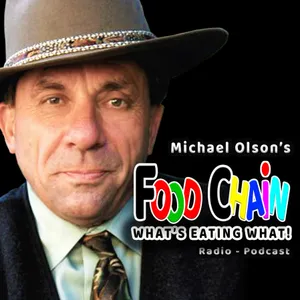
It’s a fact! 100% of men, women and children eat food, and 97.5% of must buy their food from others who bring it from an average of 2,000 miles away. And so the hungry ask: ”What’s in this tomato? Who planted that broccoli? Is it safe to eat genetically engineered corn? Why are they irradiating meat? Are we running short of water? Why is China growing our apples? What will happen to us if we can no longer farm? How safe is our food chain?” The Food Chain is an audience-interactive syndicated newstalk radio program and podcast. The Food Chain, which has been named the Ag/News Show of the Year by California’s legislature, is hosted by Michael Olson, author of the Ben Franklin Book of the Year award-winning MetroFarm, a 576-page guide to metropolitan agriculture.
Latest Episodes
The most recent episodes — sign up to get AI-powered summaries of each one.
- 1 weeks ago53 min
Ep 1431 Cheap Food Isn't
Here are two numbers that illustrate the point: Spending on food is down 6% to 7% percent. Spending on healthcare is up $4.9 trillion dollars. So, eat cheap food and pay for it at the Doctor’s office? Michael Olson Hosts: Kristine Root, Author, “The End of Cheap Food”, Founder & CEO of Socha Branding. Michael Olson's 3rd Law of the Food Chain: Cheap Food Isn't!
- 4 weeks ago48 min
Ancient Grains for Modern Times
Northern California has an Emerald Triangle that was turned green by the cultivation of cannabis. Montana has a Golden Triangle, that is being turned turned gold by the cultivation of ancient grains. And so we ask: Can ancient grains help cure what ails the modern diet? Having been raised on Montana hard-red winter wheat, and the delicious breads, noodles, pies and pastries made from that grain in the Olson family kitchen, it came as a great surprise to me that I now have a sensitivity to gluten. I did resist the thought, thinking, “Who me? Couldn’t be!” At the suggestion of my wife, we both stopped eating wheat and began feeling better. After a month or so of gluten-free living, we attended a large banquet that featured a classic menu. We avoided the rolls and pastas. But, when the desert arrived, it was chocolate cake. Our resolve melted away. On the way home she said, “We’re going to be sorry!” The morning after, we were sorry! I really do miss my Montana hard-red winter wheat food, and the big sky from which it came. And so imagine my surprise when I came across something new, that is actually something very old, growing in Montana’s Golden Triangle – Ancient Grains. That discovery now leads me to ask: Can ancient grains cure what ails the modern diet?
- Sep 3, 202653 min
Ep 1428 Mamdani’s Great Leap Forward Markets
New York City Mayor Zohran Mamdani plans to build 5 government-owned supermarkets for the 5 boroughs of his city, and charge 30% less for food. In the late 1950’s, during China’s Great Leap Forward, the Chinese Communist Party set up free communal canteens across the country. Families, children and adults were given three meals a day in the commune’s “big socialist food hall.” The canteens were symbols of Chairman Mao’s promise of equality and the end of scarcity under socialism. In the beginning, 80% of the food for the canteens was produced on private farms. But then those farms were collectivized, and while the canteens initially served good food, and lots of it, the quality and quantity quickly deteriorated. The combination of collectivization, unrealistic production goals, and poor distribution soon lead to the transformation of Mao’s Great Leap Forward into “Mao’s Great Famine.” During this time, the Chinese people resorted to eating raw seeds, tree bark, dirt, and in some cases, each other. Many tens of millions starved to death. Today, as we look across the five bouroughs of New York City, we wonder: Can Mayor Mamdani succeed where Chairman Mao failed?
- Aug 23, 202647 min
Ep 1426 Big Cities V Small Farms
Stephanie Rocha, Owner, Nest Box Farm, San Martin, CA It is a fact! Cities grow best, where farms grow best, and that is why some of the nation’s biggest cities are planted on some of the nation’s best farmland. This leads us to ask: Can farms survive their cities? Topics include how cities rezone land to maximize revenue; how farmers fight to survive against the pressure for cities to grow; and what the future might hold for what city people will have to eat. A few decades ago California’s Santa Clara Valley was called “The Valley of Hearts Delight” for the spectacular abundance of its tree fruit farms. Todxxday it is called “Silicon Valley” for the abundance of its digital technology companies. This transition from growing low value food to manufacturing high value digital information systems sets up a competition for resources between city and farm. Consider this: A single-family valley home in the valley recently sold for $4 million dollars. Well, it did have 4 bedrooms! Given the money this sale generated, and the property tax money it will generate in the future, this sale is exactly what the city fathers and mothers want to see more of. How to make that happen? What Santa Clara County is trying to do, is what most cities do when they need to more money – rezone the agriculture lands on the fringes of the metropolitan area into commercial and manufacturing… thus chasing out the rural folks and replacing them with big money folks. This never ending competition between city and farm leads us to ask: Can farms survive their cities?
- Aug 23, 202647 min
California's Plunder Coast
Michael Olson hosts Joe Oglivy, Author of Tin Can Coast for a conversation about the commercialization of California's marine life: It is an ocean current that flows south along the coast from Canada to Baja, and it brought to the people who would come to live along this coast unbelievable living treasures to plunder. And plunder they did! And so today we pause to ask: Do you think we can learn how to preserve the fish in our sea?
- Aug 5, 202653 min
Ep 1424 GLP 1s: Too Good to be True?
Michael Olson hosts. Dr. Keith Kantor, Trichologist and Author What Matters Diabetes costs the United States $640 billion a year. What if we could take a pill, lose the weight, then put all that diabetes money into the bank. Topics include how prescription GLP-1s work to help people lose weight; whether GLP-1s might be an effective way for the U.S. to reduce the number of its obese and the cost of its diabetes; and a look at the potential side-effects of using GLP-1s. Consider some very big numbers: 42.7% of those who live in the United States are obese, and 15% have diabetes. The diabetes number grows, because there is a very strong correlation between body mass index and propensity to develop diabetes. According to the Center for Disease Control, the total estimated cost of diagnosed diabetes was $640 billion per year in medical costs and lost productivity. That is nearly two-thirds of a trillion dollars per year – Gone! In 2005, GLP-1s hit the market, and the weight began peeling off the body politic. The cost for this prescription medication starts at around $39 per month, which given the cost of diabetes, would seem to be a very good deal. But then the hair started falling out, the muscles weakened, and the gut complained. Given the strange side-effects, some began to ask: Are GLP-1s too good to be true?
- Jul 31, 202654 min
1423 The Oyster Cult
#1423 Michael Olson host Virginia Shaffer, Host of Lady Oyster Blog and Author, Oyster Society: Adventures with the Shellfishly Motivated I remember the moment I was induced to slurp down a freshly-shucked oyster. That so many of us remember that moment leads us to ask: What is it about the oyster that leads us to become its cultists? Topics include a look at the history of the U.S. oyster business; a “taste” of different oyster varieties; and how the oyster spawned its cult of people.
- Jul 23, 202653 min
Ep 1422 - Beyond Alcohol: Functional Drinking
Function Drinking - Beyond Alcohol Michael Olson with Autumn Shelton, Formulator and CEO of the start-up functional drink company TruBond. Topics include the growing trend of functional foods; the functions targeted in the formulating of TruBond drinks; and the process of taking TruBond from concept, to packaged product, to the marketplace.
Get The Food Chain summaries in your inbox
Free AI-powered daily recaps. Key takeaways, quotes, and mentions — in a 5-minute read.
Get Free Summaries →Free forever for up to 3 podcasts. No credit card required.
You Might Also Like
Listeners also like.
The Food Chain
Explores the business, science, and culture behind how food gets from source to plate.
Real Organic Podcast
Farmers and experts discuss organic farming, food integrity, and resistance to corporate influence in the food system.

Gastropod
Explores the science and history behind food and farming, from ancient feasts to modern aquaculture and everything in between.
The Acres U.S.A. Podcast
Explores organic and regenerative farming practices through interviews and insights aimed at building a sustainable, profitable food system.
Fed with Chris van Tulleken
A doctor investigates the complex forces behind humanity’s most consumed meat, exploring its impact on health, animals, and the planet.
Citizen Chef with Tom Colicchio
iHeartPodcasts
Christopher Kimball’s Milk Street Radio
Explores global food stories, interviews with renowned chefs, and unusual culinary topics, from food science to cultural traditions.

Farming Today
BBC Radio 4
At the Iowa Farm Table Podcast
Explores food and farming in Iowa through conversations with farmers, food producers, and local advocates.
The Forest Garden
Discusses forest gardening, permaculture, and regenerative design through interviews with practitioners and experts.
The Food Programme
Explores all aspects of the food we eat, from production to consumption.

Running on Grass
Two ranchers discuss practical challenges of grass management, drought, cattle markets, and daily life on a working ranch.
About The Food Chain
It’s a fact! 100% of men, women and children eat food, and 97.5% of must buy their food from others who bring it from an average of 2,000 miles away. And so the hungry ask: ”What’s in this tomato? Who planted that broccoli? Is it safe to eat genetically engineered corn? Why are they irradiating meat? Are we running short of water? Why is China growing our apples? What will happen to us if we can no longer farm? How safe is our food chain?” The Food Chain is an audience-interactive syndicated newstalk radio program and podcast. The Food Chain, which has been named the Ag/News Show of the Year by California’s legislature, is hosted by Michael Olson, author of the Ben Franklin Book of the Year award-winning MetroFarm, a 576-page guide to metropolitan agriculture.
Customized Recaps
AI-powered recaps with compact key takeaways, quotes, and insights.
Straight to Your Inbox
Get key takeaways from The Food Chain in a 5-minute read.
Save Hours Every Week
Stay current on your favorite podcasts without falling behind.
Frequently Asked Questions
What is Podzilla's The Food Chain daily summary?
It's a free AI-powered email that summarizes new episodes of The Food Chain as soon as they're published. You get the key takeaways, notable quotes, and links & mentions — all in a quick read.
How does the The Food Chain podcast summary work?
When a new episode drops, our AI transcribes and analyzes it, then generates a personalized summary tailored to your interests and profession. It's delivered to your inbox every morning.
Is this an official The Food Chain product?
No. Podzilla is an independent service that summarizes publicly available podcast content. We're not affiliated with or endorsed by metrofarm.
Can I get summaries of other podcasts too?
Absolutely! The free plan covers up to 3 podcasts, any in the catalog. Basic raises that to 15, Pro to 40 and Max to 100. Browse our full catalog at /podcasts.
How often does The Food Chain release new episodes?
The Food Chain publishes biweekly. Our AI generates a summary within hours of each new episode.
What topics does The Food Chain cover?
The Food Chain covers topics including Business, Arts, Food, Nutrition, Fitness, Health & Fitness. Our AI identifies the specific themes in each episode and highlights what matters most to you.
Start getting The Food Chain summaries tomorrow morning.
Free forever for up to 3 podcasts. No credit card required.
Free forever for up to 3 podcasts. No credit card required.