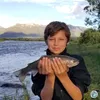
S8, Ep 32: Spring Fishing Unlocked: Mac Brown's Tips for Targeting Elementary and Graduate School Fish
Episode OverviewIn this Casting Angles episode of The Articulate Fly fly fishing podcast, host Marvin Cash reconnects with Master Casting Instructor and veteran Western North Carolina guide Mac Brown of Mac Brown Fly Fish in Bryson City for a timely mid-May conditions update on the Tuckasegee River. With the delayed harvest season winding down and roughly three weeks left to fish the DH water, Mac and Marvin break down exactly what anglers are up against — and how to read it correctly. The Tuck is running well below its seasonal average at roughly 400–500 cfs compared to a normal 1,600–1,800 cfs, but recent rainfall and cooler temperatures are providing a welcome reprieve from what has been a difficult spring across the mid-Atlantic and southern Appalachians. The episode centers on one of the most practical and underappreciated skills in trout fishing: learning to distinguish between freshly stocked fish and the educated holdover and lake-run trout that share the same water — and adjusting technique and fly selection accordingly. Mac walks through his system for identifying fish by their behavior and location, his nymphing rig progressions through the day, and why moving away from indicators is no longer optional in low, clear water.Key TakeawaysHow to identify stocked versus holdover and lake-run trout on the Tuckasegee by using stocking truck access points and "junk food" fly response as a quick field diagnostic.Why fishing a natural-colored anchor pattern like a Walt's Worm in the morning and transitioning to smaller flies as the day progresses is Mac's preferred nymphing progression in low, clear water.How to position a small nymph pattern on the dropper or point depending on whether fish appear to be feeding higher in the column or holding deep.Why using a large sacrificial dry fly — a Parachute Adams, Stimulator or Elk Hair Caddis — as a sight indicator for a trailing small dry creates a "training wheels" system for less experienced dry fly anglers targeting educated fish on size 18–20 patterns and smaller.How marking your fly line or leader with small foam indicators or competition nymphing wax lets you track takes by watching for changes in the alignment of the indicators or wax marks.Why fishing indicator-free with a longer leader at low water is increasingly critical as DH fish become conditioned to suspension devices.Techniques & Gear CoveredThe episode focuses primarily on indicator-free and low-profile presentation techniques for technical low-water trout fishing. Mac's core nymphing approach involves a natural-colored anchor fly paired with a very small midge or emerger, with dropper or point placement adjusted based on where fish appear to be in the water column. For dry fly fishing, both Mac and Marvin advocate a sacrificial large attractor — Parachute Adams, Elk Hair Caddis, Stimulator — with a size 18–20 smaller pattern that fish are actually eating trailed 12–14 inches behind; they call the large fly "the sacrificial fly" for a reason: it never gets eaten, it just helps anglers locate their small fly. As an alternative to a sacrificial dry, Marvin recommends marking the fly line or leader with foam stick-ons or nymphing wax and watching for the indicator marking to straighten on the take. Mac confirms that big bobber rigs and streamers are the wrong tools when PhD fish are locked into size 20–24 midges and blue-winged olive emergers.FAQ / Key Questions AnsweredHow do I tell whether I'm fishing to freshly stocked trout or educated holdover fish on the Tuckasegee?Mac's field diagnostic starts with geography: on the Tuck, stocking trucks can only access about five specific pullouts on the narrow gravel road, so fish podded up near those locations are almost certainly recent stockers. Fish holding far from those access points in less obvious water are likely holdovers or lake-run trout. A second confirmation: throw a "junk food" fly — a bright attractor or gaudy nymph — through a riffle. If you're getting easy eats, those are the new fish. PhD fish feeding on size 20–24 midges will ignore streamers and big rigs entirely.When should I use an indicator versus fishing indicator-free on low, clear water?Mac's view is unambiguous: in low, clear conditions — especially late in the DH season when fish have been seeing indicators for weeks — suspension devices hurt your results more than they help. He prefers a longer leader setup, tracking the nail knot or line end visually, and fishing emerger patterns just an inch or two under the film. The mechanics of detecting a subtle take watching the line end are no different from detecting takes when tight-line nymphing subsurface. Marvin ad
Podzilla Summary coming soon
Sign up to get notified when the full AI-powered summary is ready.
Free forever for up to 3 podcasts. No credit card required.
Listen to This Episode
More from The Articulate Fly
S8, Ep 33: Tying Tradition: Jason Taylor's Journey Through the Art of Fly Tying
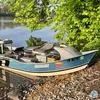
S8, Ep 31: Chasing Smallmouth: Brian Shumaker's Adaptations for Unpredictable Spring Weather
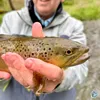
S8, Ep 30: Central PA Chronicles: George Costa's Guide to Spring Fishing Conditions and Techniques
S8, Ep 29: Fishing in Flux: Matt Reilly's Take on Spring Trends and Techniques
Get summaries like this every morning.
Free AI-powered recaps of The Articulate Fly and your other favorite podcasts, delivered to your inbox.
Free forever for up to 3 podcasts. No credit card required.