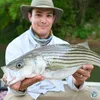
S8, Ep 29: Fishing in Flux: Matt Reilly's Take on Spring Trends and Techniques
Episode OverviewThe Articulate Fly returns to Southwest Virginia with guide Matt Reilly of Matt Reilly Fly Fishing for a candid late-spring conditions update covering the 2026 striper run, the smallmouth spawn transition and the tactical realities of fishing during one of the most compressed and drought-affected springs on record. Marvin Cash and Matt dissect a season that accelerated and stalled simultaneously — an extended cold February followed by an abrupt heat spike of 85–95°F days in late March and early April, paired with persistently low water, collapsed the striper run and complicated every major seasonal transition on Southwest Virginia's river systems. The weird weather and flows have made it genuinely difficult to pattern pre- and post-spawn smallmouth — the fish anglers actually want to target — because the usual seasonal cues have been compressed and scrambled. Matt provides a practical framework for identifying spawning males so you can skip them and keep hunting for fish that are actively feeding: the lazy follow, the lip-grab without commitment, the fish that trails your bug 8–10 feet off the bank and turns back are all signs to move on. He also explains why low water in an otherwise frustrating spring carries a meaningful upside for long-term recruitment if dry conditions hold through June. The episode closes with a thoughtful response to a listener question from Myles about breaking into fly fishing guiding professionally, with Matt covering mentorship, income diversification, the ethics of client and fishery stewardship and the financial realities of building a sustainable guide business.Key TakeawaysHow to recognize spawning male smallmouth behavior — lazy follows, lip-grabs and short pursuits that turn back to the bank — so you can move on quickly and keep hunting actively feeding pre- and post-spawn fish.Why low-water drought springs can actually produce strong smallmouth recruitment classes if rain stays away through June.When to move on from a fish that follows your bug or streamer and returns to the bank without committing — and why skipping those fish is both the ethical and tactically correct call.How unusual weather and flows this spring have scrambled the typical pre- and post-spawn patterns, making it a mixed-bag season where reading individual fish behavior matters more than following a seasonal playbook.Why building a guide career requires prioritizing client relationships and fishery health above daily revenue — and how that long-term ethic translates to business sustainability.How diversifying income streams (writing, multi-species guiding, year-round fisheries) protects a guide's livelihood when weather, blowouts or other factors cut into prime booking windows.Techniques & Gear CoveredThe central tactical theme of this episode is finding and targeting actively feeding pre- and post-spawn smallmouth in low, clear water — a harder task than usual given how badly the weird weather and flows this spring have scrambled normal seasonal patterns. Matt covers top water bug presentations and streamer fishing as the primary techniques for this window, but stresses that reading individual fish behavior is the key skill right now. Stomach-pump data — stoneflies, bees, beetles, damselflies and dragonflies — confirms that genuinely feeding fish are keyed on terrestrials and aquatic insects, which gives anglers confidence that top water presentations are well-founded. The critical field skill Matt emphasizes is identifying spawning males quickly so you can move on: a fish that lazily follows a bug or streamer 8–10 feet off the bank and turns back, or that lip-grabs without committing, is a spawner to skip — not a fish to continue to work. The striper run is also discussed briefly in the context of the same low-water and warming conditions.Locations & SpeciesSouthwest Virginia's river systems — the New River drainage and surrounding waters — are the focus of this report, with Matt Reilly fishing and guiding the region year-round. Smallmouth bass are the primary target species for the spring through early fall, with striped bass serving as the transitional species between musky season and pre-spawn smallmouth and the remainder of smallmouth season. The compressed, weather-scrambled spring has made it unusually difficult to pattern pre- and post-spawn smallmouth — the fish Matt and his clients are after — with conditions shifting too quickly for the usual seasonal benchmarks to hold. The season discussed covers late April through early July, with May through late June highlighted as the core window for top water, baitfish and crayfish presentations once the spawn has run its course and
Podzilla Summary coming soon
Sign up to get notified when the full AI-powered summary is ready.
Free forever for up to 3 podcasts. No credit card required.
Listen to This Episode
More from The Articulate Fly
S8, Ep 33: Tying Tradition: Jason Taylor's Journey Through the Art of Fly Tying
S8, Ep 32: Spring Fishing Unlocked: Mac Brown's Tips for Targeting Elementary and Graduate School Fish
S8, Ep 31: Chasing Smallmouth: Brian Shumaker's Adaptations for Unpredictable Spring Weather
S8, Ep 30: Central PA Chronicles: George Costa's Guide to Spring Fishing Conditions and Techniques
Get summaries like this every morning.
Free AI-powered recaps of The Articulate Fly and your other favorite podcasts, delivered to your inbox.
Free forever for up to 3 podcasts. No credit card required.