Free Daily Podcast Summary
The American Idea: Daily Summaries Delivered
by Ashbrook Center
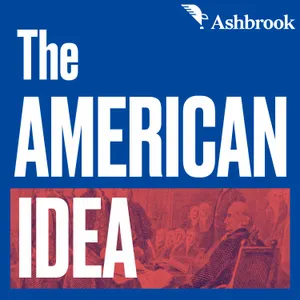
The American Idea explores America's Founding principles and their effect on American history and government. Through thoughtful conversations with renowned academics and public figures from across the country, we examine the history and political thought behind our country’s greatest documents and debates, as well as contemporary issues, American popular culture, and political statesmanship. The podcast is a production of the Ashbrook Center and hosted by Jeff Sikkenga.
Latest Episodes
The most recent episodes — sign up to get AI-powered summaries of each one.
- 1 weeks ago39 min
The Last Adieu: Lafayette and Early America
The Marquis de Lafayette came to America at age 19, on his own dime, to earn glory on the battlefield. He quickly became one of the Revolution’s greatest believers, and spent the rest of his life admiring the spirit and goals of the American Revolution and the republic it birthed.Author Ryan Cole joins us this week to discuss his book, The Last Adieu, which chronicles Lafayette’s tour of America 40 years after the Revolution. Visiting every state, and meeting with surviving veterans and leaders, along with the next generation of prominent Americans, his experience gave him a unique perspective on the country he helped create.Read Ryan’s book: https://a.co/d/0fTFmzETHost: Jeff SikkengaExecutive Producer: Jeremy GyptonSubscribe: https://linktr.ee/theamericanideaHomepage: https://ashbrook.org/the-american-idea-podcast/Thank you for being part of The American Idea community.Follow on Twitter https://x.com/amideapodcastFollow on Facebook https://www.facebook.com/ashbrookcenter/
- 3 weeks ago47 min
Completing the Founding: The Northwest Ordinance of 1787
Written while the Constitutional Convention was taking place in 1787, the Northwest Ordinance was adopted fully by the new government, despite being a production of the Articles of Confederation. It also laid the foundation for many of the Founders’ priorities and aspirations in terms of governance, land usage, economics, and slavery. How would the new, expanding America look, and what would it be like? The Northwest Ordinance is an essential enabler for the America that came on the heals of the Revolution.Jeff is joined by historian Peter Onuf to discuss this essential, yet largely overlooked, document.Read the document: https://teachingamericanhistory.org/document/the-northwest-ordinance/Host: Jeff SikkengaExecutive Producer: Jeremy GyptonSubscribe: https://linktr.ee/theamericanideaHomepage: https://ashbrook.org/the-american-idea-podcast/Thank you for being part of The American Idea community.Follow on Twitter https://x.com/amideapodcastFollow on Facebook https://www.facebook.com/ashbrookcenter/
- Aug 19, 202636 min
Fact or Fiction? Historians Discuss Young Washington
Young Washington purports to tell the story of George Washington’s early life, and the choices, situations, and actions that defined him as a young man, and in the eyes of his countrymen. But how accurate is it, and considering how many people seem to get their history from films, what should we know about this movie when thinking about the story it tells?Presidential historian Stephen Knott worked as an advisor for the movie, and sits down with Dr. Cara Rogers Stevens to discuss what’s fact, where the film took creative license, and how challenging it is to make a good historical film.Read David Hackett Fischer’s book, as suggested by Steve: https://a.co/d/05GDbgbOHost: Jeff SikkengaExecutive Producer: Jeremy GyptonSubscribe: https://linktr.ee/theamericanideaHomepage: https://ashbrook.org/the-american-idea-podcast/Thank you for being part of The American Idea community.Follow on Twitter https://x.com/amideapodcastFollow on Facebook https://www.facebook.com/ashbrookcenter/
- Aug 12, 202635 min
America's First Citizen: Character Lessons from George Washington
First in war, first in peace, and traditionally first in the hearts of Americans - what can we learn from Washington, the man? What made him the person around whom history seemed to turn, and why is his character worth studying and, in many ways, emulating? Professor Stephen Knott, noted presidential historian, discusses Washington, the man, and three key moments in his life when his decisions and integrity shifted the arc of history.Read David Hackett Fischer’s book, recommended by Steve: https://a.co/d/05GDbgbOHost: Jeff SikkengaExecutive Producer: Jeremy GyptonSubscribe: https://linktr.ee/theamericanideaHomepage: https://ashbrook.org/the-american-idea-podcast/Thank you for being part of The American Idea community.Follow on Twitter https://x.com/amideapodcastFollow on Facebook https://www.facebook.com/ashbrookcenter/
- Jul 29, 202639 min
Why Did the Founders Create a Republic?
America is often called a democracy, sometimes a democratic republic, and probably less-often a republic. But to be precise, the American system of constitutional government, first in the original 13 states, then in the general government, and since 1787, consists of a series of republics. Each state is a republic, and the national (or general, or federal) government is, as well.But what exactly is a republic, and does it matter? What is republican (little R) government, and what did the Founders see in it that was superior to a democracy? What qualities did they see in their fellow Americans, and hope to see in their progeny - us?Professor of Political Science Jim Stoner, of Louisiana State University, discusses the difference between a republic and a democracy, and how the Founders understood republicanism as both a system and a set of civic values.Host: Jeff SikkengaExecutive Producer: Jeremy GyptonSubscribe: https://linktr.ee/theamericanideaHomepage: https://ashbrook.org/the-american-idea-podcast/Thank you for being part of The American Idea community.Follow on Twitter https://x.com/amideapodcastFollow on Facebook https://www.facebook.com/ashbrookcenter/
- Jul 15, 202641 min
A Sober View of Human Nature: Federalist 10 and Factions
In Federalist 10, James Madison identified what he saw as one of the greatest dangers to popular government: factions. How did he define and understand them? Does his definition and his argument still stand up today? How can, by understanding the view on this issue at the Founding, better understand our current politics?Read Federalist 10: https://teachingamericanhistory.org/document/federalist-no-10-3/Read Madison’s “Consolidation”: https://teachingamericanhistory.org/document/consolidation/Read Madison’s “A Candid State of Parties”: https://teachingamericanhistory.org/document/a-candid-state-of-parties-2/Read Joe’s article on political parties: https://www.heritage.org/political-process/report/the-rise-and-fall-political-parties-americaFind American Covenant on Amazon: https://a.co/d/00voBuXVHost: Jeff SikkengaExecutive Producer: Jeremy GyptonSubscribe: https://linktr.ee/theamericanideaHomepage: https://ashbrook.org/the-american-idea-podcast/Thank you for being part of The American Idea community.Click to learn about how we're planning for America's 250th birthday! https://www.ashbrookfreedom250.org/Follow on Twitter https://x.com/amideapodcastFollow on Facebook https://www.facebook.com/ashbrookcenter/
- Jul 1, 202641 min
More than a Document: Living the Declaration of Independence
The ideals, values, and aspirations in the Declaration of Independence aren’t just the words of an old document - they’re a statement of political and public faith in how we should see one another and how we should conduct ourselves as a political body.In preparation for America’s 250th birthday, don’t just focus on the years and accomplishments - get in touch with the ideas that underpin them, and consider how you can live out the Declaration of Independence, and encourage others, as well, so that we can bequeath another 250 years of freedom to the generations that follow us.Read the Declaration of Independence: https://teachingamericanhistory.org/document/declaration-of-independence/Read Calvin Coolidge's speech about the DI: https://teachingamericanhistory.org/document/speech-on-the-occasion-of-the-one-hundred-and-fiftieth-anniversary-of-the-declaration-of-independence/Host: Jeff SikkengaExecutive Producer: Jeremy GyptonSubscribe: https://linktr.ee/theamericanideaHomepage: https://ashbrook.org/the-american-idea-podcast/
- Jun 24, 202645 min
Our Right to Privacy and the 4th Amendment
Our 4th Amendment rights to privacy, in various forms, has its origins before the Declaration of Independence, and is at the foundation of Americans’ understanding of natural rights. In this episode, Dr. Cara Rogers-Stevens discusses the importance and evolution of our privacy rights, and how they set us apart from so many other peoples in the world.Host: Jeff SikkengaExecutive Producer: Jeremy GyptonSubscribe: https://linktr.ee/theamericanideaHomepage: https://ashbrook.org/the-american-idea-podcast/
Get The American Idea summaries in your inbox
Free AI-powered daily recaps. Key takeaways, quotes, and mentions — in a 5-minute read.
Get Free Summaries →Free forever for up to 3 podcasts. No credit card required.
You Might Also Like
Listeners also like.

American History Tellers
Pivotal moments in American history are explored through narrative storytelling, revealing their impact on the nation and modern life.
American Revolution Podcast
Explores the events of the American Revolution from beginning to end, with supplemental maps, images, and resources available on its blog.

This Day (An America 250 History Show)
Historians explore pivotal U.S. political events from the past and connect them to today’s news.
Founding Son: John Quincy's America
A musician examines John Quincy Adams's post-presidential career and his stand against slavery in the decades before the Civil War.
Americast
Weekly analysis of U.S. politics and social media’s impact on elections from BBC journalists and guests.

American Potential
Stories of ordinary Americans driving change in their communities through grassroots action and policy advocacy.
The Atlantic Interview
A weekly exploration of democracy, society, and the American ideal through in-depth interviews and analysis.

Civics 101
Explains how U.S. government institutions and constitutional rights function in everyday life.

American History Hit
Examines key events in American history, from colonial conflicts to civil rights, through expert interviews and detailed storytelling.

American Scandal
A deep dive into infamous American scandals, exploring the lies, corruption, and ambition behind the fall of powerful figures.

Noiser Presents
Dramatic, immersive retellings of history’s most pivotal events through expert interviews and eyewitness accounts.
Federalist Radio Hour
Conversations with journalists, scholars, and thinkers on politics, culture, religion, and current events.
About The American Idea
The American Idea explores America's Founding principles and their effect on American history and government. Through thoughtful conversations with renowned academics and public figures from across the country, we examine the history and political thought behind our country’s greatest documents and debates, as well as contemporary issues, American popular culture, and political statesmanship. The podcast is a production of the Ashbrook Center and hosted by Jeff Sikkenga.
Customized Recaps
AI-powered recaps with compact key takeaways, quotes, and insights.
Straight to Your Inbox
Get key takeaways from The American Idea in a 5-minute read.
Save Hours Every Week
Stay current on your favorite podcasts without falling behind.
Frequently Asked Questions
What is Podzilla's The American Idea daily summary?
It's a free AI-powered email that summarizes new episodes of The American Idea as soon as they're published. You get the key takeaways, notable quotes, and links & mentions — all in a quick read.
How does the The American Idea podcast summary work?
When a new episode drops, our AI transcribes and analyzes it, then generates a personalized summary tailored to your interests and profession. It's delivered to your inbox every morning.
Is this an official The American Idea product?
No. Podzilla is an independent service that summarizes publicly available podcast content. We're not affiliated with or endorsed by Ashbrook Center.
Can I get summaries of other podcasts too?
Absolutely! The free plan covers up to 3 podcasts. Upgrade to Pro for 15, or Premium for 50. Browse our full catalog at /podcasts.
How often does The American Idea release new episodes?
The American Idea publishes weekly. Our AI generates a summary within hours of each new episode.
What topics does The American Idea cover?
The American Idea covers topics including History, Education. Our AI identifies the specific themes in each episode and highlights what matters most to you.
Start getting The American Idea summaries tomorrow morning.
Free forever for up to 3 podcasts. No credit card required.
Free forever for up to 3 podcasts. No credit card required.