Free Daily Podcast Summary
Tech Can't Save Us: Daily Summaries Delivered
by Literal Humans
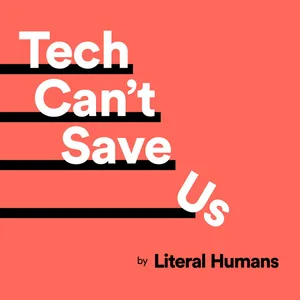
A podcast for tech founders and operators building the next generation of mission-driven tech companies. Each episode, host Paul David (Founder/CEO of Literal Humans) sits down with a CEO, founder, or innovator and digs into the key questions that separate companies that scale from those that stall: What's going on in your sector? What's your path to category leadership?How's your product? Do your customers truly love it?How sharp is your go-to-market (GTM) strategy + execution? Who are your senior leaders? How are their personal and professional experiences shaping your growth trajectory?Paul has led two B2B SaaS-focused growth consultancies (formerly, marketing agencies called Optimist and Literal Humans) and helped scale leading companies including Wise, Payoneer, Oura, Oyster, Chipper Cash, Remofirst, Playbook, and Grey — several to unicorn status. The throughline of every conversation: Stories from
Latest Episodes
The most recent episodes — sign up to get AI-powered summaries of each one.
- Yesterday23 min
S4 Ep58: Revolutionizing Direct Mail through Intelligent Automation and Scalable Supply Chains with Brent Hagan, Chief Supply Chain Officer of Lob
This week on Tech Can’t Save Us, host Paul David is joined by Brent Hagan, Chief Supply Chain Officer of Lob, the direct mail automation platform that bridges software and physical execution. Lob lets businesses send personalised, data-driven mailpieces at scale, backed by a nationwide print and delivery network that Brent oversees end to end.They discuss how direct mail, long seen as a slow, legacy channel, is being rebuilt to run at the speed and precision of digital marketing. Brent explains what it means to build the operational backbone of an automated mail platform, from manufacturing and partner networks to analytics and warehouse automation. He also unpacks the launch of Lob Logistics, a new offering that combines shipments and improves pricing across the physical mail supply chain, and how Lob keeps tight control of quality and lead times across a distributed partner network.The conversation covers Lob’s shift towards a vertical supply chain model, including bringing materials procurement and middle-mile freight in-house to unlock margin, and how Brent weighs risk against opportunity when making major capital decisions. Brent also shares lessons from his career across Amazon’s robotic fulfilment and sortation networks and Deliverr through its acquisition by Shopify, including leading an 800-person team in a 24/7 operation, and why vision-casting and making customer centricity relevant to every team remain at the heart of how he leads.Find more about Lob here: https://www.lob.com/Follow Brent Hagan here: https://www.linkedin.com/in/brent-hagan-530284173/
- 1 weeks ago38 min
S4 Ep57: Democratising Philanthropic Funding: Building the AI Tool That Levels the Grant Playing Field with Justin Steele, Co-Founder & CEO of Kindora
This week on Tech Can’t Save Us, host Paul David is joined by Justin Steele, Co-Founder & CEO of Kindora, a public benefit corporation using AI to level the playing field in philanthropic funding. Kindora has built an AI fundraising platform that reasons like a program officer, narrowing thousands of loosely relevant funders down to the few actively funding a nonprofit’s work.They discuss why the nonprofits closest to social problems have long paid the most for the least useful fundraising tools, and why incumbents serving the top of the market are poorly placed to change that. Justin explains how Kindora scores every match across six dimensions, from geographic fit to grant-size alignment and funding momentum, and how the platform now covers the full grant lifecycle: discovery, funder research, drafting, AI-powered pitch practice and pipeline tracking. He also shares how the product grew from a prototype he built for his own nonprofit, Outdoorithm Collective, into a platform that nonprofits can now use directly inside AI assistants such as Claude.The conversation covers how Kindora turns early momentum into durable, paying relationships with resource-stretched organisations, and how Justin weighs his time across Kindora, his AI product studio True Steele Labs, and Outdoorithm Collective. Justin also shares what ten years directing nearly $700 million in philanthropy at Google.org taught him about how funding decisions really get made, how he taught himself to build software without an engineering title, and why he believes proximity to a problem is the most powerful advantage a founder can have.Find more about Kindora here: https://www.kindora.co/Follow Justin Steele here: https://www.linkedin.com/in/justinrichardsteele/
- 2 weeks ago39 min
S4 Ep56: Unlocking Leadership Potential Through Scalable Executive Coaching with Farley Thomas, Co-Founder & CEO of Manageable
This week on Tech Can’t Save Us, host Paul David is joined by Farley Thomas, Co-Founder & CEO of Manageable, a leadership development platform on a mission to give everyone the gift of a great manager. Manageable brings executive-grade coaching to the managers who have historically been handed nothing, blending live, expert-led learning delivered globally in any language with data-driven insight and a daily self-learning habit.They discuss why the modern workplace is overdue a radical rethink of management, with the vast majority of managers receiving no training at all and many senior leaders never having had any. Farley explains how the support pyramid is upside down, with consultants, facilitators and coaches lavished on the most senior while first-time managers are simply told they’ve got it, leaving organisations full of ‘overnight leaders‘. He walks through how Manageable inverts that pyramid, replacing passive, box-ticking training with live learning and lasting habit formation, and aligning each manager’s growth with the performance goals of the business.The conversation covers what it takes to scale a high-social-impact B2B platform in a crowded HR tech market, from proving hard ROI to sceptical, data-driven buyers and navigating long enterprise procurement cycles, to building a consistent global coaching network and Farley’s ambition to turn better management into a movement as AI reshapes the middle layer of organisations. Farley also shares his personal journey, from starting out as an under-represented immigrant from India with no powerful connections, to nearly two decades in investment banking and asset management culminating on HSBC’s executive committees, and the conviction that led him to leave a thriving coaching practice and become a tech co-founder in 2020.Find more about Manageable here: https://www.manageable.works/Follow Farley Thomas here: https://www.linkedin.com/in/farley-thomas-55655/
- 3 weeks ago25 min
S4 Ep55: Modernizing the Bill Pay Experience with Steve Kramer, VP of Product of PayNearMe
This week on Tech Can’t Save Us, host Paul David is joined by Steve Kramer, VP of Product of PayNearMe, a fintech platform that helps businesses simplify and accelerate the way they collect payments. PayNearMe brings every major payment type into a single platform, from Apple Pay, Google Pay, PayPal and Venmo to cards, ACH and cash at more than 62,000 retail locations across the US.They discuss the friction points that still make paying a bill harder than it should be, and how the expectations of the “everything-now” economy are forcing billers to rethink the payment experience. Steve explains how PayNearMe balances high-security payment architecture with a seamless user interface, and why its ability to accept cash at retail sets it apart from digital-only competitors. He also unpacks how digital wallets lift conversion for billers, how electronic check solutions keep returns and fraud in check, and how payment behaviour data helps clients improve their collection rates.The conversation covers the industry’s shift from digital-first to mobile-only, the hurdles of growing in highly regulated sectors, and how to balance custom features for Fortune 500 clients against a scalable, universal product. Steve also looks ahead to real-time payments as a catalyst for growth and explains how PayNearMe competes with legacy processors that hold vast market share but innovate slowly. Drawing on more than 25 years in payments and his roots as a Virginia Tech computer science graduate, he shares his leadership philosophy and his approach to communicating technical roadmaps to non-technical executives.Find more about PayNearMe here: https://www.paynearme.com/Follow Steve Kramer here: https://www.linkedin.com/in/ADD-STEVE-KRAMER-PROFILE
- 4 weeks ago32 min
S4 Ep54: Revolutionising Last-Mile Logistics: Inside the Future of Drone Delivery with Beth Flippo, CEO and Founder of DEXA
This week on Tech Can’t Save Us, host Paul David is joined by Beth Flippo, CEO and Founder of DEXA, a Dayton-based autonomous logistics company transforming last-mile delivery from the birthplace of aviation. Spun out of TELEGRID Technologies in 2021, DEXA designs, manufactures and operates its own FAA-certified DE-2020 drone, turning two-day shipping into deliveries in under 15 minutes.They discuss how drone delivery is shifting from futuristic novelty to everyday infrastructure, and why Beth sees an emerging autonomy economy as the next evolution of the gig economy. Beth explains how DEXA’s roots in secure defence communications shape its approach, from the encrypted mesh networking behind its AeroGRID+ swarm technology to the customer-facing platforms that link retailers’ orders to real-time flight operations. She also unpacks what makes DEXA rare in the sector: as one of only four fully integrated drone manufacturer-operators in the US, alongside Amazon, Google and Zipline, it controls the entire delivery ecosystem end to end.The conversation covers the long road through commercial aviation regulation, which saw DEXA become only the seventh US company to secure FAA Part 135 Air Carrier certification, alongside a nationwide BVLOS waiver. They explore how DEXA turns pilots like its early Kroger partnership into lasting integrations, what investors look for after its $15 million seed round, and which signals tell the team a city is ready for drone delivery. Beth also shares how two decades in financial technology at UBS, Goldman Sachs and Cantor Fitzgerald prepared her for founding a deep-tech company, the steep learning curve of moving from CTO to CEO, and her advice for women building hardware businesses in tech and aviation.Find more about DEXA here: https://www.flydexa.com
- Oct 1, 202630 min
S4 Ep53: Commercialising Earth’s Last Empty Orbit: Building Satellites for Very Low Earth Orbit with Anatolii Papulov, Founder & CEO of NewOrbit
This week on Tech Can’t Save Us, host Paul David is joined by Anatolii Papulov, Founder & CEO of NewOrbit, a Reading-based satellite manufacturer opening up a band of space that has been written off as too hostile for commercial flight for sixty years. NewOrbit is building the world’s first commercial satellites designed to operate reliably in Very Low Earth Orbit (VLEO), between 200 and 300km, powered by its own in-house air-breathing electric propulsion system.They discuss why VLEO has sat empty since the dawn of the space age, with aerodynamic drag, atomic oxygen and aerodynamic torque meaning a conventional satellite at that altitude survives weeks rather than years, and why an increasingly crowded, debris-heavy Low Earth Orbit makes the case for a self-cleaning orbit more urgent than ever. Anatolii explains why almost every subsystem has to be rebuilt from scratch to keep a satellite alive at 200km, and how NewOrbit’s AURA air-breathing thruster turns a few days in orbit into five years. He also makes the counterintuitive economic case: for the price of one conventional satellite, customers could fly a whole fleet of smaller VLEO satellites delivering up to 20x better imagery, alongside 5G direct-to-device connectivity and live HD video from space.The conversation covers what it takes to scale a European deep-tech company towards a first launch in 2028, from closing an oversubscribed $18.5 million Series A led by Voyager Ventures to hiring thirty scientists and engineers in a field where the skills barely exist as a category, and selling infrastructure rather than a consumer service. They explore the sovereignty argument for a UK-led VLEO capability at a time when Europe has none of its own. Anatolii also shares his journey from stargazing in rural Siberia to physics research in collaboration with MIT, how he and co-founder Ruslan Rakhimov split the work, and the conviction it takes to bet a career on unlocking a single orbit.Find more about NewOrbit here: https://neworbit.space/
- Sep 24, 202627 min
S4 Ep52: Navigating the Age of Attention Scarcity with Claire Coady, Founder of The Attention Practice
This week on Tech Can’t Save Us, host Paul David is joined by Claire Coady, Founder of The Attention Practice, a specialist communications consultancy built for what Claire calls the “Age of Attention Scarcity“. Drawing on more than 20 years of advising global brands, governments and NGOs, Claire and her team fuse brand and media strategy, audience research, information risk and the science of attention to help organisations cut through in an overwhelmed world.They discuss why attention should be treated as a finite resource, and why it now belongs on every CEO’s agenda rather than being left to the marketing team. Claire explains the tipping point that led her to found a practice dedicated entirely to attention, and how the battle for attention changes when the subject is complex or sensitive rather than commercial. She walks through her approach to designing strategies that sustain attention rather than simply capturing it, from applying behavioural change insights to building a brand’s defences against the attention hacks used to spread disinformation.The conversation covers the realities of scaling a human-first, research-led consultancy in an AI-driven information environment, including how generative AI is complicating the attention problem, how the “Can We Have Your Attention?” podcast and Claire’s Substack attract government and institutional clients, and how she bridges the cultural attention gap across Europe, Africa and the Middle East. Claire also shares what award-winning, high-budget campaigns and shoestring projects have each taught her about attention, how she thinks about risk and resilience, and how her commitment to social progress as a Fellow of the Royal Society of Arts shapes her day-to-day work.Find more about The Attention Practice here: https://www.theattentionpractice.com/Follow Claire Coady here: https://uk.linkedin.com/in/clairecoady
- Sep 17, 202625 min
S4 Ep51: Taking Specialist Anxiety and OCD Care Off the Waitlist with Mona Potter, MD, Co-Founder and Chief Medical Strategy Officer of InStride Health
This week on Tech Can’t Save Us, host Paul David is joined by Mona Potter, MD, Co-Founder and Chief Medical Strategy Officer of InStride Health, an insurance-based virtual provider of specialty anxiety and OCD treatment for young people aged 7 to 26. Founded by two Harvard-trained clinicians who spent over a decade building intensive anxiety programmes at McLean Hospital, InStride delivers a purposefully time-bound course of care, typically four to eight months, through a dedicated three-person team of therapist, exposure coach and psychiatrist.They discuss why treatment with decades of evidence behind it still fails to reach most families, blocked by long waitlists, a shortage of specialists and geography rather than by any gap in the science. Mona explains the InStride model: cognitive behavioural therapy with exposure at its centre, delivered virtually so that practice happens in the places where anxiety actually shows up, at school, in a restaurant, at home, rather than in a clinician’s office. She points to the outcomes InStride publishes every year, including 97% of graduates showing clinical improvement and fewer than 1% being hospitalised in the year after finishing the programme.The conversation covers what it takes to scale specialty care without thinning it out: going in network with major commercial insurers, expanding state by state, and using technology, including AI trained on InStride’s own clinical data, to support care teams while every clinical decision stays with a clinician. Mona also shares what nearly two decades inside the Mass General, McLean and Harvard Medical School system taught her about the distance between care that works and care families can actually get, and why she left to build something that closes it.Find more about InStride Health here: https://www.instride.health/Follow Mona Potter, MD here: https://www.linkedin.com/in/mona-potter-md-28ba2179/
Get Tech Can't Save Us summaries in your inbox
Free AI-powered daily recaps. Key takeaways, quotes, and mentions — in a 5-minute read.
Get Free Summaries →Free forever for up to 3 podcasts. No credit card required.
You Might Also Like
Listeners also like.

Lenny's Podcast: Product | Career | Growth
Conversations with top product and growth leaders offering practical strategies for building, launching, and scaling successful products.
The Entrepreneur DNA
Entrepreneurs share lessons on building businesses and personal growth through real experiences and mistakes.

TED Tech
Experts examine how technology reshapes society, science, design, and business through TED Talks hosted by Sherrell Dorsey.

Expert Intelligence with Paul Estes
Explores the intersection of human expertise and AI in shaping the future of work through interviews with industry leaders and innovators.

The AI XR Podcast.
Insightful interviews with tech founders and executives on AI, virtual reality, augmented reality, and the future of spatial computing.

Right About Now - Legendary Business Advice
Raw business insights from founders and industry leaders, revealing real wins, failures, and actionable strategies without the fluff.

Creative Entrepreneur: A Podcast For Business Growth and Trending News
Examines how entrepreneurship, creativity, and media trends shape modern business and personal branding.

Mostly Human with Laurie Segall
Explores the human side of technology through interviews with influential tech figures and emerging voices shaping its impact on society.

The Restless Ones
Executives at the intersection of technology and business discuss innovation, leadership, and driving change in fast-evolving industries.

The Room Podcast
Tech founders and funders share behind-the-scenes stories from pivotal moments in their careers.

David Senra
David Senra hosts conversations with the greatest living founders.

The Twenty Minute VC (20VC): Venture Capital | Startup Funding | The Pitch
Interviews with top venture capitalists and successful founders about startup funding and building tech companies.
About Tech Can't Save Us
A podcast for tech founders and operators building the next generation of mission-driven tech companies. Each episode, host Paul David (Founder/CEO of Literal Humans) sits down with a CEO, founder, or innovator and digs into the key questions that separate companies that scale from those that stall: What's going on in your sector? What's your path to category leadership?How's your product? Do your customers truly love it?How sharp is your go-to-market (GTM) strategy + execution? Who are your senior leaders? How are their personal and professional experiences shaping your growth trajectory?Paul has led two B2B SaaS-focused growth consultancies (formerly, marketing agencies called Optimist and Literal Humans) and helped scale leading companies including Wise, Payoneer, Oura, Oyster, Chipper Cash, Remofirst, Playbook, and Grey — several to unicorn status. The throughline of every conversation: Stories from
Customized Recaps
AI-powered recaps with compact key takeaways, quotes, and insights.
Straight to Your Inbox
Get key takeaways from Tech Can't Save Us in a 5-minute read.
Save Hours Every Week
Stay current on your favorite podcasts without falling behind.
Frequently Asked Questions
What is Podzilla's Tech Can't Save Us daily summary?
It's a free AI-powered email that summarizes new episodes of Tech Can't Save Us as soon as they're published. You get the key takeaways, notable quotes, and links & mentions — all in a quick read.
How does the Tech Can't Save Us podcast summary work?
When a new episode drops, our AI transcribes and analyzes it, then generates a personalized summary tailored to your interests and profession. It's delivered to your inbox every morning.
Is this an official Tech Can't Save Us product?
No. Podzilla is an independent service that summarizes publicly available podcast content. We're not affiliated with or endorsed by Literal Humans.
Can I get summaries of other podcasts too?
Absolutely! The free plan covers up to 3 podcasts, any in the catalog. Basic raises that to 15, Pro to 40 and Max to 100. Browse our full catalog at /podcasts.
What topics does Tech Can't Save Us cover?
Tech Can't Save Us covers topics including Technology, Business, Marketing, Entrepreneurship, Culture, Society & Culture. Our AI identifies the specific themes in each episode and highlights what matters most to you.
Start getting Tech Can't Save Us summaries tomorrow morning.
Free forever for up to 3 podcasts. No credit card required.
Free forever for up to 3 podcasts. No credit card required.