Free Daily Podcast Summary
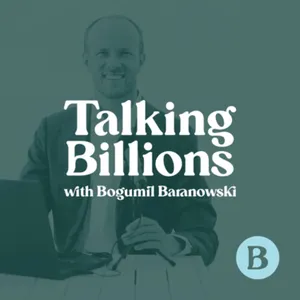
Talking Billions with Bogumil Baranowski: Daily Summaries Delivered
by Bogumil Baranowski
Get key takeaways, quotes, and insights from Talking Billions with Bogumil Baranowski in a 5-minute read. Delivered straight to your inbox.
Latest Episodes
The most recent episodes — sign up to get AI-powered summaries of each one.
- Yesterday1h 14m
Michael Nicoletti: Sailboats & Telltales, Roads & Motorcycles, Value & Quality, Good People & Generous Mentors From Jacuzzi Family Legacy, Grandfather's Advice to Playing the Long Game of Compounding
Mike Nicoletti is the founder and general partner of Top Mark Capital, a concentrated long-term investor who built his firm from a $110,000 seed during business school, drawing on experiences spanning tech consulting in Stockholm, competitive offshore sailing, and startup ventures.Episode Sponsor: Fiscal AI is a modern data terminal that gives investors instant access to twenty years of financials, earnings transcripts, and extensive segment and KPI data—use my link for a two-week free trial plus 15% off: https://fiscal.ai/talkingbillions/5:00 — Mike's family origin story: born near Toronto, his grandmother was a Jacuzzi — the family behind the iconic brand. From airplane propellers in WWI to water pumps to hydrotherapy, entrepreneurship ran deep.12:00 — The Jacuzzi family sold the business in 1979 at a bad time; infighting over share distribution led to the undoing. Mike's father passed away suddenly when Mike was seven, reshaping his childhood.16:00 — Stepfather John introduced frugality and discipline. The $1/week allowance ledger, $5 lawn mowing, and a grandfather's advice — "Sounds like you need some new customers" — sparked Mike's entrepreneurial instincts.20:00 — Sailing discovery: learned on a chalkboard, walked onto a college team with zero experience, eventually pursued competitive offshore racing. Sailing opened doors and became a lifelong thread.27:00 — In New York prepping a sailboat, Mike stumbles into Brian H. Lawrence's investing circle at Oak Cliff Sailing. Lawrence seeds Top Mark Capital with $100,000; Mike had $10,000.33:00 — Joel Greenblatt sighting at the Lawrence office. Brian Lawrence Jr. guides Mike through fund setup. "I just did it" — filed Delaware entities, opened Interactive Brokers, built it from scratch.40:00 — Pirsig's Zen and the Art of Motorcycle Maintenance: static vs. dynamic quality as a framework for value investing. Value investors hunt for dynamic quality; dogma is dynamic quality that became static.45:00 — Top Mark's asymmetry thesis: buy quality businesses with unrecognized option value exposed to long-arc trends. Venture capital's trend-identification applied to public equities.53:00 — "Software is eating the world" evolution: from cloud to AI/ML to the current harness phase — Claude Code, Cursor, Perplexity. Enormous infrastructure demand ahead.59:00 — Healthcare disruption: genomic sequencing costs dropped from $1 billion to ~$200. Diagnostics + AI will reshape the care model before patients even see a doctor.1:07:00 — Partnerships over transactions. Buffett told Brian Lawrence only 1-2% of world capital is invested this way — and Berkshire is half of it.1:10:00 — Success defined: Mom's family had love without wealth, Dad's family had wealth with problems, the Lawrences had both. "Surround yourself with good people."1:12:00 — Restoring what was lost: the Jacuzzi fortune, Polish communism — generational wealth as inspiration, not entitlement.Podcast Program – Disclosure StatementBlue Infinitas Capital, LLC is a registered investment adviser and the opinions expressed by the Firm’s employees and podcast guests on this show are their own and do not reflect the opinions of Blue Infinitas Capital, LLC. All statements and opinions expressed are based upon information considered reliable although it should not be relied upon as such. Any statements or opinions are subject to change without notice.Information presented is for educational purposes only and does not intend to make an offer or solicitation for the sale or purchase of any specific securities, investments, or investment strategies. Investments involve risk and unless otherwise stated, are not guaranteed.
- 1 weeks ago1h 5m
Kai Wu: Intangible Assets: The Dark Matter of Finance — The Invisible Forces Driving Company Value Why the Balance Sheet Misses Most of What Makes a Business Worth Owning
Kai Wu is the founder and chief investment officer of Sparkline Capital, a former GMO and Harvard-trained investor whose pioneering research on intangible assets — intellectual property, brand equity, human capital, and network effects — is redefining how value investors measure what companies are truly worth.Episode Sponsor: Fiscal AI is a modern data terminal that gives investors instant access to twenty years of financials, earnings transcripts, and extensive segment and KPI data—use my link for a two-week free trial plus 15% off (25% off Thursday, May 7th to Thursday, May 14th): https://fiscal.ai/talkingbillions/3:00 – Kai's upbringing: father a doctor, mother an artist; studied economics at Harvard with a liberal arts mindset across disciplines5:00 – Walking into GMO during the financial crisis; mentorship under Jeremy Grantham; traveling to Sydney, London, Berkeley to expand the firm's forecasting7:00 – Founding Sparkline Capital: "I'm a builder" — intellectual independence to pursue research others wouldn't, including early work on large language models in 201910:00 – The balance sheet as an incomplete map: why traditional metrics miss the majority of corporate value in today's economy11:00 – "Black sheep" identity: too growth-oriented for value circles, too value-sensitive for growth investors; bridging both camps14:00 – The four pillars of intangible value: intellectual property, brand equity, human capital, network effects — "the dark matter of finance"18:00 – Why capitalizing R&D spending doesn't solve the problem; moving from historical cost to measuring the actual asset created using alternative data and AI22:00 – Two economies: tangible ground-level operations vs. intangible businesses that scale globally with minimal physical footprint27:00 – Reframing Buffett: only 8% of Berkshire investments purchased below book value; three eras from industrial to consumer (Coca-Cola) to tech (Apple)34:00 – AI: bullish on the technology, cautious on the investment; capital cycle parallels to the dot-com boom and railroad era38:00 – Who wins tech revolutions: not the infrastructure builders but the users — Google, Amazon, Netflix won the internet, not the telecom companies42:00 – AI financial analysts: excels at rote tasks, lacks senior judgment; Claude Code now replacing junior analyst work47:00 – Jobs will transform, not disappear: 60% of today's jobs didn't exist in the 1940s; speed of change matters most54:00 – No single factor wins: "the more factors I can consider, the less blind spots I have"56:00 – Success defined as intellectual freedom, not money or famePodcast Program – Disclosure StatementBlue Infinitas Capital, LLC is a registered investment adviser and the opinions expressed by the Firm’s employees and podcast guests on this show are their own and do not reflect the opinions of Blue Infinitas Capital, LLC. All statements and opinions expressed are based upon information considered reliable although it should not be relied upon as such. Any statements or opinions are subject to change without notice.Information presented is for educational purposes only and does not intend to make an offer or solicitation for the sale or purchase of any specific securities, investments, or investment strategies. Investments involve risk and unless otherwise stated, are not guaranteed.
- 1 weeks ago1h 16m
100 Year Thinkers, Ep. 7: The Last Moat | Chris Mayer and Ian Cassel on the Stock Picking Edge AI Can’t Replicate
This episode of 100 Year Thinkers brings together Chris Mayer and Ian Cassel for a deep discussion on long-term stock picking, microcap investing, business quality, AI disruption, management teams, and the behavioral skills that separate great investors from great analysts. They explore why the edge in investing may increasingly come from judgment, presence, relationships, patience, and the ability to hold the right businesses through uncertainty.Matt Zeigler and I had the privilege of hosting Ian Cassel and Chris Mayer for a special 100-Year Thinkers Edition of the Excess Returns Podcast.Available now on Excess Returns Podcast and Talking Billions. 🎧I’m excited to share this episode with you—it’s reposted here with permission and blessing from the Excess Returns team. Don’t miss it! And follow their work, links below.Resources DiscussedThe Last Moathttps://microcapclub.com/the-last-moat/Stock Picker by Ian Casselhttps://microcapclub.com/stock-picker/The Investor’s Odyssey by Chris Mayerhttps://www.amazon.com/Investors-Odys...Follow Chris Mayer on Twitterhttps://x.com/chriswmayerFollow Ian Cassel on Twitterhttps://x.com/iancasselTopics CoveredWhy being present with management teams may still be an investor edge in the age of AIHow microcap investing differs from small-cap, mid-cap and large-cap investingWhy talking to management can build conviction but also create biasHow Chris Mayer thinks about vertical market software, mission-critical systems and AI disruptionWhy AI may become table stakes rather than a durable competitive advantageHow small companies can use AI to improve workflows, sales, inventory and productivityWhy many microcaps have short shelf lives and rarely become true long-term compoundersThe role of intelligent fanatics, owner-operators and repeat winners in great investmentsWhy management transitions can create powerful microcap opportunitiesThe difference between being a great analyst and being a great investorWhy execution, position sizing, selling losers and holding winners matter more than hit rateHow Matt and Bogumil apply the lessons to AI, business quality and the limits of small business scalabilityPodcast Program – Disclosure StatementBlue Infinitas Capital, LLC is a registered investment adviser and the opinions expressed by the Firm’s employees and podcast guests on this show are their own and do not reflect the opinions of Blue Infinitas Capital, LLC. All statements and opinions expressed are based upon information considered reliable although it should not be relied upon as such. Any statements or opinions are subject to change without notice.Information presented is for educational purposes only and does not intend to mak
- 1 weeks ago30 min
Playing the Long Game with Bogumil Baranowski: Morgan on Purpose Podcast
I was honored to join Morgan Ranstrom on his wonderful podcast, Morgan on Purpose. You can find the episode here or on your favorite podcast platform under either Morgan on Purpose or Talking Billions. I highly recommend exploring Morgan’s show—it’s thoughtful, insightful, and well worth a listen.Spotify , Apple , Buzzsprout , YouTubeWhat does it mean to truly play the long game with your money—and your life?In this episode, Morgan sits down with investor, author, and “Talking Billions” host Bogumil Baranowski for a \conversation on investing, identity, and the deeper purpose behind wealth.They explore the idea of an “infinite time horizon” and why the best investors—and families—think far beyond their own lifetimes. From lessons learned during the pandemic while writing Crisis Investing to the role advisors play in moments of uncertainty, Bogumil shares how to stay grounded when the world feels anything but.Along the way, they unpack the mental models that shape how we think about money—like why building wealth might be less like climbing a mountain and more like rolling a snowball.If you’re thinking about your financial future, your family, or how to take a more intentional, long-term approach to wealth, this episode is for you.Thank you for listening!Find all about Morgan Ranstrom here: https://morganranstrom.com/Podcast Program – Disclosure StatementBlue Infinitas Capital, LLC is a registered investment adviser and the opinions expressed by the Firm’s employees and podcast guests on this show are their own and do not reflect the opinions of Blue Infinitas Capital, LLC. All statements and opinions expressed are based upon information considered reliable although it should not be relied upon as such. Any statements or opinions are subject to change without notice.Information presented is for educational purposes only and does not intend to make an offer or solicitation for the sale or purchase of any specific securities, investments, or investment strategies. Investments involve risk and unless otherwise stated, are not guaranteed.
- 2 weeks ago1h 21m
Joseph S. Moore: What 300 Years of Money Advice Taught One Historian About Getting Rich: Capitalism is not a Scam, the American Dream is Alive, Marriage is a Superpower, Hope is an Asset
Joseph S. Moore is a historian, author, and investor who spent a decade reading nearly every piece of financial advice published in America over the past 300 years, testing those lessons himself, and distilling them into his HarperCollins book How to Get Rich in American History, selected by Malcolm Gladwell and Adam Grant for their Next Big Idea Club.Episode Sponsor: Fiscal AI is a modern data terminal that gives investors instant access to twenty years of financials, earnings transcripts, and extensive segment and KPI data—use my link for a two-week free trial plus 15% off: https://fiscal.ai/talkingbillions/3:00 — Joseph's working-class South Carolina roots: mother born into a home with no flush toilet, father's family led the famous Gastonia mill strike in the 1920s, grew up in a household that voted communist.5:00 — Bogumil shares his parallel experience growing up in communist Poland and watching the country transform after embracing free markets.8:00 — The church basement class that saved Joseph from the 2008 crisis: bought a house as a grad student, a Dave Ramsey budgeting class revealed the danger, sold the house one week before the market froze.11:00 — The American Dream: people have declared it dead since the 1670s. Joseph introduces "Big Woe" — the despair industrial complex of journalists, politicians, and academics incentivized to sell doom.17:00 — Upward mobility data: in the 1800s, 20-30% moved from bottom to middle class; today, 60% escape the bottom, 10% go all the way to the top. "We have more economic mobility than we've ever had."23:00 — Dismantling financial shibboleths: compound interest only recently became powerful (people didn't live long enough), stocks didn't reliably beat bonds until after WWII, real estate stayed flat for a century in most cities.31:00 — Old ideas in new packaging: latte factor advice dates to the 1800s, crypto mirrors 10,000 self-issued currencies before the Civil War ("all self-issued currencies eventually go to zero"), Airbnb reimagines the oldest mortgage payoff strategy.37:00 — Fast time vs. slow time: most of life is lived in slow time — the daily decisions about career, marriage, savings that determine whether you can seize opportunities when fast time arrives. Story of Norman McGee buying foreclosed homes during the Depression.42:00 — Women as unsung financial heroes throughout American history. Agnes Taylor, a beat cop's wife, paid off a New York brownstone by renting rooms. "Capitalism is a team sport. Marriage is a superpower."51:00 — Hope as a financial asset: CFPB studies found a positive attitude plus saving habit outpredicted income and inheritance for financial wellness.56:00 — FIRE movement as the "crossfit of personal finance" — financially independent people throughout history only thrived when they found meaningful work to do.1:04:00 — Generational wealth doesn't last: 90% of top 1%'s grandchildren are not wealthy. "Tutors outperform trust funds." Human capital is 30x the value of the stock market.1:09:00 — Joseph's definition of success: a great marriage, raising good kids, getting good enough at something that people trust you. "The money could go away and I'd have all those other things."Podcast Program – Disclosure StatementBlue Infinitas Capital, LLC is a registered investment adviser and the opinions expressed by the Firm’s employees and podcast guests on this show are their own and do not reflect the opinions of Blue Infinitas Capital, LLC. All statements and opinions expressed are based upon information considered reliable although it should not be relied upon as such. Any statements or opinions are subject to change without notice.Information presented is for educational purposes only and does not intend to make an offer or solicitation for the sale or purchase of any specific securities, investments, or investment strategies. Investments involve risk and unless otherwise stated, are not guaranteed.
- 2 weeks ago1h 7m
Unfiltered Coffee Q&A, April 2026: Finding Compounders, Building Conviction, and Navigating AI, Careers, and Wealth Across Generations
I share a wide-ranging monthly Q&A on long-term investing and the human side of money, from finding compounding opportunities and building conviction in uncertain markets to portfolio construction and idea generation. Tune in, enjoy listen here or on your favorite platform.I explain my approach: treat stocks as ownership of businesses, focus on value versus price, use structured checklists alongside experience-based intuition, keep a living wishlist, and use market turmoil to buy good businesses at better prices. I discuss position sizing and timing (often gradual, sometimes fast in panics), what I do when a stock falls, why holding great businesses long enough matters, and why I use valuation ranges rather than precise targets.I also cover how AI helps with information processing while judgment and conviction remain human, reflect on career decisions and non-traditional paths into investing, offer views on private equity and the role of a CEO, and discuss wealth across generations, family dynamics, housing, succession, and balancing ambition with fulfillment.Podcast Program – Disclosure StatementBlue Infinitas Capital, LLC is a registered investment adviser and the opinions expressed by the Firm’s employees and podcast guests on this show are their own and do not reflect the opinions of Blue Infinitas Capital, LLC. All statements and opinions expressed are based upon information considered reliable although it should not be relied upon as such. Any statements or opinions are subject to change without notice.Information presented is for educational purposes only and does not intend to make an offer or solicitation for the sale or purchase of any specific securities, investments, or investment strategies. Investments involve risk and unless otherwise stated, are not guaranteed.
- 3 weeks ago1h 6m
Adam Mead: 850 Pages Of Berkshire: What The Numbers Don't Tell You | Why Trust, Conviction, And Liability Management Matter More Than Spreadsheets
Adam Mead is a professional investor, CEO of Mead Capital Management, and author of the 850-page second edition of The Complete Financial History of Berkshire Hathaway — one of the most exhaustive chronicles of Warren Buffett’s conglomerate ever written.Episode Sponsor: Fiscal AI is a modern data terminal that gives investors instant access to twenty years of financials, earnings transcripts, and extensive segment and KPI data—use my link for a two-week free trial plus 15% off: https://fiscal.ai/talkingbillions/3:00 – Adam explains why a second edition was necessary: the pandemic, Apple’s rise to 50% of the portfolio, Allegheny and Pilot acquisitions, Japanese trading houses, losing Charlie Munger, and Buffett’s retirement 5:58 – Berkshire’s underlying philosophy hasn’t changed — it’s the world that changed; living through history feels more intense than researching it on the page 8:25 – Why Buffett sold the airlines: as largest shareholder, Berkshire could have blocked bailout funds, putting the airlines’ survival at risk 11:28 – New investment cases rhyme with the past; patient capital allocation works; $72B in share repurchases between 2020–2024 was the real “elephant” 15:22 – Japanese trading houses financed with 1% yen-denominated debt — currency-insulated and opening future partnership opportunities 17:56 – The new chapters are Buffett’s final years; succession to Greg Abel was methodical, not sudden; Greg made material improvements visible in the financials 22:01 – Global expansion under Greg Abel could be Berkshire’s next chapter, following Fairfax’s playbook 23:50 – Sum of the parts walkthrough: $373B cash (~$320B deployable), $234B equities (after Apple adjustment and deferred taxes), BNSF $80-90B, BHE ~$70B, MSR businesses ~$205B, insurance underwriting ~$42.5B, minus $22.5B holding company debt = just over $1 trillion intrinsic value 44:41 – S&P underperformance is more about the index going “nuts” than Berkshire missing something 48:47 – Cash buildup is confluence, not structural: Apple gains, expensive market, Berkshire shares at/above intrinsic value — like a water balloon filling up 56:41 – Berkshire’s edge: de-emphasize information, emphasize continual learning, patience, and underappreciated liability management 1:00:54 – AI won’t replace conviction; if it could be done by clicking a button, the advantage negates itself 1:10:15 – Conviction requires deep work; shallow roots won’t hold through volatilityPodcast Program – Disclosure StatementBlue Infinitas Capital, LLC is a registered investment adviser and the opinions expressed by the Firm’s employees and podcast guests on this show are their own and do not reflect the opinions of Blue Infinitas Capital, LLC. All statements and opinions expressed are based upon information considered reliable although it should not be relied upon as such. Any statements or opinions are subject to change without notice.Information presented is for educational purposes only and does not intend to make an offer or solicitation for the sale or purchase of any specific securities, investments, or investment strategies. Investments involve risk and unless otherwise stated, are not guaranteed.
- 3 weeks ago1h 8m
We Asked Chris Bloomstran Why He Won’t Own the S&P 500 At These Levels — And What He Does Instead
I joined Justin Carbonneau for one more special episode of Excess Returns.We spoke with Chris Bloomstran soon after his famous annual letter release, and right before the Berkshire meeting in Omaha.Available now on Excess Returns Podcast and Talking Billions. 🎧I’m excited to share this episode with you—it’s reposted here with permission and blessing from both Justin and Jack. Don’t miss it! And follow their work, links below.This episode features Chris Bloomstran of Semper Augustus discussing market concentration, AI capital spending, Berkshire Hathaway, and the risks facing today’s equity investors. The conversation explores whether we are at a secular valuation plateau, how AI investment may reshape returns, and why passive investors may face more risk than they realize.Semper Augustus Investmentshttps://www.semperaugustus.comTopics covered:Why extreme market concentration in the Mag 7 may create long-term risksThe concept of a “secular plateau” vs a market peakHow AI capex could become a classic capital cycle with poor returnsWhy hyperscaler spending may not translate into shareholder profitsThe hidden risks of leverage both on and off balance sheetsWhy buy-and-hold investing is harder than it seems in practiceHow valuation discipline drives long-term investment outcomesBerkshire Hathaway’s cash position and what it signals about opportunityWhy capital allocation matters more than growth narrativesLessons from past bubbles including railroads, fiber, and the Nifty FiftyThe fragility of life and how it shapes investing prioritiesThe importance of independent thinking in the age of AIPodcast Program – Disclosure StatementBlue Infinitas Capital, LLC is a registered investment adviser and the opinions expressed by the Firm’s employees and podcast guests on this show are their own and do not reflect the opinions of Blue Infinitas Capital, LLC. All statements and opinions expressed are based upon information considered reliable although it should not be relied upon as such. Any statements or opinions are subject to change without notice.Information presented is for educational purposes only and does not intend to make an offer or solicitation for the sale or purchase of any specific securities, investments, or investment strategies. Investments involve risk and unless otherwise stated, are not guaranteed.Information expressed does not take into account your specific situation or objectives, and is not intended as recommendations appropriate for any individual. Listeners are encouraged to seek advice from a qualified tax, legal, or investment adviser to determine whether any information presented may be suitable for their specific situation. Past performance is not indicative of future performance.
Get Talking Billions with Bogumil Baranowski summaries in your inbox
Free AI-powered daily recaps. Key takeaways, quotes, and mentions — in a 5-minute read.
Get Free Summaries →Free forever for up to 3 podcasts. No credit card required.
You Might Also Like
Listeners also like.
Earn & Invest
Jordan Grumet (Doc G)
15 Minutes of Finance
James Walters, CRPC and Brandon West, CPA

The Investor's Podcast (We Study Billionaires) - The Investor’s Podcast Network
The Investor's Podcast Network
Masters in Business
Bloomberg
Streams to Impact
Allen Lomax
Money Maze Podcast
Money Maze Podcast
Icons and Ideas with Peter Mallouk
Peter Mallouk
Mitlin Money Mindset
Lawrence Sprung
Invest Like a Boss
Sam Marks Johnny FD Derek Spartz
Grant Sabatier Podcast
Grant Sabatier

WS Podcast
Woj Salski
The Meb Faber Show - Better Investing
The Idea Farm
About Talking Billions with Bogumil Baranowski
EVERY MONDAY A NEW EPISODE.I READ ALL MY EMAILS - contact form on my website - www.bogumilbaranowski.com. TELL ME YOUR STORY. I’m Bogumil Baranowski, an author, a TEDx speaker, an investor, and an investment advisor to families and individuals.Intimate conversations about money, wealth, and living a rich and fulfilling life. We talk about big ideas, big inspirations, big topics. We take on the hardest subject of all – money: how to make it, save it, keep it, but our conversations lead us to an even bigger question — what it means to live a rich life beyond money. NOT INVESTMENT ADVICE.
Customized Recaps
AI-powered recaps with compact key takeaways, quotes, and insights.
Straight to Your Inbox
Get key takeaways from Talking Billions with Bogumil Baranowski in a 5-minute read.
Save Hours Every Week
Stay current on your favorite podcasts without falling behind.
Frequently Asked Questions
What is Podzilla's Talking Billions with Bogumil Baranowski daily summary?
It's a free AI-powered email that summarizes new episodes of Talking Billions with Bogumil Baranowski as soon as they're published. You get the key takeaways, notable quotes, and links & mentions — all in a quick read.
How does the Talking Billions with Bogumil Baranowski podcast summary work?
When a new episode drops, our AI transcribes and analyzes it, then generates a personalized summary tailored to your interests and profession. It's delivered to your inbox every morning.
Is this an official Talking Billions with Bogumil Baranowski product?
No. Podzilla is an independent service that summarizes publicly available podcast content. We're not affiliated with or endorsed by Bogumil Baranowski.
Can I get summaries of other podcasts too?
Absolutely! The free plan covers up to 3 podcasts. Upgrade to Pro for 15, or Premium for 50. Browse our full catalog at /podcasts.
How often does Talking Billions with Bogumil Baranowski release new episodes?
Talking Billions with Bogumil Baranowski publishes every few days. Our AI generates a summary within hours of each new episode.
What topics does Talking Billions with Bogumil Baranowski cover?
Talking Billions with Bogumil Baranowski covers topics including Business, Investing. Our AI identifies the specific themes in each episode and highlights what matters most to you.
Start getting Talking Billions with Bogumil Baranowski summaries tomorrow morning.
Free forever for up to 3 podcasts. No credit card required.
Free forever for up to 3 podcasts. No credit card required.