Free Daily Podcast Summary
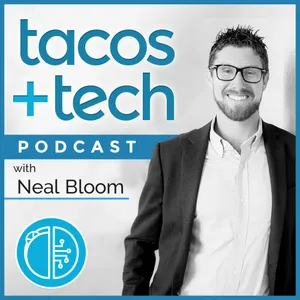
Tacos and Tech Podcast: Daily Summaries Delivered
by Neal Bloom
The Tacos and Tech Podcast highlights the builders of companies, technologies, ecosystems with a local flair for our lifestyle as well. risingtidepartners.substack.com
Latest Episodes
The most recent episodes — sign up to get AI-powered summaries of each one.
- 5 days ago1h 14m
Measure It at the Source
Max Darsonval spent twelve years in the SEAL teams, most of it as a combat medic, and left on what he calls a 50.01% decision. He’s now founder and CEO of Velocity AI, building a sensor and a coaching app that take velocity-based training - the tool every D1 and pro weight room already has - out of the facility and onto anyone’s barbell. He and Neal get into why 22-week strength programs break the moment real life happens, how drone IMUs turned into a wearable, why the SEAL Future Foundation became customer one, and what the wearable industry has to fix before people stop wearing them. Plus Don Pancho’s in Imperial Beach, the post-BUD/S institution.Key topics* From sponsored big-mountain skier to dishwasher to BUD/S at 17* Why SEALs build their own medics and what that taught him about the body* Leaving the teams at twelve years on a 50.01% decision* Velocity-based training, and why most lifters have never heard of it* Power equals force times velocity: measuring readiness at the source* Why a 22-week program can’t know what you did yesterday* Drone IMUs, a hideous first PCB, and why you need 200 Hz* $500K, 20 developers, seven months to an MVP* The SEAL Future Foundation as customer one* Data fatigue and why coaching is the next frontier for wearables* San Diego’s wearable cluster: Google, Fitbit, Dexcom, Oura* Don Pancho’s in Imperial Beach and the case for Tacos El GordoLinks & resources* Velocity AI* SEAL Future Foundation* Jacques-Arsène d'ArsonvalConnect on LinkedIn* Neal Bloom* Max Darsonval This is a public episode. If you'd like to discuss this with other subscribers or get access to bonus episodes, visit risingtidepartners.substack.com/subscribe
- 1 weeks ago29 min
A Different Person in Every Game
Cody Germain spent seven years at Riot - leading competitive games on League of Legends, with the Valorant and Legends of Runeterra launches in between - then moved to San Diego in 2022 for Psyonix and Epic. Now he’s co-founder and CEO of Bear Infinite Games, building Spark, a personalization layer for competitive play, and Project Grizzly, a game designed so no player can buy an advantage. He and Neal get into why the industry’s walled gardens strip players of identity, why San Diego’s gaming talent stayed invisible for so long, and the Barrio Logan tacos that catered his wedding.Key topics* Why you’re a different person in every game you play* 700 million competitive players, two to three titles a week* Spark: personalization that learns as you play* Project Grizzly and the “action sport” format* Designing a game where nobody can buy an edge* From QA analyst to leading League’s competitive* Why San Diego’s gaming talent stayed invisible* Shutting down Prio App when it stopped solving a problemLinks & resources* Bear Infinite Games (playtest signup)Connect on LinkedIn* Neal Bloom* Cody Germain This is a public episode. If you'd like to discuss this with other subscribers or get access to bonus episodes, visit risingtidepartners.substack.com/subscribe
- 2 weeks ago42 min
Teams Don’t Exist in Business
Larry Coval spent nearly four decades leading organizations at AT&T, Global Crossing, and Cox Business, and came out the other side convinced that most of what gets taught about leadership is wrong. He joins Neal to talk about his new book, Misled, and the argument at its center: “team” is the wrong unit of analysis for business, leadership was never a soft skill, and the fundamentals got skipped while the keynote circuit sold platitudes. He also makes the case for the smoked marlin taco at Oscar’s - drowned in orange sauce.Key topics* Why teams don’t exist in business — and the three things real ones have* Leadership Industrial Complex: why substance lost to style* Gallup’s data: managers are now as disengaged as their people* Hiring for sameness as the founder’s most expensive mistake* Red teaming: how the military pressure-tests decisions* Setting expectations with crystalline clarity — confusion is friction* How hoarding work robs your people of development* 60% of managers get zero training when promoted* The ARCANE model and why career planning has no playbook* The smoked marlin taco at Oscar’s Mexican SeafoodLinks & resources* ARCANE Leadership Concepts* Misled: Why (Almost) Everything You Learned About Leadership Is Wrong and How to Fix ItConnect on LinkedIn* Neal Bloom* Larry Coval This is a public episode. If you'd like to discuss this with other subscribers or get access to bonus episodes, visit risingtidepartners.substack.com/subscribe
- Aug 12, 202642 min
Food for the People
Neal nerds out on tacos with Mauricio Velázquez de León - Mexico City-born writer-turned-publisher, founder of Duo Press, and author of An Illustrated Guide to Tacos and Burritos, a serious cookbook drawn like a comic book, out August 11. They trace tacos from 7000 BC southern Mexico to fine taquerias in Tokyo and Norway, unpack why the burrito is actually a California invention, and get into Duo Press’s backwards publishing model - concept first, author second. Mauricio makes the case that tacos are “food for the people, from the people, to the people,” defends small tacos against the supersizing trend, and hands over a short list of spots worth crossing a border for.Key topics* A serious cookbook built like a comic book* Why tacos are “food for the people”* The burrito as a California (Mission Street) invention* Duo Press’s reverse model: concept first, author second* Tacos de canasta - the bicycle-basket tacos* Corn in the south, flour in the north: the tortilla map* Taco al pastor’s Mexico City origins* Why bigger tacos are worse tacos* Quesabirria, Korean tacos, and the fusion waveLinks & resources* An Illustrated Guide to Tacos and Burritos (Duopress, out Aug 11)* Duo Press* Jeffrey Pilcher - Mexican-food historian (University of Toronto), writes the book’s history sections* Josefina Velázquez de León - Mauricio’s great-aunt, renowned Mexican cookbook authorConnect on LinkedIn* Neal Bloom * Mauricio Velázquez de León This is a public episode. If you'd like to discuss this with other subscribers or get access to bonus episodes, visit risingtidepartners.substack.com/subscribe
- Aug 4, 202649 min
Signals Before Symptoms
Neal sits down with Adam Jacobs, President of Xzōm, a San Diego company developing a near-patient platform for isolating and analyzing exosomes from a small blood sample in under 30 minutes.Exosomes are tiny particles released by living cells that carry proteins and genetic material. Researchers believe these particles could provide useful signals about disease earlier or more dynamically than some existing biomarkers. Xzōm is working to turn that science into a compact testing platform, using a disposable cartridge and a mobile-device interface.The company’s initial focus is early pancreatic-cancer detection. Adam also discusses how the underlying platform could potentially be adapted for other areas - including sepsis, preeclampsia, transplant monitoring, and neurological conditions - by changing the biomarkers targeted by each assay. Those applications would require their own development, clinical validation, and regulatory pathways.Adam shares his unusual route to biotech: Torrey Pines High School, Cornell baseball, professional ball in Australia, a clothing brand, a yoga studio, and a consulting firm. He also explains how technology originating at UC San Diego eventually came back into his life, Xzōm’s partnership-led development model, and the role data analysis may play in interpreting complex biological signals.Plus, Adam and Neal bond over a shared appreciation for Roberto’s on Carmel Valley Road.Key topics* Isolating and analyzing exosomes on one chip in 30 minutes* Why exosomes catch disease earlier than DNA - “stage zero”* A point-of-care lab that runs on a cell phone* The difference between a versatile platform and a validated diagnostic test* From pancreatic cancer to sepsis, preeclampsia, and brain injury* How Xzōm works with clinical and commercial partners* Adam’s path from pro baseball to biotech* Why AI on the back end makes the whole thing work* Giving back: showing up, not just writing checksLinks & resources* Xzōm* A Morning Inside Xzōm’s Lab Connect on LinkedIn* Neal Bloom * Adam Jacobs This is a public episode. If you'd like to discuss this with other subscribers or get access to bonus episodes, visit risingtidepartners.substack.com/subscribe
- Jul 28, 202648 min
The Connective Tissue
Neal sits down with Eric Weiss, a fellow longtime builder in San Diego’s startup ecosystem. Eric is a self-described “parallel entrepreneur,” founder coach, President of the Design Forward Alliance - which produces San Diego Design Week—and Vice Chair of Startup San Diego.Neal and Eric first crossed paths during the early days of San Diego’s startup community, around EvoNexus and the 101 Broadway vertical campus that helped give rise to Startup Week and Startup San Diego. They revisit that era and trace Eric’s unconventional path from teenage black-hat hacker to earning an MBA in entrepreneurship at SDSU, followed by roles at Raytheon, Sony and Qualcomm. He eventually made the leap into the startup world with EvoNexus company Rock My Run.At the heart of the conversation is the connective tissue that makes an entrepreneurial community work. Neal and Eric discuss what San Diego lost after COVID, why “third spaces” and professional community management matter more than a coworking lease, and Eric’s tendency to step into leadership vacuums - including helping San Diego become the first U.S. city, and first binational region, named World Design Capital.Eric also makes the case that San Diego’s smaller, more tightly connected network—and its constraints - can be an advantage. The conversation closes with a preview of San Diego Design Week, running September 15–20, and a sleeper taco recommendation near the marina.Key topics* The “founding cradle”: EvoNexus, The Vine, and 101 Broadway* Reformed hacker to Raytheon, Sony (PS3), and Qualcomm data science* Why he’s a “parallel entrepreneur” who falls into leadership vacuums* San Diego becoming the first American World Design Capital* Opening Design Week beyond digital - fashion, architecture, interiors* Connective tissue: third spaces and professional community management* San Diego vs. the Bay: tighter networks, constraints that filter imposters* Where San Diego wins: deep tech, hardware, and life science* The investor-vs-community-builder tension of being “the picker”Links & resources* San Diego Design Week (Sept 15-20, 2026)* Design Forward Alliance* Startup San DiegoConnect on LinkedIn* Neal Bloom* Eric Weiss This is a public episode. If you'd like to discuss this with other subscribers or get access to bonus episodes, visit risingtidepartners.substack.com/subscribe
- Jul 21, 202628 min
Beyond the Blueprint
Episode SummaryNeal sits down with Janine McMurdie, Chief Commercial Officer of Pictor, a proteomics platform company that expanded from New Zealand to Carlsbad. Janine explains why your DNA is only the blueprint - and why proteins, which change in real time as your body responds to a drug or an infection, tell the fuller story. They get into Pictor’s partner-driven, capital-efficient model, how the platform runs a complex panel of biomarkers as a single answer (for everything from cattle herds to HIV comorbidities to humans), and the new Pictor Imager launching at ADLM. Plus why San Diego’s density of talent, tools, and investors made Carlsbad the right home and Janine’s favorite tacos from Encinitas to Thousand Oaks.Key Topics* Why DNA is the blueprint but proteins are the building* Running 20 tests as one multiplexed answer* Pictor’s partner-driven, capital-efficient model* One platform, many species: cattle to humans* The new Pictor Imager, launching at ADLM* Why Carlsbad won: talent, tools, and investorsLinks & Resources* Pictor* ADLM (Association for Diagnostics & Laboratory Medicine) Connect on LinkedIn* Neal Bloom* Janine McMurdie This is a public episode. If you'd like to discuss this with other subscribers or get access to bonus episodes, visit risingtidepartners.substack.com/subscribe
- Jul 14, 20261h 8m
Why Great Companies Go Bad
Episode SummaryRecorded live at the San Diego Angel Conference finale at SDSU, Eric Ries — author of The Lean Startup — sits down with product leader and founder coach Vidya Dinamani to unpack his new book, Incorruptible. His argument: there’s a gravitational force that pulls even mission-driven companies toward decay — “the making of money without the creating of value” — and the more successful you get, the bigger a target you become. Eric walks through how it happens (stack-ranking by ROI, the “what would investors want” ghost in every meeting, Groupon’s two-emails-a-day spiral), why the fix has to come earlier than anyone wants (“it’s too early until it’s too late”), and the concrete governance moves that keep the great ones honest. Along the way: the San Diego origin story of Costco, Cloudflare giving away its best paid feature, Anthropic’s long-term benefit trust, a hard-nosed take on AI, and a health insurer whose customer-service reps act like guardian angels.Key Topics* Corruption as “making money without creating value”* The gravity that pulls companies from mission to mediocrity* Costco’s San Diego origin — and why FedMart died* Why stack-ranking by ROI buries the work that builds trust* “It’s too early until it’s too late” — protecting the mission in time* The PBC filing and binding your board to the mission* AI as a “Dunning-Kruger factory,” and how to actually use it* “Love” as an operating framework: the Devoted Health storyLinks & Resources* Incorruptible* The Lean Startup* Long-Term Stock Exchange (LTSE)* San Diego Angel ConferenceConnect on LinkedIn* Neal Bloom * Eric Ries* Vidya Dinamani This is a public episode. If you'd like to discuss this with other subscribers or get access to bonus episodes, visit risingtidepartners.substack.com/subscribe
About Tacos and Tech Podcast
The Tacos and Tech Podcast highlights the builders of companies, technologies, ecosystems with a local flair for our lifestyle as well. risingtidepartners.substack.com
Customized Recaps
AI-powered recaps with compact key takeaways, quotes, and insights.
Straight to Your Inbox
Get key takeaways from Tacos and Tech Podcast in a 5-minute read.
Save Hours Every Week
Stay current on your favorite podcasts without falling behind.
Frequently Asked Questions
What is Podzilla's Tacos and Tech Podcast daily summary?
It's a free AI-powered email that summarizes new episodes of Tacos and Tech Podcast as soon as they're published. You get the key takeaways, notable quotes, and links & mentions — all in a quick read.
How does the Tacos and Tech Podcast podcast summary work?
When a new episode drops, our AI transcribes and analyzes it, then generates a personalized summary tailored to your interests and profession. It's delivered to your inbox every morning.
Is this an official Tacos and Tech Podcast product?
No. Podzilla is an independent service that summarizes publicly available podcast content. We're not affiliated with or endorsed by Neal Bloom.
Can I get summaries of other podcasts too?
Absolutely! The free plan covers up to 3 podcasts. Upgrade to Pro for 15, or Premium for 50. Browse our full catalog at /podcasts.
How often does Tacos and Tech Podcast release new episodes?
Tacos and Tech Podcast publishes 2x weekly. Our AI generates a summary within hours of each new episode.
What topics does Tacos and Tech Podcast cover?
Tacos and Tech Podcast covers topics including News, Technology. Our AI identifies the specific themes in each episode and highlights what matters most to you.
Start getting Tacos and Tech Podcast summaries tomorrow morning.
Free forever for up to 3 podcasts. No credit card required.
Free forever for up to 3 podcasts. No credit card required.