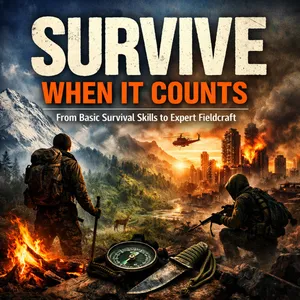
Free Daily Podcast Summary
Survive When It Counts: Daily Summaries Delivered
by Steve Barker
From survival basics to expert fieldcraft, this podcast builds confidence, judgement, and practical skill step by step. It covers mindset, water, fire, shelter, navigation, first aid, harsh environments, urban readiness, tracking, leadership, escape, and long-term planning. Ideal for beginners and seasoned outdoors people alike facing pressure, uncertainty, and hostile conditions.Go to Books Central: https://bookscentral.co.uk/
Latest Episodes
The most recent episodes — sign up to get AI-powered summaries of each one.
- Today3 min
Personal Preparedness
When people hear “survival,” they often picture a remote wilderness and a dramatic rescue. But personal preparedness usually begins much closer to home: a power outage, a winter storm, a delayed journey, or a situation where help takes longer than expected. In this episode, we’ll look at how to prepare without panic or piles of expensive equipment. The aim is simple: make sensible choices before trouble starts, so you can think clearly when it does.First, understand the risks that are realistic for your life. A household in a flood-prone area has different priorities from someone who regularly drives through remote country. Think about where you live, how you travel, the weather you face, and who depends on you. Include practical details such as medications, mobility needs, pets, and how you would contact family if mobile service failed. Personal preparedness is not about predicting every emergency; it is about noticing the likely problems and making a few useful plans for them.Next, build a basic 72-hour supply that you can actually maintain. Store drinking water and familiar, shelf-stable food, along with a flashlight, spare batteries or a power bank, a first-aid kit, essential medicines, warm layers, hygiene supplies, and a battery- or hand-powered radio where appropriate. Keep items somewhere accessible, and check expiry dates and batteries on a schedule. Tailor the kit to your household rather than copying a generic list. A supply you understand and can use is more valuable than an impressive bag you have never opened.Third, make a plan that works when normal routines are disrupted. Choose meeting places, identify an out-of-area contact, and decide how you’ll share important updates if family members are separated. Know how to shut off utilities if it is safe and necessary, and learn the evacuation guidance for your area. Keep key information—such as emergency contacts and medication details—in a form you can reach without relying on a charged phone. Talk through the plan together. A plan that everyone knows is easier to follow than one hidden in a drawer.Finally, practise the skills that turn equipment into capability. Learn basic first aid from a reputable course, use your stove or water filter according to its instructions, and try operating your flashlight and radio before an emergency. Review your plan after a move, a new job, a change in health, or a new family need. Practice should be calm and realistic: the goal is familiarity, not fear. Good preparation also includes knowing when not to improvise and when to follow official instructions or seek professional help.Personal preparedness is less about becoming self-sufficient in every circumstance and more about buying time, reducing avoidable risks, and making good decisions under pressure. Start with one small improvement this week: check your water, write down an emergency contact, or put a light where you can find it in the dark. Then build steadily. Across this survival journey, the strongest fieldcraft begins with awareness and judgement—and those can be practised long before conditions turn hostile.Next step: Find the book on Amazon and Books Central Website — https://www.poddyhost.com/go/8062?src=rss
- Yesterday3 min
Outdoor Preparedness
Outdoor preparedness isn’t about packing every gadget on the shelf or expecting the worst around every corner. It’s about making sensible decisions before you leave, carrying what you need, and knowing how to respond if a day outdoors doesn’t go to plan. Whether you’re heading out for a short walk or a remote camping trip, the same principle applies: preparation gives you more options when conditions change.Start with the plan. Check the route, distance, terrain, forecast, and daylight hours, then choose an outing that matches your experience and fitness. Tell someone where you’re going, when you expect to return, and what they should do if you’re overdue. If your plans change, update them when you can. A straightforward route plan and a reliable check-in can make a major difference in an emergency.Next, think about the essentials that protect you from exposure. Dress in layers so you can adjust to changing temperatures and activity levels, and bring protection from rain and wind even when the forecast looks clear. Pack water and know how you’ll get more if the trip runs longer than expected. A filter or other treatment method can help make water from natural sources safer, but it’s important to understand how to use it correctly. Carry a shelter option suited to the conditions, such as a tent, tarp, or emergency bivy, and keep key items dry.Navigation deserves more than a quick glance at a phone before you set off. Carry a map and compass, know how to use them, and bring a charged phone with an offline map as a useful backup. A battery pack can help, but electronics can fail, lose reception, or run out of power. Pay attention to landmarks as you travel, and check your location regularly rather than waiting until you’re uncertain. If you realize you’re lost, pause, stay calm, and avoid making hurried choices that could take you farther from familiar ground.Your kit should also help you manage small problems before they become serious ones. Include a first-aid kit you know how to use, any personal medication, a light source, extra food, and a way to signal for help. A whistle and a bright-colored item can be useful, while an emergency beacon may be appropriate for remote trips where phone coverage is unreliable. Choose gear for your actual destination and conditions; a compact, well-understood kit is usually more helpful than a heavy pack full of items you haven’t practiced with.Finally, practice before you need the skills. Test your rainwear, learn your stove’s instructions, try setting up your shelter, and take a navigation course or practice with a map on familiar trails. Outdoor preparedness is built through small habits: checking the forecast, packing deliberately, and noticing when fatigue or weather is changing the risk. The goal isn’t to eliminate uncertainty. It’s to meet it with a clear plan, useful skills, and enough confidence to make the next good decision.Next step: Find the book on Amazon and Books Central Website — https://www.poddyhost.com/go/8026?src=rss
- 2 days ago3 min
Survival Supplies
When people hear “survival supplies,” they often picture a packed bag full of specialist equipment. But the best kit isn’t the biggest or most expensive. It’s the set of useful, reliable items you understand how to use—and can reach when things go wrong. In this episode, we’ll build a practical way to think about supplies, whether you’re heading into the backcountry, preparing your vehicle, or making a plan for an emergency at home.Start with the problems your supplies need to solve. In the short term, the essentials are maintaining body temperature, getting safe water, dealing with injuries, and finding a way to communicate or get help. A simple planning question is: “What could happen here, and what would help me respond?” A day hike in mild weather calls for a different kit than a winter trip, a remote journey, or a household power outage. Survival supplies should match the place, season, duration, people involved, and likely hazards—not a generic checklist alone.Water is a good example of why both equipment and know-how matter. Carry enough drinking water for the outing, then consider how you would treat more if your plans change. A filter, chemical treatment, or means of boiling can help, but each has limits and needs to be used according to its instructions. Don’t assume that clear water is safe, and don’t rely on a single method without understanding how it works. Store some water at home, too, and rotate it as recommended. A water container is useful only if it’s clean, intact, and easy to fill.Next, think about warmth, shelter, and light. In changing weather, a spare insulating layer and a waterproof outer layer can matter more than a pile of gadgets. A compact emergency shelter or bivvy may help reduce exposure while you wait for assistance, but it won’t replace choosing suitable clothing and planning around the forecast. Add a dependable light with spare or rechargeable power, and keep it where you can find it in the dark. Test items before relying on them, especially batteries, zippers, and anything intended to keep rain or cold out.Round out the kit with first aid, communication, and practical tools. Carry a first-aid kit suited to your group and your training; include personal medication and know when to call for professional help. A charged phone, backup power, and a whistle can support signalling, but coverage and battery life are never guaranteed. A knife or multitool, fire-starting equipment, and simple repair items can be valuable when you know how to use them safely. For home and vehicle preparedness, include food, essential medications, sanitation items, and supplies for everyone—including children, older adults, and pets.Finally, treat your survival supplies as a system, not a one-time purchase. Pack them, practise with them, check expiry dates, and adjust them after each trip or season. Keep emergency items accessible, tell someone what your plan is, and learn the skills that make your equipment useful. The goal isn’t to carry everything. It’s to carry what fits your risks, understand its limits, and make calm decisions when conditions change.Next step: Find the book on Amazon and Books Central Website — https://www.poddyhost.com/go/7993?src=rss
- 3 days ago3 min
Survival Priorities
When something goes wrong outdoors, it’s tempting to rush into action: build a fire, find water, or start walking toward what looks like the right direction. But survival is rarely about doing the most dramatic thing first. It’s about noticing what matters now, choosing a sensible next step, and avoiding decisions that make the situation worse. In this episode, we’re looking at survival priorities: a simple way to organize your thinking when stress and uncertainty take over.First, pause and assess. A few calm seconds can prevent hours of trouble. Stop moving, breathe slowly, and look around. Are you injured? Is there an immediate danger such as rising water, falling branches, traffic, fire, or extreme exposure? Check yourself and anyone with you, then deal with urgent hazards before moving on. This is not about pretending everything is fine. It’s about giving your brain enough room to make a useful decision. If you’re lost, continuing to wander without a plan can turn a manageable problem into a much bigger one.Next, make yourself as safe as possible. Treat serious injuries, get away from immediate hazards, and protect yourself from the conditions. In cold or wet weather, shelter and dry insulation may matter more urgently than finding a stream. In intense heat, shade and reducing exertion may come first. There is no single checklist that works in exactly the same order everywhere; the environment, your health, and the time of day all change the calculation. The useful question is: what is most likely to harm us in the next few minutes or hours?Once the immediate danger is under control, think about the essentials: shelter, water, warmth, and a way to signal for help. Shelter can mean using a safe existing structure or creating protection from wind, rain, sun, or cold—not necessarily building an elaborate camp. Water matters, but don’t assume that drinking any available water is safe. Use a reliable treatment method when possible, and remember that a fire is only helpful when it can be built safely and serves a real purpose. A visible signal, whistle, phone call, or emergency beacon may be more valuable than spending energy on a task that doesn’t improve your chances.Then make a plan and keep checking it. If you have a phone, map, compass, or emergency gear, use it thoughtfully and conserve power where appropriate. Tell rescuers your location and situation if you can. If you’re with others, share tasks, keep everyone informed, and agree on a plan before anyone moves away. Set a clear reason to reconsider your choice: changing weather, worsening symptoms, or a new hazard may mean it’s time to adapt. Good survival decisions are not stubborn; they respond to what’s actually happening.Survival priorities aren’t a magic formula. They’re a way to replace panic with a sequence: pause, assess, address immediate threats, protect your body, and seek help or make a careful plan. Practise that sequence on ordinary outings, when the stakes are low. The more familiar it feels, the easier it is to think clearly when conditions turn hostile. In survival, calm judgement is not a bonus skill. It’s the foundation that makes every other skill more useful.Next step: Find the book on Amazon and Books Central Website — https://www.poddyhost.com/go/7960?src=rss
- 4 days ago3 min
Survival Equipment
Survival equipment is easy to overthink. A pack full of impressive tools may look reassuring, but equipment only helps when it suits the conditions, works when you need it, and is simple enough to use under stress. In this episode, we look at how to choose a practical kit—not as a substitute for skill and judgement, but as support for them.Start with the essentials that address immediate threats. In many situations, that means having a way to stay warm and dry, access to safe drinking water, a dependable light, basic first-aid supplies, and a way to signal for help. The exact choices depend on where you are, the season, how long you’ll be out, and whether you’re travelling on foot or by vehicle. A compact shelter and extra insulation may matter greatly in cold, wet terrain; in hot conditions, water capacity and sun protection may take priority. Build your kit around the risks you can reasonably expect, not a generic checklist alone.Next, think in layers and backups. Your everyday carry, day pack, vehicle kit, and home emergency supplies each have different jobs. A small light on your person is useful if your pack is lost or out of reach; a larger light can serve around camp. A fire-starting method is valuable, but don’t assume fire will always be possible or appropriate. Carry more than one way to meet critical needs when practical, while avoiding so much duplication that the kit becomes too heavy or confusing. A backup is only useful if you know where it is and can operate it.Choose equipment you can use confidently. A complicated water filter, unfamiliar stove, or multi-tool with features you’ve never practised may become a burden in a stressful moment. Learn how your gear works before relying on it: set up the shelter in poor light, treat water according to the manufacturer’s instructions, and practise using a compass alongside a map. Check expiry dates, batteries, fuel, seals, and first-aid contents regularly. Small maintenance habits can prevent a minor failure from becoming a serious problem.Finally, balance capability with weight, comfort, and common sense. Test your pack on realistic outings and notice what you actually use, what is awkward to reach, and what you can safely leave behind. Keep essential items protected from rain, and organize them so you can find them quickly without emptying everything onto the ground. No piece of survival equipment guarantees safety, and carrying gear never replaces telling someone your route, checking the forecast, or turning back when conditions demand it.The goal is not to own the most equipment; it’s to have a dependable system that matches your environment and your abilities. Start with the basics, practise with them, and improve your setup after each trip. When pressure rises, familiar tools and clear priorities make it easier to think, act, and ask for help. That’s what turns a collection of gear into useful preparation.Next step: Find the book on Amazon and Books Central Website — https://www.poddyhost.com/go/7927?src=rss
- 5 days ago3 min
Survival Techniques
Survival is rarely about one dramatic trick. More often, it comes down to noticing what is happening, staying calm enough to make a sound decision, and taking the next useful step. In this episode, we’re looking at survival techniques as a connected set of skills—not a checklist to follow blindly, but a way to think clearly when conditions become difficult.Start with the foundations: mindset and priorities. Stress can narrow your attention and push you into hurried choices, so pause before acting. Check for immediate dangers, take stock of injuries and resources, and decide what matters most right now. In many situations, that means protecting yourself from exposure, finding or treating water, and making yourself easier to locate. The right order depends on the circumstances, so observation and judgement matter as much as practical skill.Next, build competence in the essentials. Shelter and clothing help manage heat loss, wind, rain, and sun; fire can provide warmth and support other camp needs, but it should only be made where conditions and local rules allow. Water must be gathered and treated safely using a reliable method appropriate to the source. Navigation and emergency signalling deserve equal attention: know how to avoid becoming more lost, and make a plan for attracting attention rather than assuming someone will find you by chance.Good fieldcraft also includes the less dramatic routines that keep small problems from becoming serious ones. Choose a camp with hazards in mind, keep food and equipment organised, and maintain basic hygiene. Learn simple first aid and recognise when an injury or illness calls for professional help. Pay attention to changing weather, and treat foraging cautiously: never eat a plant or mushroom unless you can identify it with confidence. These habits reduce risk and preserve energy for the decisions that matter.Then consider how the environment changes the plan. Cold, heat, mountains, jungle, coastline, and urban emergencies each bring different hazards. A river crossing, night movement, or exposed ridge can turn a manageable day into a high-risk one if you rush. Before moving, weigh the route, weather, visibility, your condition, and the consequences of a mistake. Sometimes the safest technique is to stop, shelter, and reassess.Preparation connects these skills to everyday life. A practical vehicle kit, home supplies, and a realistic 72-hour plan can make an emergency less chaotic. Think through whether staying put or leaving is safer, where you would go, how you would communicate, and what essential medication or equipment you need. Plans should be simple enough to use under pressure and flexible enough to change when the facts change.As skills deepen, advanced navigation, tracking, concealment, leadership, and survival psychology become more relevant. They still rest on the same foundation: assess risk, avoid unnecessary exposure, communicate clearly, and conserve energy. Scenarios and practice can reveal gaps before a real emergency does, but training should be conducted safely and within your abilities.The goal is not to become fearless or to master every technique at once. It’s to build a reliable foundation, practise deliberately, and make better choices one step at a time. Survival techniques are most useful when paired with patience, preparation, and sound judgement—and that’s where confidence begins.Next step: Find the book on Amazon and Books Central Website — https://www.poddyhost.com/go/7894?src=rss
- 6 days ago3 min
Survival Tactics
Survival is rarely about one dramatic trick. More often, it comes down to noticing what is happening, making a sound decision, and taking the next useful step. In this episode, we introduce the survival tactics at the heart of this series: practical skills built on sound judgement, practiced in sequence, and adapted to the conditions around you. Whether you’re new to the outdoors or already confident in the field, the goal is the same: stay calm, reduce risk, and give yourself more options.We begin with the foundations: mindset and priorities. Stress can narrow your attention and push you toward rushed choices, so a simple pause matters. Look around, assess immediate dangers, and work out what needs attention first. The right response depends on the situation, but basics such as staying warm, finding safe water, making shelter, and signalling for help can become urgent quickly. We’ll explore how to think through those needs rather than treating any checklist as a substitute for judgement.Next, we turn to practical outdoor competence. Fire, clothing, shelter, navigation, hygiene, and first aid all help you manage the conditions you’re in. A fire may provide warmth, but it also takes fuel, time, and a safe location. A shelter should suit the weather and protect you without creating new hazards. Navigation means more than owning a compass: it involves observing landmarks, checking your direction, and knowing when to stop and reassess. These are learnable skills, and practice in safe settings helps make them more reliable.Then we widen the lens to challenging environments and changing weather. Cold, heat, mountains, jungle, coastline, darkness, and moving water each demand different choices. The same plan won’t work everywhere. Reading weather, managing exertion, choosing a route carefully, and recognizing when not to proceed can matter as much as equipment. We’ll also look at the first night alone: how to settle in, protect your energy, and focus on manageable tasks instead of letting uncertainty take over.Survival isn’t limited to remote wilderness. Urban emergencies, vehicle breakdowns, and disruptions at home call for preparation too. A dependable 72-hour plan can include water, food, essential medicines, lighting, communication, and a way to keep key documents accessible. We’ll consider the difference between staying put and leaving, and why that decision should be based on credible information, specific hazards, and a realistic plan—not panic or guesswork.As the series progresses, we’ll build toward advanced navigation, tracking, leadership, risk assessment, and longer-term camp planning, then bring those ideas together in demanding scenarios. The aim isn’t to promise certainty; no tactic works in every circumstance. It’s to build habits that help you observe carefully, adapt early, and use your skills responsibly. Start with the basics, practice before you need them, and keep learning. When conditions turn hostile, clear thinking may be your most important piece of equipment.Next step: Find the book on Amazon and Books Central Website — https://www.poddyhost.com/go/7861?src=rss
- 1 weeks ago3 min
Managing Survival Stress
When conditions turn hostile, survival isn’t just about having the right gear. It’s also about what happens inside your head. Fear, confusion, and urgency can narrow your attention and push you toward rushed decisions. In this episode, we look at managing survival stress: not by pretending fear will disappear, but by learning how to notice it, steady yourself, and take the next useful step.First, understand that stress is a normal response to danger. Your heart may race, your breathing may become shallow, and your thoughts may jump straight to the worst possible outcome. That reaction doesn’t mean you’re weak or incapable; it means your body is preparing to act. The challenge is that intense stress can make it harder to assess risks, remember information, and see options. Naming what’s happening—“I’m stressed, and I need to slow down”—can create a little space between the feeling and your next decision.One practical way to create that space is to pause and control your breathing. If you’re not facing an immediate threat that requires action, take a moment to breathe slowly and comfortably, with a slightly longer exhale than inhale. Then orient yourself: What can you see? What can you hear? What is happening right now, rather than what might happen later? This is not a substitute for solving the problem. It’s a way to bring your attention back to the present so you can solve it more clearly.Next, give yourself a simple order of priorities. Check for immediate danger and serious injuries, then consider shelter, warmth, water, communication, and navigation according to the situation. You don’t need to solve the whole day at once. Choose one safe, useful action, do it, and reassess. If you’re lost, for example, moving quickly in every direction may make things worse. Stop somewhere safe, check your map or other navigation tools, consider the conditions, and decide whether staying put or moving is the safer option. A short, deliberate pause can prevent a small problem from becoming a much larger one.Routine can also reduce the mental load. Simple checks—clothing, equipment, water, surroundings, and your next plan—help replace frantic guessing with a repeatable process. If you’re with other people, speak clearly and calmly. Share what you know, ask what others have noticed, and agree on the next task. Leadership in a stressful moment doesn’t require a dramatic speech; it often means helping the group focus on one decision at a time. And if someone is panicking, give them clear, manageable instructions rather than a long list of demands.Finally, stress skills are built before an emergency. Practise basic outdoor tasks in safe conditions, learn your equipment, and rehearse simple decision-making with realistic scenarios. Keep training within your abilities, and don’t create danger just to prove you can handle pressure. Familiarity won’t make every situation easy, but it can make the first step feel less overwhelming. Managing survival stress is ultimately about staying aware, keeping choices simple, and acting with care. You may not control the conditions around you, but you can practise how you respond to them—one breath, one assessment, and one sensible action at a time.Next step: Find the book on Amazon and Books Central Website — https://www.poddyhost.com/go/7805?src=rss
Get Survive When It Counts summaries in your inbox
Free AI-powered daily recaps. Key takeaways, quotes, and mentions — in a 5-minute read.
Get Free Summaries →Free forever for up to 3 podcasts. No credit card required.
You Might Also Like
Listeners also like.
Stakeholder Prepping
Explores practical and tactical approaches to everyday disaster preparedness for all experience and budget levels.
Out Alive from Backpacker
Real people recount their survival stories from wilderness disasters, detailing mistakes, bad luck, and the moments that saved them.

Fieldcraft Survival
Survival skills, preparedness tactics, gear reviews, and military-inspired training for self-reliance in the wild and urban environments.

The Survivalist Prepper Podcast
Focuses on practical survival skills, emergency preparedness, and self-sufficient living for disaster scenarios.
Real Survival Stories
Ordinary people recount real experiences surviving extreme situations in the wilderness and at sea.

What I survived
People who survived kidnappings, disasters, and extreme ordeals share their firsthand stories of trauma, survival, and recovery.

What to Carry, What to Burn
Survival stories from the Arctic and beyond, exploring human endurance and the choices that mean the difference between life and death.
The Hunt for Success
Business leaders discuss their career paths, strategic decisions, and how they align success with personal freedom and purpose.

Notes from the Edge
Raw conversations about trauma, survival, identity, and reinvention with host Lisa Lacy.
Natural Causes
Explores the intersection of outdoor access, conservation, and environmental justice in an era of climate crisis and political threat.

Modern Wisdom
Discussions with experts on psychology, philosophy, and self-improvement to help navigate life’s challenges.

Against The Odds
True stories of survival and human resilience in extreme circumstances, told through immersive firsthand accounts.
About Survive When It Counts
From survival basics to expert fieldcraft, this podcast builds confidence, judgement, and practical skill step by step. It covers mindset, water, fire, shelter, navigation, first aid, harsh environments, urban readiness, tracking, leadership, escape, and long-term planning. Ideal for beginners and seasoned outdoors people alike facing pressure, uncertainty, and hostile conditions.Go to Books Central: https://bookscentral.co.uk/
Customized Recaps
AI-powered recaps with compact key takeaways, quotes, and insights.
Straight to Your Inbox
Get key takeaways from Survive When It Counts in a 5-minute read.
Save Hours Every Week
Stay current on your favorite podcasts without falling behind.
Frequently Asked Questions
What is Podzilla's Survive When It Counts daily summary?
It's a free AI-powered email that summarizes new episodes of Survive When It Counts as soon as they're published. You get the key takeaways, notable quotes, and links & mentions — all in a quick read.
How does the Survive When It Counts podcast summary work?
When a new episode drops, our AI transcribes and analyzes it, then generates a personalized summary tailored to your interests and profession. It's delivered to your inbox every morning.
Is this an official Survive When It Counts product?
No. Podzilla is an independent service that summarizes publicly available podcast content. We're not affiliated with or endorsed by Steve Barker.
Can I get summaries of other podcasts too?
Absolutely! The free plan covers up to 3 podcasts, any in the catalog. Basic raises that to 15, Pro to 40 and Max to 100. Browse our full catalog at /podcasts.
What topics does Survive When It Counts cover?
Survive When It Counts covers topics including Technology. Our AI identifies the specific themes in each episode and highlights what matters most to you.
Start getting Survive When It Counts summaries tomorrow morning.
Free forever for up to 3 podcasts. No credit card required.
Free forever for up to 3 podcasts. No credit card required.