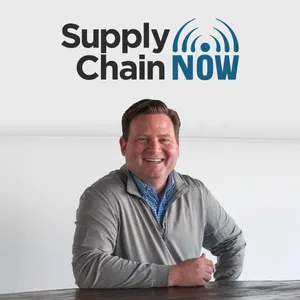
Free Daily Podcast Summary
Supply Chain Now: Daily Summaries Delivered
by Supply Chain Now
Our hosts, comprised of seasoned industry-leaders, practitioners, and solution providers, address the supply chain industry’s challenges, trends, and innovations for our global audience. With engaging, informative, and on-trend content, our podcasts, livestreams, and webinars bridge expertise and entertainment, empowering supply chain professionals to elevate their businesses.
Latest Episodes
The most recent episodes — sign up to get AI-powered summaries of each one.
- Yesterday52 min
Less Waste, Better Outcomes: Rethinking Transportation with BNSF Logistics
Transportation may be essential to global supply chains, but that doesn’t mean more movement, more technology, or more complexity automatically creates better results. Sometimes the smartest transportation strategy starts by asking a much simpler question: What is the customer actually trying to accomplish?In this episode of Supply Chain Now, Scott Luton and Tevon Taylor welcome David Ivan, President and CEO of BNSF Logistics, for a conversation that challenges conventional thinking around transportation, customer experience, lean principles, technology, and the role of rail in today’s supply chain.With more than 25 years of experience on the manufacturing and customer side of logistics, David Ivan brings a unique perspective to leading a logistics organization. He shares why transportation providers need to move beyond selling modes and capabilities and instead focus on solving the customer’s underlying business problem.The conversation explores the trade-offs between simplicity, certainty, and cost, why predictability can be more valuable than shippers realize, and how lean thinking can help organizations identify and eliminate unnecessary transportation waste. David, Scott, and Tevon also discuss the growing complexity of logistics, opportunities for rail, the right role for AI and automation, and why technology should support, not replace, human judgment when exceptions arise.Key TakeawaysStart with the customer’s desired outcome, not the transportation mode. The best solution may look very different once the underlying business problem is understood.Transportation should be viewed through a lean lens. Every unnecessary mile, touch, delay, or handoff can introduce cost and waste into the supply chain.Simplicity, certainty, and cost require trade-offs. Shippers cannot always maximize all three, and priorities may shift depending on market conditions and business needs.Certainty has real financial value. Predictable transportation can reduce safety stock, labor inefficiencies, expedited freight, downtime, and operational disruption.Technology should simplify good processes—not automate bad ones. AI can improve data analysis, pattern recognition, and decision support, but automation alone cannot fix a broken process.Human judgment still matters. Technology is powerful for routine work and identifying risk, but people remain essential for exception management, customer relationships, and complex decisions.The people closest to the work often understand the problems best. Respect for people remains a foundational lean principle and an important leadership discipline.If your transportation strategy still begins with rates, modes, or available capacity, this conversation offers a different way to think. David Ivan brings the perspective of both a longtime transportation buyer and logistics provider to show why successful logistics starts with understanding the business problem, reducing friction, and creating outcomes customers can actually rely on.Tune in to learn how lean thinking, smarter use of technology, greater certainty, and customer-focused transportation strategies can help organizations reduce waste while turning logistics into a competitive advantage. Additional Resources & Links: Connect with David: https://www.linkedin.com/in/david-ivan-80a920a/Learn more about BNSF Logistics: https://www.bnsflogistics.com/Upcoming Live Programming: https://supplychainnow.com/upcoming-live-programming/Supply Chain Now Resource Hub: https://supplychainnow.com/resource-hub/Learn more about our hosts: https://supplychainnow.com/aboutLearn more about Supply Chain Now: https://supplychainnow.comWatch and listen to more Supply Chain Now episodes here: https://supplychainnow.com/program/supply-chain-now Subscribe to Supply Chain Now on your favorite platform: https://supplyc
- 4 days ago54 min
The Buzz: AI at Scale, Panama Canal Risk, and the Future of IBP
Supply chains are facing pressure from every direction, from inflation and shifting consumer behavior to climate-driven disruption and rapidly evolving AI capabilities. For leaders, the challenge isn’t simply keeping up. It’s figuring out where to focus, how to make faster and better decisions, and how to turn emerging technology into measurable business value.In this episode of The Buzz, powered by MFG.inc, Scott Luton and special guest co-host Tanzil Uddin with Manifest are joined by Dheera Anand, Partner at Bain & Company, to unpack some of the biggest forces shaping supply chain today. They explore the latest challenges at the Panama Canal, changing consumer behavior, and lessons in regional resilience from APAC before diving deep into AI and supply chain transformation.Dheera shares practical examples of how organizations are moving beyond AI experimentation and “pilot fatigue” to create real operational value. The conversation also explores high-frequency decision-making, the importance of choosing the right AI applications, and how AI could reshape integrated business planning through faster scenario planning, continuous monitoring, and an “always-on” approach to IBP. Key TakeawaysPredictability and visibility are critical to resilience. Disruptions such as those affecting the Panama Canal demonstrate why companies need to understand their exposure throughout the supply network, not just at tier one.Consumers are still spending, but they’re becoming more value-conscious. Retailers need greater precision around inventory, working capital, automation, and productivity as economic pressures continue.AI’s greatest value may be in high-frequency decisions. Thousands of small operational decisions can create significant value leakage when humans simply don’t have the capacity to address them all in real time.Moving beyond AI pilot fatigue requires better use-case selection. Leaders should consider data availability, decision frequency, variability, and the consequences of error when determining where AI can deliver scalable value.World-class IBP is a decision process—not a reporting process. Effective IBP should drive decisions, trade-offs, scenario planning, and preparation for what happens when the plan changes.AI could make IBP increasingly “always on.” Faster scenario modeling, automated assumption monitoring, and early-warning signals could move organizations beyond the traditional monthly planning cadence.Not all complexity creates value. Organizations need greater visibility and governance to distinguish complexity that customers value from complexity that adds cost without meaningful return. Supply chain leaders don’t need more technology experiments; they need practical ways to turn technology, data, and planning into better decisions. Tune in to hear Scott, Tanzil, and Dheera explore how leaders can move beyond AI pilots, strengthen resilience, rethink IBP, and build supply chains that are better equipped to compete in an increasingly complex environment. Additional Links & Resources:MFG.inc: https://mfg.inc/With That Said: https://bit.ly/WTS-12-Sep-2026Manifest 2027: https://manifestvegas.partners/partners/SupplyChainNowSupply Chain & Logistics Summit: https://bit.ly/SupplyChainAndLogisticsSummit-2026The Panama Canal’s New Boss Inherits a Drought and a Bidding War for Transit Slots: https://on.wsj.com/4xW4xYbInflation persisted in August, potentially locking in a Fed interest rate hike: https://bit.ly/4gSLJD83 lessons from Asia-Pacific on regional cooperation in a fragmented world: https://bit.ly/Learning-from-APACThe Buzz APAC Edition for September 9th: https://bit.ly/The-Buzz-APAC-EditionMFG.inc Leadership Training: https://mfg.inc/trainingSupply Chain Now Resource Hub: https://supplychainnow.com/resource-hub/Bain: <a href="https://www.bain.com/" rel="noopener
- 6 days ago53 min
What Have We Learned Thus Far From AskLora.AI?
Supply chain performance is still being measured by outdated assumptions. Lora Cecere argues that optimizing individual functions for lower cost does not necessarily improve the business. In fact, it can throw the entire supply chain out of balance. Better performance starts with understanding what is actually feasible within an industry, focusing on the metrics that drive value, and recognizing that supply chains are complex systems that cannot be improved one function at a time. In this episode of Supply Chain Now, Scott Luton speaks with Lora Cecere, founder of Supply Chain Insights, and Wael Abdelmalek, CEO at Uthereal, about the research behind Supply Chains to Admire and how that work is being brought into Ask Lora, an AI-enabled benchmarking and advisory platform. They explore why traditional supply chain rankings and generic AI tools can reinforce conventional thinking, how verified research and industry-specific data can create better benchmarks, and why leaders need a more balanced view of growth, operating margin, inventory turns, and return on capital employed when evaluating performance. Lora and Wael also explain how Ask Lora combines 10 years of research and benchmarking data with a private large language model designed specifically for supply chain decision-making. Rather than serving only as a Q&A tool, users are applying it as a trusted peer to benchmark performance, review strategy documents, pressure-test presentations, compare organizational and technology maturity, and challenge assumptions before taking ideas to leadership.Jump into the conversation: Introduction Meet Lora Cecere, founder of Supply Chain Insights, and Wael Abdelmalek, CEO at Uthereal Fearless Friday: career leaps and personal risk-taking stories The origin of Supply Chains to Admire and why "best practices" is a myth What supply chain leaders still get wrong about cost and performance What is Ask Lora? Inside the private LLM built on 10 years of research Private LLMs vs. generic AI: accuracy, guardrails, and the Ethereal partnership How organizations are using Ask Lora: benchmarking, strategy review, and reports Pricing tiers, governance, and integration for Ask Lora Vision for Ask Lora's future and how to connect with Lora and WaelAdditional Links & Resources:Connect with Lora Cecere: https://www.linkedin.com/in/loracecere/Connect with Wael Abdelmalek: https://www.linkedin.com/in/wwael/ Learn more about Supply Chain Insights: https://supplychaininsights.com/ Learn more about Uthereal: https://uthereal.ai/ Check out AskLora for yourself: https://asklora.ai/Learn more about our hosts: https://supplychainnow.com/about Learn more about Supply Chain Now: https://supplychainnow.com Watch and listen to more Supply Chain Now episodes here: https://supplychainnow.com/program/supply-chain-now Subscribe to Supply Chain Now on your favorite platform: https://supplychainnow.com/join Work with us! Download Supply Chain Now’s NEW Media Kit: https://supplychainnow.com/media-kit/ Learn more about Blue Yonder Cognitive Solutions: http://blueyonder.com/cognitiveWEBINAR- Operational AI in the Supply Chain: How context empowers agents and humans to operate side by side: https://bit.ly/4x7Vd2ZWEBINAR- Demand Volatility Isn't a Forecasting Problem: How One FMCG Distributor Released Capacity Without Capital: <a href="https://bit.ly/4r94YM6" rel="noopener nor
- 1 weeks ago52 min
Lessons Learned from 50 Years in Leadership in the Transportation World
Most transportation companies talk about technology, efficiency, and growth. But after more than 50 years in the industry, the lesson is simpler: people, relationships, and the ability to adapt are what keep a business moving forward. Scott Luton speaks with Marcia Taylor, owner and CEO of Bennett Family of Companies, about resilience, leadership, entrepreneurship, and the evolution of transportation. They explore how Bennett grew from 15 trucks and 30 trailers into a diversified transportation and logistics organization, why listening to customers shaped its expansion, how the company has preserved its family culture through decades of growth, and where AI and emerging technology fit into the future of trucking.Marcia explains why diversification helped Bennett navigate changing markets, why AI should support people rather than replace customer and driver relationships, and why leaders must always be developing the next generation. She also shares why professional drivers deserve more recognition, how strong values guide difficult decisions, and why staying close to customers remains one of the best ways to understand what comes next. Jump into the conversation: Introduction Marcia Taylor on ranch life in Jackson Hole, Wyoming Inside Bennett Family of Companies: 14 businesses, from freight to aerospace Why professional drivers are close to Marcia's heart Taking the helm in 1981 after her husband's sudden passing The deliberate strategy behind Bennett's diversification Protecting a family culture built on faith and shared values Embracing AI without losing the human touch Leadership lessons: grooming the next generation at Bennett What people have to understand about truckers Additional Links & Resources:Connect with Marcia Taylor: https://www.linkedin.com/in/marcia-taylor-3b750a13/ Learn more about Bennett Family of Companies: https://www.bennettig.com/ Learn more about our hosts: https://supplychainnow.com/about Learn more about Supply Chain Now: https://supplychainnow.com Watch and listen to more Supply Chain Now episodes here: https://supplychainnow.com/program/supply-chain-now Subscribe to Supply Chain Now on your favorite platform: https://supplychainnow.com/join Work with us! Download Supply Chain Now’s NEW Media Kit: https://supplychainnow.com/media-kit/ Learn more about Blue Yonder Cognitive Solutions: http://blueyonder.com/cognitiveWEBINAR- Labor Is a Margin Decision: How Reyes Coca-Cola Bottling Spent a Decade Making It Stick: https://bit.ly/4d4FauGWEBINAR- Operational AI in the Supply Chain: How context empowers agents and humans to operate side by side: https://bit.ly/4x7Vd2ZWEBINAR- Demand Volatility Isn't a Forecasting Problem: How One FMCG Distributor Released Capacity Without Capital: https://bit.ly/4r94YM6WEBINAR- You Can't Manage What You Can't See: Using Visibility, KPIs, and AI to Optimize Logistics Operations: https://bit.ly/4ql6iem This episode was hosted by Scott Luton and produced by Trisha Cordes, Joshua Miranda, and Amanda Luton. For additional information, please visit our dedicated show page at: https://supplychainnow.com/lessons-learned-50-years-leadership-transportation-world-1634 The content in this episode, including all audio, videos, visuals, and graphics, is the property of Supply Chain Now and is protected by copyright law. Unauthorized use,
- 1 weeks ago46 min
The New Rules of Global Supply Chain Strategy
Supply chains used to be built primarily around cost and efficiency. Abe Eshkenazi says that era is over. Today’s leaders have to balance AI, resilience, geopolitical risk, talent, cybersecurity, and a level of disruption that makes predicting what comes next nearly impossible. In this episode of Supply Chain Now, Scott Luton speaks with Abe Eshkenazi, CEO at the Association for Supply Chain Management (ASCM), about how the supply chain profession is changing. From what organizations need to get right before scaling AI, to the reshaping of globalization, the growing importance of optionality, and the evolution of the chief supply chain officer into an enterprise strategist, Abe breaks down the forces redefining supply chain leadership. Abe explains why AI success depends less on the technology itself and more on data, talent, governance, and strong processes; why globalization is not disappearing but being redrawn around resilience and regionalization; and why supply chain leaders can no longer focus solely on operations. He also shares how ASCM is preparing professionals for jobs that do not yet exist, what leaders can expect from CHAINge 2026, and why his book, “The Chain: Links That Bind Us”, starts the supply chain story with the consumer rather than the factory. Jump into the conversation: Introduction Meet Abe Eshkenazi, CEO of ASCM AI adoption challenges: data, talent, and governance Data ownership, the Google–Spirit Airlines deal, and cyber risk The talent gap and career progression in the AI era Globalization redrawn: tariffs, resilience, and a multipolar world Semiconductors, TSMC, and the infrastructure talent gap How the CSCO role has evolved into an enterprise strategist What excites Abe most about ASCM in 2026 Abe's new book: "The Chain: Links That Bind Us" Additional Links & Resources:Connect with Abe Eshkenazi: https://www.linkedin.com/in/aeshkenazi/ Learn more about Association for Supply Chain Management (ASCM): https://www.ascm.org/ Learn more about Abe’s book “The Chain: Links That Binds Us”: https://a.co/d/0a9PzJfV Learn more about our hosts: https://supplychainnow.com/about Learn more about Supply Chain Now: https://supplychainnow.com Watch and listen to more Supply Chain Now episodes here: https://supplychainnow.com/program/supply-chain-now Subscribe to Supply Chain Now on your favorite platform: https://supplychainnow.com/join Work with us! Download Supply Chain Now’s NEW Media Kit: https://supplychainnow.com/media-kit/ Learn more about Blue Yonder Cognitive Solutions: http://blueyonder.com/cognitiveWEBINAR- Labor Is a Margin Decision: How Reyes Coca-Cola Bottling Spent a Decade Making It Stick: https://bit.ly/4d4FauGWEBINAR- Operational AI in the Supply Chain: How context empowers agents and humans to operate side by side: https://bit.ly/4x7Vd2ZWEBINAR- You Can't Manage What You Can't See: Using Visibility, KPIs, and AI to Optimize Logistics Operations: https://bit.ly/4ql6iem This episode was hosted by Scott Luton and produced by Trisha Cordes, Joshua Miranda, and Amanda Luton. For additional information, please visit our dedicated show page at: https://supplychainnow.com/new-rules-global-supply-chain-strategy-1633 The c
- 1 weeks ago1h 3m
Inside Gallo's Grape-to-Glass Supply Chain
Most wine drinkers picture a boutique vineyard. Andrew Rice says the real story is scale: hundreds of rail cars, thousands of truckloads, and a regulatory maze most consumers never see. In this episode of Supply Chain Now, Scott Luton and special guest co-host Wanda Johnson speak with Andrew Rice, senior ERP technical product manager at Gallo, about the wine supply chain. From grape to glass, government regulation and the three-tier system, harvest and weather risk, inventory and aging complexity, and how technology like agentic AI is transforming operations. Andrew explains why wine supply chain complexity comes down to regulation and aging, how Gallo balances luxury and commercial brands against the unpredictability of nature, why most wine should actually be consumed within one to five years rather than aged indefinitely, and how Gallo's tech-forward culture is helping the company scale one of the world's oldest industries. Jump into the conversation: Introduction Meet Andrew Rice, senior ERP technical product manager at Gallo What makes the wine supply chain unique: regulation and the three-tier system From grape to glass: mapping Gallo's supply chain functions How weather and harvest conditions shape flavor and planning What surprises people most about the wine industry: it's the scale The truth about wine and aging: most bottles won't get better with time How robotics, and agentic AI are transforming Gallo's operations Additional Links & Resources:Connect with Andrew Rice: https://www.linkedin.com/in/andrew-rice-supplychain/ Learn more about Gallo: http://www.gallo.com Connect with Wanda Johnson: https://www.linkedin.com/in/wanda-riddick-johnson-28070a3/ Learn more about our hosts: https://supplychainnow.com/about Learn more about Supply Chain Now: https://supplychainnow.com Watch and listen to more Supply Chain Now episodes here: https://supplychainnow.com/program/supply-chain-now Subscribe to Supply Chain Now on your favorite platform: https://supplychainnow.com/join Work with us! Download Supply Chain Now’s NEW Media Kit: https://supplychainnow.com/media-kit/ Learn more about Blue Yonder Cognitive Solutions: http://blueyonder.com/cognitiveWEBINAR- SAP AI Inside the Supply Chain: From Silo to Orchestration: https://bit.ly/4bvpz6KWEBINAR- Labor Is a Margin Decision: How Reyes Coca-Cola Bottling Spent a Decade Making It Stick: https://bit.ly/4d4FauGWEBINAR- Operational AI in the Supply Chain: How context empowers agents and humans to operate side by side: https://bit.ly/4x7Vd2ZWEBINAR- You Can't Manage What You Can't See: Using Visibility, KPIs, and AI to Optimize Logistics Operations: https://bit.ly/4ql6iem This episode was hosted by Scott Luton and Wanda Johnson, and produced by Trisha Cordes, Joshua Miranda, and Amanda Luton. For additional information, please visit our dedicated show page at: https://supplychainnow.com/inside-gallos-grape-glass-supply-chain-1632 The content in this episode, including all audio, videos, visuals, and graphics, is the property of Supply Chain Now and is protected by copyright law.
- 2 weeks ago54 min
The Buzz: From Silicon to Steel - The Supply Chains Behind AI
The digital economy may get the headlines, but behind every AI breakthrough, electric vehicle, automated warehouse, and data center is a complex physical supply chain making it possible. In this episode of The Buzz, powered by Toyota Automated Logistics, hosts Scott Luton and Karin Bursa welcome Gaurav Singh Chaudhary, founder and editor of Silicon and Steel, to explore the infrastructure, materials, energy, and global trade relationships powering some of today’s biggest transformations.From Walmart’s massive investment in automated fulfillment to dramatic shifts in the Southern timber industry, Scott, Karin, and Gaurav break down the connections between changing consumer demand, automation, trade policy, and supply chain strategy. They examine the potential impact of semiconductor tariffs on AI infrastructure, why nuclear energy’s fuel supply could become a critical bottleneck, and how AI and EV manufacturers are increasingly competing for the same electronics and manufacturing capacity.Along the way, the conversation highlights an important reality: the AI economy isn’t purely digital. Its growth depends on chips, energy, batteries, data centers, manufacturing capacity, logistics networks, and resilient global supply chains.Key TakeawaysSpeed must be designed into the network. Walmart’s next-generation fulfillment investment demonstrates why companies can’t simply compensate for poor network design with more expensive transportation.Automation is changing the nature of warehouse work. As fulfillment processes become increasingly automated, traditional manual roles are giving way to jobs focused on maintaining, operating, and optimizing technology.Supply chains operate on dramatically different timelines. Timber can take decades to mature while demand, tariffs, interest rates, and trade policies can change within months, creating significant challenges for long-term planning.The AI economy has a very physical foundation. Chips, servers, power generation, cooling systems, batteries, and data centers all create supply constraints that can determine how quickly AI infrastructure scales.Nuclear energy presents a supply chain bottleneck. The fuel required by emerging small nuclear reactors creates sourcing and geopolitical risks that extend far beyond simply building more reactors.AI and automotive supply chains are increasingly interconnected. EVs and AI infrastructure compete for electronics, chips, circuit boards, batteries, and manufacturing capacity while AI demand is also creating new opportunities for automotive battery investments.Context turns data into actionable intelligence. Supply chain-specific AI must understand industry terminology, relationships, workflows, and business rules, not simply process general-purpose data.Supply chain leaders can no longer look at AI, energy, manufacturing, trade, logistics, and infrastructure as separate conversations. This episode connects the dots between them. Tune in for practical insights into how automation, tariffs, shifting demand, energy constraints, and emerging technologies are reshaping global supply chains and why understanding the physical infrastructure behind the digital economy will be essential for navigating what comes next.Additional Links & Resources: Toyota Automated Logistics: https://toyota-automated-logistics.com/ With That Said: https://bit.ly/WTS-30-Aug-2026 From Data Chaos To Decision Intelligence: How AI Continues To Reshape Logistics: https://bit.ly/ExecExchange-MattMcKinney-LoopMeet Hunter Wendelstedt, MLB’s next Ángel Hernández in the making: https://bit.ly/MLB-ABS-MakingTractionWalmart to build $1.3B fulfillment center in Georgia: https://bit.ly/Walmart-Invests-in-GATimber Was Gold in the South—Until a Market Collapse Crushed the Forest Economy: https://on.wsj.com/3T96zoxAnother potential headache for US data centers — Trump tariffs: https://politi.co/4gFffutWest Wants Nuclear for AI. Russia Controls the Fuel: https://bit.ly/3Uigrg6Silicon & Steel: <a href="https://siliconandsteel.co/" rel="noopener no
- 2 weeks ago1h 4m
What Global Supply Chain Can Learn from the Fintech World
AI adoption is not really a technology question. It's a trust question, and trust levels shift dramatically depending on where a company operates and who its customers are. In this episode of Supply Chain Now, Scott Luton and co-host Bill Huber, retired VP CFO at VELUX, speak with Theodora Lau, founder of Unconventional Ventures, about trust and AI adoption, open banking and data interoperability, fragmented data versus bad data, workforce retraining, and the lessons global supply chains can borrow from fintech. Theo explains how to tell healthy friction from harmful friction, treat fragmented data differently from bad data, judge AI initiatives by outcomes instead of token usage, and build systems that keep people, not service providers, in control of their own data. Jump into the conversation: Introduction Theo Lau's path from telecom to fintech innovation Why trust, not technology, drives AI adoption What GDPR and the EU AI Act reveal about governance and trust Lessons supply chain can borrow from open banking and fintech What separates real AI transformation from bolting AI onto broken processes The difference between fragmented data and bad data A JD Power stat reshaping how consumers ask financial questions Additional Links & Resources: Connect with Theodora Lau: https://www.linkedin.com/in/vineetvashishta/ Learn more about Unconventional Ventures: https://www.linkedin.com/in/billhuberatlanta/ Connect with Bill Huber: https://www.linkedin.com/in/billhuberatlanta/ Learn more about VELUX: http://www.velux.com Learn more about our hosts: https://supplychainnow.com/about Learn more about Supply Chain Now: https://supplychainnow.com Watch and listen to more Supply Chain Now episodes here: https://supplychainnow.com/program/supply-chain-now Subscribe to Supply Chain Now on your favorite platform: https://supplychainnow.com/join Work with us! Download Supply Chain Now’s NEW Media Kit: https://supplychainnow.com/media-kit/ Learn more about Blue Yonder Cognitive Solutions: http://blueyonder.com/cognitive WEBINAR- SAP AI Inside the Supply Chain: From Silo to Orchestration: https://bit.ly/4bvpz6K WEBINAR- Operational AI in the Supply Chain: How context empowers agents and humans to operate side by side: https://bit.ly/4x7Vd2Z WEBINAR- You Can't Manage What You Can't See: Using Visibility, KPIs, and AI to Optimize Logistics Operations: https://bit.ly/4ql6iem This episode was hosted by Scott Luton and Bill Huber, and produced by Trisha Cordes, Joshua Miranda, and Amanda Luton. For additional information, please visit our dedicated show page at: https://supplychainnow.com/what-global-supply-chain-can-learn-from-fintech-world-1630 The content in this episode, including all audio, videos, visuals, and graphics, is the property of Supply Chain Now and is protected by copyright law. Unauthorized use, reproduction, distribution, modification, or re-uploading of this content in any form is strictly prohibited without explicit written permission from Supply Chain Now.For licensing inquiries or permiss
Get Supply Chain Now summaries in your inbox
Free AI-powered daily recaps. Key takeaways, quotes, and mentions — in a 5-minute read.
Get Free Summaries →Free forever for up to 3 podcasts. No credit card required.
You Might Also Like
Listeners also like.
Right About Now - Legendary Business Advice
Real talk from business founders and entrepreneurs about building companies, lessons learned, and what actually works in real-world ventures.

The Cloud Pod | Weekly AI & Cloud News on AWS, Azure & GCP
Covers weekly updates and AI innovations in cloud computing across AWS, Azure, and Google Cloud for tech professionals.

DTC POD: How The Best Brands Are Built
Explores how direct-to-consumer brands are built, from startup to growth, through interviews with founders, marketers, and industry experts.
NVIDIA AI Podcast
Explores how artificial intelligence and emerging technologies are driving innovation across science, sustainability, and industry.
TechSurge: Deep Tech Podcast
Explores emerging technologies, startup challenges, and investment trends through interviews with tech leaders, founders, and investors.

Possible NOW
Explores the future of marketing, culture, and technology through conversations with innovators shaping bold new possibilities.
The Investor's Podcast (We Study Billionaires) - The Investor’s Podcast Network
Analyzes the investment strategies of billionaire investors and explores lessons from legendary financiers on wealth, wisdom, and life.
The Best One Yet
Daily business news explained through sharp analysis and witty commentary, delivered in concise 20-minute episodes.
The AI in Business Podcast
Executives discuss practical AI adoption in business through interviews focused on strategy, use-cases, and ROI.

Bloomberg Intelligence
Market analysis and financial insights from Bloomberg experts and newsmakers as Wall Street opens.

Bloomberg Intelligence
Analysis of Wall Street investments and company research from Bloomberg Intelligence experts.

The Restless Ones
Executives at the intersection of technology and business discuss innovation, leadership, and driving change in fast-evolving industries.
About Supply Chain Now
Our hosts, comprised of seasoned industry-leaders, practitioners, and solution providers, address the supply chain industry’s challenges, trends, and innovations for our global audience. With engaging, informative, and on-trend content, our podcasts, livestreams, and webinars bridge expertise and entertainment, empowering supply chain professionals to elevate their businesses.
Customized Recaps
AI-powered recaps with compact key takeaways, quotes, and insights.
Straight to Your Inbox
Get key takeaways from Supply Chain Now in a 5-minute read.
Save Hours Every Week
Stay current on your favorite podcasts without falling behind.
Frequently Asked Questions
What is Podzilla's Supply Chain Now daily summary?
It's a free AI-powered email that summarizes new episodes of Supply Chain Now as soon as they're published. You get the key takeaways, notable quotes, and links & mentions — all in a quick read.
How does the Supply Chain Now podcast summary work?
When a new episode drops, our AI transcribes and analyzes it, then generates a personalized summary tailored to your interests and profession. It's delivered to your inbox every morning.
Is this an official Supply Chain Now product?
No. Podzilla is an independent service that summarizes publicly available podcast content. We're not affiliated with or endorsed by Supply Chain Now.
Can I get summaries of other podcasts too?
Absolutely! The free plan covers up to 3 podcasts. Upgrade to Pro for 15, or Premium for 50. Browse our full catalog at /podcasts.
How often does Supply Chain Now release new episodes?
Supply Chain Now publishes every few days. Our AI generates a summary within hours of each new episode.
What topics does Supply Chain Now cover?
Supply Chain Now covers topics including News, Business. Our AI identifies the specific themes in each episode and highlights what matters most to you.
Start getting Supply Chain Now summaries tomorrow morning.
Free forever for up to 3 podcasts. No credit card required.
Free forever for up to 3 podcasts. No credit card required.